Category: Blog Tour (Page 2 of 9)

My Life in France by Julie Child

Welcome to Halfman, Halfbook for my stop on the Blog Tour for My Life in France by Julie Child and published by Duckworth Books. 

About the Book

When Julia Child arrived in Paris in 1948, ‘a six-foot-two-inch, thirty-six-year-old, rather loud and unserious Californian’, she barely spoke a word of French and didn’t know the first thing about cooking.

As she fell in love with French culture – buying food at local markets, sampling the local bistros, and taking classes at the Cordon Bleu – her life began to change forever. We follow her extraordinary transformation from kitchen ingénue to internationally renowned (and internationally loved) expert in French cuisine.

Bursting with Child’s adventurous and humorous spirit, My Life in France captures post-war Paris with wonderful vividness and charm.

About the Author

Julia Child (1912-2004) was born in California and worked for American intelligence during World War II. Afterwards she lived in Paris, studied at the Cordon Bleu and taught cooking with Simone Beck and Louisette Bertholle, with whom she wrote the first volume of the bestselling classic Mastering the Art of French Cooking (1961) that has sold over 1.5 million copies worldwide.


My Review

I have a fair collection of cookery books including some by American authors, in particular Carol Field, who has written some excellent books on Italian Baking. However, it might be because I am of the wrong generation and on this side of the Atlantic, I am ashamed to say until I was offered a copy of this book to read, that I had never come across Julia Child. Turns out she was quite a big thing in cookery books in America in her time.

This memoir by her and her nephew, Alex Prud’Homme has enlightened me somewhat now.

Beginning with her early life in Pasadena, California and the events that meant she ended up working for American Intelligence. It was a posting to Ceylon (now Sri Lanka) during world war II where she met Paul. They were married soon after the war and he was posted with his job in the diplomatic service in Paris. He knew about the country as his mother had lived there, but for her, it was a bit of a shock.

She was to discover that the food was excellent though, an early stop at a restaurant in Rouen was to be a revelation, and the fact that they had wine at lunchtime shocked her. But, as this book shows, she was flexible and adaptable and set about learning the language, but it was the opportunity to learn how the French cook when she signed up for a Cordon Bleu course that the direction of her life changed completely.

She took the skill that she had learnt and began a cookery school with two other French women that they called L’Ecole des Trois Gormandes, or The School of the Three Hearty Eaters. From this an opportunity came up for her and two others, to write a cookery book for the American market. So they set about writing it. The deal with the first publisher fell through and she secured another. Testing the classic French recipes for the American market and writing the book took a while and it was going to be a monster at around 700 pages, but somehow they finally finished it. It went on to become a best seller and made her a household name.

What I liked most about this book was learning the life story of someone who I had never heard of at all before picking this up. The narrative style that this book is written in works really well, it didn’t feel like I was reading a work by two authors and the way they tell her fascinating life story is always entertaining.  Unsurprisingly, there is lots about food in here, but I was surprised not to have a smattering of her most popular recipes included. Might have to keep an eye out for her books now.


Don’t forget to visit the other blogs on the blog tour

Buy this at your local independent bookshop. If you’re not sure where your nearest is then you can find one here

My thanks to Anne Cater of Random Things Tours for arranging a copy of the book to read.

Thirteen Ways To Smell A Tree by David George Haskell

Welcome to Halfman, Halfbook for my stop on the Blog Tour for Thirteen Ways To Smell A Tree by David George Haskell and published by XXX.

About the Book

Thirteen Ways to Smell a Tree takes you on a journey to connect with trees through the sense most aligned to our emotions and memories. Thirteen essays are included that explore the evocative scents of trees, from the smell of a book just printed as you first open its pages, to the calming scent of Linden blossom, to the ingredients of a particularly good gin & tonic:

In your hand: a highball glass, beaded with cool moisture.

In your nose: the aromatic embodiment of globalized trade. The spikey, herbal odour of European juniper berries. A tang of lime juice from a tree descended from wild progenitors in the foothills of the Himalayas. Bitter quinine, from the bark of the South American cinchona tree, spritzed into your nostrils by the pop of sparkling tonic water.

Take a sip, feel the aroma and taste three continents converge.

Each essay also contains a practice the reader is invited to experience. For example, taking a tree inventory of your own home, appreciating just how many things around us came from trees. And if you’ve ever hugged a tree when no one was looking, try breathing in the scents of different trees that live near you, the smell of pine after the rain, the refreshing, mind-clearing scent of a eucalyptus leaf crushed in your hand.

About the Author

David Haskell is a writer and biologist. His latest book, Sounds Wild and Broken, is an Editor’s Choice at the New York Times and explores the story of sound on Earth. Starting with the origins of animal song and traversing the whole arc of Earth history, he illuminates and celebrates the emergence, diversification, and loss of the sounds of our world, including human music and language.

My Review

Tree huggers have been around for a while, and as mad as it sounds, communing with nature in this way is mostly harmless, unless you have just hugged a holly… Whilst we may use some of our other senses when interacting with a tree, such as sight and touch we very rarely use some of our others. But there is something very pleasurable about walking through ancient woodland listening to the susurration of the leaves in the wind or smelling the resinous scents of a pine forest.

In this fascinating book, Haskell has taken thirteen trees that we have probably come across in some capacity or the other. Beginning with the acrid and oily horse chestnut, known to many small children for their conkers, we meander around other scents and smells such as the juniper and how it has flavoured gin, the way that the white oak is the main flavouring for whisky and how the scent of the ash tree is disappearing.

Not all the smells covered here are pleasant, the living fossil that is the ginko has a particular scent that it is thought was used to attract beasts that walked this planet a long time ago. The glossy green leaves of the bay have a scent that is one of my favourites, my parents have one in their garden and I always snap some leaves in half to smell it when I am there. Trees also give us smells after they have stopped growing, the scent of woodsmoke in the right context can be wonderful, but in a forest can be terrifying. The scent that I am most familiar with though is that of books, as I do have ‘quite a few’ around the house…

The delight I feel in the ponderosa’s aromas joins me to the communicative heart of the forest. Trees confide in one another. Insects eavesdrop and concoct. Earth and sky converse.

This is probably one of the most unusual title books that I have read recently. I really liked this and thought that Haskell has come up with a very novel way of getting us to engage more with the natural world around us. I like the way that he has selected a number of trees, and used that particular species to tell us a little about that tree and how we interact with it. He is a really good writer too, his prose is engaging and fascinating as well as being stuffed full of fascinating facts that can be dropped into conversations. If you want to read a very different slant on natural history writing then I can recommend this.

Don’t forget to visit the other blogs on the blog tour

Buy this at your local independent bookshop. If you’re not sure where your nearest is then you can find one here

My thanks to Anne Cater from Randon Things Tours for the copy of the book to read.

All Island No Sea by Chris Campbell

Welcome to Halfman, Halfbook for my stop on the Blog Tour for All Island No Sea by Chris Campbell and published by Alien Buddha Press.

About the Book

‘In this buoyant collection about wading through life, people trudge in and out of houses, decorating them along the way. Growing older brings all kinds of paint splatters – some bright, some painful. These poems chart the identity crisis of a human island that has lost its ocean, leaving only a squawk and some wet socks. Perhaps, once all the wet socks are gathered, water can return. Campbell’s images unfold like a stepladder for us to climb.’

About the Author

Chris Campbell is a former journalist living in Bristol. He now works in PR and is a Rotary GB&I Young Writer National Final judge.

‘All Island No Sea’ is Chris’ third poetry book following ‘White Eye of the Needle’ (2021) and ‘Bread Rolls and Dresden’ (2013). His poems have appeared, or are forthcoming, in Dreich, Indigo Dreams’ The Dawntreader, The Waxed Lemon, Streetcake, Yuzu Press, Green Ink Poetry and Lothlorien Poetry Journal. Chris won The Portico Library’s ‘Poetry Prize’ (2021) and has been featured on BBC Radio Bristol.

My Review

Life is a series of routines for most people, with the occasional memorable event thrown in for good measure. The big things can be memorable for good and bad reasons, but for some people, they can find joy in the everyday moments. Chris Campbell is one of those.

The subject of the poems in this collection are wide-ranging, from sitting listening in a flat listening to a saxophone play, a cleaner in a pub and the things we actually own and the aftermath of a rainstorm in August seen through a broken window and a conversation with a barber. Some of the poems have a subtle and occasionally dark humour, not to make me laugh out loud, they made me smile as I read them.

You’d have been ninety-nine today.
I wonder of your rhubarb still grows

if your books now gather dust on
Someone else’s shelf?

I really liked this collection. Some of the poems brought back memories of my childhood, in particular, September. I remember having a pocket full of conkers ready to take home and pierce holes in. I like that the form and tempo of each poem were different so each page felt fresh and inviting. A great little collection that deserves a revisit at another point.

Three Favourite Poems
Dear Alan, Alan, Alan
September
I Want The Past In A Cereal Bowl

Don’t forget to visit the other blogs on the blog tour

Buy this at your local independent bookshop. If you’re not sure where your nearest is then you can find one here

My thanks to Isabelle for the copy of the book to read.

Socials:
Visit www.chriscampbellpoetry.co.uk.
Twitter: @Citizen_Chris

The Grove by Ben Dark

Welcome to Halfman, Halfbook for my stop on the Blog Tour for The Grove by Ben Dark and published by Mitchell Beazley

About the Book

There is a renewed interest in the nature on our doorsteps, as can be seen in the work of amateur botanists identifying wildflowers and chalking the names on the pavements.

But beyond the garden wall lies a wealth of cultivated plants, each with a unique tale to tell. In The Grove, writer and head gardener Ben Dark reveals the remarkable secrets of twenty commonly found species – including the rose, wisteria, buddleja, box and the tulip – encountered in the front gardens of one London street over the course of year.

As Ben writes, in those small front gardens ‘are stories of ambition, envy, hope and failure’ and The Grove is about so much more than a single street, or indeed the plants found in its 19 ½ front gardens. It’s a beguiling blend of horticultural history and personal narrative and a lyrical exploration of why gardens and gardening matter.

About the Author

Ben Dark is a head gardener, award-winning broadcaster and landscape historian working at the top of British horticulture. He ’s been described as ‘the millennial Monty’ by Gardeners’ World Magazine and ‘the future of horticulture’ by Horticulture Week.


He graduated with a degree in History from Bristol University and went on to study Horticulture at Capel Manor College, before completing his education with a traineeship at the Garden Museum and an MA in Garden and Landscape History at the University of London’s Institute of Historical Research. As a gardener he has worked for embassies, cemeteries, heritage bodies and oligarchs. He has organized a private flower show for the Royal Family and helped to build gold-medal winning gardens on the main avenue at the Chelsea Flower Show. As the creator and host of the award-winning Garden Log Podcast he frequently speaks to gardening groups and industry events. Ben has written about plants for the Telegraph and has been featured in the Independent, Gardens

Illustrated and the Financial Times.

My Review

If you have a garden and a library you have everything you need – Marcus Tullius Cicero

If you are a regular visitor to this blog then you probably know that I like books. Whilst the house is not quite a library, it isn’t too far short, Sarah has a thing about gardens so we have a lot of plants around the place. I don’t know exactly how many plants she has in the front garden but the size of the bed is about 10m x 5m. Based on the words of Cicero, I think we’re sorted.

Even though he is a head gardener, Ben Dark does not have his own garden. He lives in a flat with his wife and son and when walking in the neighbourhood came across this street called The Grove with these rich and varied front gardens. It reminded him of the day, years ago, just after he had started horticultural college. He realised that he actually recognised a plant in someone’s garden Not only did he recognise it, but he knew its Latin name and could remember what he had recently learnt about it. From that moment on he was hooked on plants.

Each of the gardens was very different but they all had a particular thing in there that piqued his interest and for each chapter, he has chosen one plant to write about. Beginning with Wisteria, each chapter is on an utterly different plant, from Box to magnolia, Tulips to London Planes and roses to a plant that we have a lot of in our garden, Verbena. It gives him an opportunity to explore the origins of each plant and why we have them in London. It is endlessly fascinating, as we root around in the undergrowth with him, learning about each of them and what they bring to our gardens.

I had never heard of Ben Dark before coming across this book. But I can see why he is highly rated based on what I have just read. I did like the way that he uses a different plant for each chapter to explore the gardens of The Grove. The mix of culture, horticulture and history along with his own personal stories and anecdotes is just about right. He knows his green subjects too, drawing on all his experience as a gardener and he does that without me feeling that I was being lectured to as some of the gardeners can do.

Don’t forget to visit the other blogs on the blog tour

Buy this at your local independent bookshop. If you’re not sure where your nearest is then you can find one here

My thanks to Anne Cater of Random Things Tours for the copy of the book to read.

The Accidental Detectorist by Nigel Richardson

Welcome to Halfman, Halfbook for my stop on the Blog Tour for The Accidental Detectorist by Nigel Richardson and published by Cassell (Part of Octopus Books).

About the Book

One man’s accidental journey into uncovering Britain’s underground obsession. A fascinating and engaging tale of metal detecting history and Britain for fans of The Detectorists.

When a travel writer is stuck on home soil in the middle of a pandemic he meets Kris Rodgers, one of Britain’s eminent metal detectorists. Dipping a toe in the hobby, Nigel quickly finds himself swept up in the world beneath the surface. Above the ground are a cast of fascinating and passionate people who open Nigel’s eyes to a subterranean world of treasure and stories that bring the history of the island to life.

Scouring the country from Cornwall to Scotland in search of treasure and the best detectorists, Nigel finds himself more immersed in the culture than he bargained for and makes his own personal journey from cynicism to obsession in his trail through the heartlands of metal detecting. From women’s groups who react against the hobby’s male bias, to the ‘Nighthawks’ who risk jail time in their pursuits, he finds his preconceptions disabused and gets to the heart of what makes this quiet community so obsessed with happy beeps.

About the Author

Nigel Richardson is a British journalist and author of five previous books who has worked at the top level for more than 25 years (13 of them on the staff of the Daily Telegraph in London). He writes about history, archaeology, landscapes, culture and wildlife conservation and has won numerous awards and commendations (UK Travel Journalist of the Year, Sunday Times Children’s Book of the Week, BBC Radio 4 Pick of the Week etc). Previous books include the travelogues Breakfast in Brighton: Adventures on the Edge of Britain and (with the actor Richard Wilson) Britain’s Best Drives: Journeys Back to the Golden Age of Motoring.

My Review

The first time that Nigel Richardson met a metal detectorist he was sat eating his lunch by the edge of a field. It wasn’t a hobby that had any appeal to him, and in a slightly sneering way, they have a terse conversation and it wasn’t helped by Richardson’s dog pilfering one of the man’s sandwiches. He had changed his mind a little about the men (and it is mostly men) who pursue this hobby after watching the brilliant TV comedy, The Detectorists.

Roll on five years and a travel writer who is unable to travel because of a pandemic is going to get quite bored and stuck at home. He managed to get a column that paid and the idea came to him to write about the hobby. He was put in touch with a local guy called, Kris, who had a big following on YouTube. He lent him a detector and they set about a field in Kent in the search for, well for anything he could find really. They found a few things and he even found a dress pin. More importantly, he had enough material for the column. Sitting in the car after drinking tea he thought about what had happened and then set off for home.

A few weeks later he retrieved his new machine from where it was hidden behind the wheelie bins. He was starting on a journey that he never ever thought that he would take.

It was a journey that would take him to various parts of the country from his local village to the wide skies of Norfolk. He walked in fields that people had walked across hundreds of years ago and lost the items that he would find later. He would share these experiences with one person sweeping the head of their machine across another part of the field and went to big rallies where there would be hundreds of other detectorists who were as obsessed as he was becoming. The one thing that he want to find was an elusive hammered coin. Everyone else seemed to have found them.

I liked this gentle heart-warming tale as Richardson tells how he discovered a new hobby that quickly becomes an obsession. He writes well, and it is an amusing and entertaining book to read. What made the book for me is his descriptions of the characters who occupy the detectorist landscape as well as that thrill of finding a little bit of history for yourself.

Don’t forget to visit the other blogs on the blog tour:

Buy this at your local independent bookshop. If you’re not sure where your nearest is then you can find one here

https://www.google.com/maps/d/viewer?mid=1I6nGZCeCQEzaRTF_ST3SkZ9Y6j4OnO_W&ll=53.88013082599319%2C-3.7254416000000674&z=6

My thanks to Anne Cater of Random Things Tours for arranging a copy of the book to read.

(Un)interrupted Tongues by Dal Kular

Welcome to Halfman, Halfbook for my stop on the Blog Tour for (Un)interrupted Tongues by Dal Kular and published by Fly on the Wall Press. (And a day late because of other stuff…)

About the Book

(un)interrupted tongues unfolds Kular’s creative journey and life as a working-class woman of colour. Written and created intuitively, Kular seeks to unravel the past, in order to understand the present and to heal. Here, unbelonging is power. These poems are love letters to the reader, to never give up on creative dreams.

About the Author

Author Photo

Dal Kular is a Sheffield-born and based writer of Punjabi/Sikh heritage. She is a facilitator, tutor and mentor specialising in creative writing arts for healing. (un)interrupted tongues unfolds Kular’s creative journey and life as a working-class woman of colour. Written and created intuitively, Kular seeks to unravel the past, in order to understand the present and to heal.

My Review

Some people seek acceptance and power through membership and belonging. Dal Kular is not like that, rather she draws power from unbelonging. The poems in this collection are written from a very personal perspective, drawing deep from her Punjabi heritage.

Using the past to explain the present is a theme that runs all the way through this collection, but the past is not there to be seen through rose-tinted spectacles. She uses it through these poems to channel her anger into a way to heal from those injustices.

tell me new stories – flood
the urban lies. I prefer
to be formed elemental –
Stand earth stacked,
wind hacked, salt slapped
with the old Wo-man of Hoy.

It is an interesting collection that I ended up reading a couple of times through in the end. To say it is unconventional is an understatement, the form and layout of the poems is very different from any other collection that I have read recently, and the choice of words in some of the poems demonstrate just how she is carving her own path with prose. If you want to read a very different collection of poems from a working class perspective then I can recommend this.

Three Favourite Poems

I had a dream once
2019 | Orkney
I knew | | 2016

Don’t forget to visit the other blogs on the blog tour

Buy this at your local independent bookshop. If you’re not sure where your nearest is then you can find one here

My thanks to Isabelle from Fly on the Wall Press for the copy of the book to read.


The Draw Of The Sea by Wyl Menmuir

Welcome to Halfman, Halfbook for my stop on the Blog Tour for The Draw Of The Sea by Wyl Menmuir and published by Aurum.

About the Book

Since the earliest stages of human development, the sea has fascinated and entranced us. It feeds us, sustaining communities and providing livelihoods. It fires our imagination, providing joy and solace, but it also wields immense destructive power. It connects us to faraway places, offering the promise of new lands and voyages of discovery, but also shapes our borders, carving
divisions between landmasses and eroding the very ground beneath our feet.
In thirteen interlinked chapters of beautifully written prose, Wyl Menmuir sets out to investigate what it is that draws us to the water’s edge, portraying the lives of fishermen, surfers, sailors, boatbuilders, free-divers, swimmers and artists. In the specifics of these livelihoods and their rich histories and traditions, he captures the universality of humankind’s connection to the sea. In more personal, reflective passages, Wyl reveals the grief that underpinned his settling in
the far South West and how living by the sea has consoled and restored his family.
The Draw of the Sea is a meaningful and moving investigation into how we interact with the environment around us, how it comes to shape the course of our lives, and what we have to lose – as individuals and as a society – if we don’t acknowledge its significance. As unmissable as it is compelling, as profound as it is personal, this must-read book will delight anyone familiar with
the intimate and powerful pull of
life beyond the shoreline.

About the Author

Wyl Menmuir is a novelist, editor and literary consultant living in Cornwall. He is the author of the Man-Booker nominated novel The Many, and the critically acclaimed Fox Fires and his short fiction has appeared in Best British Short Stories. A former journalist, he has written for Radio 4’s Open Book, the Guardian and the Observer. He is co-creator of the Cornish writing
centre, The Writers’ Block, and is a lecturer in creative writing at Falmouth University.

My Review

I have always been drawn to the sea, whether spending time at the beach watching the waves gently lap the sand or being in awe at the power of a storm crashing into the rocks. Wyl Menmuir is another who feels this draw too. So much so that he moved from the centre of the country down to Cornwall to be closer to the coast.

In this book, he travels around Cornwall and Scilly Isles and all the way up to Svalbard finding out the stories of the people who live and love the coast in the same way that he does. Across twelve chapters, he meets rock poolers, scavengers, wreckers and surfers. He even has a go at free diving, those amazing people who can hold their breath for minutes at a time.

Most fascinating was his walk with Lisa Woollett who has become a collector of the random items that wash up on the seashore and Tracey Williams who has a thing about finding the Lego pieces that wash up from a container that was lost at sea many years ago. He begins his own collection, but his wife asks him to move it outside as the smell worsens…

I must admit I loved this book. Menmuir has picked an interesting bunch of people that have a story to tell about their life on the coast. He wants to be involved or participate in the thing that he is investigating. I think that this gives him a better perspective on their lives and his prose about the subject is lyrical and informed. If you have the slightest interest in the sea then I can highly recommend this.

Don’t forget to visit the other blogs on the blog tour

Buy this at your local independent bookshop. If you’re not sure where your nearest is then you can find one here

My thanks to Anne Cater from Random Things Tours for the copy of the book to read.

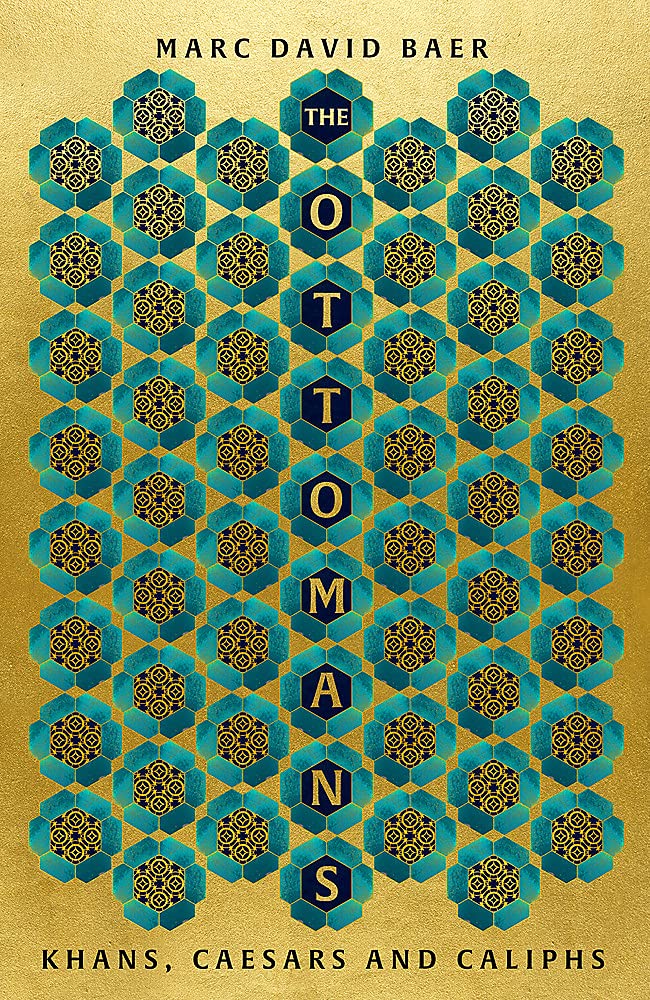
The Ottomans by Marc David Baer

Welcome to Halfman, Halfbook for my stop on the Blog Tour for The Ottomans by Marc David Baer and published by Basic Books.

About the Prize

The Wolfson History Prize, which celebrates its 50th anniversary this year, is the UK’s most prestigious historical writing prize and was created to champion the best and most accessible historical writing, and to highlight the importance of history to modern life. Previous winners have included Mary Beard, Antony Beevor, Antonia Frasier, Sudhir Hazareesingh, Amanda Vickery and many more.

A number of the six titles in the running for the £50,000 prize (making it the UK’s most valuable non-fiction writing prize) prove that current social divisions are nothing new, exploring times of discord and crisis throughout history, including accusations of witchcraft in a small New England town, the shock of Britain’s European neighbours during the turbulent Stuart dynasty, and the topical question of fallen statues and what they tell us about historical legacy.

Other titles on the shortlist showcase the impact faith has had on our lives over the centuries, tackling subjects such as the role of religious tolerance within the Ottoman Empire, the surprising realities of Medieval churchgoing, and the ways in which the anatomical concept of God has changed across time.”

To learn more about the Wolfson History Prize please visit https://www.wolfsonhistoryprize.org.uk/ or connect on Twitter via @WolfsonHistory / #WolfsonHistoryPrize.

The books shortlisted for the 2022 Wolfson History Prize are:

The Ruin of All Witches: Life and Death in the New World by Malcolm Gaskill (Allen Lane)

Devil-Land: England Under Siege, 1588-1688 by Clare Jackson (Allen Lane)

Going to Church in Medieval England by Nicholas Orme (Yale University Press)

God: An Anatomy by Francesca Stavrakopoulou (Picador)

Fallen Idols: Twelve Statues That Made History by Alex von Tunzelmann (Headline)

And the book I am reviewing today:

The Ottomans: Khans, Caesars and Caliphs by Marc David Baer (Basic Books)

About the Book

The Ottoman Empire has long been depicted as the Islamic-Asian antithesis of the Christian-European West. But the reality was starkly different: the Ottomans’ multiethnic, multilingual, and multireligious domain reached deep into Europe’s heart. In their breadth and versatility, the Ottoman rulers saw themselves as the new Romans.

Recounting the Ottomans’ remarkable rise from a frontier principality to a world empire, Marc David Baer traces their debts to their Turkish, Mongolian, Islamic and Byzantine heritage; how they used both religious toleration and conversion to integrate conquered peoples; and how, in the nineteenth century, they embraced exclusivity, leading to ethnic cleansing, genocide, and the dynasty’s demise after the First World War. Upending Western concepts of the Renaissance, the Age of Exploration, the Reformation, this account challenges our understandings of sexuality, orientalism and genocide.

Radically retelling their remarkable story, The Ottomans is a magisterial portrait of a dynastic power, and the first to truly capture its cross-fertilisation between East and West.


About the Author

Marc David Baer is Professor of International History at the London School of Economics and Political Science. He is the author of five books: Honored by the Glory of Islam: Conversion and Conquest in Ottoman Europe, winner, Albert Hourani Prize, Middle East Studies Association of North America; Sultanic Saviors and Tolerant Turks: Writing Ottoman Jewish History, Denying the Armenian Genocide, winner of the Dr Sona Aronian Book Prize for Excellence in Armenian Studies, National Association for Armenian Studies and Research; The Dönme: Jewish Converts, Muslim Revolutionaries, and Secular Turks; German, Jewish, Muslim, Gay: The Life and Times of Hugo Marcus; and The Ottomans: Khans, Caesars and Caliphs.


My Review

The Ottoman Empire controlled a large part of Southeast Europe, Western Asia, and Northern Africa between the 14th and early 20th centuries. It crushed the Byzantine Empire and after it won in the Balkans it became a genuine transcontinental empire. It has been perceived in history as being the Islamic foe of Christian Europe, but the reality was utterly different, it was a multiethnic, multilingual, and multireligious society that accepted people from everywhere.

They were keen on converting people to Islam, but this was not a prerequisite to being a member of this society. Jews that were fleeing European persecution found a home here and could even rise high in the elite service of the sultans. In fact, the tolerance and acceptance of a whole variety of peoples became its strength over the greater part of its history.

The book follows both the political leaders of the empire over the six centuries of rule. The way that each new sultan would put to death brothers and cousins to ensure that they had no threat to their leadership was shocking reading. For me, I found, the descriptions of the way that the society worked and the cultural aspects much more interesting reading.


To say there is a lot to take in in this book is an understatement. Baer covers the 600 years of the ebb and flow of the history of this empire in a remarkably readable book. It has a strong narrative and only occasionally descends into detailed academic prose about very specific or particular events. It also shows that Ottoman history is unequivocally European history too.


Don’t forget to visit the other blogs on the blog tour


Buy this at your local independent bookshop. If you’re not sure where your nearest is then you can find one here


My thanks to Bei from Midas PR for the copy of the book to read.

The Price of Immortality by Peter Ward

Welcome to Halfman, Halfbook for my stop on the Blog Tour for The Price of Immortality by Peter Ward and published by Melville House.

This is part of the Blog Tour to celebrate the 20th Anniversary of Melville House. They are an independent publisher located in Brooklyn, New York with an office in London. It was founded in 2001 by sculptor Valerie Merians and fiction writer/journalist Dennis Johnson, in order to publish Poetry After 9/11, a book of material culled from Johnson’s groundbreaking MobyLives book blog. The material consisted of things sent into the blog by writers and poets in response to the 9/11 attacks, and Johnson and Merians felt it better represented the spirit of New York than the call to war of the Bush administration.

Melville House is also well-known for its fiction, with two Nobel Prize winners on its list: Imre Kertesz and Heinrich Boll. In particular, the company has developed a world-wide reputation for its rediscovery of forgotten international writers — its translation of a forgotten work by Hans Fallada, Every Man Dies Alone, launched a world-wide phenomenon. The company also takes pride in its discovery of many first-time writers — such as Lars Iyer (Spurious), Tao Lin (Shoplifting from American Apparel), Jeremy Bushnell (The Weirdness) and Christopher Boucher (How to Keep Your Volkswagen Alive) — all of whom have gone on to greater success.


About the Book

In the tradition of Jon Ronson and Tim Wu, an absorbing and revelatory journey into the American Way of Defying Death

As longevity medicine revolutionizes the lives of many older people, the quest to take the next step—to live as long as we choose—has spurred a scientific arms race, funded by Big Tech and Silicon Valley, in search of the elixir of life. Once the stuff of Mesopotamian mythology and episodes of Star Trek, as the pace of technological progress quickens, proposals to make humans immortal are becoming increasingly credible. It has also empowered a wild-eyed fringe of pseudo-scientists, tech visionaries, scam-artists, and religious fanatics who have given their lives to the pursuit of immortality.

Peter Ward’s The Price of Immortality is a probing, deeply reported, nuanced — and sometimes very funny — exploration of the current state of the race for immortality and an attempt to sort the swindlers from the scientists, while also analyzing the potentially devastating consequences should humanity realize its ultimate dream. Starting off at the Church of Perpetual Life in Florida and exploring the feuding subcultures around the nascent cryonics industry that first emerged in the wake of World War 2, Ward immerses himself into an eccentric world of startups, scientific institutions, tech billionaires and life-extension conferences, in order to find out if immortality is within our grasp, and what the cost might be if we choose to take what some people think is the next step in human evolution.

About the Author

Author Photo

Peter Ward is a British business and technology reporter whose reporting has taken him across the globe. Reporting from Dubai, he covered the energy sector in the Middle East before earning a degree in business journalism from the Columbia University Graduate School of Journalism. His writing has appeared in Wired, The Atlantic, The Economist, GQ, BBC Science Focus, and Newsweek.

My Review

Who wants to live forever? sings Freddie Mercury in the Queen song. But who does? I grew up knowing that getting your three score and ten in was a good thing, but thanks to modern healthcare people are living way beyond that. But in the end, there is always death, it is as inevitable as taxes and your computer crashing.

There are people out there who do not think that death is for them. They are seeking that elusive and magic elixir of life that they will hope will give them that chance of immortality. What technology and medical advances are there out there that people are hoping might solve the problem. In this book, Peter Ward tries to find out where the money is and to see if it is actually going to work.

He begins this journey at the appropriately named Church of Perpetual Life. This organisation is not a Christian organisation but rather they describe themselves as a science faith-based church. Its members are drawn from all over the place but they all have the desire to live for a long time. They know that they can’t avoid death at the moment, but some want to live until they are 150 in the hope that as yet uninvented technologies will be available to help them live longer again.

For those that aren’t going to live that long, they are hoping that cryonics will mean that their bodies or just their heads can be preserved to be resurrected at some indeterminate point in the future. The technique has been around for a long while, but strangely enough, no one knows if it will actually work…

Ward takes us through all of these different techniques. Some of them sound plausible and based on strong science such as research into other animals that have extraordinarily long lives. There are other techniques that seem to be pedalled by charlatans and snake oil salesmen that stand more chance of shortening your life.

I thought that this was a fascinating and informative read about the search for immortality, He is open to hearing what these people have to say and tries to find out why they are seeking this path. He takes a rational look at the house of smoke and mirrors that is this industry, going in with an open mind and presenting the facts. He acknowledges that we can make people live longer with much better health care and details some of the differences in the state for those wealthy enough to have cover to pay for their medical bills. He has a great writing style, and this makes it an easy read for a complex subject. Well worth reading


Don’t forget to visit the other blogs on the blog tour

Buy this at your local independent bookshop. If you’re not sure where your nearest is then you can find one here

My thanks to Nikki Griffiths for the copy of the book to read.

Villager by Tom Cox

Welcome to Halfman, Halfbook for my stop on the Blog Tour for Villager by Tom Cox and published by Unbound.


About the Book

There’s so much to know. It will never end, I suspect, even when it does. So much in all these lives, so many stories, even in this small place.

Villages are full of tales: some are forgotten while others become a part of local folklore. But the fortunes of one West Country village are watched over and irreversibly etched into its history as an omniscient, somewhat crabby, presence keeps track of village life.

In the late sixties a Californian musician blows through Underhill where he writes a set of haunting folk songs that will earn him a group of obsessive fans and a cult following. Two decades later, a couple of teenagers disturb a body on the local golf course. In 2019, a pair of lodgers discover a one-eyed rag doll hidden in the walls of their crumbling and neglected home. Connections are forged and broken across generations, but only the landscape itself can link them together. A landscape threatened by property development and superfast train corridors and speckled by the pylons whose feet have been buried across the moor.


About the Author

He is the author of the Sunday Times bestselling The Good, the Bad and the Furry and the William Hill Sports Book longlisted Bring Me the Head of Sergio Garcia. 21st-Century Yokel was longlisted for the Wainwright Prize, and the titular story of Help the Witch won a Shirley Jackson Award. @cox_tom

Tom Cox has 80k followers on Twitter and 33k on Instagram. He is also the man behind the enormously popular Why My Cat is Sad account, which has 240k followers. He lives in Devon.


My Review

The Dartmoor village of Underhill is exactly where you would expect, under a hill. It has a long history of occupation, the stone circle taking it back beyond recorded history. Some of the stories from the landscape have gone forever but others have permeated the local folklore if you know where to look.

The people that have lived in the village over this have their own stories to tell and the narrative switches between different characters from 100 years ago to almost 150 years in the future. They all have a different story to tell of their time spent there, from the music that was created there and became a cult in its own right. There is the story of a doctor seeing the ghost of a woman in a ruined barn and the discovery of a body by two golf man teenagers.

Each of these stories is connected by the main character of the book; the landscape. Its presence is often brooding and sometimes comforting in each of these short vignettes and it feels like it is watching over the inhabitants of the village as they change the land for better or for worse.

The stones will talk, I think, if you give them long enough

I have been a big fan of Tom Cox for ages, so much so that I have even read his golf book, and I really liked this. It took a few days to grow on me, and this, like his non-fiction, is full of quirks and tiny details that make me wonder just where he gets his ideas from. I really liked the underlying rumble of folk horror in the stories, it is there like a satisfying bass line in a favourite track, not enough to scare you, but enough to give a feeling of unease. It is not a conventional novel by any means and is a strong reflection of his interests and passions. I am so glad that I read this, if it wasn’t for Unbound then we may not have seen this as most publishers wouldn’t consider this a commercial book. I still think that his non-fiction writing has an edge over this, but I am very much looking forward to whatever he writes next.


Don’t forget to visit the other blogs on the blog tour


Buy this at your local independent bookshop. If you’re not sure where your nearest is then you can find one here


My thanks to Anne Cater from Random Things Tours for the copy of the book to read.

« Older posts Newer posts »

© 2026 Halfman, Halfbook

Theme by Anders NorénUp ↑