Category: Book Musings (Page 17 of 31)

June 2021 TBR

It is already June. How did that happen? Anyway, the gloom and horrible weather seems to have cleared and the sun has come out. Sadly I have been stuck inside decorating the past few weekends and haven’t got as much reading as I would like done. So the TBR this month is even more ridiculous than the one in May.


Finishing Off (Still!)

Lotharingia: A Personal History Of Europe’s Lost Country – Simon Winder

Behind the Enigma: The Authorized History of GCHQ, Britain’s Secret Cyber-Intelligence Agency – John Ferris


Blog Tour

Tapestries of Life: Uncovering the Lifesaving Secrets of the Natural World – Anne Sverdrup-Thygeson


Review Copies

Did manage to read 11 review copies in May, but the list grows ever longer each month

Astral Travel – Elizabeth Baines

The Germans and Europe: A Personal Frontline History – Peter Millar

Britain Alone: The Path from Suez to Brexit – Philip Stephens

We Own This City: A True Story of Crime, Cops and Corruption in an American City – Justin Fenton

Fox Fires – Wyl Menmuir

Invisible Work: The Hidden Ingredient of True Creativity, Purpose and Power – John Howkins

The Power of Geography: Ten Maps That Reveals the Future of Our World – Tim Marshall

Elites: Can you rise to the top without losing your soul? – Douglas Board

Trimming England – M.J. Nicholls

The Fugitives – Jamal Mahjoub

Spaceworlds: Stories of Life in the Void – Ed. Mike Ashley

Slow Trains Around Spain: A 3,000-Mile Adventure on 52 Rides – Tom Chesshyre

The Others – Raül Garrigasait

Burning The Books: A History Of Knowledge Under Attack – Richard Ovenden

The Four Horsemen: And The Hope Of A New Age – Emily Mayhew

The Spy who was left out in the Cold: The Secret History of Agent Goleniewski – Tim Tate

The Devil You Know: Stories of Human Cruelty and Compassion – Gwen Adshead, Eileen Horne

When Quiet Was the New Loud: Celebrating the Acoustic Airwaves 1998-2003 – Tom Clayton

Letters from Egypt – Lucie Duff Gordon

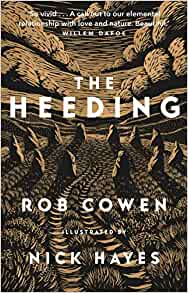
The Heeding – Rob Cowen & Nick Hayes

The Glitter in the Green: In Search of Hummingbirds – Jon Dunn


Library

Lots of library books to read this month because of other people reserving them and me neglecting to get them read before. Might end up paying the fines as you can’t return and renew at the moment.

The Lip – Charlie Carroll

Lev’s Violin: An Italian Adventure – Helena Attlee

Summer In The Islands: An Italian Odyssey – Matthew Fort

Sea People: In Search of the Ancient Navigators of the Pacific – Christina Thompson

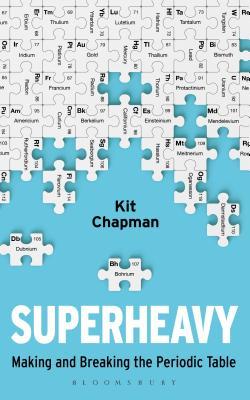
Superheavy: Making And Breaking The Periodic Table – Kit Chapman

On The Marsh: A Year Surrounded By Wildness And Wet – Simon Barnes

Pie Fidelity: In Defence Of British Food – Pete Brown

Another Fine Mess: Across Trumpland In A Ford Model T – Tim Moore

The Living Goddess: A Journey Into The Heart Of Kathmandu – Isabella Tree

The Odditorium: The Tricksters, Eccentrics, Deviants And Inventors Whose Obsession Changed The World – David Bramwell & Jo Keeling

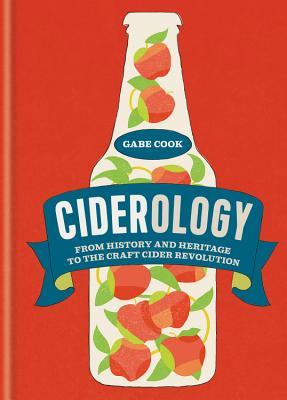
Ciderology – Gabe Cook

The Almost Nearly Perfect People: Behind The Myth Of The Scandinavian Utopia – Michael Booth

Elephant Complex: Travels In Sri Lanka – John Gimlette

Tweet Of The Day: A Year Of Britain’s Birds From The Acclaimed Radio 4 Series – Brett Westwood & Stephen Moss


Poetry

Only intending on reading one this month give the vastness of the rest of the list…

The Heeding – Rob Cowen & Nick Hayes


20 Books Of Summer

Cathy at 746 books is running this again and my post about it is here. I am not going to get to all of these this month, but they are here so I can start ticking them off the list to read.

An Affair Of The Heart – Dilys Powell

Wyntertide – Andrew Caldecot

The Con Artist – Fred van Lente

Girl Squads: 20 Female Friendships That Changed History – Sam Maggs

Water Ways: A Thousand Miles Along Britain’s Canals – Jasper Winn

The Night Lies Bleeding – M.D. Lachlan

Divided: Why We’re Living in an Age of Walls – Tim Marshall

The Wonderful Mr Willughby: The First True Ornithologist – Tim Birkhead

The House of Islam – Ed Husain

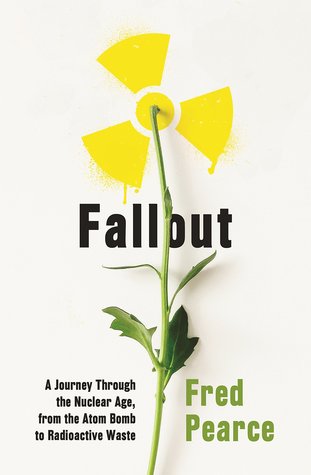
Fallout: Disasters, Lies, and the Legacy of the Nuclear Age – Fred Pearce

Asian Waters: The Struggle Over the South China Sea and the Strategy of Chinese Expansion – Humphrey Hawksley

Light of the Stars: Alien Worlds and the Fate of the Earth – Adam Frank

Blue Mind: How Water Makes You Happier, More Connected and Better at What You Do – Wallace J. Nichols

21 Lessons for the 21st Century – Yuval Noah Harari

The Restless Kings: Henry II, His Sons and the Wars for the Plantagenet Crown – Nick Barratt

The Kindness Of Strangers: Travel Stories That Make Your Heart Grow – Ed. Fearghal O’Nuallain

To Obama: With Love, Joy, Anger, and Hope – Jeanne Marie Laskas

The Secret Network of Nature: The Delicate Balance of All Living Things – Peter Wohlleben

What We Have Lost – James Hamilton-Paterson

Bloody Brilliant Women: The Pioneers, Revolutionaries and Geniuses Your History Teacher Forgot to Mention – Cathy Newman


These lists never seem to get any shorter, do they? 🙂

Any that you have read or are there some above that take your fancy?

20 Books of Summer 2021

After the truly bloody horrible May that we have had, the past few days of heat and sun have meant that it almost felt like summer. Not convinced it will last though. And as it is summer then it must be time for this challenge once again.

It was dreamt up by Cathy at 746 Books, it is a challenge for bloggers and anyone else and the aim is to try and read through 20 books that are on their TBR. I have tried for the past two years. In the first year, I read 18 and last year I only managed 12. I almost didn’t do it this year, but I like the idea of it and It is good to support another blogger in what they are doing to promote reading. Follow the hashtag #20booksofsummer21 to follow those who are taking part this year.  I like to pick themes normally. Last year it was travel and this year the theme is trying to read through some of the review books that I have had around for way too long. So without further ado, here is my list of books:

An Affair Of The Heart by Dilys Powell

Dilys Powell’s love affair with Greece and the Greeks began on a sun-baked archaeological dig in 1931. Joining her husband the archaeologist Humfry Payne on the remote peninsula of Perachora, she came to know the villagers who laboured on the site, camping beside them year after year, for months at a time.

Despite personal tragedy, the occupation of Greece and civil war, Powell’s affair of the heart continued. She returned time and again through the ’40s and ’50s, and with each visit there was a reconciliation with her idyllic memories of the country. Both with Humfry and without, she explored remote mountains in the company of shepherds, isolated stretches of coast and island with local fishermen and olive-dotted hillsides with the subsistence farmers who worked them. Out of this she has fashioned a gem of a travel book.


Wyntertide by Andrew Caldecot

Welcome back to Rotherweird, where an ancient plot centuries in the making is about to come to fruition – and this time the forces of darkness might actually win . . .

The town of Rotherweird has been independent from the rest of England for four hundred years, to protect a deadly secret.

Sir Veronal Slickstone is dead, his bid to exploit that secret consigned to dust, leaving Rotherweird to resume its abnormal normality after the travails of the summer . . . but someone is playing a very long game.

Disturbing omens multiply: a funeral delivers a cryptic warning; an ancient portrait speaks; the Herald disappears – and democracy threatens the uneasy covenant between town and countryside.

Geryon Wynter’s intricate plot, centuries in the making, is on the move.

Everything points to one objective: the resurrection of Rotherweird’s dark Elizabethan past – and to one date: the Winter Solstice.

Wynter is coming


The Con Artist by Fred van Lente

This illustrated mystery will appeal to comic book fans and anyone who appreciates an unconventional whodunit.

Comic book artist Mike Mason arrives at San Diego Comic-Con, seeking sanctuary with other fans and creators—and maybe to reunite with his ex—but when his rival is found murdered, he becomes the prime suspect. To clear his name, Mike will have to navigate every corner of the con, from zombie obstacle courses and cosplay flash mobs to intrusive fans and obsessive collectors, in the process unravelling a dark secret behind one of the industry’s most legendary creators.


Girl Squads: 20 Female Friendships That Changed History by Sam Maggs

A modern girl is nothing without her squad of besties. But don’t let all the hashtags fool you: the #girlsquad goes back a long, long time. In this hilarious and heartfelt book, geek girl Sam Maggs takes you on a tour of some of history’s most famous female BFFs, including:

• Anne Bonny and Mary Read, the infamous lady pirates who sailed the seven seas and plundered with the best of the men
• Jeanne Manon Roland and Sophie Grandchamp, Parisian socialites who landed front-row seats (from prison) to the French Revolution
• Sharon and Shirley Firth, the First Nations twin sisters who would go on to become Olympic skiers and break barriers in the sport
• The Edinburgh Seven, the band of pals who fought to become the first women admitted to medical school in the United Kingdom
• The Zohra Orchestra, the ensemble from Afghanistan who defied laws, danger, and threats to become the nation’s first all-female musical group

And many more! Spanning art, science, politics, activism, and even sports, these girl squads show just how essential female friendship has been throughout history and throughout the world. Sam Maggs brings her signature wit and warmth as she pays tribute to the enduring power of the girl squad. Fun, feisty, and delightful to read—with empowering illustrations by artist Jenn Woodall—it’s the perfect gift for your BFF.


Water Ways: A Thousand Miles Along Britain’s Canals by Jasper Winn

For a hundred and fifty years, between the plod of packhorse trains and the arrival of the railways, canals were the high-tech water machine driving the industrial revolution. Amazing feats of engineering, they carried the rural into the city and the urban into the countryside, and changed the lives of everyone. And then, just when their purpose was extinguished by modern transport, they were saved from extinction and repurposed as a ‘slow highways’ network, a peaceful and countrywide haven from our too-busy age. Today, there are more boats on the canals than in their Victorian heyday.

Writer and slow adventurer Jasper Winn spent a year exploring Britain’s waterways on foot and by bike, in a kayak and on narrowboats. Along a thousand miles of ‘wet roads and water streets’ he discovered a world of wildlife corridors, underground adventures, the hardware of heritage and history, new boating communities, endurance kayak races and remote towpaths. He shared journeys with some of the last working boat people and met the anglers, walkers, boaters, activists, volunteers and eccentrics who have made the waterways their home. In Britain most of us live within five miles of a canal, and reading this book we will see them in an entirely new light.


The Night Lies Bleeding by M.D. Lachlan

The world is at war again. London is suffering from the German Blitz. For one immortal werewolf, the war means little. He knows he will soon have to give up his identity once more, begin a new life. Before the wolf emerges.

But a chance conversation leads him to the scene of a gruesome murder, and the realisation that another war is being fought. The runes want to be together, and the when they are the wolf’s story will end.

And in Germany, one weak-willed doctor finds himself caught up in the Third Reich’s fascination with the occult and the Norse myths. They believe that the runes will bring them power, and wish to abuse them for their own ends.

And if they succeed, Ragnarok will come.


Divided: Why We’re Living in an Age of Walls by Tim Marshall


We feel more divided than ever.
This riveting analysis tells you why.

Walls are going up. Nationalism and identity politics are on the rise once more. Thousands of miles of fences and barriers have been erected in the past ten years, and they are redefining our political landscape.

There are many reasons why we erect walls, because we are divided in many ways: wealth, race, religion, politics. In Europe the ruptures of the past decade threaten not only European unity, but in some countries liberal democracy itself. In China, the Party’s need to contain the divisions wrought by capitalism will define the nation’s future. In the USA the rationale for the Mexican border wall taps into the fear that the USA will no longer be a white majority country in the course of this century.

Understanding what has divided us, past and present, is essential to understanding much of what’s going on in the world today. Covering China; the USA; Israel and Palestine; the Middle East; the Indian Subcontinent; Africa; Europe and the UK, bestselling author Tim Marshall presents a gripping and unflinching analysis of the fault lines that will shape our world for years to come.


The Wonderful Mr Willughby: The First True Ornithologist by Tim Birkhead

From the author of Bird Sense, a biography of Francis Willughby, the man who pulled the study of birds out of the dark ages and formed the foundations of modern ornithology.

Francis Willughby lived and thrived in the midst of the rapidly accelerating scientific revolution of the seventeenth century. Travelling with his Cambridge tutor John Ray, they decided to overhaul the whole of natural history by imposing order on its messiness and complexity. It was exhilarating, exacting, and exhausting work. Yet before their first book, Ornithology, could be completed, Willughby died in 1672. Since then, Ray’s reputation has grown, obscuring that of his collaborator. Now, for the first time, Willughby’s story and genius are given the attention they deserve.

In his too-short life, Francis Willughby helped found the Royal Society, differentiated birds through identification of their distinguishing features, and asked questions that were, in some cases, centuries ahead of their time. His discoveries and his approach to his work continue to be relevant–and revelatory-today. Tim Birkhead describes and celebrates how Willughby’s endeavours set a standard for the way birds–and indeed the whole of natural history–should be studied. Rich with glorious detail, The Wonderful Mr Willughby is at once a fascinating insight into a thrilling period of scientific history and an authoritative, lively biography of one of its legendary pioneers.


The House of Islam by Ed Husain

‘Islam began as a stranger,’ said the Prophet Mohammed, ‘and one day, it will again return to being a stranger.’

The gulf between Islam and the West is widening. A faith rich with strong values and traditions, observed by nearly two billion people across the world, is seen by the West as something to be feared rather than understood. Sensational headlines and hard-line policies spark enmity, while ignoring the feelings, narratives and perceptions that preoccupy Muslims today.

Wise and authoritative, The House of Islam seeks to provide entry to the minds and hearts of Muslims the world over. It introduces us to the fairness, kindness and mercy of Mohammed; the aims of sharia law, through commentary on scripture, to provide an ethical basis to life; the beauty of Islamic art and the permeation of the divine in public spaces; and the tension between mysticism and literalism that still threatens the House of Islam.

The decline of the Muslim world and the current crises of leadership mean that a glorious past, full of intellectual nobility and purpose, is now exploited by extremists and channelled into acts of terror. How can Muslims confront the issues that are destroying Islam from within, and what can the West do to help work towards that end?

Ed Husain expertly and compassionately guides us through the nuances of Islam and its people, contending that the Muslim world need not be a stranger to the West, nor its enemy, but a peaceable ally.


Fallout: Disasters, Lies, and the Legacy of the Nuclear Age by Fred Pearce

Environmental journalist Fred Pearce travels the globe to investigate our complicated seven-decade long relationship with nuclear technology, from the bomb to nuclear accidents to nuclear waste.

While concern about climate change has led some environmentalists to embrace renewable energy sources like wind and solar, others have expressed a renewed interest in nuclear power as an alternative source of carbon-neutral energy. But can humanity handle the risks involved?
In Fallout, Fred Pearce uncovers the environmental and psychological landscapes created since the dropping of the first atomic bomb. Traveling from Nevada to Japan to the UK to secret sites of the old Soviet Union, he explores first the landscapes transformed by uranium and by nuclear accidents–sites both well-known and little known. He then examines in detail the toxic legacies of nuclear technology, the emerging dilemmas over handling its waste, the decommissioning of the great radioactive structures of the nuclear age, and the fearful doublethink over our growing stockpiles of plutonium, the most lethal and ubiquitous product of nuclear technologies. How, Pearce asks, has the nuclear experience has changed us? Is nuclear technology indeed the existential threat it sometimes appears? Should we be burdening future generations with radioactive waste that will be deadly for thousands of years?
Fallout is the definitive look at humanity’s nuclear adventure, for any reader who craves a clear-headed examination of the tangled relationship between a powerful technology and human politics, foibles, fears, and arrogance.


Asian Waters: The Struggle Over the South China Sea and the Strategy of Chinese Expansion by Humphrey Hawksley

Few territories are as hotly contested as the western Pacific Ocean. Across the 1.5 million square mile expanse of the East and South China Sea, six countries lay overlapping claims that date back centuries. China, Vietnam, Korea and Indonesia assert their right to trade routes, deploying military garrisons to defend disputed territories while Japan, Vietnam and the Philippines resist their expansion. But no single government can face a superpower such as China alone, and as the country extends its reach, less powerful states look to the US for diplomatic mediation creating an American security umbrella that stretches across the Asia-Pacific nicknamed the “American Lake”. These conditions produce an unstable cocktail of competing interests and international tensions poised for conflict.

BBC foreign correspondent Humphrey Hawksley has been following this increasingly precarious situation in East Asia for decades. Reporting on years of political developments, he has witnessed China’s rise to become one of the world’s most powerful trade entities, elbowing smaller markets out in the process. In Asian Waters, Hawksley draws on his experience as a veteran journalist to portray the region in all its complexity and delivers a compelling account of where it is heading. Will China continue to rise to power peacefully or will its ambition prompt a new world war? Will Japan, the Philippines, South Korea, and Taiwan create a multi-lateral alliance similar to NATO to pre-empt further encroachment? Asian Waters delves into these topics and more as Hawksley presents the most comprehensive analysis of the region to date.


Light of the Stars: Alien Worlds and the Fate of the Earth by Adam Frank

Light of the Stars tells the story of humanity’s coming of age as we awaken to the possibilities of life on other worlds and their sudden relevance to our fate on Earth. Astrophysicist Adam Frank traces the question of alien life and intelligence from the ancient Greeks to the leading thinkers of our own time, and shows how we as a civilization can only hope to survive climate change if we recognize what science has recently discovered: that we are just one of ten billion trillion planets in the Universe, and it’s highly likely that many of those planets hosted technologically advanced alien civilizations. What’s more, each of those civilizations must have faced the same challenge of civilization-driven climate change.

Written with great clarity and conviction, Light of the Stars builds on the inspiring work of pioneering scientists such as Frank Drake and Carl Sagan, whose work at the dawn of the space age began building the new science of astrobiology; Jack James, the Texas-born engineer who drove NASA’s first planetary missions to success; Vladimir Vernadsky, the Russian geochemist who first envisioned the Earth’s biosphere; and James Lovelock and Lynn Margulis, who invented Gaia theory. Frank recounts the perilous journey NASA undertook across millions of miles of deep space to get its probes to Venus and Mars, yielding our first view of the cosmic laws of planets and climate that changed our understanding of our place in the universe.

Thrilling science at the grandest of scales, Light of the Stars explores what may be the largest question of all: What can the likely presence of life on other worlds tell us about our own fate?


Blue Mind: How Water Makes You Happier, More Connected and Better at What You Do by Wallace J. Nichols

Why are we drawn to the ocean each summer? Why does being near water set our minds and bodies at ease? In Blue Mind, Wallace J. Nichols revolutionizes how we think about these questions, revealing the remarkable truth about the benefits of being in, on, under, or simply near water. Grounded in cutting-edge studies in neurobiology, cognitive psychology, economics, and medicine, and made real by stories of innovative scientists, doctors, athletes, artists, environmentalists, businesspeople and lovers of nature – stories that fascinate the mind and touch the heart – Blue Mind will awaken readers to the vital importance of water to the health and happiness of us all.


21 Lessons for the 21st Century by Yuval Noah Harari

In Sapiens, he explored our past. In Homo Deus, he looked to our futureNow, one of the most innovative thinkers on the planet turns to the present to make sense of today’s most pressing issues.

How do computers and robots change the meaning of being human? How do we deal with the epidemic of fake news? Are nations and religions still relevant? What should we teach our children?

Yuval Noah Harari’s 21 Lessons for the 21st Century is a probing and visionary investigation into today’s most urgent issues as we move into the uncharted territory of the future. As technology advances faster than our understanding of it, hacking becomes a tactic of war, and the world feels more polarized than ever, Harari addresses the challenge of navigating life in the face of constant and disorienting change and raises the important questions we need to ask ourselves in order to survive.

In twenty-one accessible chapters that are both provocative and profound, Harari builds on the ideas explored in his previous books, untangling political, technological, social, and existential issues and offering advice on how to prepare for a very different future from the world we now live in: How can we retain freedom of choice when Big Data is watching us? What will the future workforce look like, and how should we ready ourselves for it? How should we deal with the threat of terrorism? Why is liberal democracy in crisis?

Harari’s unique ability to make sense of where we have come from and where we are going has captured the imaginations of millions of readers. Here he invites us to consider values, meaning, and personal engagement in a world full of noise and uncertainty. When we are deluged with irrelevant information, clarity is power. Presenting complex contemporary challenges clearly and accessibly, 21 Lessons for the 21st Century is essential reading.


The Restless Kings: Henry II, His Sons and the Wars for the Plantagenet Crown by Nick Barratt

In The Restless Kings Nick Barratt presents the tumultuous struggle for supremacy between the first Plantagenet king, Henry II, and his four sons – a drama that tore apart the most powerful family in western Europe and shaped the future of two nations.

As well as exploring the personalities and crises facing these extraordinary people as a family, The Restless Kings follows them as they raced around western Europe, struggling to hold together a vast conglomeration of lands – often through force of arms – whilst constantly harried by the their nominal overlord and arch rival, Philip Augustus, king of France.

Although the key events took place over 800 years ago, their significance still resonates today. Whether you’re looking for the root causes of Brexit or tension in the Middle East, their origins can be found in the actions of the Angevin kings of England.

The Restless Kings will challenge everything you assumed you knew about the medieval world. Above all, it brings to life some of the most remarkable, complex, flawed and brilliant monarchs ever to have sat on the English throne.


The Kindness Of Strangers: Travel Stories That Make Your Heart Grow by Ed. Fearghal O’Nuallain

Travel is the only thing you can buy that makes you richer

Travel opens our minds to the world; it helps us to embrace risk and uncertainty, overcome challenges and understand the people we meet and the places we visit. But what happens when we arrive home? How do our experiences shape us?

‘The Kindness of Strangers’ explores what it means to be vulnerable and to be helped by someone we’ve never met before. Someone who could have walked past, but chose not to.

This is a collection of stories by accomplished travellers and adventurous souls like Sarah Outen, Benedict Allen, Ed Stafford and Al Humphreys, who have completed daring journeys through challenging terrain, adventuring from the Calais Jungle to the Amazon, from Land’s End to the Gobi Desert, from New Guinea to Iran and many other places in between. Each has a story to tell of a time when they were vulnerable, when they were in need and a kind stranger came to their rescue.

These are stories that make our hearts grow, stories that will restore our faith in the world and remind us that, despite what the media says, the world isn’t a scary place – rather, it is filled with Kind Strangers just like us.

All royalties go directly to fund Oxfam’s work with refugees.


To Obama: With Love, Joy, Anger, and Hope by Jeanne Marie Laskas

Every day, President Obama received ten thousand letters from constituents. Every night, he read ten of them before going to bed. This is the story of the profound ways in which they shaped his presidency.

Every evening for 8 years, at his request, President Obama received a binder containing ten handpicked letters from ordinary American citizens — the unfiltered voice of a nation — from his Office of Presidential Correspondence. He was the first to President to save constituent mail, and this is the story of how those letters affected not only the President and his policies, but also the deeply committed people who were tasked with opening the millions of pleas, rants, thank yous, and apologies that landed in the White House mailroom.

Based on the popular New York Times article, “To Obama,” Laskas now interviews the letter writers themselves and the White House staff who sifted through the powerful, moving, and incredibly intimate narrative of America during the Obama years emerges: There is Kelli, who saw her grandfathers finally marry – legally — after 35 years together; Bill, a lifelong Republican whose attitude toward immigration reform was transformed when he met a boy escaping M-16 gang leaders in El Salvador; Heba, a Syrian refugee who wants to forget the day the tanks rolled into her village; Marjorie, who grappled with disturbing feelings of racial bias lurking within her during the George Zimmerman trial; and Vicki, whose family was torn apart by those who voted for Trump and those who did not.

They wrote to Obama out of gratitude and desperation, in their darkest times of need, in search of connection. They wrote with anger and respect. And together, this chorus of voices achieves a kind of beautiful harmony: here is a diary of a nation. To Obama is an intimate look at one man’s relationship to the American people, and the the intersection of politics and empathy in the White House.


The Secret Network of Nature: The Delicate Balance of All Living Things by Peter Wohlleben

Did you know that trees can influence the rotation of the earth?
Or that wolves can alter the course of a river?
Or that earthworms control wild boar populations?

The natural world is a web of intricate connections, many of which go unnoticed by humans. But it is these connections that maintain nature’s finely balanced equilibrium.

Drawing on the latest scientific discoveries and decades of experience as a forester and bestselling author, Peter Wohlleben shows us how different animals, plants, rivers, rocks and weather systems cooperate, and what’s at stake when these delicate systems are unbalanced.

The earth’s ecosystems are too complex for us to compartmentalise and draw up simple rules of cause and effect; but The Secret Network of Nature gives us a chance to marvel at the inner workings and unlikely partnerships of the natural world, where every entity has its own distinct purpose.

And the more light that is shed on relationships between species, the more fascinating nature’s web becomes.


What We Have Lost by James Hamilton-Paterson

Between 1939 and 1945, Britain produced around 125,000 aircraft – to take one example – and enormous numbers of ships, motor vehicles, armaments and textiles. We developed radar, antibiotics, the jet engine and the computer. Less than seventy years later, the major industries that had made Britain a global power industrially and militarily, and had employed millions, were dead. These industries had collapsed within a mere three decades. Had they really been doomed, and if so, by what? Can our politicians have been so inept? Was it down to the superior competition of wily foreigners? Or were our rulers culturally too hostile to science and industry?

James Hamilton-Paterson, in this evocation of the industrial world we have lost, analyses the factors that turned us so quickly from a nation of active producers to one of passive consumers and financial middlemen.


Bloody Brilliant Women: The Pioneers, Revolutionaries and Geniuses Your History Teacher Forgot to Mention by Cathy Newman


A fresh, opinionated history of all the brilliant women you should have learned about in school but didn’t.

In this freewheeling history of modern Britain, Cathy Newman writes about the pioneering women who defied the odds to make careers for themselves and alter the course of modern history; women who achieved what they achieved while dismantling hostile, entrenched views about their place in society. Their role in transforming Britain is fundamental, far greater than has generally been acknowledged, and not just in the arts or education but in fields like medicine, politics, law, engineering and the military.

While a few of the women in this book are now household names, many have faded into oblivion, their personal and collective achievements mere footnotes in history. We know of Emmeline Pankhurst, Vera Brittain, Marie Stopes and Beatrice Webb. But who remembers engineer and motorbike racer Beatrice Shilling, whose ingenious device for the Spitfires’ Rolls-Royce Merlin fixed an often-fatal flaw, allowing the RAF’s planes to beat the German in the Battle of Britain? Or Dorothy Lawrence, the journalist who achieved her ambition to become a WW1 correspondent by pretending to be a man? And developmental biologist Anne McLaren, whose work in genetics paved the way for in vitro fertilisation?

Were it not for women, significant features of modern Britain like council housing, municipal swimming pools and humane laws relating to property ownership, child custody and divorce wouldn’t exist in quite the same way. Women’s drive and talent for utopian thinking created new social and legislative agendas. The women in these pages blazed a trail from the 1918 Representation of the People Act – which allowed some women to vote – through to Margaret Thatcher’s ousting from Downing Street.

Blending meticulous research with information gleaned from memoirs, diaries, letters, novels and other secondary sources, Bloody Brilliant Women uses the stories of some extraordinary lives to tell the tale of 20th and 21st century Britain. It is a history for women and men. A history for our times.


So there we go. Is there any that you’ve read? Or now want to read? Let me know in the comments below

April 2021 Review

We for a short month that ended up a really good month for reading. I didn’t get anywhere near the number of books that I wanted to read but did manage to clear another 17 from my TBR and had three, yes three five star reads. Mor on them at the bottom of the post.  And here they all are.

I read four books about Japan this month and first up is a translated book, Touring the Land of the Dead. It is two novellas by Maki Kashimada and translated by Haydn Trowell, one story is about a couple who have been surviving on his wife salary after he could no longer work. The second is about a family of four sisters who have always been close and then one finds a man and the bond is tested and loosened. Both slightly surreal in that very Japanese way.

I had heard a lot about, How To Do Nothing by Jenny Odell and had managed to get a copy via the library. I liked the premise of this book, that we are constantly distracted by all of modern life and Odell’s philosophy of how to resist it. In the end, it didn’t really live up to my expectations.

I am trying to read books that have a theme where possible and these three are on health. Stroke is a fairly obvious title, and it is the story about Ricky’s survival following a stroke that almost killed him. Sinéad Gleeson’s book won our Wellcome Prize Shadow Award last year, and these are a series of essays about the various and numerous health problems she has had. She is quite some writer too! Finally in this little section is How to Be Sad which is Helen Russell’s take on how to be sad properly, how to get through it and how to use that to enjoy the better times when they come.


Another theme and this time it is symbols. Hyphens & Hashtags is a wonderful little book about the characters that you find on keyboards and the second a wider look at symbols that we come across in our modern lives.


The first two of the six natural history book that I read in April, are The Spirit of the River by Declan Murphy and Save Our Species by Dominic Couzens & Sarah Edmunds. Murphy’s book is about the summer he spent watching the dippers and kingfishers in a local river and Couzens’ book is ways that we can practically help the endangered species in our country.


Gone is about the animals that we deliberately or accidentally chose not to help and are no longer with us. Michael Blencowe has written a fascinating tale of his search for their remains in museums around the world. Roger Morgan-Grenville has a thing about shearwaters and this rather good book is the story of his obsession with them.


Only read one poetry book this month. In a strange bit of book serendipity, Of Mutability by Jo Shapcott was mentioned in Constellations and it was going to be my next book to read. It is not a bad collection all about her mortality

My travel reading this month was all centred on Japan. First was Pico Iyer’s  A Beginner’s Guide To Japan, a series of though and muses about his life in that country. In Hokkaido Highway Blue, Will Ferguson decides to follow the cherry blossom from the South West of the Country right up to the northernmost island. He hitchhikes his way of getting to see the country and meet the people that are not on any tourist trail at all.


I have three Book of the Month for April. First is the sublime The Bells of Old Tokyo by Anna Sherman which is her story about seeking the great bells by which the inhabitants of Edo, later called Tokyo tracked their lives by. Next is another obsession distilled down into a book, The Screaming Sky. Charles Foster doesn’t really do anything by halves and this is his musings on those masters of the air, Swifts.  Finally is Neil Ansell’s book about a place near me, The New Forest. Beautifully written as ever, he extolls the place and the natural world that manages to just cling on. Read all three.


So have you read any of these? Are there now any that you want to read? Let me know in the comments below.

May 2021 TBR

Another month passes and I suddenly realised that I haven’t decided what I am going to read for next month! Quickly shuffled around the spreadsheets and now have a list for May. Totally ambitious as ever, but I did read a fair amount in April. So here we go:

Finishing Off

Lotharingia – Simon Winder

Behind the Enigma – John Ferris


BLOG TOUR

To Start The Year From Its Quiet Centre – Victoria Bennett

Empire Of Ants – Suzanne Foitzik & Olaf Fritsche


Review Copies

Wyntertide – Andrew Caldecot

Astral Travel – Elizabeth Baines

The Germans and Europe – Peter Millar

Reset – Ronald J. Deibert

Britain Alone – Philip Stephens

The Future of You – Tracey Follows

We Own This City – Justin Fenton

Born Digital – Robert Wigley

Fox Fires – Wyl Menmuir

Invisible Work – John Howkins

The Power of Geography – Tim Marshall

Finding True North – Linda Gask

Elites – Douglas Board

Trimming England – M.J. Nicholls

The Fugitives – Jamal Mahjoub

Spaceworlds: Stories of Life in the Void – Ed. Mike Ashley

Slow Trains Around Spain – Tom Chesshyre

Westering – Laurence Mitchell

Much Ado About Mothing – James Lowen

Earthed A Memoir – Rebecca Schiller

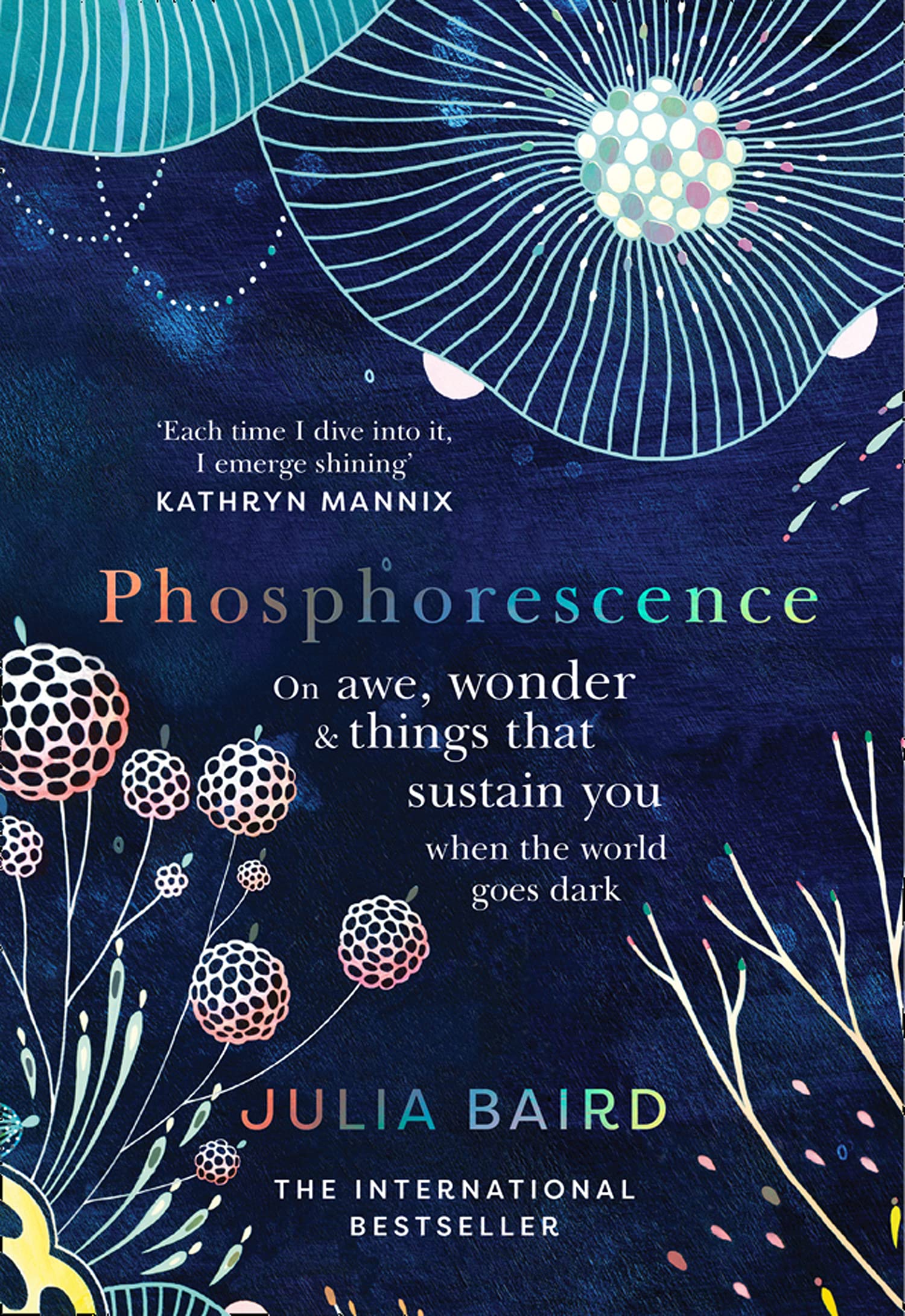
Phosphorescence – Julia Baird

The Others – Raül Garrigasait

Burning The Books – Richard Ovenden

The Four Horsemen – Emily Mayhew


Library

Everybody Lies – Seth Stephens-Davidowitz

On the Plain of Snakes – Paul Theroux

Notes From Deep Time – Helen Gordon

Sea People – Christina Thompson

Summer In The Islands – Matthew Fort

The Electricity Of Every Living Thing – Katherine May


Books to Clear

Battle of the Titans – Fred Vogelstein

Where My Heart Used to Beat – Sebastian Faulks

Prisioners of Geography – Tim Marshall


Poetry

Three this month as I only read one in April

Watery Through the Gaps – Emma Blas

To Start The Year From Its Quiet Centre – Victoria Bennett

Door Into The Dark – Seamus Heaney


Challenge Books

From Rome to San Marino – Oliver Knox


Stanford Award

Without Ever Reaching the Summit – Paolo Cognetti

The Border – Erika Fatland Tr. Kari Dickson

Shadow City – Taran Khan

Travelling While Black – Nanjala Nyabola

Owls of the Eastern Ice – Jonathan C. Slaght


Science Fiction

Planetfall – Emma Newman

After Atlas – Emma Newman

I know it is quite a lot, but I am hoping to get to at least 18 – 20 of them

March 2021 Review

March felt more like a more normal month than previously. It was a good reading month, with three, yes three, books of the month. But, first some stats after reaching a quarter of the way through the year.

I have read 50 books and 13682 pages. Thirty-four of the authors were male and the remaining 16 were female (34%). I have read 23 review books, 12 library books and 15 of my own. I have read books from 34 different publishers so far.

The top three publishers are:

Eland – 4 books

Saraband – 2 books

Head of Zeus – 2 books

(in fact, there are 11 publishers with 2 books read so far)

The top three genres are:

Travel – 10 books

Fiction – 9 books

Poetry – 6 books

So on to the books that I read in March

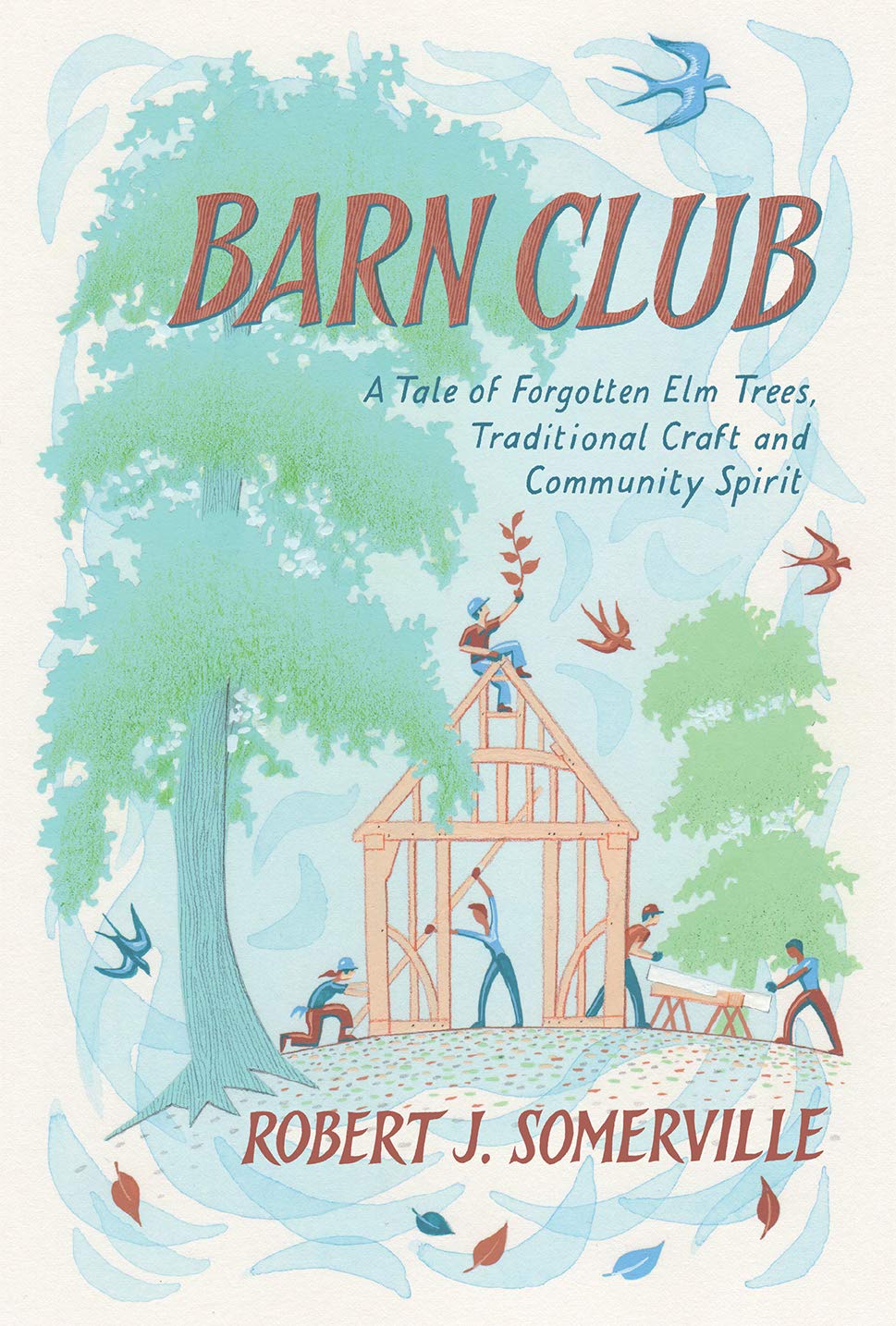
Barn Club a combination of architecture and craft and the story of a barn being built from elm for his clients using volunteers. They help with the cutting of the wood and learnt about how to cut the wood to make a self-standing structure. I really liked it

I know it sounds odd, but I read five fiction books this month. Like Fado is a collection of short stories by Graham Mort that are thoughtful, but not always cheerful. Million-Story City  is a collection of writings by the late Marcus Preece pulled together by his friends and editors Malu Halasa & Aura Saxén. There are all sorts of things in here, graphic strips, music journalism and plays. If you like something a bit different then this might be one you’d like. I have been a big fan of the late John Le Carré and I am reading the one on my bookshelves to pass to my brother in law to make space for other books! Our Kind Of Traitor is his take on the way that Russian money is swirling around the world in legal and illegal schemes and how those at the very top of our country are influenced by it. Chilling stuff.


I had read Gabriel Hemery’s previous collection of short stories loosely about woods and tree and he offered me a review copy of this. It is a diverse collection again, some of which I liked more than others, but there were a couple of great stories inside. So Long, See You Tomorrow by William Maxwell is a story of murder set in the 1920s and how it affected those for years after.


Notebook is Tom Cox’s latest book and it originated from the time that his bag was stolen with a precious notebook inside. There are various musings from his other notebooks. It is quite random, but also an insight as to how he creates his wonderful books. In Minature is Simon Garfield’s exploration into those that are fascinated about replicating the real world in tiny form. Really enjoyable read. The First of Everything is a huge list of all the things that you may of heard of and who invented or discovered them first. Not bad


If you want to know about how the birds that we see around us got their names from our language, their behaviour and those that travelled all around the world trying to find new species then Mrs Moreau’s Warbler by Stephen Moss is a good place to start.

Desert Air is a collection of poetry set in and about the deserts of the world drawn together by Barnaby Rogerson. It is a great little collection and pocket sized too.

Two of the travel books that I read this month were written about the same place at the same time but two guys who were there at the same time. It was interesting seeing how Gavin Young and Gavin Maxwell’s experiences overlapped in their books.


Humanity has a habit of mucking things up and leaving them. But what happens after they have been left? In Cal Flyn’s fascinating book, Islands Of Abandonment, she travels to these places to see how the natural world is claiming them back. Highly recommended.

And now for my three books of the month. I am a big fan of Stephen Moss’s writing and Skylarks with Rosie is his lockdown diary of the natural world that he sees in his garden and the loop that he walks around every day. Wonderful piece of writing. Springlines sadly is out of print now, but I managed to pick up a copy second hand. It is a wonderful collection of art and poetry by Clare Best and Mary Anne Aytoun-Ellis. Finally is  The Book Collectors of Daraya a wonderful story of a few men who set about collecting books from the rubble of the town and making a library from them. Books helped them face the horrific bombing they were subject to on a daily basis. It is a wonderful story.


Any here that you have read?

Any here that you’d now like to read?

Let me know in the comments below.

April 2021 TBR

After posting a ridiculously long TBR for March I thought that I would have cleared a few off the list, but no, so some of these have rolled over from April (quite a few, please don’t count them!) So here we go again, equally long:


Finishing Off (Still!)

Behind the Enigma: The Authorized History of GCHQ, Britain’s Secret Cyber-Intelligence Agency – John Ferris

Lotharingia: A Personal History Of Europe’s Lost Country – Simon Winder


BLOG TOUR

None this month


Review Copies

Wyntertide – Andrew Caldecot

Stroke: A 5% Chance of Survival – Ricky Monhan Brown

Astral Travel – Elizabeth Baines

The Germans and Europe: A Personal Frontline History -Peter Millar

Reset: Reclaiming the Internet for Civil Society – Ronald J. Deibert

Britain Alone: The Path from Suez to Brexit – Philip Stephens

How to be Sad: Everything I’ve learned about getting happier, by being sad, better – Helen Russell

Touring the Land of the Dead – Maki Kashimada Tr. Haydn Trowell

The Future of You: Can Your Identity Survive 21st-Century Technology? – Tracey Follows

Finding True North: The Healing Power of Place – Linda Gask

Hyphens Hashtags*: *The stories behind the symbols on our keyboard – Claire Cock-Starkey

We Own This City: A True Story of Crime, Cops and Corruption in an American City Justin Fenton

Born Digital: The Story of a Distracted Generation Robert Wigley

Fox Fires Wyl Menmuir

Invisible Work: The Hidden Ingredient of True Creativity, Purpose and Power John Howkins

Shearwater: A Bird, an Ocean, and a Long Way Home Roger Morgan-Grenville

The Circling Sky: On Nature and Belonging in an English Forest Neil Ansell

The Power of Geography: Ten Maps That Reveals the Future of Our World Tim Marshall

The Spirit of the River: A Quest for the Kingfisher Declan Murphy

Finding True North: The Healing Power of Place Linda Gask

Gone: A Search For What Remains Of The World’s Extinct Creatures Michael Blencowe


Library

A Beginner’s Guide To Japan: Observations And Provocations – Pico Iyer

Constellations: Reflections From Life – Sinéad Gleeson

The Bells of Old Tokyo: Travels in Japanese Time – Anna Sherman

Everybody Lies: What the Internet Can Tell Us About Who We Really Are – Seth Stephens-Davidowitz

On the Plain of Snakes: A Mexican Road Trip – Paul Theroux


Books to Clear

Symbols: A Universal Language- Joseph Piercy

Battle of the Titans – Fred Vogelstein

Where My Heart Used to Beat – Sebastian Faulks


Poetry

Watery Through the Gaps – Emma Blas

Of Mutability – Jo Shapcott


Challenge Books

From Rome to San Marino: A Walk in the Steps of Garibaldi- Oliver Knox

Hokkaido Highway Blues- Will Ferguson


Stanford Award

The Winner was the book below! Didn’t get to read any of these in March sadly!

Shadow City: A Woman Walks Kabul- Taran Khan

Without Ever Reaching the Summit- Paolo Cognetti

The Border – A Journey Around Russia: Through North Korea, China, Mongolia, Kazakhstan, Azerbaijan, Georgia, Ukraine, Belarus, Lithuania, Poland, Latvia, … Finland, Norway and the Northeast Passage- Erika Fatland Tr. Kari Dickson

Travelling While Black- Nanjala Nyabola

Owls of the Eastern Ice: The Quest to Find and Save the World’s Largest Owl- Jonathan C. Slaght


Science Fiction

None this month; have you not seen all the books above ^^^

That is quite another list. I know that I am not going to get to them all. But I can dream

February 2021 Review

Compared to January that was a much faster month. I think the extra daylight helps. The only disadvantage with February is that there are only 28 days, so I only managed to get through 16 books from the huge TBR that I had set myself. That said there were some really good books in the ones that I read. So, here they are:


I really like most of the books that China Miéville has written, with The City and The City being an outstanding favourite. Un Lun Dun is his first children book that I have had on a shelf for ages and this month I read it. Really enjoyable with the imagination that he has, but it was a touch predictable plotwise.


I read two fiction books this month, the first was a family drama set in Ireland. The Wild Laughter by Caoilinn Huges is about a family coming to term with financial losses after the crash and with the added dilemma of the request from a very ill parent. I was sent Sunny And The Wicked Lady by the lovely people at Salt. This is Alison Moore new children book. I don’t normally read these any more but it took no time at all to read this little adventure ghost story.


I really enjoyed Toast when I read it recently so thought I would read, Nigel Slater’s second foodie memoir, Eating for England. Thoroughly enjoyed it, but just felt it could have been better laid out. Also on the food theme is The Lost Orchard. THis is the story, with recipes naturally, of Raymond Blanc’s desire to create an orchard in Oxford. Not a bad book.

If you want a memoir about a life taken far too early, then I can recommend The Mahogany Pod by Jill Hopper. This is a tribute to her boyfriend of no time at all who passed far too early from cancer.


Botanical Curses and Poisons sounds like quite a morbid book, but thankfully Fez Inkwright manages to make plants that can kill an utterly fascinating subject. One of my favourite nature writers is Stephen Moss this was a book from a little while ago. It is following on from the great books, The Unofficial Countryside and Edgelands and is about the wild life that exists in the cracks. Great stuff. Nicholas Pyenson’s book is more academical and is about his passion, whales. Quite liked this, but there was the odd flaw here and there.


The two poetry books I read could not have been any more different Black Country by Liz Berry is about home life and How The Hell Are You? by Glyn Maxwell is more contemporary and political.

How Britain Ends – Gavin Esler Politics 4

I was sent this ages ago by Sandstone Press and they moved the publication date got moved back. Paul Braddon’s The Actuality is a dystopian science fiction thriller about an android who has been living in an apartment illegally. She has to flee when people realise that she is there and this is the story of her trying to escape to Europe.


I read wo travel books from the middle east that share a border Writing from Iran, Mirrors of the Unseen is Jason Elliot’s follow up to the spectacular Unexpected Light. Not quite as brilliant as that, in my opinion, this is still an excellent insight into that country. Moving over the border to Iraq, Wilfred Thesiger’s The Marsh Arabs is a travel classic and well worth reading.

My book of the month is the latest travelogue with recipes by Caroline Eden, Red Sands. She has a way of getting to the essence of the places that she is passing through, partly via the food, but mostly because she is a sensitive and receptive traveller.

Any of those take your fancy from this month?

March 2021 TBR

Blink and February has gone. I didn’t feel as long as January did. I think that the lengthening days helps. This time of year always makes me think of one of my favourite Kathleen Jamie quote:

Every year, in the third week of February, there is a day, or more usually a run of days, when one can say for sure that the light is back. Some juncture has been reached and the light spills into the world from a sun suddenly higher in the sky.

And it is true. You can sense the days getting longer, but then all of a sudden the days seem full of light and the promise of summer. If you haven’t read her books by the way, you really should do so. Anyway, you’re hopefully here about the books. Here is my totally ambitious plan for the books that I am intending on reading in March. I have split them into categories as usual, it helps me get my head around all the books that I am wanting to read.

Finishing Off (Still!)

The Marsh Arabs – Wilfred Theisger

Mrs Moreau’s Warbler How Birds Got Their Names – Stephen Moss

Lotharingia: A Personal History Of Europe’s Lost Country – Simon Winder

A Reed Shaken By The Wind: Travels Among The Marsh Arabs Of Iraq – Gavin Maxwell

Return To The Marshes – Gavin Young

BLOG TOUR

The Notebook – Tom Cox

Review Copies

Wyntertide – Andrew Caldecot

In Miniature: How Small Things Illuminate The World – Simon Garfield

Stroke: A 5% Chance of Survival – Ricky Monhan Brown

The First of Everything: A History of Human Invention, Innovation and Discovery – Stewart Ross

Behind the Enigma: The Authorized History of GCHQ, Britain’s Secret Cyber-Intelligence Agency – John Ferris

Astral Travel – Elizabeth Baines

The Germans and Europe: A Personal Frontline History -Peter Millar

Reset: Reclaiming the Internet for Civil Society – Ronald J. Deibert

Britain Alone: The Path from Suez to Brexit – Philip Stephens

Like Fado – Graham Mort

Million-Story City: The Undiscovered Writings of Marcus Preece – Marcus Preece (Malu Halasa & Aura Saxén Editors)

How to be Sad: Everything I’ve learned about getting happier, by being sad, better – Helen Russell

Touring the Land of the Dead – Maki Kashimada Tr. Haydn Trowell

Barn Club: A Tale of Forgotten Elm Trees, Traditional Craft and Community Spirit – Robert Somerville

The Future of You: Can Your Identity Survive 21st-Century Technology? – Tracey Follows

Finding True North: The Healing Power of Place – Linda Gask

Hyphens Hashtags*: *The stories behind the symbols on our keyboard – Claire Cock-Starkey


Library

A Beginner’s Guide To Japan: Observations And Provocations – Pico Iyer

Constellations: Reflections From Life – Sinéad Gleeson

The Bells of Old Tokyo: Travels in Japanese Time – Anna Sherman

Everybody Lies: What the Internet Can Tell Us About Who We Really Are – Seth Stephens-Davidowitz

On the Plain of Snakes: A Mexican Road Trip – Paul Theroux


Books to Clear

Our Kind of Traitor- John Le Carré

Symbols: A Universal Language- Joseph Piercy

So Long, See You Tomorrow- William Maxwell


Poetry

Desert Air: Arabia, Deserts And The Orient Of The Imagination- Ed. Barnaby Rogerson

Springlines – Clare Best and Mary Anne Aytoun-Ellis


Challenge Books

From Rome to San Marino: A Walk in the Steps of Garibaldi- Oliver Knox

Hokkaido Highway Blues- Will Ferguson


Stanford Award

Without Ever Reaching the Summit- Paolo Cognetti

The Border – A Journey Around Russia: Through North Korea, China, Mongolia, Kazakhstan, Azerbaijan, Georgia, Ukraine, Belarus, Lithuania, Poland, Latvia, … Finland, Norway and the Northeast Passage- Erika Fatland Tr. Kari Dickson

Shadow City: A Woman Walks Kabul- Taran Khan

Travelling While Black- Nanjala Nyabola

Owls of the Eastern Ice: The Quest to Find and Save the World’s Largest Owl- Jonathan C. Slaght


Science Fiction

None this month; have you not seen all the books above ^^^

That is quite some list. There are a moderate number of shorter books, which will help, but still…


January 2021 Review

That was the longest January that I think I have ever experienced. It seemed to go on forever. Even though it went on for ages I didn’t read as much as I thought that I was going to either (story of my life). However, I did manage to read seventeen books and still have a lot to review (!!) and here they are:

This was shortlisted for the Edward Stanford Travel Memoir Book prize and I actually met Peter at the prize ceremony. Footnotes is his book about travelling around the UK in the company of some of his favourite writers. I really liked it and it made me think of which writers I would like to follow if I were to make a similar journey.

We are reaching various crises at the moment. Covid is the most immediate, but just because we are not looking at others at the moment, doesn’t mean that they haven’t gone away. One which hasn’t is climate change and in Enough, Cassandra Coburn explains the principles behind the Planetary Health Diet and how but making significant changes, we can help climate change. It is a very interesting book.

Rotherweird is the story about a part of England that was established back in Elizabethan times to hold Twelve children, gifted far beyond their years. 450 years on it is still bound by its unique set of laws. Learning about its history is banned, but there is a new guy in town who is there to uncover it for his own personal gain. It is a richly imagined story.

I read two fiction books this month, both set in different parts of our world. On Borrowed Time is set in Hong Kong and is set at the time of the handover from the UK back to China. Various storylines converge in this medium-paced thriller. A very different and when it was released controversial book is American Dirt. This is about a mother and son story of fleeing from a Mexican drug cartel and hoping that they can get to America.


Growing up in Northern Ireland in Derry during the worst of the troubles, Kerri had seen a lot of violence. She left there and vowed never to return again, but witnessing that had left a lot of baggage to lug around. It reached a point where it was almost too much. Thankfully it didn’t and her route back to where she is mentally today is the story in the beautifully written memoir.

Saving the World – Women by Paola Diana is a short and tautly written book about improving gender equality. She strongly argues the case for breaking the glass ceiling and having more women at the top of society

My two poetry books this month were The Martian Regress – J.O. Morgan and Postcolonial Love Poem – Natalie Dia. Both very different as the first is about a lone martian returning to Earth and the second is a richly imagined collection see from the perspective of an indigenous American.


I read two, yes two, science fiction books in January! Use of weapons is one of the few in the culture series that I hadn’t read until now. It is not my favourite in the series, but it is still enjoyable as Banks is true to form all the way through. The second is more of a thriller set on Mars, but unlike that other one, this felt much more plausible.


We are a long time dead and the way that we commemorate those that we have lost is the subject of Tomb With A View. Ross travels all over the UK find the stories on the stones. Highly recommended.

Two of the four travel book that I read this month came from the wonderful people at Eland. Time Among the Maya is about Ronald Wright’s time spent wandering the Yucatan peninsular looking for the magnificent structures that they left behind, but it is as much about the people that still inhabit those countries. The second was the reportage/travel book from Martha Gellhorn and the strong opinions that she has of the places she visits. Lastly is Gavin Young’s book, In Search of Conrad. In here he spends lots of time on boats chasing the shadows of Joseph Conrad by sea, land and river, visiting ports and islands, from Singapore to the Straits of Makassar.


I had two five star books in January. The first is Invisible Women by Caroline Criado-Perez. This concerns how badly skewed almost everything is towards the male; be it car safety, phone sizes and computer algorithms. She writes clearly and with some passion about her subject. The second was the latest travel book by John Gimlette. In The Gardens of Mars, he takes us all around the fascinating island of Madagascar and back through its short and turbulent history.


Anyone read any of these? Or do you now want to read any of these now you’ve seen them? Let me know in the comments below.

February 2021 TBR

Well, that was possibly the longest January on record. But we made it through. No sign of lockdown easing at the moment, and I still have an enormous pile of books to read. So without further ado, here is my slightly ambitious TBR for February:


Finishing Off (Still!)

Lotharingia – Simon Winder

American Dirt – Jeanie Cummins


Blog Tour

Botanical Curses and Poisons – Fez Inkwright


Review Copies

How Britain Ends – Gavin Esler

The Mahogany Pod – Jill Hopper

The Actuality – Paul Braddon

Like Fado – Graham Mort

Behind the Enigma – John Ferris

The Germans and Europe – Peter Millar

Wyntertide – Andrew Caldecot

Mrs Moreau’s Warbler – Stephen Moss

Sunny And The Wicked Lady – Alison Moore


Library Books

The Wild Laughter – Caoilinn Huges

A Beginner’s Guide To Japan – Pico Iyer

Constellations – Sinéad Gleeson

The Accidental Countryside – Stephen Moss

Red Sands – Caroline Eden

Spying on Whales – Nicholas Pyenson

The Bells of Old Tokyo – Anna Sherman

Everybody Lies – Seth Stephens-Davidowitz

The Lost Orchard – Raymond Blanc

On the Plain of Snakes – Paul Theroux


Challenge Books

Mirrors of the Unseen – Jason Elliot

The Marsh Arabs – Wilfred Theisger

Eating For England – Nigel Slater

Seveneves – Neal Stephenson

From Rome to San Marino – Oliver Knox

Hokkaido Highway Blues – Will Ferguson


Poetry

How The Hell Are You? – Glyn Maxwell

Black Country – Liz Berry


Science Fiction

None this month as I read two (yes two!!) in January

« Older posts Newer posts »

© 2026 Halfman, Halfbook

Theme by Anders NorénUp ↑