Category: Review (Page 9 of 132)

On Writing And Failure by Stephen Marche

3.5 out of 5 stars

The publisher provided a copy of this, free of charge, in return for an honest review.

Writing sounds like an ideal job. Indoors, no heavy lifting, you can set your own hours, and you can tie it in with a bit of surfing the web for research… But it turns out that it isn’t that easy, and yet people still do it.

Being a writer is a very peculiar sort of a job: it’s always you versus a blank sheet of paper (or a blank screen) and quite often the blank piece of paper wins.- Neil Gaiman

If you do manage to turn that blank space into your best work yet, you then have to satisfy the whims of an editor who is highly likely to reject it. Who’d be a writer?

It is a cruel way of baring your soul to the wider world, but yet people still do it. Reading through the short essays in the book I was struck by how a number of authors suffered from mental health problems, perhaps the words need to be forged in the inner pain. And in all that suffering, we, the readers, have some insight into the mind of another person. A different perspective of someone you have never met.

This is how you do it: you sit down at the keyboard and you put one word after another until it’s done. It’s that easy, and that hard. – Neil Gaiman

I did like this, but I thought that this was brutal at times, Marche does not hold back in his thoughts on the struggles of writers, but in that bleak outlook is a dark humour that really appeals to my sense of humour. I had wanted to be a writer many years ago and even signed up for a course, but now I don’t think that I could, the fear of rejection is too much, just writing reviews on a blog is enough for me. I did think that there wasn’t a wide enough spectrum of authors in here.

I kind of want to pass this to an author that I know, but don’t know how it will affect them; though I suspect they would agree wholeheartedly with it.

All Around The Year by Michael Morpurgo

4 out of 5 stars

The publisher provided a copy of this, free of charge, in return for an honest review.

Farming the land to produce food is hard work, Even nowadays with all the modern technology to help them, farmers still face an uphill struggle to break even and pay the debts on the expensive kit. It wasn’t any easier in the 1970s either, as the reprint of this diary of a farming year shows.

All Around The Year is the day-by-day account of the life on Parsonage Farm and it was written by the master wordsmith, Michael Morpurgo. This farm in Devon was a mixed farm, unlike most farms these days which have tried to improve economies of scale by concentrating on one particular aspect. The work here is long and hard and relentless. Every day sees the same tasks being recorded – milking, feeding, repairs and regular expensive visits from the vet.

The various seasons see tasks like ploughing, tilling and harvesting as well as the constant animal husbandry needed. There is a routine every day, but as the seasons flow into one another, those tasks change; winter tasks ebb away to be replaced by another demanding thing. The farm’s income was a constant worry, everything cost money, and they were dependent on getting a good milk yield every day. The investment in the milking parlour had to be paid for somehow. They have income from the animals that they breed and sell on, and they are often surprised by just how much some of the beasts they sell actually make.

Yet in the record of constant toil and graft are the simple pleasures of working outside in a beautiful part of the country. Morpurgo records the first faltering steps of a calf after it has just been born, the sunshine on the face after the squall has passed through and the tired satisfaction of having completed an honest day’s work.

The weather is a constant in the entries too, even now the hints that the climate was beginning to change are there, but not as severe as we are getting these days. The right weather was needed to get things done in good time, rain on the wrong day could spoil the hay, delay seed planting affect milk yields and stop necessary repairs from happening.

I really liked this, Morpurgo’s writing is sparse and yet he manages to convey all of the detail. I felt that the diary entries have an almost metronomic effect, but he does that without romanticising just how hard it is to work there. I liked that every month began with a poem from Ted Hughes – a moment to take stock of what is likely to happen that month. I particularly liked the pictures from James Ravilious. They portray life as it was then, warts and all. I highly recommend this.

The Holly King by Mark Stay

4 out of 5 stars

This is another enjoyable escape to the village of Woodville, where we rejoin the villagers in the lead-up to Christmas. They have had quite the year so far, and are looking forward to the festivities whilst the war still rages overhead. However, the normal life of the village is going to be utterly ruined by the return of the Holly King. This demigod is not happy having been supressed for a long time and is going to use everything in his power to retake his woodland domain back.

Are the folks of Woodville not going to see this Christmas?

The plot was far more intense than the previous three books and I thought that the stakes were much higher for Faye and the other witches. It did strike me that there is not a huge amount of character development since the last book too, as they seem to be barely over the last drama as the next crisis arrives.

As with any series, the jeopardy in the story means that I know that the characters will emerge at the end of the story, but these books, as with any series are about the journey through the story. There was one bit that didn’t quite make sense to me, but as with the first three books, I really enjoyed my time in this world that Stay has created.

Travellers Through Time by Jeremy Harte

4 out of 5 stars

The publisher provided a copy of this, free of charge, in return for an honest review.

Even though the author is not a gypsy, there is an interesting conversation that he recounts in the introduction that he has with another gypsy when he says about writing this book. The man argues that a gypsy history should be written by a gypsy, and Harte agrees. But he asks who is going to write it, and the man agrees that it is unlikely that anyone at the moment has those skills needed, so it might as well be me, says, Harte.

This book, Travellers Through Time is a sympathetic history of these travelling people from Tudor times up until about a decade ago. They have never really fitted in this country in all that time, being seen as vagrants and delinquents. But behind that façade is a people who have their own morals and way of life. Just because it doesn’t fit with ours, doesn’t make it wrong.

If you know where to look you can find their stopping places all over the country, place names that have a link way back to where they stopped on their travels. Back in Tudor times, they walked, none of the beautiful caravans, they came much later

Their story in our county ebbs and flows between tolerance and persecution, but knowing what these people are actually like takes time and energy. Jeremey Harte has had that time to spend with them, to understand what makes them tick and I think that this book acts as a bridge between our way of life and theirs. He is seen as having a unique perspective given his integration with the community, understanding of their way of life and also detached enough to give it a proper perspective.

I thought this was a fascinating history. Each chapter takes us through a time range and there is a good selection of photos and art of well-known gypsies through the ages. He covers their language, way of life and significant milestones in their history in the country. I hadn’t realised that Gypsies were very active in the place where I grew up, Knaphill and in particular Chobham which is the next village along. If you want to learn about these people then this is a very good place to start and I also would suggest reading The Stopping Places by Damien Le Bas too.

February 2024 Review

Happy Leap Year to those that celebrate it… I tend to think of it as an extra day reading. February seemed to both fly and drag at times, but in terms of what I read, it was really good.  I  took the prompt from Kaggsy’s and Lizzy’s Literary Life about reading books from independent publishers. And I did, all the books listed below are from Indies and I have popped the publisher at the end. Do take a look at their website for a bundle of good reading. So here are the books:

Books Read

Crawling Horror: Creeping Tales of the Insect Weird – Ed. Daisy Butcher & Janette Leaf – 3 Stars (British Library)

Aromabingo – David Gaffney – 3 Stars (Salt)

As the Women Lay Dreaming – Donald S. Murray – 3 Stars (Saraband)

The Museum of Cathy – Anna Stothard – 3.5 Stars (Salt)

Where Furnaces Burn – Joel Lane – 4 Stars (Influx)

Footprints In The Woods: The Secret Life Of Forest And Riverbank – John Lister-Kaye – 3.5 Stars (Canongate)

All Around The Year – Michael Morpurgo – 4 Stars (Little Toller)

The Hero and the Girl Next Door – Sophie Hannah – 3 Stars (Carcanet)

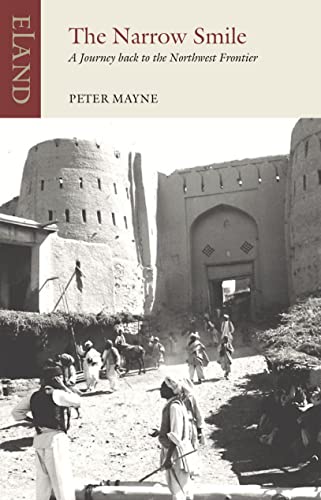
The Narrow Smile: A Journey Back to the Northwest Frontier – Peter Mayne – 3.5 Stars (Eland)

Apple Island Wife: Slow Living In Tasmania – Fiona Stocker – 4 Stars (Unbound)

The Christian Watt Papers: Memoirs of a Fraserburgh Fishwife – Christian Watt, Ed. David Fraser – 4 Stars (Eland)


Book(s) Of The Month

There were several four star books this month and this by Iain just had the edge:

The Only Gaijin In The Village – Iain Maloney – 4 Stars (Birlinn)


Top Genres

I have only read seven genres so far this year with travel writing way ahead so far

Travel – 10

Fiction – 7

Natural History – 3

Poetry – 2

Biography – 1

Writing – 1

History – 1


Top Publishers

Salt – 2

Eland – 2

Bloomsbury – 2

Canongate – 1

Carcanet – 1

British Library Publishing – 1

Vintage – 1

Unbound – 1

Faber & Faber – 1

Little Toller – 1


Review Copies Received

Modern Fog – Chris Emery

Seaglass: Essays, Moments and Reflections – Kathryn Tann

Hunt for the Shadow Wolf: The Lost History of Wolves in Britain and the Myths and Stories That Surround Them – Derek Gow

Hedgelands: A Wild Wander Around Britain’s Greatest Habitat – Christopher Hart

The Long Unwinding Road: A Journey Through the Heart of Wales – Marc P. Jones

Mystic Orchards – Jonathan Koven

Sunken Lands – Gareth E. Rees


Library Books Checked Out

Stone Will Answer: A Journey Guided by Craft, Myth and Geology – Beatrice Searle

All The Wide Border: Wales, England and the Places Between – Mike Parker

The Orchid Outlaw: On A Mission To Save Britain’s Rarest Flowers – Ben Jacob

Late Light: Finding Home In The West Country – Michael Malay

The Story of Silbury Hill – Jim Leary & David Field

Footmarks: A Journey Into Our Restless Past – Jim Leary


Books Bought

Dress & Textiles – Rachel Worth (Signed)

Techno-Feudalism What Killed Capitalism – Yanis Varoufakis

Someone At A Distance – Dorothy Whipple

Breath: The New Science of a Lost Art – James Nestor

52 Ways to Walk: The Surprising Science of Walking for Wellness and Joy, One Week at a Time – Annabel Streets

Venice Sketchbook – Tudy Sammartini

A Line in the World: A Year on the North Sea Coast – Dorthe Nors

West with the Night – Beryl Markham

Trouble Brewing in the Loire – Tommy Barnes

Cairngorms: A Secret History – Patrick Baker

Discovering Hedgerows – David Streeter & Rosamond Richardson

The Lord of the Rings Location Guidebook: Extended Edition – Ian Brodie (Signed)

First Overland: London-Singapore by Land Rover – Tim Slessor

North – Seamus Heaney

Discovering Prehistoric England: A Gazetteer of Prehistoric Sites – James Dyer

An Ottoman Traveller: Selections from the Book of Travels of Evliyâ Çelebi – Evliyâ Çelebi & Ed. Robert Dankoff

Wild Geese: A Collection of Nan Shepherd’s Writing – Nan Shepherd

The Shadow of the Sun: My African Life – Ryszard Kapuściński Tr. Klara Glowczewska

Dorset: The Isle of Purbeck – Rena Gardiner

High Street – J.M. Richards & Eric Ravilious

Tyneham: Dorset’s Ghost Village – Rodney Legg (Signed)

The Years – Annie Ernaux Tr. Alison L. Strayer

Mother Tongues – Helena Drysdale

An Englishman In Patagonia – John Pilkington (Signed)

In Search of Genghis Khan: An Exhilarating Journey on Horseback across the Steppes of Mongolia – Tim Severin

Venice: A Literary Guide for Travellers – Marie-Jose Gransard

Boneshaker – Cherie Priest

So are there any from that huge list above, that you have read, or now seeing them, now want to read? Let me know in the comments below.


On The Scent by Paola Totaro & Robert Wainwright

3.5 out of 5 stars

The publisher provided a copy of this, free of charge, in return for an honest review.

According to some people we have many more than five senses, with some even suggesting as many as 33! As far as I am aware I only have the five, sight, hearing, touch, taste and smell, though my wife would disagree with the hearing sense sometimes.

At the moment they all seem to be working. I don’t have the strongest sense of smell, but the thought of losing even that does not appeal at all. Thankfully when I had a dose of COVID, I had no symptoms and could still taste and smell ok. When Paola Totaro caught covid in March 2020 she lost her sense of smell and her world changed forever.

It took a long while for it to return too and she had to retrain her brain and nose to smell again. It also prompted her to learn about this sense we take for granted. It turns out that COVID had given her anosmia, but thankfully hers was only temporary, unlike 1 in 10,000 who are born with it. She digs deeper into those that suffer from this illness and also a parallel illness called parosmia where they have smell distortions and things never smell quite right, the scent of coffee and poo are often associated with this.

This fascinating book does what all popular science books should do, take a subject that you know little or nothing about and makes you want to read more about the subject. I liked that she blended personal anecdotes with solid science, it adds depth to the narrative and for me the personal angle really worked when she expands from personal experience into the research behind it. If you want to understand a little bit more about the sense you probably think about the least then this is a good place to start.

Nature Tales for Winter Nights Ed. By Nancy Campbell

4 out of 5 stars

The publisher provided a copy of this, free of charge, in return for an honest review.

I can’t say I have a favourite season, they each have their positives and negatives, but of all of them, winter can feel like it is dragging sometimes. But it is the perfect season for reading, immersing yourself in the words others have written from their experiences and travels.

I thought that this was an interesting collection of essays and extracts of non-fiction, fiction and poetry that Campbell has chosen. The extracts are not all from recent writers, it begins with a heartfelt paragraph from Anne Frank as she mourns the lack of fresh air in her hiding place. There is a piece written by a Japanese lady from 1000 years ago and musings from Darwin, Jansson and folk tales from Iceland.

As with any collection, there are some pieces that I really enjoyed and others that didn’t move me at all. It was good to find the always brilliant Tim Dee in here, I can’t think of anything of his work that I didn’t love reading. I should also note that this is the first time that I have ever read anything by a Bronte!

The other pleasure from this is discovering new authors. I have a copy of Walden by Henry David Thoreau that I picked up recently, but have not read it yet, based on the two extracts in here it should be really good. My favourite piece though was Encounters on the Road of Hercules by Charlotte Du Cann. I thought it was a stunning piece of travel writing and I have a new author’s work to explore. I personally prefer to have the author bio with the piece, rather than at the back as I don’t like flicking back and forwards every time, but that is just my view. Really good collection that I can recommend.

Grounding by Lulah Ellender

4 out of 5 stars

Lulah Ellender has a garden in Sussex, but whilst she cares for it and is raising her four children there, it is not hers. Soon after the death of her mother, she gets notice that the current owners of the property are looking at selling and she is effectively on notice for her home.

It is one thing too many; she freezes, not wanting to invest time in the garden with the thought that she will lose that too. It doesn’t last long, Ellender is a woman who lives for her garden and she is soon planting, planning and pottering in the out there.

It does give her time to take stock of where they are, where they might be and what her actual priorities are. Tending her garden provide a framework of routine and joy and she harvests produce that she thought she would never see. All the time in the background is an uncertain future.

If you want a book about how the tangle of modern life can be soothed by gardens and gardening, then I can recommend this. It didn’t feel morbid, as sometimes these books can, rather the actor gardening gives those that do it a sense of optimism, and I thought it was the same here. The writing is gentle and conversational, so much so that I felt I was alongside Ellender in her garden helping cut plants back or sitting in the shade with a glass of something and talking about life the universe and everything.

Tree Thieves by Lyndsie Bourgon

4 out of 5 stars

The publisher provided a copy of this, free of charge, in return for an honest review.

Spending time in the presence of an old tree always makes me wonder just what they have ‘seen’. Not literally of course, but their timelessness means that they are around much longer than us. Whilst I want to see them survive so other generations can enjoy them, there are people out there who see them purely as a resource that will give them an income.

That is essential in our modern society, but when these trees and forests have significance for lots of people in their locale, finding out that someone has cut down trees from protected areas is quite shocking. Just look at the reaction to the sycamore being felled recently.

There is a thriving black market in wood. Trees from protected forests are regularly cut down and sold on to those that aren’t going to be asking too many questions as to where the timber came from. In this book, Lyndsie Bourgon parts the understorey and brambles to show us just how endemic it is.

She concentrates mostly on the forests in North America and highlights specific cases where they have managed to get prosecutions of the individuals involved. But it is a global problem, and the later part of the book explores some of the industrial logging that takes place, often at the hands of criminal gangs who are reliant on those that turn a blind eye, having been bribed.

It isn’t just theft, the wider problem of this illegal logging is that the carbon that these ancient trees were storing has been released into the atmosphere again. Even the process of removing the finely patterned burls from big trees can damage them. You may not think that it is much of a crime to steal some wood from a tree, but this crime is part of a wider problem that we humans have had with the world’s resources and that when they are gone, that is it, no more.

It does make me wonder just how certified FSC wood actually is. If they can trace illegal wood into Ikea and other stores then it probably means that the entire system is flawed and cannot be completely trusted. If you want to read a true crime book that does not have dead bodies littering the prose then I can recommend this.

Reboot by Elaine Kasket

4 out of 5 stars

The publisher provided a copy of this, free of charge, in return for an honest review.

You are almost certainly reading this online, either on your computer or most likely now on a mobile device. Vast swathes of what we do have moved online or have a high technological aspect or element to it. The data that you provide to the companies and organisations that we interact with makes you a valuable part of their business.

Because technology is so pervasive, people have started to question is this actually good for us and our loved ones. I love technology, but I tend to think that the answer to this question now is no. The companies use various techniques to get us hooked and keep us interacting with their particular app. This is borderline psychological warfare on us the customer and at the moment, most people are losing…

Each chapter takes us through each stage of our lives from infancy, and early childhood to the tumult that is modern teenage years and onto our digital interactions as adults and the digital legacy that we will leave behind. In each chapter, Kasket gives a good overview of how technology has changed and the possibilities it offers and more importantly the warning signs that you need to be aware of.

This is a very thought-provoking book, She is not writing to make you feel really bad about all of your habits with regard to technology, but rather, just some of them…

The part that I was most startled by is the amount of technology that parents are expected to smother (not literally) their latest offspring in. We only had a baby monitor and didn’t use that for all of ours. It is also a warning about where we could be going, especially with regard to your digital legacy and the ghost in the machine that you will leave behind.

I did feel that it was missing a how-to-change section at the back. But she made it very clear in the conclusion that she wasn’t and didn’t want to do that. Rather she advocates her Technology Serenity Meditation:

May I have the serenity to accept what I cannot change about tech, the courage to change my use of it where I can, and the wisdom to know the difference.

However, on reflection, I thought that the warnings in the book would be different for every reader of this and then they will have the knowledge to begin to make positive changes in their digital life. She does provide guidelines to help in this process. If you feel that you need to have a digital detox, then this is a good book to start that process with.

« Older posts Newer posts »

© 2026 Halfman, Halfbook

Theme by Anders NorénUp ↑