Page 132 of 185

Review: The Ascent of Gravity: The Quest to Understand the Force that Explains Everything

The Ascent of Gravity: The Quest to Understand the Force that Explains Everything The Ascent of Gravity: The Quest to Understand the Force that Explains Everything by Marcus Chown
My rating: 4 of 5 stars

As the story goes, in 1666 Isaac Newton watched an apple fall from a tree, and it was this simple action that gave him the inspiration to develop the theory and the mathematics that was first published in 1687 in Philosophiæ Naturalis Principia Mathematica (Mathematical Principles of Natural Philosophy) where he laid out the foundations of classical mechanics. These new laws meant that for the first time people could track the progress of the planets across the night sky, and Halley used the laws laid down by Newton to predict the elliptical path of the celestial object to predict the return of Comet, an event that he was never to see, but it carries his name to this day. They were used to predict the presence of a new planet, Neptune, the first to be discovered using these principles.

Variations in the path of Mercury, lead astronomers to search in vain for another planet amongst the inner planets, a subject covered very well in The Hunt for Vulcan by Thomas Levenson, but this was to show the limitations of Newton’s laws.
These limitations were not addressed until a chap called Einstein who was unhappy with the anomalies that the current theory threw up. It took eight years for him to demonstrate that the concept of gravity as everyone understood it was better described mathematically as the curvature of space-time. The ten equations in his general theory of relativity can be distilled down into this elegant equation:

description

From this, all sorts of things can be deduced and predicted and it is only recently that one of those predictions was finally detected; gravitational waves. This final part of the books ventures into the strange, surreal and occasionally baffling world of string theory. The physicists working on this are trying to reconcile special relativity and quantum theory to one theory of everything and the current consensus is that the present theories, along with years of understanding will have to be totally re-written.

Gravity is a habit that is hard to shake off ― Terry Pratchett

Chown has given us a well written and thankfully, given that this is a physics book, a comprehensible text on the history and the most recent developments in research into gravity.
He goes some way to answering the big questions; what is space? What is time? How did it start, but I can’t help but have the feeling that the next breakthrough in this field will make Einstein’s theory as irrelevant as he made Newton’s work at the turn of the 20th Century.

View all my reviews

Review: Don’t Panic: Douglas Adams & The Hitchhiker’s Guide to the Galaxy

Don't Panic: Douglas Adams & The Hitchhiker's Guide to the Galaxy Don’t Panic: Douglas Adams & The Hitchhiker’s Guide to the Galaxy by Neil Gaiman
My rating: 4 of 5 stars

The Hitchhiker’s Guide to the Galaxy was first broadcast at 22.30 on a Wednesday evening in 1978 where the BBC almost hoped that no one would hear it. Radio programmes in those days almost never got reviews either, so there was a collective dropping of jaws when it turned out that there were two in the papers that weekend praising the show. Word of mouth recommendations meant that this obscure comedy sci-fi series grew to have a cult following very soon and it was to permeate the national culture in ways that Douglas Adams could never have conceived when he had the idea in a field in Innsbruck in 1971.

Don’t Panic…

So began a much-loved trilogy that just happened to spread itself across five books. But Douglas Adams created far more things than just this. Born in Cambridge in 1952 he moved to London a little while later and after his parents divorced ended up in Essex. He stood out at school, mostly because he was very tall, 6 foot at the age of 12 and finally reached 6′ 5″, but was also known for his stories that were published in the school paper. University beckoned and he ended up at Cambridge where he tried and failed to join Footlights. He had written material that Footlights wanted to use, but they still didn’t want him in it! Post university, the desire to get into TV or radio as a writer. He was fortunate to have his Revue shown on the BBC and this lead to a brief sketch writing with Graham Chapman of Monty Python fame. Then nothing, so a series of odd jobs ensued; was his brief writing career over before it started? Thankfully no, he kept plugging away and suddenly the thing that he had desired the most was happening. The rest is history; or is it the future.

I love deadlines. I love the whooshing noise they make as they go by.

Neil Gaiman in this fondly written biography of Adams, has written a fitting tribute to the man, who was taken from us far too early. whose work has seeped into the British psyche; even my children knew the answer to everything is 42, but they didn’t know where it had originated from. This has been corrected now and a second-hand set of the books was acquired and pointed out to them on the shelf and they were strongly advised to read them. The book is crammed full of facts and details such as the asteroid named in his honour was 2001 DA42. It is enough to warm the transistors in the heart of a depressed robot. A touching tribute to an author with an amazing imagination and has one of the most amusing dedications written that I have read in a while. Great stuff.

View all my reviews

Review: The Reading Cure: How Books Restored My Appetite

The Reading Cure: How Books Restored My Appetite The Reading Cure: How Books Restored My Appetite by Laura Freeman
My rating: 4 of 5 stars

At the young age of fourteen, Laura Freeman was diagnosed with anorexia. Where everyone saw a really thin girl with almost transparent skin, she saw something utterly different in the reflection in the mirror. It was the culmination of months of avoiding certain foods, before almost stopping eating completely until she reached the point where she was starving to death. While she let very little pass her lips in the form of nourishment, she still devoured books, and it was literature that was to hold the key to her recovery.

The road to recovery for an anorexic is long and fraught and it was no different for Laura, but where others just had the mental battle, she had the extra support from the books she was reading. In between the covers of Dickens, Sassoon, Woolf, Lee and Leigh Fermor, she would discover how they were able to consume vast plates full of roast beef, bowls of soup and exotic sounding breads without a care in the world. She reads of soldiers who treasure the moment of a scalding hot cup of tea after an intense battle in World War One. In fact, what she discovered was that these authors loved food; they reveled in the taste of what they were eating and sharing the moment with others. These passages in the books, slowly gave her the confidence to rediscover food for the pleasure of eating it rather than purely as a fuel.

Even though her mind had driven her to the point of abhorring food, one thing that she never lost was her love of reading. Most people do not realise just how debilitating anorexia is and there is some painful moments in here as she recalls the lowest points of her illness. But there are the moments too, where she is sustained by her mother’s love, an invitation from a friend that arrived at just the right moment. I have read a fair number of the books that Laura talks about in here and whilst the eating and celebration of life between friends and strangers is a key part of them, it is not something that particularly stood out for me, until now. Just reading the descriptions quoted in the book made me very hungry! However, it did for Laura and this list of childhood favourites and other classics has played a crucial role in her accepting that food is not something to avoid and can be enjoyed.

View all my reviews

Monthly Muse – February

 February – the shortest month in the year, and somehow I managed to read 17 books… Not quite sure how. Was a good month too, my first two five star reads too along with some sci-fi, history, science and natural history. So here they are: 

This is the second in the Empire Games series and Stross has raised the stakes in this one. Multiple plot lines, the two America’s on the cusp of another nuclear war and the discovery of an alien series. Lost left unfinished ready for the next book.


I have only read one of Tom Cox’s books in the past, Bring Me the Head of Diego Garcia, but I had been hearing so much about this book, how it was funded in seven hours on Unbound, and how his proposal for a book could not fit in the neat boxes that marketing could understand. Not quite a natural history book, not quite a family memoir, not quite a polemic; what it is though is brilliant.

This is the latest book from Neil Ansell. It focuses on him returning to the same part of Scotland and also the way that his perception of the natural world is changing as his hearing slowly fails. Poignant and beautifully written.

Hadrian Wall is the 2000 year old frontier of the Roman Empire that you can still see across the landscape of northern England. More than that it tells the history of Roman ambitions and the stories of the people who lived there.


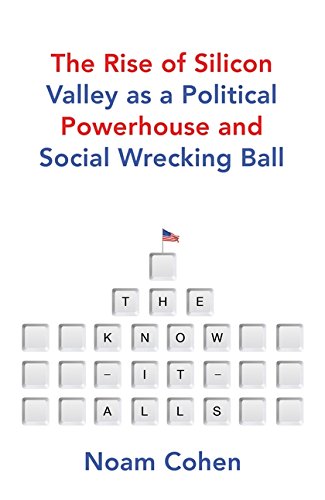
I finished this on the day that Elon Musk’s SpaceX Falcon Heavy Lifter blasted off from Kennedy Space Centre at Cape Canaveral and put a car into space. I loved the Don’t Panic message on the screen on the dashboard, but most impressive was the return of the boosters bask to Earth, landing in perfect synchronicity. This is a really good introduction to the current state of space technology and those seeing it as just another investment opportunity. There are going to be few winners and lots of losers in this very expensive game. One day this will all be history; but at this very moment, it is the future.

A book about a favourite author written by another favourite author. Crammed full of facts, it is enough to lift the heart of a depressed robot. A touching tribute to an author with an amazing imagination.


There is something about owls that has captivated us for millennia. The way that can float silently across a field or hunt in the dark has endowed then with mystical properties. Woven together with the touching story about her adult son’s illness this is a touching natural history book.

I have always loved woodlands and in this sumptuous coffee table book, Robert Penn shows how much life there is in one. Glorious pictures in here that you will want to return to again and again.


A book about books. What could be better? This was sent to me by the author along with her book on libraries and it is full of facts about how books are made, the smallest, the longest and the oldest. 


This is the companion volume to Claire’s book on books and it is just as wonderful as the other one. A cornucopia of snippets, facts and figures about libraries that bibliophiles will treasure. 


Poetry has a way of reaching into your very soul that fiction doesn’t always seem to manage and this is a collection by the anonymous author, lady Grey, has the capacity to do just that. 

The second sci-fi book that I read this month is a mass-murder mystery set in the universe that Reynolds has created. People are starting to die with increasing frequency as their implants kill them and no one knows why. Great stuff with some excellent tech and twists and turns.

 A touching story of a very strange family written in an engaging way, but there is a greater depth to the story as Gameson addresses the issues that all parents face as children grow up and change into adults capable of independent thought and now aren’t the person that you remembered. There are a variety of threads that start tangled and are brought together in unexpected ways. So very different to a lot of fiction that is out there and well worth reading.

There are still secrets that the universe is yet to relinquish and one the most mysterious is what lies in the 6-inch gap between your ears. If you want a well written popular science book on the possibilities and limits of intelligence, then you can’t go wrong reading this.


If you are wanting wide panoramas of the beautiful landscapes of the lakes then this is probably not the book for you. The majority of this book is about John caring for a young roe deer that was to become a great, semi-wild companion. Wyatt may not have had many possessions when he was a woodsman, but he had a life that had riches that no one else could buy.

A haunting bleak story about a Cornish fishing village with a lot of unrequited ghosts. Short and intense storytelling

A fascinating book, full of detail on a country that stepped into the abyss and almost took the whole of Europe with it. There are echoes in here that have a resonance today and we would be wise to remember.

Review: The Gift of the Gab: How Eloquence Works

The Gift of the Gab: How Eloquence Works The Gift of the Gab: How Eloquence Works by David Crystal
My rating: 3 of 5 stars

A copy of this was provided free of charge from the publisher in return for an honest review.

We have all been in situations where someone has just stood up to speak and by the third sentence in, your eyes are drooping and after five minutes their droning noise is only just louder than your snoring… And yet there are others who can stand up and speak for 30 or 40 minutes and whose every word is captivating and interesting, leaving you wanting to hear more.

So how do these people do it?

The man best placed to answer this is the linguist David Crystal. Using the electrifying “Yes we can” speech of 2008 by Barack Obama he analyses the essential elements of public speaking, from the pitch to the pace and rhythm, when to make a joke and when to interject a dramatic pause, the best technologies to use and that fine line between eloquence and verbosity.

Whilst most people who pick this up are not going to be speaking to millions, there is something in here for anyone who has to do any form of public speaking, for those that have to speak to colleagues, peer groups and at family gatherings. The little interludes between the chapters are amusing, offering a little light relief in between the detailed breakdown of the best way to enhance your public speaking.

View all my reviews

Review: Travellers in the Third Reich: The Rise of Fascism Through the Eyes of Everyday People

Travellers in the Third Reich: The Rise of Fascism Through the Eyes of Everyday People Travellers in the Third Reich: The Rise of Fascism Through the Eyes of Everyday People by Julia Boyd
My rating: 4 of 5 stars

A copy of this was provided free of charge from the publisher in return for an honest review.

There are countless books on World War 2, from serious and weighty tomes, stories of daring do and detailed explanations of pivotal moments that changed the course of a continent. Whilst there has been lots of analysis about the failings of the post-World War 1 reparations and oppression by the victors led to the problems that Germany found itself in, there has been very little written about the way it was rapidly changing from the perceptive of holidaymakers and visitors to the country.

In Travellers in the Third Reich, Julia Boyd has documented the turmoil that Germany was in as seen through the eyes of the people that visited the country in the interwar period. Collecting together their stories and accounts we learn how the particular set of circumstances led to the political rise of an obscure Austrian, who had once been tried for treason. As Hitler gained in popularity, the twisted message that he was broadcasting became a cult movement. This fervent following he had at the huge rallies to hear his vitriolic speeches, scared some visitors and yet others from the British establishment were embracing this dystopia.

After gaining political power, it didn’t take long for him to seize total control and begin to roll out the nationalist policies across the country. The people that were drawn to Germany at this time came from all walks of life and saw the way that it was changing, but there were glimpses of the persecution that was starting to happen across the country as the vision of the Aryan ideal was implemented. The Olympics were the point where the Third Reich could showcase itself on the world stage and athletes and visitors where shown a sanitised country. Those that managed to peer behind the scenes though, were startled and horrified by what they saw.

This book has stories from a diverse range of people, schoolchildren, musicians, tourist and the political classes that were in and travelling through Germany in the 1930’s. At the time there was a certain amount of complacency as to what was happening there, but with hindsight it is easy to see the way things were going, the secret war preparations, buses that could be converted into armed troop carriers, arrests and the terrifying events that were unfolding if they had taken a few moments to look beyond the veneer. It is the human angle that makes this such a fascinating book, the family from Bournemouth on holiday who bump into Hitler whilst on a walk and take a snap, the couple who are moved to take the disabled child of a Jewish mother out of the country to give her a chance of life and two lads realising that they were cycling very close to the concentration camp of Dachau by accident. It is a fascinating book, full of detail on a country that stepped into the abyss and almost took the whole of Europe with it. There are echoes in here that have a resonance today and we would be wise to remember.

View all my reviews

Review: The Genius Within: Smart pills, brain hacks and adventures in intelligence

The Genius Within: Smart pills, brain hacks and adventures in intelligence The Genius Within: Smart pills, brain hacks and adventures in intelligence by David Adam
My rating: 4 of 5 stars

A copy of this was provided free of charge from the publisher in return for an honest review.

Science has discovered almost uncountable things since the beginning of the 20th century. We have found elements and compounds that have almost magical properties, seen the vastness of the solar system and untangled the very strands of life. There are still things that we have yet to discover, secrets that the universe is yet to relinquish and one the most mysterious is what lies in the 6-inch gap between your ears.

Neuroscience is slowly revealing how the mind works and just what it is actually capable of, but what if you could supercharge your grey matter without having to go through the effort of hard work, revision and practice and just pop a pill? David Adam is up for a challenge, so to benchmark his own capability prior to trying out the latest science and technologies available for mind enhancement he decides to have a go at the Mensa examination. Scores achieved, it is time to begin his journey into the inner recesses of his own mind and to see what enhancements will help improve his score when he comes to take it again.

There have been many methods that people have tried to enhance the mind, and some of the discussed in the book include the spectres of eugenics and the way that intelligence tests have been used for all manner of nefarious ends. Adam selects two methods to try enhancements, the first is the drug modafinil to see the effects. As it is normally a prescription drug then he has to acquire his tablets, through other means, shall we say, before trying various before and after experiments. As electrical stimulation has been shown to have some effects a system with electrodes is acquired to run a similar set of experiments. It comes with instructions, but no details on where to place the electrodes as they might be liable for incorrect placements so the manual suggests just googling it…

His self-experiments make for amusing reading, but it is the questions that Adam poses that go some way to addressing the question of what is intelligence, how it affects us as an individual, and how societies treat those at the top and bottom of the scale, but his book can only provide answers to some of these questions. The more we find out about the capacity of our minds the more we realise just how little we know, we may all have untapped intelligence that is normally attributed to savants and whilst the IQ test can give a gauge of one factor of intelligence there are others that it doesn’t account for. If you want a well written popular science book on the possibilities and limits of intelligence, then you can’t go wrong reading this.

View all my reviews

Publisher Profile – Salt

For me, independent publishers are the people in the industry who are prepared to take risks on new authors and books where the larger players either don’t wish to venture, or they can’t see there being a return on. Each month in 2018 I am aiming to highlight some of my favourite independent publishers, along with some of their books that I have loved and also to have someone from the publisher answer a few questions.


The publisher for months Profile is Salt Publishing. Based in Cromer, Norfolk, Salt have been been in business for 19 years this year and are committed to the publication of contemporary British literature, poetry and short stories. The first books published were poetry and they soon became a force to be reckoned with as the awards piled up. From 2011 they branched out into fiction and have critical aclaim there too with shortlisting and winners in the Polari First Book Prize, the Jerwood Fiction Uncovered Award , the Man Booker Prize and the Costa Book Awards. They are good at finding the authors who most mainstream publishers would never consider, and bringing the stories to life that you wouldn’t get to read otherwise. For example The Clocks in This House All Tell Different Times, not only has a stunning cover, a disturbing and unerving novel set in Epping Forest or the unreilable narrator in The Giddy Career of Mr Gadd (deceased). I have just finished The many this weekend which was longlisted for the Man Booker. It is a haunting novel of a seaside village that is full of suspense as an outsider moves into a house and disturbs the fragile equilibium.

Christopher Hamilton-Emery was kind enough to answer some of my questions below on behalf of Salt Publishing:

Can you tell me a little about the history of Salt?
Well we started things back in 1999, in Cambridge. In the early days, it was mainly poetry, and mainly experimental poetry, often with a transatlantic flavour. We published a lot of Australians, too. We quickly diversified into literary criticism and literary companions, poetry, memoir, novels and short stories. There was this rapid expansion in the Noughties, at one point we were publishing around eighty titles a year. Like any publishing business we began with some narrow editorial imperative; if you are lucky enough to survive, you broaden those out – I’d say we were a small independent trade publisher now. We started developing our fiction list about seven years ago and at the same time, began plans to draw the list back. In the main, we publish British novels, about fifteen books a year, but we’re redeveloping our non-fiction and poetry lists, too.
How is the company organised today and how many people work for you?
There are three directors: Linda Bennett, Jen Hamilton-Emery and me. Nicholas Royle is a commissioning editor. Emma Dowson is our publicist. As in all independents, we all double up in roles – Jen commissions fiction, Linda commissions crime, I commission poetry. But this is the core team of five people.
What is the company philosophy when it comes to selecting for your catalogue?
I suspect each of us would provide a slightly different set of concerns in answering that question. There are perhaps three questions: Is it good? Can we sell it? Will readers love it? Each of us might attend to those questions in a different order and with different priorities, and we may add things in, loyalties and prejudices, hopes and dreams. Wearing my director’s hat, you don’t have a business if you don’t address paying readers – so I tend to start and end with this in strongly mind. Yet it’s not all about sales. A great book can be persuasive in several ways.
How do you go about choosing the titles to be included in your portfolio?
Each editor is free to choose what they most passionately believe in. We are great advocates of editorial judgement. There are cases when we might debate whether we can make a title as successful as it deserves to be. And I’d be wrong to imply that there aren’t financial constraints. But each editor is part of the Salt family and understands what we are trying to do and what resources we have. There’s pragmatism to match the passion.

Tell me about your process after selecting a book for publication
We start work on a book anything from fifteen months to nine months in advance – sometimes earlier, working with the author in developing a text. Then there’s contracting, editing and revision. Copyedits and line edits. Lining up your contacts and fans, working out the marketing plan, the publicity plan. Cover design and cover reveals. There’s a lot of administration sorting the bibliographic data, loading the buyers and suppliers with information. There’s a lot of talking to people: finding endorsers and supporters. There’s the typesetting and proofing cycle once editorial is finished. Prize planning and getting proofs out. Publicity copies to reviewers, bloggers, vloggers and booksellers – some on long lead times, some short. Pre-sales: planning titles in to key selling cycles and briefing the sales teams. Catalogue production. International sales. Rights sales. The book fair and festival planning. Author events. Excerpts, features and interviews. Social media campaigns. More prize planning. Networking. Drawing upon the author’s own publicity through their websites, online presence, friends and colleagues. Looking at influencer marketing – who will love this book. Seeding reviews with readers. Giveaways. Competitions. Tie-ins. Radio and TV. Point of sale materials. Bookshop marketing. Special sales. Then, in a kind of crescendo, we publish. 80% of the sales and marketing effort happens before the book hits the shops.
How much effort goes into the design of the book, for example the cover design, font selection and so on?
A great deal. You can’t formally announce a book without a cover, so it has to happen as early as possible and there’s a team involved in getting the right solution. Yet I’d say that the author is a key player – no book will succeed without the author, and the author needs to believe in the cover. It might not be the one they had chosen, but it must be the one they settle for. If you publish a book with a cover the author hates, its biggest advocate won’t support it. It’s both an emotional and commercial matrix. We think we get it right most of the time. Never underestimate its importance. Try to avoid bringing too much compromise. Don’t illustrate the book but create a powerful metaphor if you can.

Are there any up and coming books that you are publishing soon that we need to look out for?

All of them! However, if you want a glimpse of our range I’d say Samuel Fisher’s The Chameleon, Bee Lewis’s Liminal, Alison Moore’s Missing and Philip Whitaker’s You would give you a flavour of 2018 – but I am quite serious, they’re all worth seeking out.


What debut authors are you publishing this year?
Mark Carew, James Clarke, Samuel Fisher, Bee Lewis and Martin Nathan.

How did you come across them?
In each case, our editors went out and found them –through teaching, workshops and lectures.
What title of yours has been an unexpected success?
Success is always unexpected, I know that sounds arch but it’s true. You have a sense of which titles have the largest sales opportunities, and you have evidence for those insights, but prizes can swing things dramatically and we have had considerable success with literary prizes – a key part of our business strategy, you may say. No one can know the full effect of prizes. There are always dark horses, something that readers respond to in a way you hadn’t foreseen. In fact, I’d say that every year, there are some real surprises. That’s part of the pleasure of publishing.
What would you say were the undiscovered gems in your catalogue?
Each of us would answer this differently: Pinckney Benedict, Gerri Brightwell, Charles Yu.
How do you use social media for promoting books and authors?
We talk about what we do, about how and why we do it, which books we’re working on. We share our passion and hopefully our humour. We try to be honest, relentlessly honest. We try to be inclusive and open – let people into our working lives. We’re certainly not precious. We try to be visual. We try to be informative. We try to be, er, interesting, sometimes perhaps controversial. Social media is the coffee machine natter with folks. There are some more formal components, creating memes around releases and events. A change in register and tone makes for a more interesting voice. We start early and keep going. Social media is also a kind of afterlife for books. Never stop talking about them.
Is working with book bloggers becoming a larger part of that process now?
Yes, a blogger can break a book in ways traditional media largely controlled ten years ago. Like all media, some bloggers have a larger presence and impact than others. Some bloggers have become vloggers and changes in how we use new media have seen changes in how blogs work. Once upon a time, people would leave the world of social media to visit a blog – now the blog has to appear within social media. The discussions move to where the audience is. Presently, this lies within Facebook (for depth) and Twitter (for transient moments). It’s interesting to see vloggers increasingly collaborate and we’re seeing the emergence of a form of coherent broadcasting. We may yet see the emergence of channels of combined book reviewers creating an effective schedule of programmes.
What book do you wish you had published?
After Me Comes the Flood. What an author to have in your stable.
What does the future hold for Salt?

Financial exasperation, commercial seizures, all the usual moans and groans – yet alongside this ‘publishing weather’, the old complete conviction that we can make a difference to readers’ lives. Homilies aside, we have an important collaboration as co-funders with Galley Beggar Press and the Writers’ Centre Norwich/National Writing Centre over the next three years. We’re excited about that. There’s the careful development of our non-fiction list. And hopefully the resurgence of our poetry publishing. As Blake says, ‘The most sublime act is to set another before you’.

Thank you to Chris for taking time out of his busy schedule to answer those questions for me. I really appreciate it. Salt’s books are available from all good bookshops and their most recent catalogue can be seen here. I would urge you to buy them from an independent bookshop if you can as this support them, the publisher and of course the author with one purchase. 

Review: The Shining Levels

The Shining Levels The Shining Levels by John Wyatt
My rating: 4 of 5 stars

People are affected by the grand vistas of the Lake District in many ways, many return year after year to climb the same hills, to bask in the tranquillity of the lakes or to just enjoy the peace away from the hubris of modern life. John Wyatt’s first experience of this part of the country was when he visited in the cub scouts and it deeply affected him.

A few years later he was working for the Telegraph in Manchester, but the draw of the lakes still had him, so he applied for the job of forest worker at Cartmel Fell. He ended up in a simple hut that had a bed, a stove and very little else. The work was simple and hard, but he relished the task as he was living in the place that he loved the most. One day everything changed when two boys brought him a young fawn that they had found and thought was ill. He explained that it had probably been hidden by its mother who’d return later, but by then it was too late. Wyatt had gained a charge, that he came to call Buck.

If you are expecting wide panoramas of the beautiful landscapes of the lakes then this is probably not the book for you, there is a fair amount about the comradery of the people who he worked with and who he lived near but the majority of this book is about John caring for a young roe deer that was to become a great, semi-wild companion. The antics of Buck would regularly startle and surprise those who would not expect a wild animal to have such a close association with a human. Wyatt may not have had many possessions when he was a woodsman, but he had a life that had riches that no one else could buy.

View all my reviews

« Older posts Newer posts »

© 2026 Halfman, Halfbook

Theme by Anders NorénUp ↑