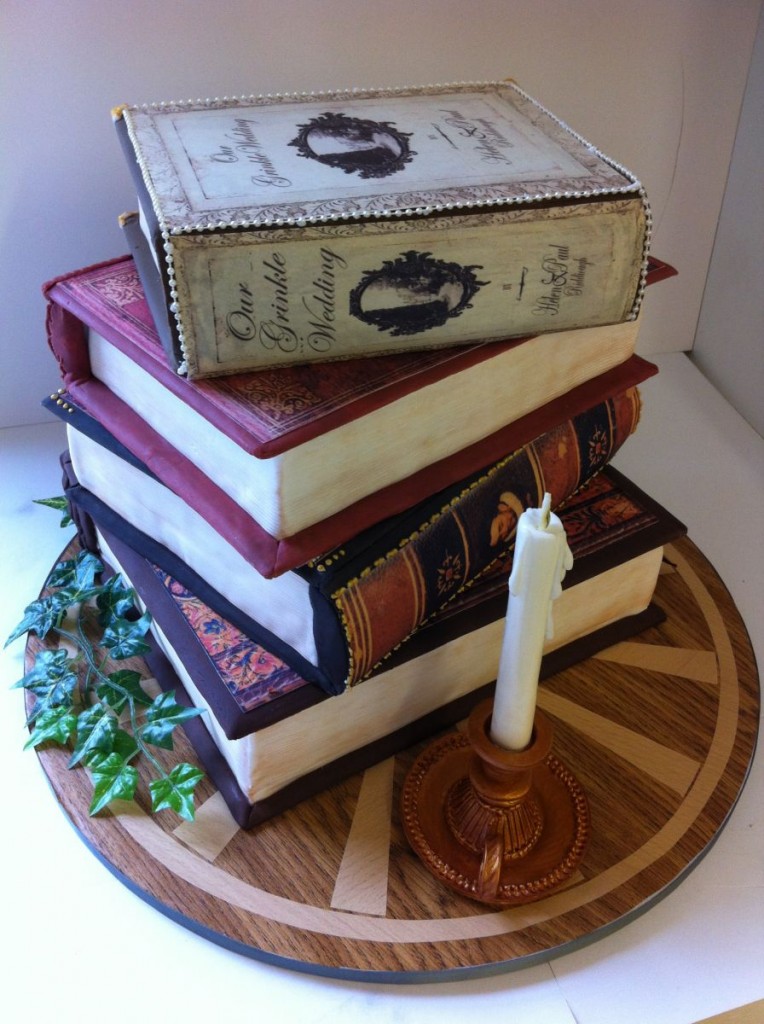
Just realised today that it is just over a year since I started blogging. I have posted just over 300 times, and have had over 8000 page views.
Thank you everyone!

 The Otters’ Tale by Simon Cooper
My rating: 4 of 5 stars
A copy of this was provided free of charge from the publisher in return for an honest review.
Otters are one of our apex predators in the UK, but after the Second World War, they almost went extinct due to environmental and other pressures. That they have slowly clawed their way back as the rivers and streams that they live in became less polluted. The fact that they now they can be found in every county in the land is a conservation success and should be applauded. They are almost mythical though, they are seldom glimpsed, even when going looking for them, you may only hear a splash. You will find evidence that they are sound though, their spraints are fairly visible and you’ll probably come across the scattered remains of supper every now and again.
Even after buying a watermill on a chalkstream in Hampshire Simon Cooper didn’t expect to see one either. As he moved around the lake and streams that came with his property he began to find the evidence that they were some nearby, but it was finding a family of otters in the mill race, just feet from his desk, that he realised that he was the intruder on their territory. So begins this transitory relationship with this mother and four cubs, as Cooper spent more time watching and following their trial and tribulations of growing up and learning how to swim and feed and playing as you’d expect otters to behave.
Cooper’s daily observations have given us this well-written tale of the elusive creature that is the otter. He has used some artistic licence to write the story of Kuschta and her cubs, how she moved into the lakes, the liaison with the father and how she goes about raising and training them to hunt and survive. The story side is woven in with a raft of solid facts and detail on these fascinating creatures following them through the seasons as they live and thrive around the mill. A really good book on that most evanescent of creatures and a worthy addition to anyone’s natural history library.
 Rainbow Dust: Three Centuries of Delight in British Butterflies by Peter Marren
My rating: 4 of 5 stars
There is something about butterflies that captivates some people. They fulfil no ecological purpose, as they are not pollinators, they are not a source of food for a most animals as they are frequently full of poisons and unpalatable substances, they just seem to exist because nature can make it so. Regardless of their purpose, these brightly coloured little insects have enthralled people for years. From the time he first caught one at the age of five, Peter Marren was one of those captivated by these beguiling insects. So began a hobby that has lasted a lifetime, first hunting them for his collection, then rearing them when he realised that what he was doing was not sustainable.
However, this is not another guidebook about butterflies, rather a guidebook about butterfly lovers. Marren’s deep passion about his subject is evident as he brings us the stories and potted biographies and histories of those that have had a similar passion to him. We learn about the Rothschild family members who were equally besotted, what John Fowles and Vladimir Nabokov liked to collect and how butterflies have inspired countless artists and writers. He guides us through the extinctions of some and the reintroduction of the Large Blue and takes us through the life cycle right from the egg to the next generation.
His writing is authoritative without being tiresome and it flits along at a fair old pace. It is also a warning; we have been persecuting all sorts of wildlife in this country, and the relentless push to greater efficiency and cost savings has put butterflies and many of their habitats in peril. I liked the mix of solid science and research with a series of personal stories and it is a really good general book in the study of his favourite insect.
Thanks to Midas PR

 Havergey by John Burnside
My rating: 3 of 5 stars
A copy of this was provided free of charge from the publisher in return for an honest review.
Havergey used to appear on maps but has long since disappeared from them. Even though most don’t know it exists, it is home to the wanderers and dreamers from a shattered world seeking a new life in an ancient land still formed by its exposure to the elements. They rarely have visitors though, so when a guy appears the small community is naturally curious. He is slightly bewildered, claiming to have come from the past. They ask him to stay in a building near the shore as a form of Quarantine, and he is assigned Ben, the Watcher, to look after him and help him settle.
John is not going to be allowed out but will be fed and sheltered. In the same building is the community archive, a collection of documents and letters and other texts. As he sits and reads them during the day, John starts to get a feel for the way that the community has evolved to its present state. He is joined every meal time by Ben, who tells of the Collapse and the state of the world now from the one that he left and who asks his guest what he makes of their island and if he would be able to make his home here.
Reading this is a strange and almost surreal experience. It is full of subtle nuances as Burnside explores the concepts of utopia on an island that is a refuge in a dystopian world. He also uses it as way of making us the reader think just what we are doing to this world that we live on, not only in the obvious harm, but to consider the misguided good that some think is appropriate. There is not a huge amount of character development as the themes are the prominent way of getting us to think about the current state of the world. I did like it, in particular, the sparse but eloquent prose, but at times it was a bit too fleeting. The main points it is trying to convey dovetail in quite well with the Confessions of a Reluctant Environmentalist that I read recently. It is a book that I will read again and mull over with a glass of something. 3.5 Stars


 Everything I Never Told You by Celeste Ng
My rating: 2 of 5 stars
Lydia is the apple of her parent’s eyes. She has her mother’s vivid blue eyes and her father’s jet black hair. For James, he hopes that she will become the person he never could be at school; popular, liked and the life and soul of any party. For Marilyn, she wants Lydia to be the doctor that she never became, rather than a mother and homemaker. As if these pressures are not enough, she has to contend with the spectre of race in her community. With a Chinese father and an American mother she had inherited the oriental looks along with her brother and sister. Nath, Hannah and Lydia suffer from the external pressures of race and the exclusions that 1970’s American society judged them on.
No one thought anything was wrong, until one day Lydia goes missing.
This is a really sad story really with a strong moral dimension about the perils of projecting your wishes and unrequited desires onto another individual. Ng has written eloquently about the way a family can implode and how each individual reacts to the after the loss of a child. I liked the effortless writing and certain aspects of the plot, but it just felt a little too woolly for me.
 Floating: A Journey Through Roger Deakin’s Waterlog by Joe Minihane
My rating: 4 of 5 stars
A copy of this was provided free of charge from the publisher in return for an honest review.
For those that haven’t read Waterlog, then you should. In my opinion it has reached the point where it could be considered a classic tome now. Joe Minihane was one of those who has discovered the delights that the prose of Roger Deakin could offer. In the process of reading and re-reading this book, a germ of an idea grew. Twenty years after it was first published, Joe decided to recreate Deakin’s journey by swimming where he had before and to see how the wild swimming landscape had changed in the two decades.
A lot of the locations could be reached fairly easily, close to a tube station or at the end of a ride on a bicycle. To get to some of the others in the more remote parts of the UK would take a bit more effort though, especially as Joe can’t drive! It was time to find companions who want to join him in the cold waters of the UK and perhaps rekindle some old friendships that had faded in the busyness of modern life. However, this project was going to have a much more profound effect of Minihane’s life. He was to use the rituals of swimming to fight against the black dog depression and anxiety that he suffers from, slowly opening up to friends and seeking the professional help that he needs.
But this is more than that, not only does he describe the joys and shocks of immersing himself in the cold waters in this island, often with a sharp intake of breath, but like Deakin’s original, it is a frog’s eye view of the present state of our watery natural world. He lets his worries float away downstream and develops stronger bonds with old friends. Waterlog is a tremendous book, and this book by Minihane is a fitting tribute to Deakin and his legacy. A poignant reminder of the healing power of nature.
 Britain’s Best Historic Sites: From Prehistory to the Industrial Revolution by Tom Quinn
My rating: 2 of 5 stars
Britain has rich deep veins of history reaching back thousands of years. There are so many different periods of interest that where to start is sometime baffling. In Britain’s Best Historic Sites, Quinn has listed the 80 most significant or important sites and buildings that show the way that we have used and changed the landscape over the past 10,000 years. There is a little bit of everything in here; Iron Age hill forts, Roman castles and villas, cathedrals, stone circles, manor houses and even relatively modern industrial architecture.
The book has a potted history of some of the most significant sites around the UK and is accompanied by some beautiful photographs of them. Sadly with all books of this type, it suffers because of what had to be left out. The text is informative, though very brief, but it does proved good details on location and so you can discover these places for yourself.
© 2026 Halfman, Halfbook
Theme by Anders Norén — Up ↑


Recent Comments