Page 21 of 188

Book Pairings

Anyone who follows this blog or me on various social media sites will know that I have a passion for non-fiction. I do read fiction, but not that much. So, when I looked at the subject of this weeks post, I knew that it was going to be a struggle to come up with a list of books that I have read that would fit.

The idea of this is to marry together a fiction book with a non-fiction book and read them in parallel or sequentially, the purpose of which is to gain a wider appreciation of the subject or place that you have chosen. It is something that I like the idea of as one of the philosophies that I have is that fiction deals with truths and non-fiction with facts and that by choosing the right books, you can gain more insight into a particular thing that you are interested in.

I couldn’t think of many times when I had read a fiction and non-fiction book that had some link to each other, but then when trawling through my lists of books there have been very few occasions when this happened. Strangely enough, the non-fiction genre was travel and when I was on holiday in Sicily back in 2019. I had taken three non-fiction books on the island and one fiction book:
In Sicily by Norman Lewis
The March of the Long Shadows by Norman Lewis
Sweet Honey, Bitter Lemons: Travels in Sicily on a Vespa by Matthew Fort
Sicily: Through the Writers’ Eyes by Horatio Clare

There is something about reading a book set in the location that you are currently in.
I often read three or four books about the same subject, for example, four books about the winter a couple of years ago. And I may do that more often in the coming year. I have at least four books on Japan that are on my TBR including
Abroad in Japan by Chris Broad
The Only Gaijin In The Village by Iain Maloney
Fifty Sounds by Polly Barton
The Roads to Sata by Alan Booth
I may add in a couple of Murakami books to that list and have a Japan month!

I have had a think possible subjects that you might be able to combine if you’d like to do this:
Historical fiction and history
Place and travel
Memoir
Biography
Science fiction and science

So what are your favourite book pairings? Let me know in the comments below
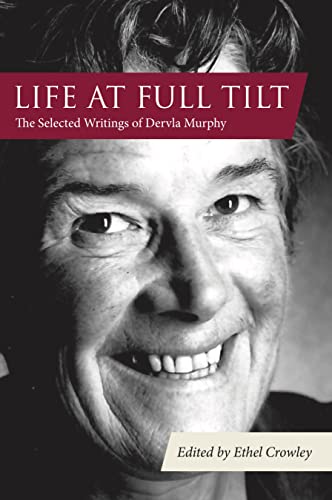
Life At Full Tilt Ed. By Ethel Crowley

4.5 out of 5 stars

The publisher provided a copy of this, free of charge, in return for an honest review.

Dervla Murphy is legendary in the genre of travel writing. The book she is best known for, Full Tilt, is the record of her ride from Ireland to India. It was something that she wanted to do from the age of 10 when the dual presents of a bicycle and an atlas gave her this idea. Because she had to look after her mother she wasn’t able to do this until the age of 32.

She kept a diary and was persuaded to write it up and send it to a guy called Jock Murray. The rest is history and this was the first of 27 books she wrote over the course of 50 years of her travels all over the world. She travelled simply, preferring to be on her trusty bike, Roz and relying on the hospitality of the people that she encountered on her journeys. Having a daughter didn’t stop her and Rachel would become a companion on her travels in later stories.

This book is a compilation of all the books that Murphy wrote. Crowley has separated the books out into the decades that they were written and picked her favourite passages from this book. For me, it shows two things, her evolution as a writer and the way she changes from somebody being amazed by all the things she saw to someone who became appalled by the poverty and injustices of the world.

If you are a fan of Dervla Murphy then I would say this is an essential addition to your collection. Highly recommended.

Choosing Nonfiction

How I choose non-fiction is a question that I have never asked myself before. But as that is the subject of this week’s post, so I really had to dig deep and think about what I do when I add a particular book to my TBR. It isn’t really a fully logical process, nor is it completely random, it is kind of a hybrid of both.

After reading in excess of 3500 books, I know what I like and more importantly, I am very aware of what I don’t like. This doesn’t mean that I won’t give books a go though.

So how do I pick the non-fiction books that I want to read?

Firstly, I select by genre. I have two genres, travel and natural history, that I will almost always add regardless of who wrote it, bar the very odd exception. Other favoured genres include science, history and biographies.

Secondly, if it isn’t a book from those genres, then it needs to be doing something else to attract me. Is it a book by an author that I have read before? Is the subject something that I am interested in or as happens sometimes, does the cover look good enough to make me want to pick it up and investigate it further.

Thirdly, I scour the catalogues that publishers publish twice a year and drag from them a list of books that I want to read. I publish these as my anticipated books for the spring and autumn. But I don’t find every book, some I miss and there are publishers where I never seem to be able to find out what they are releasing.

Fourthly, one of the places where I find new books is strangely enough in bookshops. Amazing isn’t it? A well-curated independent bookshop often has gems that I wasn’t aware of, and they get added to the TBR too.

Lastly, charity shops are one of my weaknesses. I am looking for out-of-print books, those rare books that have slipped through the net, signed editions and the joy of finding an absolute bargain. whilst I do buy second-hand books online, I have a list in my head of books that I am looking for and I get a lot of satisfaction on finding a copy.

So how do you choose the non-fiction that you want to read?

Let me know in the comments below.


October 2023 Review

October flew by. Not help by being really busy at work and in life in general. But I did get 16 books read, went to London for the first time in ages and went to the Launch even for Life a Full Tilt in the actual John Murray building. So here is what I read and bought this month:


Books Read

Wintering Out – Seamus Heaney – 3 Stars

Rocks and Rain, Reason and Romance – David Howe – 3 Stars

Off the Shelf: A Celebration of Bookshops in Verse – Carol Ann Duffy – 3.5 Stars

Natures Wonders – Jane V. Adams – 3.5 Stars

The Girl Who Forgets How To Walk – Kate Davis – 3.5 Stars

Am I Normal?: The 200-Year Search For Normal People (And Why They Don’t Exist) – Sarah Chaney – 3.5 Stars

The Bridleway: How Horses Shaped The British Landscape – Tiffany Francis-Baker – 3.5 Stars

Swan: Portrait of a Majestic Bird, from Mythical Meanings to the Modern Day – Dan Keel – 3.5 Stars

Botanical Folk Tales of Britain and Ireland – Lisa Schneidau – 3.5 Stars

Call of the Kingfisher: Bright Sights and Birdsong in a Year by the River – Nick Penny – 4 Stars

In The Pines – Paul Scraton – 4 Stars


Book(s) Of The Month

High Caucasus: A Mountain Quest In Russia’s Haunted Hinterland – Tom Parfitt – 4.5 Stars

Rural: The Lives Of The Working Class Countryside – Rebecca Smith – 4.5 Stars

Grounded: A Journey Into The Landscapes Of Our Ancestors – James Canton – 4.5 Stars

Life At Full Tilt: The Selected Writings of Dervla Murphy – Dervla Murphy, Ed. Ethel Crowley – 4.5 Stars

The Granite Kingdom: A Cornish Journey – Tim Hannigan – 4.5 Stars


Top Genres

Fiction 27

Natural History 21

Travel 21

Poetry 16

Memoir 11

History 7

Science Fiction 6

Fantasy 6

Art 4

Environmental 4


Top Publishers

Faber & Faber 12

Penguin 6

Little Toller 6

Bloomsbury 6

Simon & Schuster 5

Headline 4

Jonathan Cape 4

William Collins 4

Picador 3

Eland 3


Review Copies Received

Dead Drunk: Tales of Intoxication and Demon Drinks – Ed. Pam Lock

The House on the Borderland William – Hope Hodgson

Following Miss Bell: Travels Around Turkey in the Footsteps of Gertrude Bell – Pat Yale

Now is the Time to Know Everything – Simon Moreton

All Around The Year – Michael Morpurgo

Black Ghosts – Noo Saro-Wiwi


Library Books Checked Out

Prophet – Helen Macdonald

The Holly King – Mark Stay

Windswept: Life, Nature and Deep Time in the Scottish Highlands – Annie Worsley

Secret Britain: Unearthing Our Mysterious Past – Mary-Ann Ochota

Books Bought

The Almond Blossom Appreciation Society – Chris Stewart (Signed)

The Hills of Adonis: A Journey in Lebanon – Colin Thubron (Signed)

Fever Trees of Borneo – Mark Eveleigh

On The Red Hill – Mike Parker

Life Lessons From the Amazon: A Guide to Life From One Epic Jungle Adventure – Pip Stewart

Returning Light: 30 Years of Life on Skellig – Michael Robert L. Harris

Green Was the Earth on the Seventh Day – Thor Heyerdahl

The Island That Dared: Journeys in Cuba – Dervla Murphy

The Shining Levels – John Wyatt

An Empire of The East – Norman Lewis

A Winter Book – Tove Jansson

Very British Problems: The Most Awkward One Yet – Rob Temple

As It Was And World Without End – Helen Thomas

Weird Walk: Wanderings and Wonderings through the British Ritual Year – Weird Walk

The Honoured Society: The Sicilian Mafia Observed – Norman Lewis

Crossed Of The Map – Shafik Meghji (Signed)

French Lessons in Africa: Travels With My Briefcase in French Africa – Peter Biddlecombe

Untrodden Peaks and Unfrequented Valleys: A Midsummer Ramble in the Dolomites – Amelia B. Edwards

My Midsummer Morning: Rediscovering a Life of Adventure – Alastair Humphreys

The Landscape Of Thomas Hardy – Donald Maxwell

Are there that take your fancy, or that you have read and loved? Let me know in the comments below


Call Of The Kingfisher by Nick Penny

4 out of 5 stars

The publisher provided a copy of this, free of charge, in return for an honest review.

As people are discovering, the time spent walking in nature is not wasted at all. It gives you head space and connecting with the sights smells and sounds of the outdoors is good for you. Sadly the state of the wildlife in this country is pretty poor.

Discovering what is in your local area and repeatedly going back to see what changes on a daily or weekly basis is a way of getting a richer experience of the wild around you. This is what Nick Penny did, he took almost daily walks along a short stretch of the River Nene in Northamptonshire. The more time he spent there, the more he heard and saw. He has a particular interest in the Kingfisher, the iridescent blue bird that most people have never seen. But if you know where and how to look these amazing little birds are suddenly there.

This book is a diary of the sights and sounds of his walks along the river. There are days when he sees lots of activity and other days when not much happens, such are the trials of wildlife watching. But those days can still refresh the spirit and that comes across in his writing. But this is not just about the river, he heads out into the countryside in the hope of finding cuckoos and nightingales as well as getting up way too early to go and hear the dawn chorus.

I thought that this was a wonderful book. Penny has managed to capture the things that he saw and heard on a daily basis quite eloquently. I liked the diary form too, that record of everything that he saw, for me, has a sense of grounding and it shows what you can find if you take the time to discover to fully explore your local patch

As I sit writing this review, I am listening to the sounds that Penny has recorded of the birds throughout the year. He brings his knowledge as a musician to this book too, and the sounds that he has recorded of specific birds and some of the dawn and evening choruses that he heard whilst researching this book. You can follow the link in the book and I thought this gave an excellent extra dimension to his writing. I can recommend this, primarily for the inspiration that it has given me to go out and find out more about the nature where I live in Dorset.

Listen to the sounds here They are well worth it.

Call of the Kingfisher – Audio Recordings

Nonfiction November Week 1: My Year in Nonfiction

For those that follow this blog, and I know it isn’t many of you, you’ll know that I am a big fan of non-fiction. So this November I am kind of joining in with Non-Fiction November. This is run by A Book Olive who can be found here and here and in various other places over the interweb.

The aim of the challenge is for those taking part to read one, yes, one no-fiction book during the month of November. Should you want to so more she has generated four prompts that you can interpret in any way you chose to pick a suitable book. The prompts this year are:

Fraud

Web

Capital

Display

I have no idea what I would choose for those! Must explore my TBR to see what I could find

For the first week I am here to talk about my year in non-fiction. I have so far read 161 books in 2023 and 105 of those have been non-fiction.

These are the subjects so far:

Natural History – 21
Travel – 21
Memoir – 11
History – 7
Art – 4
Environmental – 4
Politics – 4
Photography – 3
Archaeology – 2
Dorset – 2
Miscellaneous – 2
Britain – 2
Maths – 2
Science – 2
Mental Health – 2
Gardening – 2
Weather – 2
Technology – 2
Social History – 2
Economics – 2
Food – 1
Biography – 1
Architecture – 1
Books – 1

Of those, there have been some cracking books:

Restoring The Wild: Sixty Years of Rewilding Our Skies, Woods and Waterways – Roy Dennis
Hothouse Earth: An Inhabitant’s Guide – Bill McGuire
England on Fire: A Visual Journey through Albion’s Psychic Landscape – Stephen Ellcock& Mat Osman
Eating to Extinction: The World’s Rarest Foods and Why We Need to Save Them – Dan Saladino
The Bookseller’s Tale – Martin Latham
The Lost Orchards: Redicovering The Forgotten Cider Apples Of Dorset – Liz Copas & Nick Poole
Nomad Century: How to Survive the Climate Upheaval – Gaia Vince
Two Lights: Walking through Landscapes of Loss and Life – James Roberts
One Place De L’Eglise: A Year Or Two In A French Village – Trevor Dolby
Notes from the Cévennes: Half a Lifetime in Provincial France – Adam Thorpe
The Serpent Coiled in Naples – Marius Kociejowski
The Lost Rainforests Of Britain – Guy Shrubsole
Taking Flight: A Celebration Of The Miraculous Phenomenon Of Flight – Lev Parikian
Real Dorset – Jon Woolcott
Between The Chalk And The Sea: A Journey On Foot Into The Past – Gail Simmons
Grounding: Finding Home In A Garden – Lulah Ellender
The Language of Trees: How Trees Make Our World, Change Our Minds and Rewild Our Lives – Katie Holten
Undercurrent: A Cornish Memoir Of Poverty, Nature And Resilience – Natasha Carthew
The Swimmer: The Wild Life Of Roger Deakin – Patrick Barkham
La Vie: A Year In Rural France – John Lewis-Stempel
Wild About Dorset: The Nature Diary of a West Country Parish – Brian Jackman
Ravenous: How To Get Ourselves And Our Planet Into Shape – Henry Dimbleby
High Caucasus: A Mountain Quest In Russia’s Haunted Hinterland – Tom Parfitt
Rural: The Lives Of The Working Class Countryside – Rebecca Smith
Grounded: A Journey Into The Landscapes Of Our Ancestors – James Canton
The Granite Kingdom: A Cornish Journey – Tim Hannigan
Life At Full Tilt: The Selected Writings of Dervla Murphy – Dervla Murphy, Ed. Ethel Crowley

As you can probably tell, the two genres that I like, travel and natural history feature strongly in my favourites list too.

So let me know in the comments below if you are participating in Non-fiction November.

Are there any of the books in the list above that you really like the look of?

November 2023 TBR

Does anybody know where October went? It just flew by and I nearly forgot to pull together my TBR for November. But with a bit of spreadsheet shuffling I now have one! Here it is:

Still Reading
Prophet – Helen Macdonald
Challenge Books
Bloom: From Food to Fuel, the Epic Story of How Algae Can Save Our World – Ruth Kassinger
be/longing: Understories Of Nature, Family And Home – Amanda Thomson
Heavy Time: A Psychogeographer’s Pilgrimage – Sonia Overall
Botanical Folk Tales of Britain and Ireland – Lisa Schneidau
Other Books
A Life in Car Design – Oliver Winterbottom
Review Books
In Sardinia: An Unexpected Journey in Italy – Jeff Biggers
Way Makers: An Anthology of Women’s Writing about Walking – Kerri Andrews
The Purple Land: An Adventure in Uruguay Or The Banda Oriental – W. H. Hudson
Tree Thieves: Crime and Survival in the Woods – Lyndsie Bourgon
On the Scent: Unlocking The Mysteries Of Smell – And How Losing It Can Change Our World – Paola Totaro and Robert Wainwright
Travellers Through Time: A Gypsy History – Jeremy Harte
The Possibility of Life: Searching for Kinship in the Cosmos – Jaime Green
Cry of the Wild: Tales Of Sea, Woods and Hill – Charles Foster
Moderate Becoming Good Later: Sea Kayaking the Shipping Forecast – Katie Carr & Toby Carr
Poetry
Morning In The Burned House – Margaret Atwood
Library Books
A Line Above The Sky: On Mountains And Motherhood – Helen Mort
The Ghost Of Ivy Barn – Mark Stay
Bibliomaniac: An Obsessive’s Tour Of The Bookshops Of Britain – Robin Ince
Mustn’t forget that it is Non-fiction November, created by Book Olive, there are links and people participating all over social media. Go and find what they are reading for this month
Have you read any of these? Or do any take your fancy? Let me know in the comments below.

A Bloggers Reading Journey – Reader Dad

Today’s Bloggers Reading Journey is from Matthew Craig who blogs at Reader Dad. He describes himself as a voracious reader of dark crime, horror, sci-fi and fantasy works. The darker the better. He can be found on Twitter here . So here are his answers to my questions:

What is your earliest reading memory?

That’s a tough one. Probably reading Jill Tomlinson’s gorgeous THE OWL WHO WAS AFRAID OF THE DARK as a child.


What was your favourite childhood book? Probably Winnie-the-Pooh by A. A. Milne and E. H. Shepard. Though, more recently, I discovered Oliver Jeffers’ STUCK, while reading it to my son. It’s hilarious and totally bonkers.


What book do you remember reading at school?

I’m going to cheat here and name three that have really stayed with me, one from P7 (Robert C. O’Brien’s Z FOR ZACHARIAH) and two that were part of the GCSE English curriculum at the time (Harper Lee’s TO KILL A MOCKINGBIRD and LORD OF THE FLIES by William Golding). I return to all three at times, even now.


What was the book that changed you?

Stephen King’s SKELETON CREW, and its opening story, “The Mist”, set me on the path to becoming a lifelong fan of the man’s work. Not sure if that’s a change for the better… Who was the author who helped you discover a whole new genre? I read a lot of fantasy and science fiction as a child, then crept over the genre lines into horror when I got my hands on SKELETON KEY around about the time I hit my teens. But it was Raymond Chandler who opened my eyes to the crime genre – which is probably the one I read most in these days.


What was the last book that you bought?

“Book”? I can’t just come away from a bookshop with ONE book, so my last trip ended up netting me: A TALE OF ONE JANUARY by Albert Matz THE TREES by Percival Everett CLOSE TO HOME by Michael Magee (definitely one of my books of the year) and YELLOWFACE by Rebecca F. Luang


What was the last book you reread?

I’m currently re-reading Stephen King’s THE STAND. Before that, it was the audio version of James Herbert’s RATS.


What was the last book you couldn’t finish?

Once upon a time, I would have finished every book, if it killed me. About 10 years ago I realised that it wasn’t really worth the effort: there are too many great books out there. It’s not a frequent occurrence (3 so far this year), but it happens. The most recent was at the end of May: Ruth Kelly’s THE VILLA. My own fault: it’s about a reality TV show, which is a genre of TV that I really can’t stand. About 50 pages in I felt like I was watching an episode of Big Brother, and had to ditch it.


The book I am currently reading

CENTRAL PARK WEST by James Comey, who has the distinction of being able to say he was sacked by you-know-who in his bio.


Where do you read?

Wherever I can! Usually, sprawled across the settee between 10:30 and midnight, when my wife and son have gone to bed.


What books/genres do you turn to, to get out of a reading slump?

I can always rely on King to get me out of a slump. But sometimes I need something that requires little from me, and I’ll turn to James Patterson’s Alex Cross series or Matthew Reilly’s non-stop thrillers.


What was your last five-star read?

THE LAST SONGBIRD by Daniel Weizmann (Melville House)


How many books do you currently own?

Too many (according to my wife). If I had to guess, it’s gotta be somewhere north of 2000. Enough to fill the attic and start spilling out to other parts of the house.


What is the oldest book on your bookshelves?

If you mean the oldest in terms of age, it’s probably the clothbound copy of Joseph Conrad’s NOSTROMO dated 1919. If you mean the earliest one I bought (or, as the case is, was bought for me), it’s a now rather ragged paperback copy of SKELETON CREW.


What book did you last buy based on the cover?

SCORCHED GRACE by Margot Douaihy


What book do you always recommend?

ROOM by Emma Donoghue, or the aforementioned STUCK by Oliver Jeffers

The Granite Kingdom by Tim Hannigan

4.5 out of 5 stars

The publisher provided a copy of this, free of charge, in return for an honest review.

I have been going to Cornwall for holidays for many years now. I think that it is quite a special place, with beautiful coasts and dramatic landscapes. The side I see has always been the tourist side. However, for those that live there, it is very different. Love the county, its landscape is bleak and dramatic or small and cosy – provided you know where to go.

They are overwhelmed with tourists for half the year, and when they all depart, the income dries up and they have to scratch a living until the next season. Even if you do manage to earn a living, the chances of being able to afford a home there now are very slim. The tsunami of second homeowners with plenty of cash to spare means that most properties have been priced out of the locals price range. This is a subject that has been written about in the excellent Undercurrent by Natasha Carthew.

The place is almost an island, the border of the Tamar rises in the north of the county leaving the peninsular to only be joined at the top and because of this it doesn’t quite feel like England. How we perceive it as outsiders has been fuelled by many things including writers who have given us the image of a wild land and people.

What the county is, is an enigma.

The people best placed to answer what the county now is are the Cornish. Tim Hannigan is a Cornish man who grew up and worked there, before heading off around the world to write guidebooks and who now lives in Ireland. This gives him a unique perspective on the place, seeing it from the outside with a travel writer’s eye and knowing what makes the place tick.

How we perceive the place is very much different from the reality, and he takes time to show that as he moves through the literary landscape as he zigzags across the county on his walk. Not only do you get a journal of what happens that day to him on his walk, but he digs through the history of the places that he walks, lifting gems from history and folklore to tell us about. I thought that the folklore stretched way into the past, but it seems that it was mostly invented by two gents in the 1800s!

Not quite English, always Cornish.

I thought that this was well worth reading. Hannigan manages to describe the modern enigma that is Cornwall perfectly. The writing is really good regardless of whether he is describing the walking, the places that he passes and the people that he meets or his own hinterland. This isn’t a romantic view of the county either, you can sense his pride in the county as he tells of the parts that he loves and is fiercely critical of some of the problems that the county finds itself in. You almost certainly have a view of what Cornwall is, but it is like a kaleidoscope, with different people seeing different things from their perspectives. And in some way, it is all of those things and not at the same time.

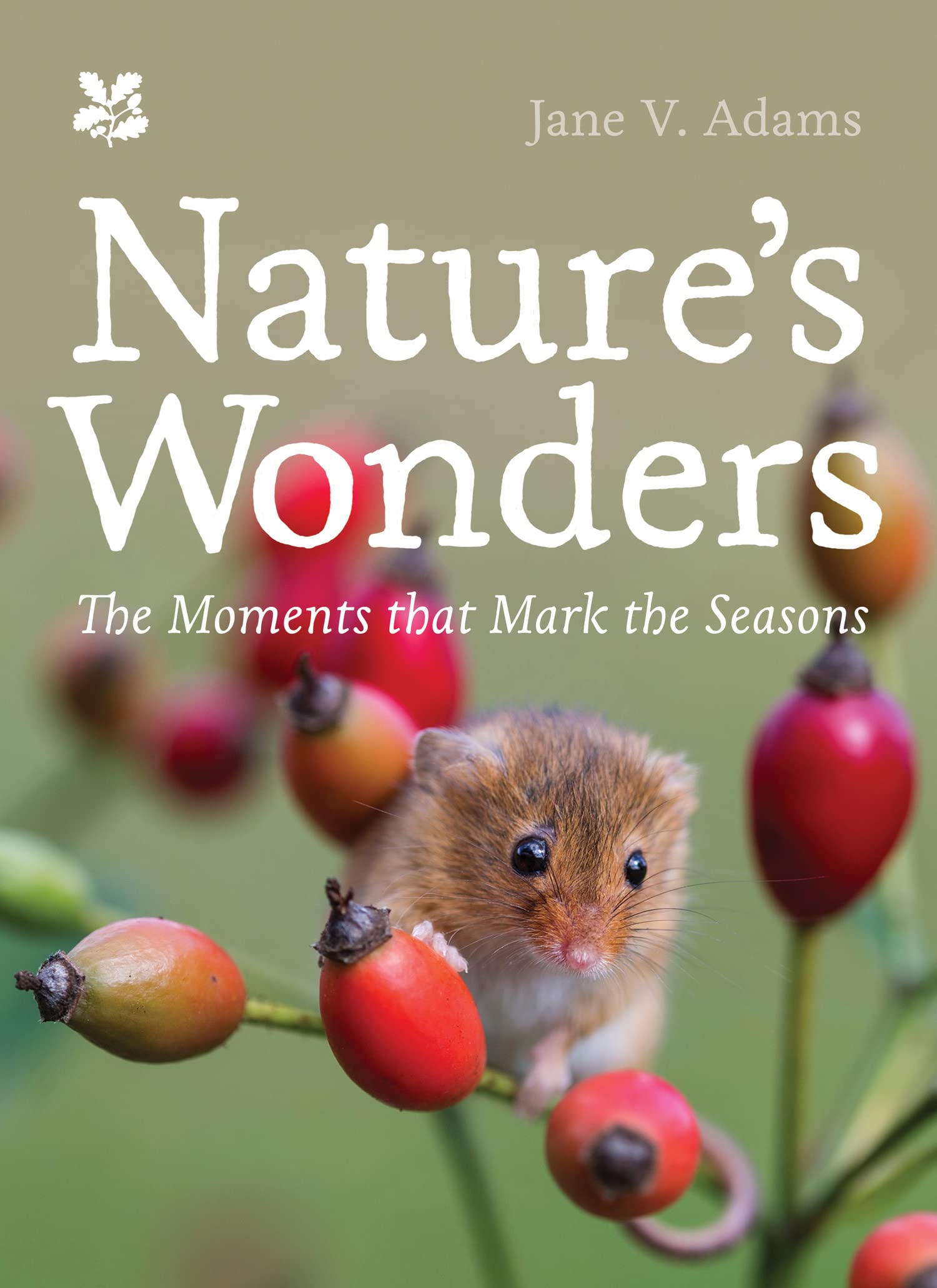
Nature’s Wonders by Jane Adams

3.5 out of 5 stars

The publisher provided a copy of this, free of charge, in return for an honest review.

For too long we have cast aside nature, beating it into submission or just obliterating it, but the tide is turning and people are seeing that we cannot carry on like this forever as we will be deeply affected too. We are intrinsically linked to the natural world, after all, we are all part of the same ecosystem.

But where to begin? If you have been in a bookshop recently, you’ll have noticed that the range of nature books has grown exponentially over the past decade. This has been ably assisted by the Wainwright Prize. People became more aware of nature during the pandemic when they could head out on their sanctioned exercise and the sensory stimulation did them the world of good.

Nature’s Wonders is an introduction to the wonders that you can discover if you feel so inclined. The book is split into seasons and in each, Adams has selected various things to look out for in each. Some of these items are easier to find than others! So in spring, there are essays on bluebells, black caps and brimstone butterflies. In summer she suggests, chafers, foxgloves and taking the time to smell the scent of summer.

Autumn brings dramatic changes to the landscape and the essays include listening to the deer rut, the sound of the crickets in meadows and spotting the winter migrants such as fieldfares. Winter is the time for frosts and long shadows, but if you know where to look the last of winter brings out the celandines.

I really liked this book. If you are expecting in-depth guides on each of the fifty subjects that are written about in this book, then this is the wrong book to start with. Rather, it has been written to inspire people who are not sure about the natural world to take the time to go and find the things written about within and hopefully use it as a stepping stone to your own discoveries.

« Older posts Newer posts »

© 2026 Halfman, Halfbook

Theme by Anders Norén — Up ↑