Page 53 of 185

White Spines by Nicholas Royle

5 out of 5 stars

A copy of this was provided free of charge from the publisher in return for an honest review.

He begins the book on a trip to see two authors, to get them to sign a set of books that are due to be despatched to bookshops soon In between visits he has time to stop in Norwich. He is there to visit an Oxfam bookshop too. This is not your two for a pound charity shop, these are priced at £4 and upwards, but the shop is well laid out and the people running it know what they have and what the value of each book is. He scours the shelves looking for literary treasure and there it is Nomad by Mary Anne Fitzgerald a 1994 edition in a Picador paperback. It is a book that he is sure he will never read, but it is the thrill of finding one that he is sure he has never owned before.

It’s not hoarding if it is books, so the saying goes, but there is probably is an element of truth in there…

When does an interest become a passion and then in turn become an obsession? I am not sure, but in White Spines, Nicholas Royle takes use through the threshold of each of these limits. He is passionate about the paperback Picador books that were published between the 1970s to the end of the 1990s. They were predominately fiction, but all the books they published were some non-fiction; I know I have several travel books in the series.

But this is much more than a catalogue of all the Picadors that fit his criteria or a list of books that he has or is seeking to acquire, rather it is a trip down his literary memories, of where he found a particular edition or the time that he first read the book or was passed it by someone else. He has a thing about books that have the presence of a previous owner, a receipt that was used as a bookmark, an inscription in the front to the person receiving it as a gift or very occasionally a signed copy. These are his favourites as he feels like a custodian of the book.

This is a wonderful collection of memories about the books, where they were bought from and his favourite bookshops to find them in. I loved this book and I think that I have found a kindred spirit in Royle. Not only do I like to read, but I also like to find and collect books in second-hand book shops and charity shops. I collect books too, Royle has a thing for Picador White spines as well as some of the King Penguins, whereas my failing is collecting books by Little Toller and Eland as well as other travel and natural history books. It is a lovely hobby to have, books do furnish a room after all, but space is quite often an issue…

The Eternal Season by Stephen Rutt

4 out of 5 stars

A copy of this was provided free of charge from the publisher in return for an honest review.

Stephen Rutt was visiting family in Bedfordshire when the national lockdown was announced in March 2020. What was supposed to be a short visit became a much longer stay as they could not return to his home in Dumfries. It was a time of anxiety for many people and in particular for Rutt and his partner as they are medically vulnerable people too. It felt like his spring had been stolen and the book he was originally going to write on warblers became this on summers past and future.

He like so many others during the pandemic sought some solace in the natural world. You would expect that from a nature writer, but Rutt has a keener eye than most and one of the things that he begins to notice is the way that the seasons are being changed and moulded by the growing disaster that is climate change. In the past, there was a sense of order to things, cold winter days reset life each year and as the light increased during spring warmth and life flooded back into the world. Now we can get days in December that are as warm as July and rain in June that can be as bad as the worst of the winter storms.

How much the season and blending into each other was brought home in two instances he recounts. In the first he is in a friends garden with and that friend spots a browncap in the mahonia. It is the first he has seen overwintering in the UK. The second instance is on a break in Cornwall in February. The sky turned from grey to pewter and then the snow started to fall. A postman they passed, said he had not seen snow for 30 years there. The birds that would be deep in the scrub were everywhere searching for food, including a chiffchaff.

Until that point, he had considered both of these summer birds. They were there because they had adapted, rather they could stay in the UK because the climate was changing and it was more conducive for them to remain rather than travel south. Part of the world is getting weirder and the once familiar order of things is changing. It is happening at a speed that we cannot get used to either. It is on another trip to visit family that they become stuck as a national lockdown is enforced. They will be in Bedford for the foreseeable future with no option to return home. As worrying as it is, it does give him the time to ponder the way that the world is changing.

Being stuck in because of being medically vulnerable means that he has to rely on technology to move him to the places that he wants to see. Looking at these places on the screen gives him a stronger longing to go and see them in person when he is able to. Seeing them from a screen though also gives him time to think about phenology, The science of recording when things happen and to see how and if they move year on year. It is also a useful tool to see how a changing climate is affecting vast swathes of wildlife as the normal synchronisations fall out of place.

He does manage to make it out of the house they are locked down in for his one hour of permitted exercise, it helps with the natural history fix that he needs. The quieter roads with people forced to stay home mean that wildlife that you wouldn’t normally see is suddenly much more visible to an almost silent walker. He is surprised by a Little Owl and comes face to face with a Chinese Water Deer. As they pass the summer solstice they have the opportunity to return home to Scotland and restart their lives in a world that has changed.

This is another fine book from Rutt, he is not yet 30 and has written three! It is more personal than his first two and written with a wistful melancholy that the lockdown gave him. I like the way that he uses short essays on a variety of subjects from nightjars to spiders to how much wetter everything is getting in between the chapters. It is a book to make you think too, think about what we are doing to this planet, the changes that we are having on delicate and fragile ecosystems and what the long term implications are for us as a species.

September 2021 TBR

August flew by and I had a week off too! Managed to make a small inroad to last month’s TBR but the list is still out of control. I am aiming to pick around 16 to 18 from this list below.


Finishing Off (Still!)

Lotharingia – Simon Winder

Sea People – Christina Thompson

On The Marsh – Simon Barnes

Another Fine Mess – Tim Moore

Invisible Work – John Howkins

The Pay Off – Gottfried Leibbrandt and Natasha De Terán


BLOG TOUR

London Clay – Tom Chivers


Review Copies

Astral Travel – Elizabeth Baines

The Germans and Europe – Peter Millar

Britain Alone – Philip Stephens

We Own This City – Justin Fenton

Spaceworlds – Ed. Mike Ashley

The Fugitives – Jamal Mahjoub

Slow Trains Around Spain – Tom Chesshyre

The Power of Geography – Tim Marshall

Finding the Mother Tree – Suzanne Simard

The Four Horsemen – Emily Mayhew

The Spy who was left out in the Cold – Tim Tate

The Devil You Know – Gwen Adshead, Eileen Horne

Letters from Egypt – Lucie Duff Gordon

The Glitter in the Green – Jon Dunn

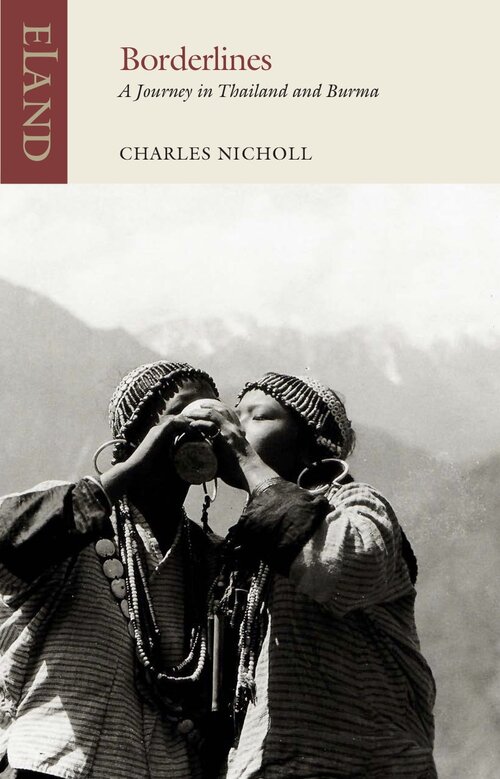
Borderlines – Charles Nicholl

The Sea Is Not Made Of Water – Adam Nicholson

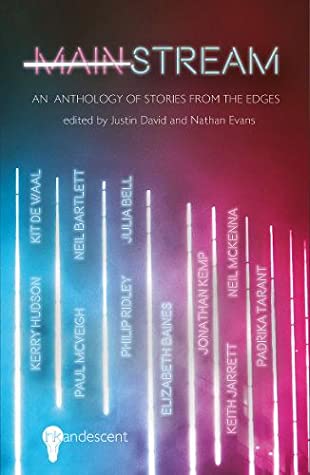
Mainstream – Ed Justin Davis & Nathan Evans

Flight of the Diamond Smugglers – Matthew Gavin Frank

Above the Law – Adrian Bleese

Somebody Else – Charles Nicholl

Goshawk Summer – James Aldred

The Red Planet – Simon Morden

The Turkish Embassy Letters – Mary Wortley Montagu

Lost Animals – Errol Fuller

A Short History of Spaghetti with Tomato Sauce – Massimo Montanari Tr. Gregory Conti

The Long Field – Pamela Petro

100 Poets – Ed. John Carey

The Song of Youth – Montserrat Roig, Tr. Tiago Miller

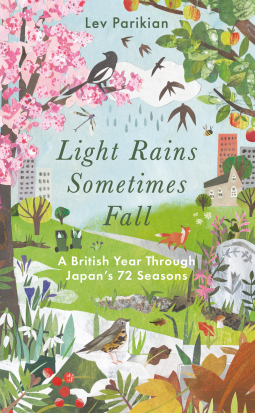
Light Rains Sometimes Fall – Lev Parikian


Library

Grounded – Ruth Allen

Rag And Bone – Lisa Wollett

Island Dreams – Gavin Francis

Seed To Dust – Marc Hamer


Poetry

High Windows – Philip Larkin
Death of a Naturalist – Seamus Heaney


Terry Pratchett

Thought that I might get to these earlier, but no. So four books to go on the Discworld series, and this month I will read the first of the four left. Probably not going to get to the Bromliad series this year but never say never…

I Shall Wear Midnight


Challenge Books

The Con Artist – Fred van Lente

Water Ways – Jasper Winn

The Night Lies Bleeding – M.D. Lachlan

Divided – Tim Marshall

The Wonderful Mr Willughby – Tim Birkhead

The House of Islam – Ed Husain

Asian Waters – Humphrey Hawksley

Light of the Stars – Adam Frank

Blue Mind – Wallace J. Nichols

21 Lessons for the 21st Century – Yuval Noah Harari

The Restless Kings – Nick Barratt

The Kindness Of Strangers – Ed. Fearghal O’Nuallain

To Obama – Jeanne Marie Laskas

What We Have Lost – James Hamilton-Paterson


Wainwright Prize

Vesper Flights – Helen Macdonald

Seed to Dust – Marc Hamer

English Pastoral: An Inheritance – James Rebanks

I Belong Here – Anita Sethi

The Wild Silence – Raynor Winn


Any that you have read or come across before? Or are there are any that take your fancy?

Walking Pepys’s London by Jacky Colliss Harvey

4 out of 5 stars

A copy of this was provided free of charge from the publisher in return for an honest review.

Samuel Pepys, the well-known diarist of the seventeenth century walked around London for miles to and from work. He lived near the Tower of London and worked in various places, including Whitehall and Greenwich. The walks were chronicled in his diary and became part of his social and professional life with the people that accompanied him while walking.

A substantial amount of the city within the old Roman walls was destroyed in the Great Fire of London. When they came to rebuild it they retained the old street layout, rejecting the new layout that Sir Christopher Wren proposed. So believe it on not. those streets that he walked are still there and you can follow the most likely routes that Pepys took around the city.

In this delightful little book, Jacky Colliss Harvey brings history alive through five planned routes around the City of London. These take us from Westminster to the City, from there to the wonderfully named Seething Lane. One walk takes us on a night out with him and there are two longer routes along to Greenwich and the final walk wends its way through the city to Wapping.

I really liked this, the blend of history set against modern-day London is a reminder of how old the city actually is. It is full of tiny nuggets of history that are still visible provide you know where to look or are lucky enough to have a guide like Harvey to point them out to you. I have walked some of these streets when I have been in London, but there are some that I have not been along. Thankfully there are digital maps available for the walks, so next time I am in London I will be taking this book along with me.

Fire, Storm Flood by James Dyke

4.5 out of 5 stars

A copy of this was provided free of charge from the publisher in return for an honest review.

Regardless of what the oil industry-funded climate change deniers would have you think, the climate of this tiny blue dot that we inhabit is changing in ways that we can only speculate on. It feels like we are just about at a tipping point too. Recently the temperatures in Europe have reached the highest levels ever recorded, there have been wildfires and for the first time ever rain rather than snow has fallen in part of Greenland.

There is a lots of political noise and talk about changing the way that we do things. However, vested interests and a concerted effort from the oil industry spread enough doubt to get parts of the population to question everything. (It is well worth reading Merchants of Doubt). All of this could change should the Earth begin one of its violent phases again, but at the moment we are the instigators behind these changes.

In this book, Dyke reminds us of the ancient geological history of our planet by looking at how events have shaped it and both brought forth life as well as eradicating it. However, the focus is really about what we are doing to it.  In between each of the overviews are little essays about a particular event that happened along with a photo relevant to it. The events are a huge as Snowball Earth to the 1976 heatwave, the Chicago Fire in 1871, Hurricane Katrina, floods from all around the world, wildfires and even the stuff we can’t always see, like coral bleaching.

I can’t say that I truly liked this book. It does have a cruel beauty and a stark and unequivocal warning. The images within of a planet suffering are beautiful and disturbing in equal measure. Dyke’s writing is not gloating at all, rather the words are a considered response to the unfolding catastrophe that is climate change. This book and the events of the past few months are a reminder that it is not coming anymore.


It is here now.

Peacocks in Paradise by Anna Nicholas

Welcome to Halfman, Halfbook for my stop on the Blog Tour for Peacocks in Paradise by Anna Nicholas and published by Burro Books.


About the Book

The long-awaited seventh title in Anna Nicholas’s humorous travel series about how to live the dream in a Mediterranean country. The author explores different local cultural themes in each title. Anna delves into the island’s authentic heartland, exploring nature reserves, bird sanctuaries and paprika, fruit and almond farms. On her travels, she meets the makers of siurell whistles, palm leaf baskets, hot sauces and ensaimada pastries, and revels in visiting local producers of wine, craft beer, gin and brandy – and Mallorca’s famed herbes liqueur. Meanwhile, she and chum, Alison, are tackling all 54 Tramuntana peaks over 1,000m, enduring the arduous overnight Guell hike to Lluc Monastery along the way.


About the Author

Anna Nicholas is of Celtic origin & has lived for 18 years in rural Mallorca. An inveterate traveller & experienced freelance journalist, she regularly participates in humanitarian aid expeditions overseas with British explorer Colonel John Blashford-Snell, CBE and is a Fellow of the RGS. She ran her own PR company in Mayfair, London, for 20 years, was a Guinness Book of Records adjudicator alongside the book’s founder, Norris McWhirter, CBE, and as a rookie press officer at charity Help the Aged, handled events for Princess Diana. She runs an international marathon annually for her favourite causes.


My Review

There are nicer ways to be woken than a hearing the screeching of a peacock, but the most recent addition to their ever-growing menagerie has a habit of waking them at some ungodly hour before the alarm goes off. She glances out of the window and sees the sun lighting the Tramuntana mountains. One very strong cup of coffee later and they are ready to face the day.

The peacock is just one of the numerous animals that they have around their home. Over the course of the book, they seem to end up with an endless influx of other animals as well as finding a large number of kittens on their property. They have a full and entertaining life there in Mallorca, her son has left home now and is in other parts of Europe, they miss him, but he is travelling as she did at the same age.

They are fully embedded in life on the island and you sense from the scenes she describes with the neighbours that they have got deep and long-lasting friendships with neighbours and others around the islands. They are partial to good food and wine, and they are always travelling around in their battered mini to all sorts of different places to meet various food and wine producers of the island. They are often out to lunch with friends or visiting organisations that are trying to help local species and protect the local environment. There is a little part of the story in London too. In her past life, Nicholas was a PR and old friends want to use her skills to help launch a new set of products in Mallorca. Whilst in London it gives her time to catch up with some old friends that she wouldn’t normally see.

I really enjoyed this. It is a welcome break from the gloom of the pandemic that keeps rumbling on. Nicholas writes in a chatty style as she tells us about her extremely busy life in Mallorca. She is really good at extracting the details from the things that she is doing, whether that is the walking challenge that she undertakes with her friend up the fifty-four peaks over 1000m or the time spent at a number of vineyards or just the interactions with her friends and neighbours on a daily basis. She is a good saleswoman too because having read about the island I now want to visit it and see it for myself. Even though this is the seventh book in the series, this is the first of the series that I have read. I do have one of the others and as I really enjoyed this I am going to make an effort to get and read the others.


Don’t forget to visit the other blogs on the blog tour


Buy this at your local independent bookshop. If you’re not sure where your nearest is then you can find one here


My thanks to Anne Cater of Random Tours and  Anna Nicholas for providing a copy of the book to read.

Girl Squads by Sam Maggs

3 out of 5 stars

A copy of this was provided free of charge from the publisher in return for an honest review.

Sometimes all you need is a friend. Even though the #girlsquad hashtag is relatively recent, the bond formed between women over time has a long and interesting history. She has collected together these stories about women from politics, activism, art, science and even sport. They are all fascinating,  but I had some in particular that stood out.

Firstly there is the story of Trung Trac and Trung Nhi, two Vietnamese sisters who were leaders in a matriarchal society. They organised a fight back against an invasion by the Chinese. Being a medical professional was a challenging job before basic hygiene and it was something that only men were permitted to do as it was thought that the sight of certain parts of the anatomy would be too much for women. It was nonsense, of course. Seven women defied the social pressure of the time and they began to do their best to move into the profession as best they could. The rules slowly changed where they could sit their exams, but were not permitted to pass or be awarded their MD’s. In the end, they set up their own London School of Medicine for Women and slowly the law changed to catch up with what they were doing.

I had two favourite stories from this book, the first was about the patriotic women of Iran who turned their oppression around and began to push back against the patriarchy. Their cause was helped by a daughter of a Qajar Prince and the progress was mixed. It is still something that they are fighting today. My other favourite took place during the second world war. There was a shortage of mathematicians as most had been called up to fight, so the military started employing women to fill the gaps. The few men that were left resented this until they realise that they were actually much better mathematicians. Even though segregation was banned in the army there was still a lot of discrimination. One of the women subject to some of this was Katherine Johnson who joined NACA. She was still there when it back NASA and was a key mathematician responsible for calculating the trajectories of the Apollo capsules.

I quite liked this, there are some very interesting stores in here and Maggs has written about them in a light-hearted and entertaining way. If you want to learn a little about how women have made amazing contributions to societies all around the world, this is a good place to start.

Nature Fast and Nature Slow by Nicholas P. Money

4 out of 5 stars

A copy of this was provided free of charge from the publisher in return for an honest review.

Supposedly we have threescore and ten on this earth. Sadly that isn’t everyone as many lose their lives far too early. The longest-lived person on this planet reached 119, though there is a disputed age older than that. Some creatures are barely around long enough to register on the scale, mayflies for example who emerge from the river and have an urgent rush to find a mate before becoming food.

Do other creatures count time though? Well, they don’t generally, their lives can be short and brutal or extremely long-lived, the factors that govern these things are numerous and multifaceted. In this book, he begins with the microseconds that it takes for a jellyfish to fire a poisonous spine into an unaware swimmer. It may only reach 44mph but the g force is just staggering.

A second passes in almost no time at all. It is the speed, more or less, of our hearts that beat until we breathe out our very last breath. It is thought that every mammal has the same number of heartbeats, from the Etruscan Shrew whose heartbeats 25 times a second to the blue whale that beats 10 times a minute. Not everything huge has a long life, the tiny water bear can live for decades and survive almost everything that this planet can through at it.

For other species time can be measured in days, weeks and months, in particular, the summer flowers that appear as the equinox is reached and follow a circadian pattern. The fleeting glimpse of a flower though pales into insignificance when compared to the bristlecone pine. These trees can last a thousand years and these are by no means the oldest plants out there. Yews, giant sequoias and baobabs can reach equally vast ages that watch the humans that pass as mere flickers on their journey through time.

I thought that this was a really clever way of looking at life on this planet. Taking each chapter as a step up in time gave me a great insight into the way that the natural world works and highlights the fact that we may feel we live a long time, but we are a mere snapshot compared to other lifeforms. The writing does occasionally veer into the academic realm, however, mostly it is a very readable science book on life and its rich and varied time that it chooses to exist. Well worth reading.

Owl Unbound by Zoë Brooks

3.5 out of 5 stars

A copy of this was provided free of charge from the publisher in return for an honest review.

This collection of poetry from Zoë Brooks is as intensely personal as it is wide-ranging. She changes from poems about family members, beginning with one about her Grandfather and Uncle who were taken from this world with untimely haste, and a poem about a Lost Daughter and signing the deeds for Naunton Farm.

Mostly though, this is a collection with the sharpest of focuses on the natural world. Of being lost in the railway sidings between the fox track and the willow herb, mourning the loss of the ash trees and those moments on a muggy evening just before the storm breaks.

I have longed to leap
into the fast moving clouds
Shadowing the hills

I really liked this collection. The poems within this slime volume are as broad as they are personal, they are full of profound insight into the way that the world hurtles on in its messy way, yet Brooks still has time to pause and see the details that most people miss as they look rather than see

Three Favourite Poems
Cleeve Hill
The Apples
Too Far

Burning The Books by Richard Ovenden

3.5 out of 5 stars

A copy of this was provided free of charge from the publisher in return for an honest review.

A few months ago the author, Jeanette Winterson made quite an impact when she burned a number of copies of her books because as she said: Absolutely hated the cosy little domestic blurbs on my new covers. Turned me into wimmins fiction of the worst kind! Whether it was a genuine protest against what the publisher had done to her books or a publicity stunt it had quite an effect.

The act of burning books and destruction of libraries has always been seen as an act of violence or oppression against a particular sector of people. The act is not recent though as it has been going on over the past 3000 years. In a lot of the cases, the aim has been of the victors to eradicate the histories of the people that they have just conquered.

Sadly this is not an ancient phenomenon. And there have been many instances of this happening even in the past century. Probably the best known is the horrors that the Nazi’s inflicted on the Jewish populations. The books burnings and eradication of their common European histories began in their own country and would be similar to the places that they invaded.

In this book, Richard Ovenden takes us through several notable historical events from the war in Bosnia, the way that the Jewish communities went about saving as much of their literature as they could from those that wanted to eradicate them as well as authors such as Kafta and Byron who specifically asked for their works to be destroyed and what those responsible did to them. It is bang up to date too, considering what we have to do as a global society to keep records of the vast quantities of websites that are created all the time.

It is the duty of the present to convey the voices of the past to the ears of the future. – A Norwegian saying

I thought this was an interesting book about the way that countries and nations have sought to dominate and write history from their own perspective. Ovenden’s prose is occasionally a bit dry and academic but there are parts of this that are very readable. It is also a warning that we discard our collective histories at our peril, that these hold the key to our future.

« Older posts Newer posts »

© 2026 Halfman, Halfbook

Theme by Anders NorénUp ↑