Page 56 of 185

Fox Fires by Wyl Menmuir

4.5 out of 5 stars

Wren Lithgow has not really had a conventional upbringing. Her mother, Cleo, is a concert pianist who travels to different cities around Europe and she accompanies her as she moves. This time they are heading to the city-state of O, a place that according to her mother she was conceived in almost twenty years ago. Wren’s only information about this man is a scrap of a photo with his face on.

Finding him whilst they are staying there is her top priority and soon after arriving at their new abode, Wren has decided to leave her mother and venture into the city alone. She takes a few possessions, including the wind-up toy she calls Ariadne, a gift that arrived in her life a while ago and raised more questions than it answered.

She has no idea where to go though and stops at a café for a cake and a coke. Wren is soon on the move again trying to find her way around a city that she knows almost nothing about. A man who might be who her father walks past and she follows before realising that it almost certainly isn’t him. The next thing she knows is that she is lost. She is stopped by a woman in the street who tries to tell her that the curfew is starting soon, and points her in the direction of a hotel.

The following morning she tries to work out where she is in the city and heads out to buy a map. Nowhere has one for sale and she cannot work out why. She ends up in the library. It is mostly full of older people, but near her is a young guy sitting at a desk with his head on it sleeping. She feels the need to talk to him before he hurries off. A few days later he is there again and she manages to talk to him a little more and as it is nearly curfew, they head back to his apartment.

It is not long before she is moving into his apartment and hoping that Alexis will be able to help find her father; but will this mysterious city want to relinquish its secrets?

The city felt a little like Beszel from The City & the City by China Miéville, it feels like a place that you may have visited at some point when travelling. Menmuir has then cleverly layered that familiarity with the unease of being in a place as an outsider, where different conventions are normal and where everyone is watching.

I loved this haunting beautiful story of a girl trying to find her past in this dystopian city of O. Menmuir’s writing has found that perfect balance of tenderness about Wren, whilst conveying the brutal heavy-handedness of an authoritarian state.

Behind The Enigma by John Ferris

3.5 out of 5 stars

A copy of this was provided free of charge from the publisher in return for an honest review.

Most people have heard of MI5 and MI6 and even when they were officially denied for years, people knew why existed. GCHQ is the third part of our intelligence services and even though they have been around for 100 years, very few knew about them or what they did. When they did emerge from the shadows after the terrorist attacks in America and England they were still very circumspect about revealing any operational details.

A large number of people still haven’t really heard of them, though a large number of people are aware of the efforts during World War 2 in taking the work that the Polish did and breaking the Enigma codes of the Nazis. There were thousands of people involved in this process but one of two have become household names, Alan Turing and Tommy Flowers. Thankfully it isn’t too heavy on the Bletchley Park years. They do get a chapter of their own, but the emphasis is on all of their histories so there were things that I learnt about that I had never come across before.

Ferris begins the book way back in the 1840s tracing the origins of British efforts to intercept and break coded messages from those that were perceived as the enemy and to maintain the control we had over our global empire. It was a messy process though and each service undertook its own way of doing it. It would take a war to focus the attention from piecemeal collection to a department that is a central point for all its consumers of intelligence. This was to become the GC&CS. They shared a building with MI6 at one point and were under the secret umbrella of the Foreign Office.

In between the wars their prolific output of intercepted and broken transmissions of a huge number of countries never ceased. At one point there were thousands of messages being analysed. Germany was not of the priority list for most of that time, however, that would begin to change as they realised that Germany was in discussion with Italy and Japan and developing secret relationships with as yet unknown intents. Those would soon be revealed and the world would plunge into another war.

The amazing work in World War Two gave the allied powers great insight into the way that the Axis powers were thinking. Of all the chapters it is probably the most critical of the work that was completed. Post-war the goalposts changed dramatically and an ally in the war became enemy number one. The cold war had arrived and would shape world history for the next four and half decades. It was a time of close cooperation between America and the UK and other members of the five eyes network. There are chapters on the events in Palestine, Indonesia, the move out to Cheltenham and the rise in computers for codebreaking and of course the advent of the internet age along with all the positives and negatives that it has brought.

This is a fairly comprehensive guide to the history of GCHQ. However, being the official history there are no revelatory bits in it, rather it is the sanitised and unredacted version that portrays the organisation is mostly good light. I did have a couple of issues with it. The timeline that Ferris has chosen to use is different to the one I would have preferred. He has looked at the way that they changed in response to different world events, the cold war, the Indonesian conflict, the Falklands War. My preference would have been to take it a decade at a time which I feel would give a better flavour of the way that demands on their skills were shifting as world events unfolded. There is almost nothing on the way that they do things, I wasn’t expecting it in the book to be honest, but it would have been nice to read a little on the techniques and methods they use. He does mention traffic analysis a number of times, which looks at how people send messages and can derive an enormous amount of intelligence from that. It might not be for everyone as it can be a bit dry at times. I have read the official histories of the other secret services, Defend the Realm: The Authorized History of MI5 by Christopher M. Andrew and MI6: The History of the Secret Intelligence Service, 1909-1949 by Keith Jeffery and it felt that those authors had a wider scope to critically analyse the activities that those agencies had done over the years.

Where? by Simon Moreton

4.5 out of 5 stars

A copy of this was provided free of charge from the publisher in return for an honest review.

The loss of a parent can change your perspective on life in a big way especially if you are close to that parent. Back in 2017, Simon Moreton’s father suddenly became ill and very soon after that died. During his short illness the thoughts of growing up, how his family came to be and where they came from swirl in the tumult of emotions. It was something that he hoped would keep him connected with his dad and the family. Wanting to know how he became who he is now would mean going back to the place they live and his dad worked. The art that he would normally create felt insufficient, instead, that work he couldn’t create, became this book.

Heading back to the landscape of his childhood and back in time would bring back memories that have been suppressed for years. Some of those memories he mined were happy; holidays spent with the family, the times that he spent messing around with his brother, climbing the walnut tree and making things out of wood with his dad. The smells came back too, grass clippings, damp concrete, homebrew and horse farts. Other memories are more troubling, the teasing he had from other pupils about reading the encyclopaedia, the total lack of skills with any ball games and not even understanding the question about what team to support.

I sometimes think it would be nice to go back and feel like that again, and sometimes I am glad I never can.

His dad had quite an unusual job, he worked at a manned radar station on the Clee Hills and it would be the place that he would look for answers to questions that hadn’t yet fully formed in his head yet. Walking again through these places of his childhood that seemed familiar and yet different searching for the presence of his dad still left in the area, finding the magic once again in the gaps in his memories. He remembers trying to play the guitar one night. His father came and sat with him and passed him a book of poetry. He had written these at a similar age to Simon when he himself had been struggling with his own internal demons. It is a touching moment as each generation faces their own and their shared demons.

Those times are magical; so magical, in fact, that I don’t know if my memories of them are even real.

Walking to the radar station follows the path of the Titterstone Wake, a local festival that took place at the end of August. The station is still there, but now fully automated. He remembers being taken inside by his dad, it was a geodesic cathedral to the secret services. Meeting the men that he had worked with at the funeral gave him an insight into the character of his father that he had never really known or seen.

Okwell Soov is a poultice that was said to cure all ills. It is something that Moreton feels that he needs to cure his pain of grief, but its secrets have been lost to the past. The writing is often introspective but not in a bad way; his journey to the past to try to understand how he has become who he is now is quite some journey. I think that this book is a journey back with Moreton that we merely glimpse parts of because in between the prose is a mix of all sorts of art, photos and maps that come in a rush. His art is simple and yet full of the dynamics of life, they are interspersed with photos from childhood and significant moments in his life. It is primarily an artistic tribute to his dear father and also a look deep into the reflections that we see of ourselves when we look into the landscapes that formed us.

Watery Through The Gaps by Emma Blas

3.5 out of 5 stars

A copy of this was provided free of charge from the author in return for an honest review.

Several books that I have read recently have pointed out the obvious point that we are as much a part of this watery blue planet and its ecosystem as it is part of us. Over the pandemic many people have discovered or rediscovered the natural world and felt how just being in a woodland or near a river can help in so many ways. I spend a number of evenings walking down to the river, sometimes to watch the sun go down, or see if I can see the otters or sometimes just to watch the water flow under the bridge.

This new collection by Emma Blas is her conversations with the watery world that she wants us to start to correspond with too. They are poems that are drawn deep from her heart as she looks to the ocean for comfort and peace. In some she slings her anger deep into the cool silky water which absorbs and tempers her, the saline swell calm her boiling mind.


i will swap this ravens call

for a ride

on the wing of a gull

let this voice soften

salt and brined

to a howl for the moon


She finds herself at sunset, hoping to blend and blur with the sky and join the edge of the sunset. Her church is the ocean, a place that she holds dear and some of the poems reflect that spiritual side of her engagement with it. But there is anger in these words too, anger at the injustice in the world.


i have never tried

to hold something

so fluid as a river

Yet it feels more in my reach

than trying to grasp

what it means to be human


This is quite an emotional collection, Blas is baring her inner soul in a lot of the poems. From mourning not being near the shore for a long time to contemplating the vastness of the sky and counting the reasons why she cannot be loved. To Ripple is such a short poem, and yet full of profound mean about how we deal with relationships. As with any collection, there were a couple that I didn’t like, but overall I thought that this was a good collection.


Four Favourite Poems

In the Shadows

How High Will I Rise

The Edge of Moonlight

Worn Hollow

Pie Fidelity by Pete Brown

4 out of 4 stars

At the beginning of lockdown number 1, I was wandering through Waitrose last year I paused by a fairly empty shelf and I was surprised by seeing something on the shelf that I never expected to see; a Fray Bentos pie. Two things surprised me about this, one that they still existed and secondly that it was in Waitrose. It has been a while since I had one of those. And I think it was only ever one that I had…

You are what you eat is that well-known phrase that springs to mind, and on one level we very much are the sum of all the things we pop in our mouth. But on a different level, the things that we would call our favourite foods also define us as a person and make our class and the are we live very easily identifiable. When we think of India and its curries, France and the cheeses and gourmet foods and Belgium would be mussels and chips with mayonnaise. But what foods would you use to define Britain?

This was a question that Pete Brown often asked himself and it got him thinking. He was born and brought up in the north but now lives a London life. Couple that with his work as a food and drink journalist he has tried and drunk many different things, but he still has his favourites. Narrowing it down to eight different things to put in the book wasn’t going to be easy.

In the end, he made his choice of the meals that he wanted to include that he considered defined him and he considered were classic British dishes. These were Pie and Peas, cheese sandwiches, fish and chips, spaghetti Bolognese, a west country cream tea, curry, a full English breakfast and of course the classic roast followed by a Rhubarb crumble.

He decided that he wants to eat a typical example of each so rather than just wander out into the local area he decides to travel a little of the country to see the sights, meet the locals who make these things and most importantly eat. He heads to Blackpool to eat fish and chips, eats curries in Birmingham and enjoys decided whether it is the cream or jam first in Devon. He persuades two friends to make their version of spag bol and then decides to recreate the version he made as a teenager for his family. Searching for the typical cheese sandwich takes a little longer and the debate as to what you must include in a full English breakfast will run and run.

Each of his chosen meals has a chapter dedicated to it and he talks about the cultural and history behind it as well as eating an awful lot of really good food. I thought that this was another really good book from the pen of Pete Brown. I like his writing style, is conversational and informative without coming across as patronising. There is a smattering of withering sarcasm and gentle ribbing as well as a strong shot of self-deprecating humour too. Would I have picked these eight dishes for my iconic British foods? No, but some of them would have been on there. He also shows that British food can be really bad and more often now, really good. Entertaining reading, though you may need snacks when reading it.

The Storm Is Upon Us by Mike Rothschild

Welcome to Halfman, Halfbook for my stop on the Blog Tour for The Storm Is Upon Us by Mike Rothschild and published by Monoray, an imprint of Octopus Books.

About the Book

In 2017, President Trump made a cryptic remark at a gathering of military officials, describing it as ‘the calm before the storm’-then refused to explain himself to puzzled journalists. But on internet message boards, a mysterious poster called ‘Q Clearance Patriot’ began an elaboration all of their own.

Q’s wild yarn hinted at a vast conspiracy that satisfied the deepest desires of MAGA-America. None of Q’s predictions came to pass. But did that stop people from clinging to every word, expanding Q’s mythology, and promoting it ever more widely? No.

Conspiracy culture expert Mike Rothschild is uniquely equipped to explain QAnon, from the cults that first fed into it, to its embrace by Trump and the right-wing media. With families torn apart and with the Capitol under attack, he argues that mocking the madness of QAnon will get us nowhere. Instead, he argues that QAnon tells us everything we need to know about global fear after Trump-and that we need to understand it now, because it’s not going away.

About the Author

Mike Rothschild is a journalist, author, and the foremost expert in this ever-changing QAnon conspiracy theory. He is a contributing writer for the Daily Dot, where he explores the intersections between internet culture and politics through the lens of conspiracy theories. As a subject matter expert in the field of fringe beliefs, Mike has been interviewed by the New York Times, the Washington Post, CNN and Yahoo – among many others. He is also a frequent speaker, and podcast and radio guest on the topic of conspiracy theories, including NPR’s weekly show “On the Media” and a Vice documentary. Rothschild has been studying the QAnon phenomenon since early 2018 and was one of the first journalists not only to reveal its connections to past conspiracy theories and scams but also to openly address its danger to the American public—and beyond.

My Review


Thankfully the maelstrom of the Trump years are behind us and hopefully they won’t ever be back. He is still wildly popular there, his supporters see him as some godlike man who can purge American politics of liberalism and Democrats. His influence on American politics though has left a deep and long lasting scar on their country and it is going to take a long time to heal.

His 2016 campaign about Making America Great Again along with his popularist pitches reached a lot of people who felt that they had lost a voice in American politics. He was also attracting the voters who wouldn’t normally be that interested in politics, those that felt that the state had too much power and believed in the myriad of conspiracy theories that have been around for ages. Then in 2017, President Trump made a cryptic remark at a gathering of military officials, describing it as ‘the calm before the storm’ and then refused to explain himself to puzzled journalists.

A short time after this, a person identifying themselves as ‘Q Clearance Patriot’ started posting messages of the anarchic message board, 4chan. A follow up post hinted at massive riots taking place across the country. It read like the opening paragraph from a techno thriller and was the beginning of the mother of all conspiracy theories that would become QAnon. Q was claiming to be a high level military intelligence office who was there to tell the people that there was a secret war taking place, the culmination of this would be the end of the child trafficking rings, the end of the deep state, the end of all things evil and the beginning of true freedom. The posts or drops as they became known, were prolific at first, hinting at all manner of things happening, referencing the comment Trump had made earlier and hinting at a ‘mind blowing truth’ that cannot be fully revealed and the hell that was about to unleashed.

There was one tiny issue though; none of it was true.

People lapped it up though. What was a niche message board became wider known as more people wanted to read these drops for themselves and a whole cabal of people would interpret and reshare these messages across a variety of social media platforms adding to the myth and conspiracy. It didn’t take long for it to become part of the mainstream and QAnon believers to make up a substantial part of the Republican Party now. Its pinnacle though was the Capitol Hill invasion by its supporters eager to unleash the storm and reinstate Trump to the presidency.

But what is QAnon? In this book Mike Rothschild takes us through its short, intense and tumultuous history, outlining key moments as it grew into the phenomena that it is now. He systematically analyses the points where it went from being the delusions of a few cranks to a significant force in American politics. He tries to answer the question as to what it actually is, a cult, a political part of even a religion and given how it is driving families apart, makes suggestions on how to deal with those that have been sucked into its sphere.

I can’t really say this is a good book, the subject matter is quite terrifying to be honest, but it is a necessary book. Rothschild knows his subject, in particular about cults and the effects they can have of those that believe in them. He writes with empathy about the people that have asked questions about the way of the world and found that QAnon were on the surface, providing those answers to them. There are stories from those that have delved a little deeper into the drop and have come to the realisation that they is no substance to the message. He even goes as far to speculate who the person was who begun this. Well worth reading.


Don’t forget to visit the other blogs on the blog tour:

Buy this at your local independent bookshop. If you’re not sure where your nearest is then you can find one here

My thanks to Anne Cater of Random Things Tours for the copy of the book to read.

June 2021 Review

I almost can’t believe that we are halfway through the year already. First a few mid-year stats. I have now read 99 books and 26274 pages, or pretty much double what I had read by the end of March. Sixty-four of the authors were male and the remaining thirty-five were female (35%). I have read 52 review books, 27 library books and 20 of my own. I have read books from 59 different publishers so far.

The top five publishers are:

Eland – 5 books

Picador – 5 books

Faber & Faber – 5 books

William Collins – 5 books

Bloomsbury – 4 books


My top five genres are:

Travel – 17 books

Natural History – 15 books

Fiction – 14 books

Poetry – 11 books

Miscellaneous – 5 books

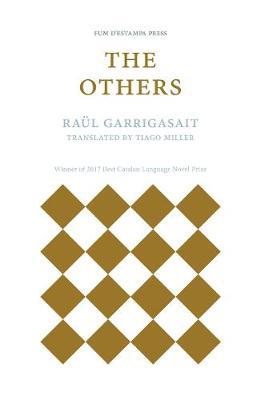
So on to the books that I read in June. I read four fiction books during the month. Trimming England by M.J. Nicholls is a comedic story about a future English Prime Minister who decides to rid each count of its most annoying citizen and send them to Jersey. There were some amusing parts, but it wasn’t really for me. The Others is a completely different book, set in the modern-day, it is about an author who finds a set of notes about the Carlist Wars in the mid-1830s and the story of a Prussian Gentleman who arrived in the region to fight. Not a bad book overall. The Lip is Charlie Carroll’s first fiction book. This story is about a girl who lives in Cornwall and who objects to the way the people who can afford second homes are pricing the locals out of the neighbourhood. I liked it and the way it tries to deal with mental health and many other factors. My fourth book is one of my books of the month, which is at the bottom of this post


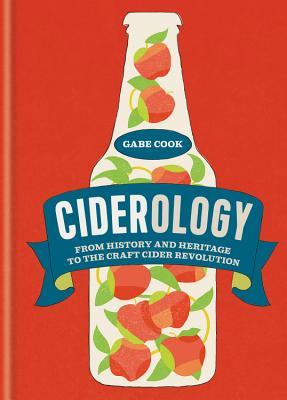
I read three books that had a food theme, one of which made it to my books of the month too. These two could not be more different though, the first is all about the wonderful drink that is cider. There is not a lot of detail in here, but it is a good introduction though. Pete Brown writes some really good books on food and drink and this is his selection of the meals that make Britain. Some of the foods he picks would have made my list but some won’t have…


I read two books that had a musical theme, the first Lev’s Violin is the story of Helena Attlee being captivated after hearing a violin play and sifting through history to find out more about the instrument. When Quiet Was the New Loud is a book about the music that Tom Clayton listened to during the late 1990s and early 2000s. I must admit that the music is not really my sort of thing, so much so that I had barely heard of some of the bands he talks about. That said I really enjoyed the book, he has a way with words that makes it worthwhile reading


The Odditorium does exactly what it says on the cover; namely tells you about all the people who have done something significant but slighting unusual in their lives. Interesting and light-hearted reading.

I read two natural history books this month and both had the same story to tell about how interlinked the natural world is, but from very different perspectives. I can recommend both


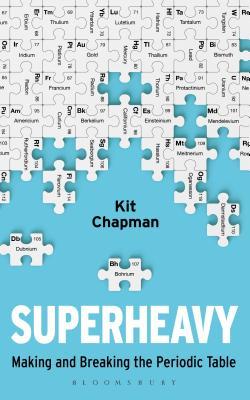
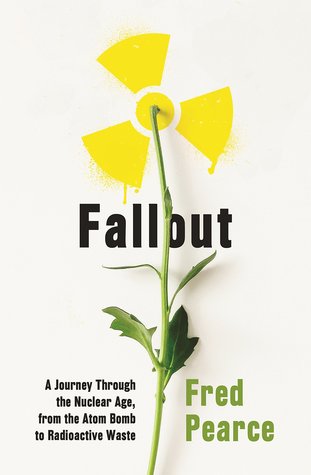
The two science books I read both were about the nuclear industry. The first is about the creation of the superheavy elements that were originally needed by the scientists and engineers who were making nuclear reactors. The second is about the mess that we have left in the relentless pursuit of this nuclear goal.


I have only reading Wilding before by Isabella Tree, so was looking forward to her book on Nepal. This is part travel and part history about the Living Goddesses who are still revered in Nepal. Whilst context is needed, I felt this was much heavier on the history and rituals behind the position rather than her travels in the country learning about them.


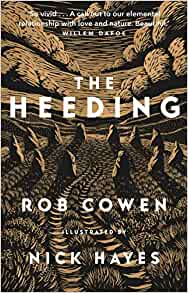
An so onto my books of the month. First up is the wonderful Summer in the Islands, an account of the time that Matthew Fort spent travelling around Italy on his Vespa eating lots of lovely food. This will make you hungry! Next is The Heeding, an artistic and poetic response by Rob Cowen & Nick Hayes to the lockdowns that we had to go through with the pandemic. Finally is the beautifully written Fox Fires, about a girl who is looking for her father in the dystopian city of O.


Have you read any of these? Are there any that you now want to read? Let me know in the comments below.

The Others by Raül Garrigasait

3 out of 5 stars

A copy of this was provided free of charge from the publisher in return for an honest review.

It is 1837 and the Carlist Wars are at their height. A young man by the name of Rudolf von Wielemann arrives to help in the struggle. He is not there completely by choice as he has been lent on heavily by his family as his father thinks that assisting in the war with the Carlists against the liberals will be honour for the family name. He is bearing an introductory letter from his uncle. However, this young man is completely out of sorts, he has had a well to do upbringing with a passion for music and had an ordered comfortable life. But here in Spain, he is utterly out of his depth.

For a start, he barely speaks the language, Catalan and the dialect that they speak in the region that he is in is another level of difficulty. He has gone from his ordered and organised life in a civilised part of northern Europe to the chaos of war. They are not quite sure what to do with this tall Prussian but eventually find him a task but he is not really suited to it.

He makes friends with Dr Miguel Foraster and captivates him with his musical ability. But it is time to move into war and he is put in charge of a platoon of men, who are better known as the Shambolic Six, as the liberals carry out their attacks.

I liked this book overall, the prose is richly detailed and full of vivid descriptions. It is full of subtle nuanced humour, especially between von Wielemann and the men he is in charge of. But it is a layered story too, part of the book is about the discovery of the papers that von Wielemann left and how the narrator of the book, Raül, is teasing out the details and working with a publisher to write a book. I must admit that it took me a short while to work out that the story was jumping back and forwards from a historical plot to an autobiographical part as the author wonders about the man he is researching and hopes that the editor will like his writings about him.

July 2021 TBR

Halfway through another strange year, and it doesn’t seem to be getting any better at the moment. I could go on about Covid, but you’re probably as bored of it as I am.  Anyway, you are here for the books so this is the super long list that I am intending to work my way into. If I don’t emerge please send doughnuts.


Finishing Off (Still!)

Lotharingia: A Personal History Of Europe’s Lost Country – Simon Winder

Behind the Enigma: The Authorized History of GCHQ, Britain’s Secret Cyber-Intelligence Agency – John Ferris

On The Marsh: A Year Surrounded By Wildness And Wet – Simon Barnes

Pie Fidelity: In Defence Of British Food – Pete Brown

Another Fine Mess: Across Trumpland In A Ford Model T – Tim Moore


Blog Tour

The Storm is Upon Us – Mike Rothschild


New Book

These Towers Will One Day Slip Into The Sea – Gary Budden & Maxim Griffin


Review Copies

Did manage to read 7 review copies in May, but the list grows ever longer each month:

Burning The Books – Richard Ovenden

Dear Reader – Cathy Rentzenbrink

Astral Travel – Elizabeth Baines

The Germans and Europe – Peter Millar

Britain Alone – Philip Stephens

We Own This City – Justin Fenton

Elites – Douglas Board

The Fugitives – Jamal Mahjoub

Invisible Work – John Howkins

Slow Trains Around Spain – Tom Chesshyre

The Power of Geography – Tim Marshall

The Four Horsemen – Emily Mayhew

The Spy who was left out in the Cold – Tim Tate

Tarmac to Towpath – David Banning, Julian Hyde

Where – Simon Moreton

The Devil You Know- Gwen Adshead, Eileen Horne

Human, Nature- Ian Carter

Letters from Egypt – Lucie Duff Gordon

The Glitter in the Green – Jon Dunn

Lakeland Wild – Jim Crumley

Croak – Ed. Phil Bishop

Borderlines – Charles Nicholl

The Pay Off – Gottfried Leibbrandt and Natasha De Terán

The Eternal Season – Stephen Rutt

The Story of Life in 10 1/2 Chapters – Marianne Taylor

Mainstream – Ed Justin Davis & Nathan Evans

Flight of the Diamond Smugglers- Matthew Gavin Frank

White Spines – Nicholas Royle

Above the Law – Adrian Bleese


Library

There are fewer library books this month as I managed to renew some:

The Lost Plot – Genevieve Cogman

The Burning Page – Genevieve Cogman

The Way To The Sea – Caroline Crampton

Concretopia – John Grindrod

The Electricity Of Every Living Thing – Katherine May

Weathering – Lucy Wood

No Friend But The Mountains – Behrouz Boochani

Seed To Dust – Marc Hamer


Wainwright Prize

The Wainwright Prize was announced last month and I have read six so far so I am intending on working my way through the ones that I haven’t read yet.

Vesper Flights Helen Macdonald

The Stubborn Light of Things: A Nature Diary Melissa Harrison

Seed to Dust Marc Hamer

English Pastoral: An Inheritance James Rebanks

Birdsong in a Time of Silence Steven Lovatt

I Belong Here Anita Sethi

The Wild Silence Raynor Winn


Poetry

Only intending on reading one this month given the vastness of the rest of the list…

Owl Unbound – Zoë Brooks


20 Books Of Summer

Cathy at 746 books is running this again and my post about it is here. I am not going to get to all of these this month, but they are here so I can start ticking them off the list to read. Two down from last month!

An Affair Of The Heart – Dilys Powell

Wyntertide – Andrew Caldecot

The Con Artist – Fred van Lente

Girl Squads: 20 Female Friendships That Changed History – Sam Maggs

Water Ways: A Thousand Miles Along Britain’s Canals – Jasper Winn

The Night Lies Bleeding – M.D. Lachlan

Divided: Why We’re Living in an Age of Walls – Tim Marshall

The Wonderful Mr Willughby: The First True Ornithologist – Tim Birkhead

The House of Islam – Ed Husain

Asian Waters: The Struggle Over the South China Sea and the Strategy of Chinese Expansion – Humphrey Hawksley

Light of the Stars: Alien Worlds and the Fate of the Earth – Adam Frank

Blue Mind: How Water Makes You Happier, More Connected and Better at What You Do – Wallace J. Nichols

21 Lessons for the 21st Century – Yuval Noah Harari

The Restless Kings: Henry II, His Sons and the Wars for the Plantagenet Crown – Nick Barratt

The Kindness Of Strangers: Travel Stories That Make Your Heart Grow – Ed. Fearghal O’Nuallain

To Obama: With Love, Joy, Anger, and Hope – Jeanne Marie Laskas

What We Have Lost – James Hamilton-Paterson

Bloody Brilliant Women: The Pioneers, Revolutionaries and Geniuses Your History Teacher Forgot to Mention – Cathy Newman


These lists never seem to get any shorter, do they? ?

Any that you have read or are there some above that take your fancy?

Lev’s Violin by Helena Attlee

4 out of 5 stars

It was a night that she can still remember now, the full crowd, the warmth of the evening even though she was in Wales at the time. There came the moment in the concert where the violinist stepped up to play. The other instruments faded and the first notes flowed out from the strings.

When I heard the violin speak for the first time, with a voice powerful enough to open pores and unbuckle joints, and a shocking intimacy that left us all stupid with longing for emotions larger, wilder sadder and more joyful than we ever had known.

It became a memory and something precious in that very moment.

It was a bit of luck that after the concert they walked out and spotted the violinist. She went over to talk to him. He said that he had been told that the instrument had been made in Italy in the 18th century, but he had got it from a Russian and it is called Lev’s violin after the guy who had owned it before. He got it out of the case for her to see.

Expecting a pristine instrument, Attlee was surprised to see it worse for wear. Cradling it in her arms like a baby she realised that it carried the presence of everyone who had ever played it. He had been told that it was absolutely worthless when he had taken it to be valued. But surely a violin that was made in Cremona, home to the master craftsman, Stradivarius, and sounded like it did, must have a story behind it?

She thought about the concert and the sound of the violin a lot over the next few months, partly as the process of clearing her mother’s possessions meant that she wondered a lot about the stories that the things that we own have to tell us. As luck would have it she was offered work in Milan and that was really close to Cremona; she would go onto the town after to find out more about the history of the instruments made there.

It was the beginning of a journey that would take her from the workshops of that town and back into the past learning how they are made. She journeys high into the alps to see where the wood is sourced from and heads to Russia to meet Lev, the previous owner of the violin. Each of these helps her uncover a little more information about this particular instrument and the wider history of the various European diasporas that took the violins and the craft of making them all over the continent. She meets a modern-day luthier, Melvin Goldsmith who happens to make some of the best sounding violins mostly by not following conventional techniques. What would really tell her just what this violin that she had become a tiny bit obsessed with, is a dendrochronology check. Perhaps after that, it would reveal its secrets. Attlee was just about to find out.

It struck me that although people make things, things are very often the making of people

I really liked this, Attlee writes well and this has a strong coherent narrative as she follows the trail of Lev’s violin to north Italy and on into Russia gradually uncovering its history. I liked the blend of history, travel and memoir that has enough of each of them to balance it. If you have any interest in the history of music then you’d probably like this.

The violin is laying broken in it’s case and there is a crowdfunded here to raise the money to have it rebuilt and restored so it can be heard once again. You can donate money here

« Older posts Newer posts »

© 2026 Halfman, Halfbook

Theme by Anders NorénUp ↑