Author: Paul (Page 128 of 188)

Monthly Muse – May

That was a month that I am not going to want to remember for a while. I had been with my company for 13 years and this month along with two others I was made redundant with my boss and the other engineer. There is another positive lead that I am following up on, but still a bit numb and shell-shocked. Somehow managed to read 18 books though and there were these below:

This is Malachy Tallacks debut novel, set in a valley in the bleak but beautiful landscape of Shetland. It is not a dynamic plot, just a natural tension between the characters and their interaction. 


It has been a long while since I climbed a tree, but in my childhood, I spent a fair amount of time climbing and occasionally falling out of trees. But in this book, Aldred takes climbing trees literally to another level. An enjoyable account of a part of the wildlife filming side that you don’t get to hear about very often.


Sleep is one of those things that we do as humans that until recently no one has really understood why we do it. But according to this well-written science book, it is a key element of our health and well being. One for any science buffs TBR.


Having lost everything bar a small amount of money, and with the diagnosis for her husband of a terminal illness, Raynor Winn and her husband decide that they might as well buy a tent and camp, and if they are camping then they may as well walk the 630 miles of the South Coast Path. It is a great life-affirming book.


Mary Monroe lost her father when she was 18; until that point, she only knew him as dad; but she heard from an aunt that he was one of the greats of World War II. She had to find out more, and this is her tribute and story of his life.


There is only so much crap people can take before they have had enough, and Solnit in this picks up on the stories of five decades of activism against the state. It is a little dated, but she is such a good author that it is still worth reading


One of the defining characteristics of humanity is our curiosity. In a world where you have almost unlimited knowledge at your fingertips then it is so easy to take everything for granted. Henderson thinks that this is something that we still need to retain, and this book sets about opening your eyes to the wonders that still exist. Beautifully produced too.


At the age of 12, Lev Parikian was an avid birdwatcher. He had a huge list of birds from the common or garden to the exotic neatly ticked off. Except he hadn’t seen some of them, in fact, he had probably only seen half of them. When he decided to revive it, he realised that he needed a target to aim for, and after consulting with a friend, plumped for 200. This is his story of that challenge. Really enjoyed this and laughed all the way through.


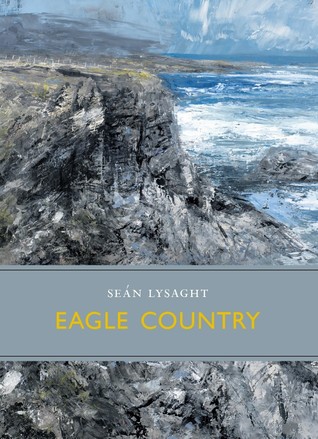
If someone was to ask where to see eagles, you’d almost certainly suggest Scotland. But a while ago there were eagles on the west coast of Ireland too, and their ghosts can still be seen in the names of places in the landscape.  decides to spend time seeking their eyries by walking the wind and storm-swept landscape. His prose is beautiful and this is another cracking book from little Toller


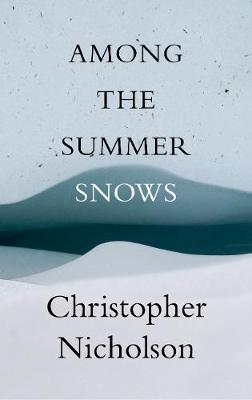
Snow? In the summer? It sounds like climate change gone mad and given the weather recently it could be quite feasible. However, this is more than that, Nicholson is seeking the pockets of snow in the highlands of Scotland that last deep into the summer and sometimes surviving until the next winter. Lovely book with some haunting beautiful photos of the snow cathedrals he finds.


The benefits of getting outside in the natural world are only just starting to be understood, and Nick Baker in this book suggests some things to do to engage your all senses. Not a bad book. 


For most people science is a big scary thing that they last did at school, but as Cooper explains in the book, anyone can be involved from observing birds in your garden on a weekend to searching the skies for new stars and galaxies. Lots of ideas on how to get involved.

As style icons go there are not as many that are as cool as the VW Campervan and this little book gives a brief overview of the evolution of them so far. Nice photos, but no depth


The newest nation on Earth is on the Antarctica Peninsula, a place that has now been made habitable by global warming, rising sea levels and the advent of ecopoets. These genetically modified humans had special adaptions to cope with the extreme cold and climate at the far south of the planet. This alternative future by Paul McAuley has a thriller and family story dropped onto it. I liked it, but the thriller elements were too predictable as ever.

Dixe Wills latest book in the ‘Tiny’ themed series is all about the small-sized attractions around our island. From the museums in telephone boxes to the tiny public squares in the very centre of London, the smallest theatres and smallest pubs then this is the book for you. 


Life on the open ocean is harsh relentless and unforgiving. To survive there takes resilience and millennia of evolution. Seabirds are masters of this environment, relishing the storms that drive the vast ships to save havens. In this book,  writes about at ten of the greatest seabirds and how they are coping with climate change and the devastation we as humanity are wreaking on the oceans. Fascinating stuff.


 This is a bang up to date contemporary story set in a sleepy Scotish village, but there is more to it than that, there is a mystery, secret and it is very eerie at times too. Excellent debut


Rambling has now reached the grand total of 36 series and on there Clare Balding has walked with all sorts of people in locations around the country. There are stories of her time at the Olympics and other sporting events. Very funny at times it is just good fun read.



Review: Walking Home: My Family and Other Rambles

Walking Home: My Family and Other Rambles Walking Home: My Family and Other Rambles by Clare Balding
My rating: 4 of 5 stars

Having been brought up with horses and ended up working with them Clare Balding spent a lot of her time on the back of one or heading to the next racecourse to watch more. But in 1999 she took a call from a radio producer asking if she ever walked anywhere. ‘Well, I walk the dog…’ was her reply. From that call, the Radio 4 series Ramblings came about.

It is still going strong all these years later and has clocked up a huge 36 series so far. She has managed to walk 1500 miles along footpaths that are well-known paths like the Pennine Way to ones that are local and special to the people that accompany her on the perambulations. There have been blisters, soakings, minor injuries and one moment when walking with a ranger who walked at twice her pace though she was going to die!

Whilst her walks have taken her all over the country, in all weathers, the thing that makes this series work so well is the people that she meets on the walks. There have been choirs, novelists, poets, couples, small groups who are using the medical elements of walking to cope with all sorts of issues from bereavement to those recovering from mental health issues. She has collected litter with David Sedaris and walked backwards and barefoot, but never naked. Clare is accompanied by Lucy and her furry microphone

Woven into the tales of other places, are stories of family life and her partnership with Alice and her time spent presenting the Olympics and other sporting events. Clare and her brother’s intention to finally tackle the Wayfarer’s Walk that is close to the place she grew up. This is not a taxing read, rather an entertaining and in parts a very very funny stroll through some beautiful countryside and a passing glimpse into people’s lives and how and why they walk.

View all my reviews

Review: The Seabird’s Cry: The Lives and Loves of Puffins, Gannets and Other Ocean Voyagers

The Seabird’s Cry: The Lives and Loves of Puffins, Gannets and Other Ocean Voyagers The Seabird’s Cry: The Lives and Loves of Puffins, Gannets and Other Ocean Voyagers by Adam Nicolson
My rating: 4 of 5 stars

Life on the open ocean is harsh relentless and unforgiving. To survive there takes resilience and millennia of evolution. Seabirds are masters of this environment, relishing the storms that drive the vast ships to save havens, navigating ten of thousands of miles, and when they do touch land inspiring those that see the fight as a species to survive to the next generation.

Nicolson has been fascinated by these utterly wild birds since visiting and then inheriting The Shiants, the Hebridean islands just of the coast of Lewis and seeing the kittiwakes and gannets and other seabirds that use the speck of land for nesting, he came to love all these birds that inhabited the islands and places that he loved. Beginning with the fulmar, a bird which he would watch for hours swirling around off the cliffs of the Shiants, he considers the lives and fortunes of ten of the seabirds, including the guillemot, gulls, shearwaters, the colourful puffins and the master of the southern ocean, the albatross. Weaving together the history of these birds along with cultural aspects, folklore, poetry and the latest that science has revealed about their habits and habitat.

Using the latest miniature technology to track the epic journeys they make, and some of these are vast, far out into the Atlantic using the trade winds to travel vast distances with little or no effort. Whilst this book is a celebration of their dogged existence and mastery against the elements; it is also a warning. As climate change bites harder these birds are beginning to suffer as the food they need to raise their young becomes scarce or it takes much longer to reach. They are also suffering because of the amount of plastic that is clogging up our oceans too, with a rise in young being found with bellies full of waste that they just cannot get rid off. Each chapter is illustrated by the beautiful drawings of Kate Boxer the simple imagery capturing the essence of the bird. There is lots of detail packed in this timely book, but Nicolson is such a quality writer that it doesn’t feel like a chore reading it. For me, I think that Sea Room just has the edge on this one, but like that book, his deep love for the birds that inhabit the wild windswept places is evident in the book; how much longer we will have them is not yet know.

View all my reviews

Review: Tiny Britain

Tiny Britain Tiny Britain by Dixe Wills
My rating: 4 of 5 stars

A copy of this was provided free of charge from the publisher in return for an honest review.

For a small country we have an awful lot of places to visit, but how do you sort the good from the bad, the quirky and interesting from the dull and tedious. This book is a good place to start. Following on from his other books concentrating on the ‘Tiny’ parts of Britain this one is all about the attractions that fit the criteria of places to go when you only have half an hour.

There are all sorts of different attractions in here to tempt you to move away from the mainstream, caves, piers, cinemas including one in a caravan, museums in telephone boxes, the cliff side hut of an opium-smoking vicar and the smallest county. There are railways, short ferry crossings and a bus service that if you miss you will have a very long wait for the next one. Some of the best views in the UK can be seen from a small slate bridge in the Lake District and he visits another bridge where a bear of very little brain gave us a game that amuses children and adults alike. Should all this travelling about be too much and you need a break, there are recommendations for some of the smallest pubs in Britain too.

This is another classic quirky and informative travel book by Dixe Wills. It is full of photos of the places that he is recommending to visit with clear instructions on how to find them. There is something in here for everyone, and if you have read and liked any of his other books on Tiny places then this book would be right up your very small street.

View all my reviews

Publisher Profile – Slightly Foxed

For me, independent publishers are the people in the industry who are prepared to take risks on new authors and books where the larger players either don’t wish to venture, or where they can’t see there being a return on. Each month in 2018 I am aiming to highlight some of my favourite independent publishers, along with some of their books that I have loved and also to have someone from the publisher answer a few questions. This month is the turn of Slightly Foxed


Each year the Uk publishes a staggering amount of books. A number of these end up on the bestseller lists, but in amongst those headline books are lots that never have the same level of hype and publicity. Sometimes this is because the budget isn’t there to promote them properly or they are languishing on a backlist. This is where Slightly Foxed comes in, it has an independent editorial team and a raft of people who contribute who are passionate about reading and books and who pick books that you almost certainly haven’t heard of. 

Not content with helping people discover books that most wouldn’t have heard of and feature them in their magazine, they took the steps to start to republish some of what they considered the best that had dropped out of print. They now have a selection of beautifully made books that are there for a new generation of readers. If the books and magazine aren’t tempting enough, then there are some carefully chosen literary gifts that will have you reaching for your wallet fairly quickly.

So thank you Steph and the Hattie, Olivia, Anna and Jennie at Slightly Foxed for taking time out to answer my questions.


Can you tell me a little about the history of Slightly Foxed?
Slightly Foxed started life in 2004 after the sale of the independent publisher John Murray to a large conglomerate. Gail Pirkis, former managing editor at Murrays and Hazel Wood, a Murray editor and journalist wanted to set up a bookish company with the emphasis on independence.  After much thought, Slightly Foxed, the quarterly literary review was the result.  It started around Gail’s kitchen table with a handful of staff, including Steph Allen from Murrays and Kathleen Smith from Waterstones. Kathleen moved on to the bookshop Topping & Co in Bath, but the original team are all still there – aided by Jen Harrison Bunning who arrived in 2006 and a strong team in the office (more of whom below).  It is a testament to Slightly Foxedthat staff have a tendency to stay.
After 4 years of publishing the quarterly we moved into books, specifically reprinting memoirs and autobiographies no longer in print. The Slightly Foxed limited editions, beautifully produced pocket hardbacks in an enticing array of coloured cloth have become collectors’ items.  Following on from their popularity we launched the Slightly Foxed paperback series and the Foxed Cubs – a children’s series of historical novels from Ronald Welch.  Plain Foxed Editions followed on. 
For a short while we had a second-hand and new bookshop on the Gloucester Road, which was wonderful while it lasted, but we have now established an online bookshop offering presents for bookish friends or relatives and a carefully chosen range of book-related merchandise, including bookplates featuring wood engravings by some of our favourite engravers.  
We have an active marketing team who combine traditional marketing (advertising, inserts etc) with a stylish social media presence, a growing partnership scheme with other like-minded magazines and organisations and regular events. We aim to launch each quarterly at an independent bookshop, or other venue that has a connection with our latest issue or edition and we have a one-day literary festival held every November in the Art Workers’ Guild in Bloomsbury
How is the company organised today and how many people work for you?

We have a busy office with four full time staff.  Jen Harrison Bunning looks after our website design, oversees our social media presence and future projects.  Anna Kirk deals with bookshops and our partnership scheme, alongside editorial assistance.  Olivia Wilson runs our renewal programme and will be our new podcast manager and along with Hattie Summers keeps our readers happy, dealing with their subscriptions and book orders.  Our editors work mainly from home, in Devon and London and we have three part-time staff who help with packing, marketing, accounts and events.  At busy times everyone does a bit of everything! We also have two contributing editors.  Once a month the editorial team and the marketing team meet up and we aim to get the full staff together at regular intervals – for a little gin and a catch-up.  Altogether there are 11 staff and between us there are also 6 office dogs and 3 cats! 
What is the company philosophy when it comes to selecting contributors for your journal?
Our contributors come from all different walks of life – some well-known in the literary world, some not – but what they all have in common is the ability to write personally and entertainingly about books they love and return to.  The end result is not so much a review magazine as a collection of literary enthusiasms and book recommendations.
How do you go about choosing the titles to be included in your portfolio?
Our memoir list is primarily selected by Gail and Hazel (our editors), from a mixture of favourite past reads, titles suggested by other staff members and some suggested by readers.
Tell me about your process after selecting a book for publication
After obtaining the rights from the agent, the book enters the editorial and design phase (see below).  We announce each title to our subscribers, a number of whom have a repeat order of the same limited edition number.  
How much effort goes into the design of the book, for example the cover design, font selection and so on?
The look of the issue and our editions is extremely important to Slightly Foxed.  The issues are A5 in size, 96 pages and are printed on high-quality, cream-coloured vellum to stand the test of time (many of our readers collect back issues and we have slipcases for them to house an annual subscription).  Each issue has a specially commissioned cover and we have a number of artists who return to us time after time. Cover artists include Posy Simmonds, Quentin Blake, Angie Lewin and Sue Macartney Snape among others. 
Our cloth-bound limited edition series was inspired by the pocket hardbacks of the 1920s-40s and much work goes into the choice of cloth colour, endpapers and ribbon. 
Key to the Slightly Foxedlook and ethos are our printers, Smith Settle in Yorkshire who have been with us from the first issue.  They are a traditional craft printer with a reputation for high-quality printing and bookbinding. 
Are there any up and coming books that you are publishing soon that we need to look out for?
We are bringing out Brendon Chase from BB, our third reissue of a BB title and greatly anticipated. We are also looking forward to bringing Rosemary Sutcliff’s historical novels for children in the Foxed Cub series.
In our limited edition series we have memoirs from Ernest Shepard, Jennie Erdal, Jan Morris and Eric Newby coming out in the next eighteen months. 
What debut authors are you publishing this year?
Something new for us – Philip Rhys Evan’s A Country Doctor’s Commonplace Book, due out in September. 
How did you come across them?
He is one of our readers and sent his manuscript in! 
What title of yours has been an unexpected success?
Terms & Conditions: Life in Girls’ Boarding-Schools 1939-1979by Ysenda Maxtone Graham.  We had wonderful review coverage for this title and reprinted 6 times! 
What would you say were the undiscovered gems in your catalogue?
There are almost too many to mention, but books that our readers have discovered for the first time and loved include Diana Holman-Hunt’s My Grandmothers and I, John Hackett’s I Was A Stranger, Gavin Maxwell’s The House of Elrig, Michael Holroyd’s Basil Street Blues and Adrian Bell’s trilogy of farming memoirs.  
How do you use social media for promoting books and authors?
Social media has become increasingly important to us for publicity and marketing purposes.  We use twitter and facebook to promote events, share news from other publishers and spread the literary word and we have a stylish, carefully curated instagram site which is worth taking a look at if you haven’t done already @foxedquarterly
Is working with book bloggers becoming a larger part of that process now?
Yes, Jen Harrison Bunning who plans and photographs our Instagram posts is connecting with an increasing number of book bloggers.  We always share any bloggers posts about Slightly Foxed and enjoy reading them in the office.
What does the future hold for Slightly Foxed?
Podcasts! We are excited to be joining forces with a podcast company to produce our own carefully selected content and round the table discussions from the Slightly Foxed team.
We will also be celebrating the publication of our 60thissue in December with an event at the London Library.
A big thank you to Steph and the team at Slightly Foxed for taking time out of their hectic schedules to answer those questions for me. I really appreciate it. I have contemplated getting a subscription for a while now, and after reading this have taken the plunge. If you do want their books, get them direct from the website or I would urge you to buy them from an independent bookshop as you can as this support them, the publisher and of course the author with one purchase. 

Previous Publisher Profiles:

Head of Zeus

Eland

Salt Publishing

Little Toller

Review: ReWild: The Art of Returning to Nature

ReWild: The Art of Returning to Nature ReWild: The Art of Returning to Nature by Nick Baker
My rating: 3 of 5 stars

In the Western world, the majority of people have become remote from the natural world. Rather than walk the paths and see the vistas from the hills, inhale the smell after summer rain. Or listen to the wind rustling the leaves and hear the sound of water running over rocks, most opt to stay inside, bathed in the blue-white light from their screens rather than absorbing the vitamin D from the sun.

The concept of rewilding in terms of adding the top level predators back into wild has been expertly covered in George Monbiot’s book, Feral. Baker does touch on that at the beginning of the book, but this primary focus in here is getting you out into the forests and on the moors and giving tips to maximise your enjoyment of the places you visit by using all your senses.

The capability of enhancing your senses lies within all of us, something that Baker realised when he had a close encounter with a bear in Alaska and in that moment all his senses came alive. He has various suggestions that will aid you in improving the way that you perceive the world around you. Some of them are sensible, learning to really see what is there, starting to use your ears to hear the myriad of sounds that surround you, even in what most consider to be silence. Not seeing is equally important; spending time in the twilight as it gets dark and letting your eyes adjust, gives a very different perception of the landscape around you; it also heightens your other senses. There are chapters on the senses that we tend to omit when we do venture outdoors, touch and taste.

He recommends walking barefoot along a woodland path and taking time to feel the texture of the things around. Taste is one sense that you rarely use outdoors; something that Terry Pratchett. Summed up in his quote when he said: All fungi are edible. Some fungi are only edible once, but this applied to real life as people generally aren’t willing to take the risk trying things when out in the wild. He does recommend it, tasting different leaves in a sensible and controlled way, but I really wouldn’t recommend slugs as he tried on one trip!!

It is not a bad book overall, he has some useful ideas about how to make ourselves more open to the natural world by using all of our senses as we walk through a glade or up a Tor. The writing is uncomplicated, making it fairly straightforward to read, but it doesn’t sparkle. The addition of the accident that his family suffered from was almost a superfluous addition to the text, it felt like it was shoehorned in. The points he was making were covered elsewhere. Not a bad read, and adds to the collective that getting out in the natural world is good for your soul.

View all my reviews

Review: Austral

Austral Austral by Paul McAuley
My rating: 3 of 5 stars

A copy of this was provided free of charge from the publisher in return for an honest review.

The newest nation on Earth is on the Antarctica Peninsula, a place that has now been made habitable by global warming, rising sea levels and the advent of ecopoets. These genetically modified humans had special adaptions to cope with the extreme cold and climate at the far south of the planet. Seen as sub-human, they were despised and feared by the rest of the population.

Austral Ferrado is a second generation ecopoet, or husky, as they are often called, and she has been in and out of prison as a convict and a is now corrections officer. Always skirting at the edge of the law she has been involved with the criminal mastermind there, Keever, he has a favour to ask and it is going to be one she cannot refuse. He wants her to speak to Deputy Alberto Toom, who is her uncle, as he arrives and the disturbance that will cause will be a distraction helping Keever make his escape. Except Austral has a something that she is keeping from Keever, a secret that could threaten her life if he knew.

Instead, she abandons the plan when she realises what is going to really happen, and almost by accident, kidnaps Kamilah, Toom’s teenage daughter. Now on the run with her cousin, Kamilah is her ticket off Antarctica. She is going to be reliant on all her skills to stay ahead of the authorities and Keevers gang in the forests and across icy plateaus of the peninsula, but even though all their tech is off to stop them being tracked, there is still someone who knows where they are.

This alternative spin on a dystopian future set on the continent of Antarctica is a great concept by McAuley, he has taken what will become mankind’s greatest challenge in the coming years and places a thriller story on it. The geoengineering that humanity had tried has not worked as they thought; some think because they shouldn’t have bothered and others in the story think that they didn’t go far enough. On this bleak future is the story of Austral, a woman driven by wanting to get what she feels she is owed. The plot is essentially a thriller and it is varied, fast paced and action packed at times and at others slow as she gets to know her cousin and fills in the backstory. He has managed to get a society that blends high tech elements with the low tech way that most people will be living. I am not a huge fan of thrillers, twists and turns aside, it is fairly straightforward to predict where they are going, but that shouldn’t put you off reading this alternative future.

View all my reviews

Review: The Little Book Of Camper Van

The Little Book Of Camper Van The Little Book Of Camper Van by Michael Heatley
My rating: 3 of 5 stars

As style icons go there are not as many that are as cool as the VW Camper van. First made in 1950 and called the Type 2, as the Beetle was the Type 1, it was based on a sketch by Ben Pon a Dutch importer of Volkswagens. From these humble beginnings as a work vehicle with just over half a tonne of load capacity, but versions were made that became ambulances, flatbeds and even hearses. The split screen with the two side doors was the first and production ran until 1967 with all sorts of variants. It became known as the T1 and the next model was the T2, and was quickly names the bay window. This morphed into the T3 the more boxy looking van. The T4 was the first of the front-engined and front wheel drive model that has now become the T6 in it’s most recent iteration.

This is quite a short book with an overview of every model and the camper versions that were made by official partners and third-party companies. It is full of colour photos of typical models and talks a little about the Surf and hippy culture that adopted these versatile vans. I own a T4 and was given this as a gift, but it is kind of an odd book in some ways. There is not enough depth on the subject in here for a dedicated fan, neither are there enough photos for someone who is not so worried about the history so much. It does come with a DVD and that isn’t bad either.

View all my reviews

Review: Citizen Science: How Ordinary People are Changing the Face of Discovery

Citizen Science: How Ordinary People are Changing the Face of Discovery Citizen Science: How Ordinary People are Changing the Face of Discovery by Caren Cooper
My rating: 4 of 5 stars

A copy of this was provided free of charge from the publisher in return for an honest review.

The last experience that most people had with science would have been at school, where for a fair proportion of those studying it really couldn’t get along with it. One maxim that I had heard to differentiate between the three core subjects was: if it moves it is biology, if it smells it is chemistry and if it doesn’t work it is physics. So the thought of getting involved in science in any shape or form has some people reeling. Yet you can; you don’t need a PhD or even a degree all you need is a fascination and curiosity for the world around you and anyone anywhere in the world can contribute.

In this book, Caren Copper tells the stories of the ways that normal people are getting involved in science projects. In this way, they are challenging the academic norms on how and more importantly who can collect scientific data. There are stories of people who have been collecting weather data for decades all around the United States, and how these thousands of daily records are showing worrying trends for more unstable weather. We learn of people who use spare computer power to run through protein folding sequences to assist scientists when they are creating the latest drugs. Nature lovers who wanted to ensure that turtles could lay their eggs in safety begun collecting the plastics and in particular the nurdles, that were being washed up in startling volumes on the beaches, a pressing environmental concern at the moment given the longevity of plastics.

People have always contributed to medical research, often unaware too, but there is now active participation in drug trials with people wanting to help others who will be suffering the same illnesses further down the line. Collective action by communities by people who are being made ill by companies who still pollute the atmosphere and waters is covered in one chapter, showing that how keeping records and having it backed up by scientific and government authority can make a difference. Details of migratory birds and butterflies that are observed by enthusiastic individuals add to the bigger picture that science understands about the twice-annual flow of life around the planet.

Probably the sphere of science that an amateur can have the most impact in is astronomy. All over the globe thousands of people every night head outside hoping for clear skies to observe the majesty of the night sky. Their observation are just as important as the astronomers who have control over the largest telescopes in the world. Even those who are averse to heading out can get involved too; there are websites that people can log onto to assist in verifying types of galaxies, something that us mere humans can do much better than computers at the moment. In fact, amateurs are so important in this field that they often appear on the peer-reviewed papers alongside the ‘real’ scientists.

Science is not as scary as you think and thankfully Copper has written a fascinating book that shows how you, yes you, can be involved in science. There are a list of resources in the back of the book and websites where you can go to find out more and sign up. It is American centric, but there are some links below where you can find out more:

http://www.nhm.ac.uk/take-part/citize…

https://blog.rsb.org.uk/everyones-a-s…

https://www.britishscienceassociation…

https://www.zooniverse.org

View all my reviews

« Older posts Newer posts »

© 2026 Halfman, Halfbook

Theme by Anders Norén — Up ↑