Category: Review (Page 20 of 133)

Every Breath You Take by Mark Broomfield

3.5 out of 5 stars

A copy of this was provided free of charge from the publisher in return for an honest review.

The mix of nitrogen and oxygen that we breathe every day without fail has kept us and countless other humans and other animals alive for hundreds of millions of years now. But since the industrial revolution, the amount of particulates and pollution has increased in the atmosphere relentlessly. This low-quality air is what we breathe in now and it is contributing to seven million deaths each year.

But what are these substances that we are breathing in? How do they affect us? And what is being done to reduce this pollution? In this fascinating book, Mark Broomfield sets about trying to answer some of these questions on a journey that begins on another planet and will take us all around the world to discover where this pollution comes from and the most recent science on how it affects us.

I liked this book, Broomfield, obviously knows his facts, which you would kind of hope for given his background and experience, but he has made the subject of air pollution both readable and interesting. He has laid the book out in a logical order too moving from the air that we breathe around us right up to the stratosphere. It is a popular science book, so sometimes the really technical details aren’t there, but there is a comprehensive series of notes in the rear of the book should they be needed. There were a couple of flaws, the occasional attempt at humour wasn’t really needed, and for me, the final chapter on one possible future ahead I didn’t think was really necessary. I would have preferred action points on how to go about improving the air quality around us. Worth reading if you are concerned with air pollution.

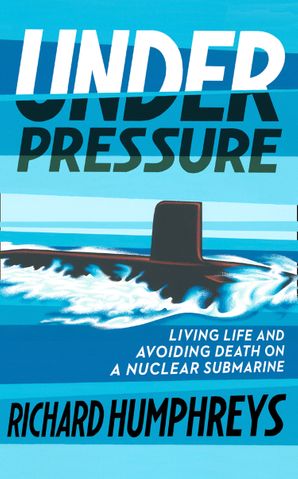
Under Pressure by Richard Humphreys

4 out of 5 stars

A copy of this was provided free of charge from the publisher in return for an honest review.

Flying as a method of transport is not the most thrilling way of moving around the world. You are stuck in a metal tube, but not for long and you do get to look out the window. The thought of being cooped up in a black metal tube, an unspecified depth under the sea for months at a time has no appeal at all.

But this is what the elite submariners do day in, day out in the oceans of the world for us. They have a fixed day, not one clue where they are and have no personal space and bugger all privacy. They are crammed into a 430ft x 33ft steel tube with 140 other smelly sweaty bodies and need to be able to work under pressure constantly. If that isn’t enough, there are nuclear weapons on board and it is powered by a reactor…

Richard Humphrey’s joined when he was 18 and served at the end of the 1980s. It was this time when no one knew if the cold war would suddenly go hot. The threat of being discovered by the Soviets was a real and the thought would chill his bones regularly.

My father was in the Navy and joined at the age of 15. When I was younger he tried to persuade me to sign up too, but it had no appeal at all. He never went into submarines, staying above the waves for a number of years. Having read this I think that I made the correct decision. In Under Pressure, Humphrey’s account of his time spent deep in the Atlantic Ocean has a lot to commend it. To begin with, you don’t have to go down in one of those boats and he gives a fairly decent account of life under the waves.

The balance of detail and atmosphere is about right too, I guess a certain amount has been withheld from the narrative as these are part of our nuclear security, but he is an entertaining writer. He is honest too, telling what he liked about this career and the part of navy life that he detested. There were even certain parts that made me laugh. If you have ever considered the submarine service, or want confirmation that this is never going to be for you, then you should read this.

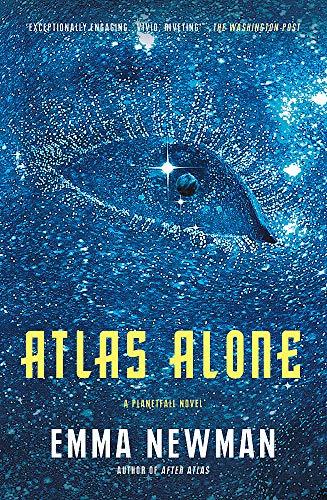
Atlas Alone by Emma Newman

3.5 out of 5 stars

Dee has been on the ship for six months now and she raging about the circumstances that led her to be on there as well as the events that happened after they had left. She wants to find was responsible, but her limited privileges on the ship mean she is making no progress on it at all.

She has been noticed though by someone in authority. She is asked to provide some analysis for them and they are happy with her results and work. She gets paid for it and there is the offer of more work, and most importantly, access to databases that she never knew existed. On top of that, she has been invited to play in some of the games or mersives by a designer.

These games are incredibly intense, unlike anything that she has tried up until now. It is only after she returns to normal life that she realises that one of the people in the game she was playing is now actually dead on the ship. Her friend, Carl is asked to investigate. And whilst she knows the game felt real, she really doesn’t believe that it was that real. Or was it? Perhaps the chatbot that only seems to be talking to her may have the answer. On not. She really doesn’t know…

Given how much of a blast the previous book was, I had high hopes for this, the final book in the series. And don’t get me wrong, It was good in various ways, however, I was disappointed for a few reasons that I will come to in a moment. I really liked the AI and the tech that they use to live on this ship that was made from the information in the capsule. The characters were engaging too, though Carl from book 2 was a little two-dimensional in this. Some of the details of the plot were good, the way that the action in the ‘mersives was having an impact on real life on the ship, blurring the differences between the real world and the virtual worlds. I had a problem with a couple of the aspects of the plot though, firstly it seemed too easy for events to take place given how monitored the passengers on the ship were and it kind of felt that it was rushed to a conclusion. I had hope for other things to happen, but sadly that wasn’t to be.

Generally, I thought it was a good series though with some high points and only the odd low one. I kind of hope there is going to be the fifth book in the series, as there are so many unanswered questions, but haven’t seen anything about it.

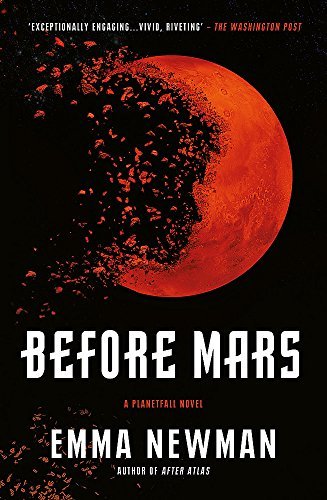
Before Mars by Emma Newman

4.5 out of 5 stars

A copy of this was provided free of charge from the publisher in return for an honest review.

Anna Kubrin has been travelling for months to get to Mars. She is fortunate to get a position, as the rest of the team has been there for a while and while her position as artist-in-residence is a little controversial, she can bring her skills as a geologist to the planet too. She has left on Earth a husband and small daughter and she is hoping that the year that she will be here with not damage that connection that she had with them.

But not everything seems right on the Mars base. She has a cool reception from one of the members of the team there, but she understands that some might not understand the reason that she is here. When she is shown the room that she will be staying in, she finds a painted note in her style advising her not to trust the colony psychologist. She recognises her writing but has no recollection of writing it. Her wedding ring has been changed too, and the engraving that was inside has gone.

It is not long before she is allowed out onto the surface of the planet so she can gain some inspiration for her art. She heads over to a place that no one has visited before, and behind a rock fits a footprint. It is from a boot similar to hers. There is no explanation as to why it is there and the colony AI is not particularly helpful when questioned about it. In some of the photos that she takes in preparation for her painting, there is something strange in the background of one that isn’t in the others

She wants to find out what happened and have an explanation for these strange events. This is mostly to prove that she is not losing her mind, but as she digs deeper she realises that this might not be a truth that she wants to know after all…

This book threw me a little, to begin with. It didn’t seem to follow the same timeline as the previous book, After Atlas. Part way through, I realised that whilst it is a series, it is the story of a series of events seen from a variety of characters perspectives. This book was much darker than the previous ones for a variety of reasons, that you will have to find out by reading the book. I am not going to say much more than that, just that if you like your sci-fi with an original take on a dystopian future then this series is really good and this is the best in the series so far.

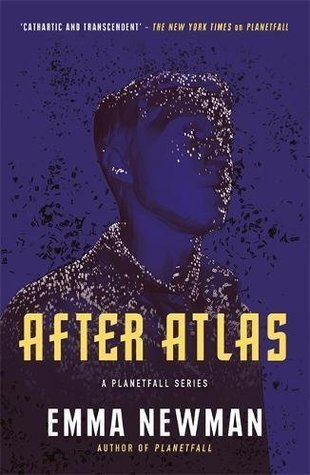
After Atlas by Emma Newman

4.5 out of 5 stars

Carlos Moreno was only a baby when Atlas left the earth. His mother was on the ship and his life changed forever at that point. He was left with his father who had not made the selection for the ship and they ended up in the hands of the religious cult known as the Circle run by the charismatic leader called Alejandro Casales. That was forty years ago and attention is being focused on the capsule that was left as it is going to be opened soon.

He left that cult and made his way to the UK where he now works for the Ministry of Justice as an investigator. He is called in by his seniors to investigate a death. Alejandro Casales has been found in his hotel room and they think that he will be the best person to find out who did it. Given the profile of Casaleshas, there are a lot of interested parties and the inevitable legal teams from various gov-corps around the world who have an interest in knowing what happened.
He will have to ignore all his shared history with Casaleshas, but as he uncovers each clue he realises that he is getting into murkier and murkier territory.

I thought this was a big step up from her first book in this series. The pace of it is really fast as she throughs her main character through the emotional and physical mill whilst trying to solve this mysterious case. I got halfway through the book and realised that he couldn’t have solved the case already. He hadn’t, there was just so much more to unpack in the story. I really liked how she has built the society, it feels very dystopian with a pervasive tech that is built into people when they are chipped at the age of 16. The way that the super rich can influence governments is equally worrying, it feels like she has created a natural extrapolation of where we are in society at the moment. Excellent stuff and onto the next now.

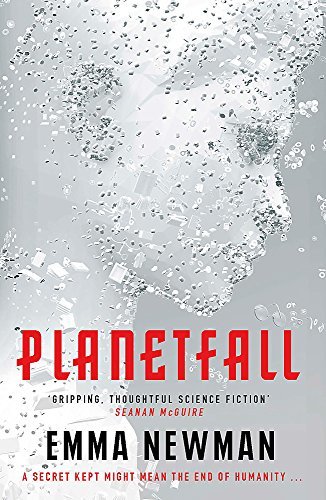
Planetfall by Emma Newman

3.5 out of 5 stars

It has been twenty-two years since Ren and the others in the colony arrived on this planet far beyond earth. It was a place that was untainted by overpopulation, pollution, and war and held a promise to reveal our place in the cosmos. They made their home at the bottom of an organic alien structure and in that structure is Lee Suh-Mi the founder of the colony.

But the truth of what happened to Suh-Mi is not known to the other colonists, Renata Ghali is one of the few who knows exactly what happened and she has kept that secret since. The arrival in the colony of a stranger from one of the other ships threatens the status quo, especially when they learn that he is related to Suh-Mi. He is there for a reason and if the other colonists were to discover the truth, who knows what might happen

I really liked this story. The world-building is very well done, in particular the alien structure and the way that the characters interact with it. I liked the varied characters, there is an unreliable narrator, the disrupter and the sneaky type and they all go to make the story work really well. The plot was well mapped out and there was enough in there to keep me reading it, which is always a good thing. If there was one flaw, there were too many loose ends and unanswered questions in this, but it is the first in a series of four, so I am hoping that they get answered in the rest!

The Seven Deadly Sins by Various, Tr. Mara Faye Lethem

3.5 out of 5 stars

A copy of this was provided free of charge from the publisher in return for an honest review.

The seven deadly sins are a list of vices within Christian teachings and currently are; lust, gluttony, greed, sloth, wrath and envy. I say currently as the order has been different in the past, as well as having others included in the list in the early church, where they had nine at one point!

But what is the modern take on these vices? To answer that seven of the most exciting, vibrant voices in Catalan literature, Raül Garrigasait, Jordi Graupera, Oriol Ponsatí-Murlà, Marina Porras, Anna Punsoda, Adrià Pujol, and Oriol Quintana have been asked to chose one and write about it in any way they like.

It makes for a wide-ranging and interesting series of essays too, with subjects covered as diverse as relationships with others at the age of 14, a lesson learnt about pride at a delicatessen and a young girl first learning about lust, when a neighbour left his wife for a Russian girl thirty years younger than him.

I really enjoyed reading these. Each author has a vice they have chosen to write about and this makes them all very different in terms of the context, specific subjects and even if they think it is a vice or not. I didn’t really have a favourite and they all complement each other so well. As an aside, I think that the translator has done a great job too, finding the individual voices and making a cohesive book.

Word Drops by Paul Anthony Jones

4 out of 5 stars

A copy of this was provided free of charge from the publisher in return for an honest review.

I am a big fan of books on language. If you like books on the origins of the words that we use every day, or learning about phrases that have vanished from our regular usage then you cannot go wrong with a book by Paul Anthony Jones.

I have liked all the books of his that I have read previously and can happily add this one to the list of books I have enjoyed. This collection of words has been harvested from his excellent Twitter feed, @HaggardHawks. A lot of the content is the tweets replicated, such as learning what is bookstave is or discovering the original definition for bumfuzzle.

The advantage that the book has over Twitter is that he has the opportunity to expand some of the entries. For example the faintly ridiculous word, whangdoodle has a long explanation of its origins and which Sunday in the year is called Quasimodo day. It is a good way of changing the pace of the book from just reading the brief language gems. Can recommend this if you like filling your mind with random facts to repeat to friends and family.

Where the Wildflowers Grow by Leif Bersweden

4 out of 5 stars

Leif Bersweden has been fascinated by wild plants for as long as he can remember. As a child, he would spend his afternoons collecting the various leaves and flowers that he found. Being given a digital camera meant that he could collect a digital record and he would then fill notebooks with his findings.

It was this fascination that led to a degree in biology and now a PhD from Kew on orchids. He has never fallen out of love with our green friends and have already been to various parts of the country with the intention of finding orchids he wanted to see for himself other plants in their location. He brogan this trip though in London with his mum looking for plants that were flowering on the 1st of January 2021.

It is the start of a journey that will take him from Ireland discovering mosses to Shetland seeking the mouse ear. He travels back to his original home in Wiltshire walking the paths of his childhood to the Fens where he was searching for lilies and cycles the south downs at peak bluebell time. The trips to see these plants and many many others took place over the year, the various travel restrictions and lockdowns meant that rather than it being some sort of grand plant tour, it was a series of shorter journeys written up as essays.

I really liked this, not only is he really knowledgeable, but what comes across is his enthusiasm. It is infectious to reading this makes me want to go and discover what is out in my local patch! He is utterly besotted by plants and this is evident in his prose and the pictures included in his book of him, especially when he gets to hold a bladderwort.

One of the main things that he is trying to show in this book is that some of the plants that he goes to see are extremely threatened by climate change and human actions. I liked that sometimes he is in a spot to see a very rare and specific plant and more importantly sometimes he is there just because being in the natural world is equally important. It is a good follow-up to his first book, The Orchid Hunter and can recommend reading it. Even better each of the plants that he mentions in the book can be seen on this website:

https://www.wherethewildflowersgrow.co.uk/

Jacobé & Fineta by Joaquim Ruyra, Tr. Alan Yates

3.5 out of 5 stars

A copy of this was provided free of charge from the publisher in return for an honest review.

I am not going to go into too much detail in this review as revealing too much information about these two short stories in this slender volume will probably spoil it for others.

In the first short story, Jacobé is looking after a young lad called Minguet while his parents are at work. It is a common thing that happened and the girl would always be called his teta. She still cares deeply for him even though he is a young man now and the story explores the relationship they had.

In the second story, a girl called Fineta is waiting by the beach for her father and brothers to return from their fishing trip. As she looks out to see she can’t see their sail on the horizon, but she is not alone. A man that is known locally as the Woodsman is walking past. She returns home as she does not like the man before coming back to the beach. When she returns later he is still there…

The writing in both stories is sharp and sparse, it is quite amazing what he can convey in such few words. He manages to convey with tiny details in the prose just what the landscape is like and the emotional turmoil that the characters are suffering from. If you like your short stories short and espresso in intensity, give this a go.

« Older posts Newer posts »

© 2026 Halfman, Halfbook

Theme by Anders NorénUp ↑