Page 18 of 185

The Swan by Dan Keel

3.5 out of 5 stars

The publisher provided a copy of this, free of charge, in return for an honest review.

What comes to mind for you when you see a swan? For me, there are several things. Firstly, they are sparklingly white, secondly they seem to glide effortlessly through the water, hardly making a ripple and thirdly they are absolutely bloody enormous!

Whilst I am always pleased to see a swan glide past on the River Stour near me, I am not as obsessed as Dan Keel is with this magnificent bird. They have enthralled and captivated him since boyhood and he has spent hours studying them to write about and more recently take photos of them.

This book is a finely crafted mix of his observations and encounters with the folklore, myths, art and culture of them. The chapter titles include The Aviator, The Lover and The Fighter. He expands on these subjects by keeping a diary of a swan nesting near him, describing how these birds fly and how they defend themselves in the wild.

I thought that this was really well done. If you are remotely interested in all of the wildlife that inhabits our ponds and rivers then the swan should be counted equally with birds like of the kingfisher. Keel has a passion for these huge birds and this is very evident in each chapter. There were lots of facts about swans that I was completely unaware of and he even busts some of the myths about them too. (They can’t break your arm!). I thought this was definitely worth reading.

November 2023 Review

November is a strange month, the evenings are dark, but it doesn’t have any of the bling of Christmas. It is also a short month, so I never feel I have the time to fit books in, in the headlong rush to the end of the year. But it was a good month for reading, with three books of the month. Here they are:


Books Read

The Ghost Of Ivy Barn – Mark Stay – 4 Stars

Lost Acre – Andrew Caldecott – 3 Stars

Prophet – Helen Macdonald & Sin Blaché – 3.5 Stars

A Line Above The Sky: On Mountains And Motherhood – Helen Mort – 2.5 Stars

Heavy Time: A Psychogeographer’s Pilgrimage – Sonia Overall – 3.5 Stars

Windswept: Life, Nature and Deep Time in the Scottish Highlands – Annie Worsley – 3.5 Stars

Morning In The Burned House – Margaret Atwood – 3 Stars

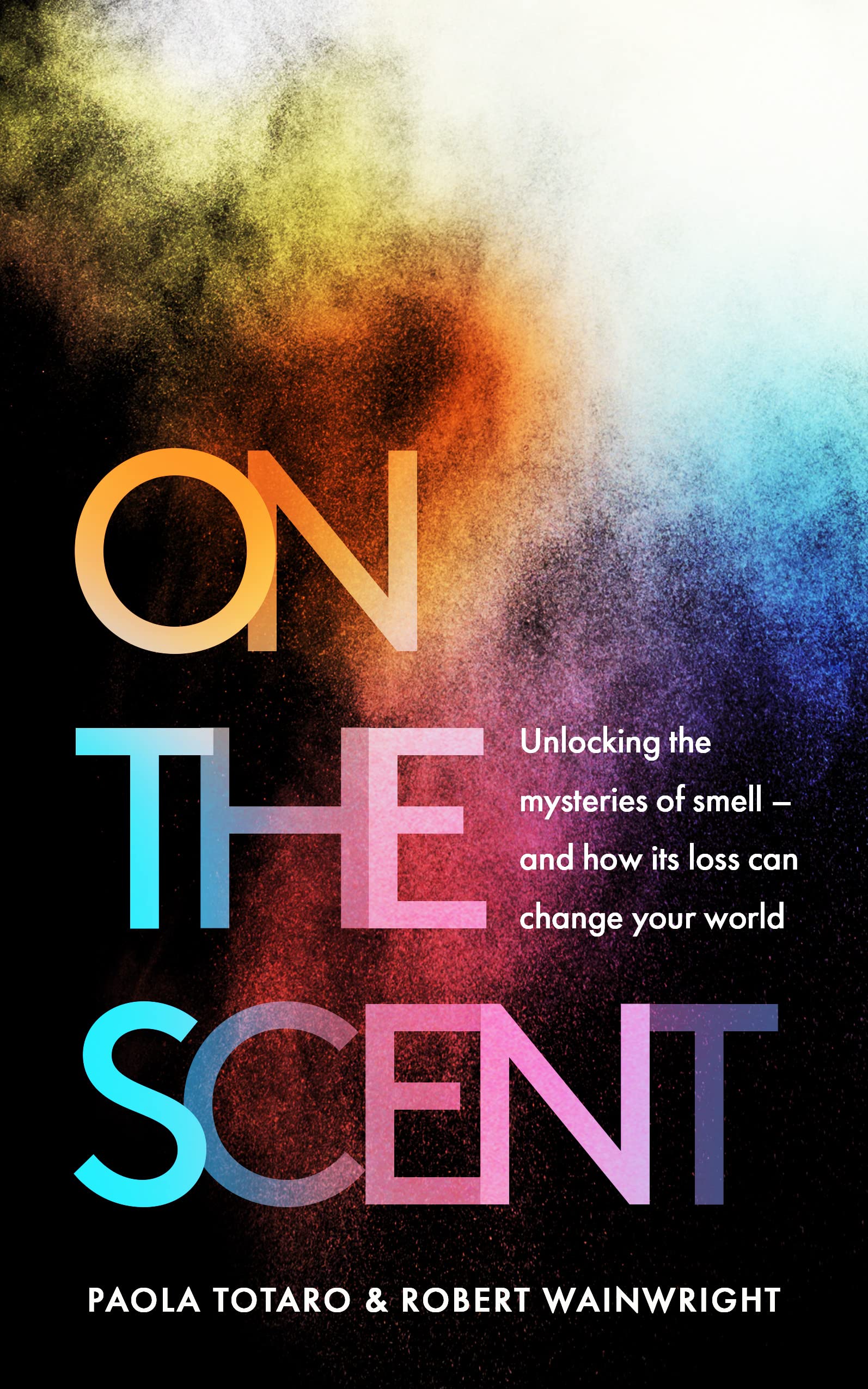
On the Scent: Unlocking The Mysteries Of Smell – And How Losing It Can Change Our World – Paola Totaro and Robert Wainwright – 3.5 Stars

The Possibility of Life: Searching for Kinship in the Cosmos – Jaime Green – 4 Stars

A Life in Car Design – Oliver Winterbottom – 3 Stars

Tree Thieves: Crime and Survival in the Woods – Lyndsie Bourgon – 3.5 Stars

In Sardinia: An Unexpected Journey in Italy – Jeff Biggers – 4 Stars


Book(s) Of The Month

Singing Like Larks: A Celebration Of Birds In Folk Songs – Andrew Millham – 4.5 Stars

Bibliomaniac: An Obsessive’s Tour Of The Bookshops Of Britain – Robin Ince – 5 Stars

Seriously Funny: The Endlessly Quotable Terry Pratchett – Terry Pratchett – 5 Stars


Top Genres

Fiction–28

Travel – 22

Natural History – 22

Poetry – 17

Memoir – 13

Fantasy – 9

History – 7

Science Fiction – 7

Environmental – 4

Science – 4


Top Publishers

Faber & Faber – 12

Simon & Schuster – 6

Bloomsbury – 6

Little Toller – 6

Penguin – 6

William Collins – 5

Jonathan Cape – 5

Headline – 4

Doubleday – 4

Elliott & Thompson – 4


Review Copies Received

Local: A Search for Nearby Nature and Wildness – Alastair Humphreys


Library Books Checked Out

Elixir : In The Valley At The End Of Time – Kapka Kassobova

Sea of Tranquility – Emily St. John Mandel

Mischief Acts – Zoe Gilbert

52 Ways to Walk: The Surprising Science of Walking for Wellness and Joy, One Week at a Time – Annabel Streets


Books Bought

Nature Writing for Every Day of the Year – Ed. Jane McMorland Hunter

The Flying Sorcerers – Ed. Peter Haining

The Wizards of Odd : Comic Tales of Fantasy – Ed. Peter Haining

The Hawaiian Archipelago: Six Months Among the Palm Groves, Coral Reefs and Volcanoes of the Sandwich Islands – Isabella Lucy Bird

Lore Of The Land: A Guide to England’s Legends, from Spring Heeled Jack to the Witches of Warboys – Jennifer Westwood & Jacqueline Simpson

Then We Sailed Away – John Ridgway, Marie Christine Ridgway & Rebecca Ridgway

I Came, I Saw: An Autobiography – Norman Lewis

Honey and Dust: Travels in Search of Sweetness – Piers Moore Ede

Into the Heart of Borneo – Redmond O’Hanlon

The Road to Oxiana – Robert Byron

Travels with a Donkey in the Cévennes – Robert Louis Stevenson

Who’s In The Next Room? – Thomas Hardy & various

An Area of Darkness – V.S. Naipaul

Christmas Ghost Stories – Various

Monet in the 20th Century – Various

The Art of the Lord of the Rings – Wayne G. Hammond, Christina Scull & J.R.R. Tolkien

Tibetan Foothold – Dervla Murphy

Leaves from the Fig Tree – Diana Duff

London is a Forest – Paul Wood

Nightwalking: Four Journeys into Britain After Dark – John Lewis-Stempel

Dress & Textiles – Rachel Worth

The Unadulterated Cat: The Amazing Maurice Edition – Terry Pratchett

Isle of Purbeck in Pen & Ink – Roy Carr

Travels as a Brussels Scout – Nick Middleton

Uneasy Rider: The Interstate Way of Knowledge – Mike Bryan

An Encyclopaedia of Plants in Myth, Legend, Magic and Lore – Stuart Phillps

Photographing Flowers: Inspiration*Equipment*Technique – Sue Bishop


So any from that huge list that you have read, or now seeing them, now want to read? Let me know in the comments below.
December 2023 TBR

We have made it to December! And it snowed in Dorset yesterday. It means that we can mention the C word now. I have 14 books to go to reach my Good Reads Challenge of 190 so there are some very short books in this list:


Still Reading

Travellers Through Time: A Gypsy History by Jeremy Harte


Challenge Books

Bloom: From Food to Fuel, the Epic Story of How Algae Can Save Our World by Ruth Kassinger

be/longing: Understories Of Nature, Family And Home by Amanda Thomson

Feather, Leaf, Bark & Stone by Jackie Morris


Winter / Christmas Books

The Holly King by Mark Stay

I Hate Christmas: A Manifesto for the Modern-day Scrooge by Daniel Blythe

Nature Tales for Winter Nights by Ed. Nancy Campbell

Dead Drunk: Tales of Intoxication and Demon Drinks by Ed. Pam Lock


Other Books

Malarkoi by Alex Pheby

Shitstorm by Fernando Sdrigotti

Wild Isles by Patrick Barkham

Soundings: Journeys In The Company Of Whales by Doreen Cunningham


Review Books

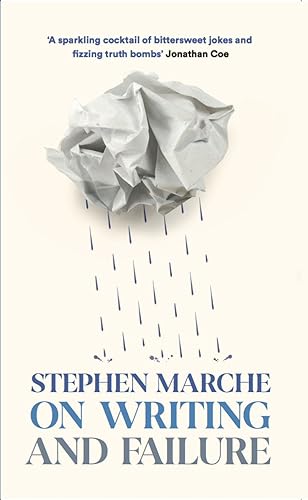
On Writing and Failure by Stephen Marche

Yew by Fred Hageneder

Now is the Time to Know Everything by Simon Moreton

Wild Wanderings by Phil Gribbon

Way Makers: An Anthology of Women’s Writing about Walking by Kerri Andrews

The Lost Flock: Rare Wool, Wild Isles and One Woman’s Journey to Save Scotland’s Original Sheep by Jane Cooper

The Purple Land: An Adventure in Uruguay Or The Banda Oriental by W. H. Hudson

Cry of the Wild: Tales Of Sea, Woods and Hill by Charles Foster

Moderate Becoming Good Later: Sea Kayaking the Shipping Forecast by Katie Carr & Toby Carr


Poetry

The Last Hedgehog by Pam Ayres & Alice Tait


So that is it for the year. Some of those have been on numerous TBRs and others haven’t. A couple of these are Christmas presents and need to be read before I wrap them. (Doesn’t everyone do that?)

Any that take your fancy? Let me know in the comments below

New to My TBR

Anyone who reads this blog (thank you to you all), will know that I buy and acquire a lot of books, so this week is quite appropriate for non-fiction November, it is New To My TBR.  So have I bought any books in November, yes of course…

So here are all the non-fiction books that I bought this month that I haven’t read before:

Nature Writing for Every Day of the Year by Ed. Jane McMorland Hunter

Enjoy a whole year of the very finest nature writing, with one carefully selected piece to savour every day.

This beautifully illustrated daily anthology brings you the very best of nature writing from around the world and through the centuries, from Pliny the Elder’s Natural History to modern authors such as Helen Macdonald and Robert Macfarlane. Encompassing fact and fiction, essays and field guides, letters and diaries, it’s a rich banquet of prose, the perfect companion to help your mind escape into the world of nature every day.

It contains descriptions of nature in all its Virginia Woolf on snails, Kenneth Grahame on the charms of a riverbank, Willa Cather on the rolling American prairies, and, via L. M. Montgomery, Anne of Green Gables on Octobers. David Attenborough pops up to talk about our responsibility to the natural environment, Edith Holden provides evocative descriptions from The Country Diary of an Edwardian Lady , and Henry David Thoreau, of course, sends dispatches from Walden Pond . We meet Rudyard Kipling’s jungle animals and Jack London’s wild dogs, and Mark Twain explains why a camel is not jumpable.

Keep this wonderful celebration of nature by your bedside and it will become the perfect start or close to each day of the year.


The Hawaiian Archipelago: Six Months Among the Palm Groves, Coral Reefs and Volcanoes of the Sandwich Islands by Isabella Lucy Bird

Isabella Bird visited the Sandwich Islands in 1871, when she was forty. Her letters home to her sister Henrietta have a remarkable freshness and spontaneity, and reveal the transformation of a Victorian invalid into a fearless horsewoman and enthusiastic mountain-climber, who thought nothing of riding for miles soaked with rain and fording terrifyingly swollen rivers. She undertook a thirteen-hour unaccompanied trek to the summit of the extinct volcano of Mauna Kea, revelling in the security with which she was able to travel and camp out without guides or companions. At the end of her stay she was able to make the perilous ascent to the summit of Mauna Loa, the largest volcano in the world, camping for the night on the edge of the crater, at nearly 14,000 feet.


Lore Of The Land: A Guide to England’s Legends, from Spring Heeled Jack to the Witches of Warboys by Jennifer Westwood & Jacqueline Simpson

Where can you find the ‘Devil’s footprints’? What happened at the ‘hangman’s stone’? Did Sweeney Todd, the demon barber of Fleet Street, ever really exist? Where was King Arthur laid to rest? Bringing together tales of hauntings, highwaymen, family curses and lovers’ leaps, this magnificent guide will take you on a magical journey through England’s legendary past.


Then We Sailed Away by John Ridgway, Marie Christine Ridgway & Rebecca Ridgway

In October 1993 the Ridgways closed their school of adventure and left their croft on the west coast of Scotland to embark on an 18-month adventure voyage to the Pacific and back in their yacht, the “English Rose VI”. This is the story of one family’s dream to “get away from it all”. It tells how John Ridgway, his wife Marie Christine, their daughter Rebecca and their adopted Quechua Indian daughter Elizabeth decided to weather violent storms, tempestuous arguments and everyday domestic life against a backdrop of not-so-ordinary locations: an Atlantic crossing; the Caribbean; the Panama Canal; the South Sea Islands; South America (including a trip to Peru where Elizabeth has a moving reunion with her family); and Antactica.


I Came, I Saw: An Autobiography by Norman Lewis

With dry, laconic wit, Norman Lewis remembers his transformation from stammering Welsh schoolboy to worldy wise, multilingual sergeant in the Intelligence Corps, on the cusp of becoming a writer. With a calm, observant gaze from the start, the young Norman moves from Spiritualist parents in Enfield to live with supremely dotty aunts in Carmarthen, whose baking of a weekly cake to feed the jackdaws gives the book its title. Escaping his eccentric family by marrying the daughter of a Sicilian associate of the Mafia, Norman made a living as a wedding photographer and by dealing in cameras, while restoring and racing Bugattis for pleasure. Here we see his first journeys in Spain, Cuba and the Yemen and a wartime spent in Algeria, Sicily and Italy, all of which acted as an apprenticeship for his career as one of the twentieth century’s greatest travel writers.


Honey and Dust: Travels in Search of Sweetness by Piers Moore Ede

After being seriously injured in a hit and run, Piers Moore Ede went to work and recuperate on an organic farm in Italy. There he met a beekeeper, Gunter, who showed him, for the first time, the wonders and magic of the beehive. Battling depression and afraid to face the future, Piers finds a renewed sense of purpose through his work with the bees. Up close amongst the highly organised life of a hive, he realises that somehow honey might be the salve that can help him. Back in England Piers, still only in his mid twenties, decides upon a quest to seek the most wondrous honeys in the world. From the terracotta bee jars of the Lebanon to the clay cylinders of Syria, slowly his personal tribulations dwindle into perspective against the backdrop of the fast-shrinking traditions of the honey-farmers. Hunting wild honey from cliffs with Gurung tribesman in Nepal, and in vast jungle trees with Veddah tribesmen in Sri Lanka, Piers draws close to the very origins of life. But honey itself is the real luminary of Honey and Dust – honey, the wonderful invigorating golden manna that Virgil believed was of divine origin. Honey and Dust is about the world’s oldest and purest food. But it also a personal quest of healing, an attempt to regain a sense of place in the world. Meditative, and keenly observa


Into the Heart of Borneo by Redmond O’Hanlon

The story of a 1983 journey to the center of Borneo, which no expedition had attempted since 1926. O’Hanlon, accompanied by friend and poet James Fenton and three native guides brings wit and humor to a dangerous journey.


The Road to Oxiana by Robert Byron

Byron’s The Road to Oxiana is considered by many modern travel writers to be the first example of great travel writing. It is an account of Byron’s ten-month journey to Persia and Afghanistan in 1933-34 in the company of Christopher Sykes. Byron had previously travelled to widely different places; Mount Athos, India, the Soviet Union, Tibet. However it was in Persia and Afghanistan that he found the subject round which he forged his style of modern travel writing, when he later came to write up his account in Peking, his temporary home.

Writer Paul Fussell wrote in his 1982 book Abroad: British Literary Traveling Between The Wars that The Road to Oxiana is to the travel book what “Ulysses is to the novel between the wars, and what The Waste Land is to poetry.” Travel writer Bruce Chatwin has described the book as “a sacred text, beyond criticism,” and carried his copy “spineless and floodstained” on four journeys through central Asia.


Travels with a Donkey in the Cévennes by Robert Louis Stevenson

OBERT LOUIS STEVENSON was not only a gifted writer, he was also an indefatigable traveller. His thirst for adventure was formed by his boyhood visits to remote Scottish lighthouses, and he spent much of his life fleeing the rigours of both cold climates and social orthodoxy. Along the way he canoed through Belgium and France, booked passage to and across America, and finally famously settled in Samoa in the South Seas. The walking trip that Stevenson describes in Travels with a Donkey in the Cevennes (1879) was taken when the nascent author was still in his twenties and pining for a lost love. Accompanied by Modestine, the eponymous donkey he hired to carry his camping gear, the journey proved both challenging and charming. The book is infused with all of the qualities that make Stevenson the most popular of humour and humanity, poetry and perspicacity, ebullience and intelligence. And his timeless exhortation continues to inspire all true For my part, I travel not to go anywhere, but to go. I travel for travel’s sake.


An Area of Darkness by V.S. Naipaul

Traveling from the bureaucratic morass of Bombay to the ethereal beauty of Kashmir, from a sacred ice cave in the Himalayas to an abandoned temple near Madras, Naipaul encounters a dizzying cross-section of browbeaten government workers and imperious servants, a suavely self-serving holy man and a deluded American religious seeker. An Area of Darkness also abounds with Naipaul’s strikingly original responses to India’s paralyzing caste system, its apparently serene acceptance of poverty and squalor, and the conflict between its desire for self-determination and its nostalgia for the British raj. The result may be the most elegant and passionate book ever written about the subcontinent.


Monet in the 20th Century by Various

An illustrated examination of Monet’s work between 1900 and 1926, which sets the paintings in a personal as well as an historical context. The authors also assess the artists public persona and his personal and professional strategies. The text is designed to accompany an exhibition at the Boston Museum of Fine Arts in September 1998.


Tibetan Foothold by Dervla Murphy

Tibetan Foothold is Dervla Murphy’s account of the day-to-day life in an orphanage for Tibetan children in the refugee camps of Northern India in the 1960s. Dervla vividly describes the children’s lives in squalor while a handful of dedicated volunteers do their best to feed and care for them, attempting to keep disease at bay with limited resources. Dervla’s heart-rending account is interwoven with her own observations on the particular cultural and social problems associated with trying to help a people who have lived in isolation from the rest of the world, and she becomes a perceptive witness to the inner realities and sometime inadequacies of aid work.


Leaves from the Fig Tree by Diana Duff

Raised by eccentric grandparents at Annesgrove, an Irish stately home, Diana Duff grew up surrounded by family ghosts, banshees and buried treasure. At 18, Diana entered the glamorous world of 1950s Kenya, becoming a stand-in for Grace Kelly before embarking on a career as a nurse. After marrying a young officer in the Colonial Service, Diana spent her nights shivering and alone, gun in hand, as the Mau Mau rebellion threatened to engulf her. Moving to Tanganyika, Diana went on to found the first inter-racial nursery school in East Africa before a transfer saw the family shifting to South Africa in the 1960s at the height of apartheid.


London is a Forest by Paul Wood

Can a city be a forest? At first glance, this does not chime with our childhood idea of the `wild wood’ – a dark entanglement of trees, where humans fear to tread. But a forest does not need to be dense and impenetrable, and it’s not unheard of for people to live in them either. In London, 8.6 million people are crammed into just 600 square miles alongside 8.3 million trees, and millions upon millions of other plants, insects and animals. According to one UN definition, this makes the city a forest. The Forestry Commission agree, describing London as the world’s largest urban forest. And it’s a very special, urban forest at that. Following a number of trails through the rich diversity of London, this book will look closely at the urban forest, our relationships with it and attitudes towards it and will uncover the fascinating stories and secrets it holds. Through these paths that meander through the urban forest, author Paul Wood explores its geography, its past and future, and looks at the remarkable variety of life supported in this unique metropolitan ecosystem. From the edgelands to the beating heart of the clamorous 21st century megacity, a wealth of arboreal details, history, legend and anecdotes will be revealed along the way. You’ll discover some of the species found here, and the people who have helped to shape this remarkable environment over many centuries. Complementing the trails, Wood will look in more detail at the fascinating stories of some of the iconic, and some of the more hidden species that define the urban forest. These will include familiar tree species like the London Plane, Oaks, Cherries and Hornbeam, alongside the rare Wild Service Tree and the surprising Tree of Heaven. Other inhabitants of the forest such as parakeets, urban foxes and, of course, humans will also be featured.


The Isle of Purbeck in Pen & Ink by Roy Carr

The Isle of Purbeck is a fascinating part of Dorset which is a little paradise and a delight to both local people and visitors. This easy-to-read book is full of all the information needed to offer the reader, or would-be explorer, a feel for an island full of beauty, history, archaeology, architecture, mystery and legend. As armchair reading, it is designed to inspire the wish to discover new places or capture memories and in the field it is an essential companion for a walk. It is especially useful as a guide to new visitors. The book embraces the magnificent Jurassic Coast from its sandy beaches to its cave-ridden limestone and chalk cliffs, broken only by sheltered caves. Inland, the ridges, valleys and rolling heartland offer picturesque views and are a haven for wildlife. Iconic, stone-built villages abound, most with accompanying church and manor house, adding their own characteristics to the surrounding countryside. Many are depicted in over 300 meticulous illustrations and maps for which an explanation is given in hand-written text. The drawings were created from the author’s direct experience of countless walks and thorough investigation of Purbeck over a number of years.


Travels as a Brussels Scout by Nick Middleton

In a modern rendition of the Grand tour of Europe, Nick Middleton set out to seek the truth behind the myths we British like to propagate about our European neighbours….. The Belgians are boring, the French eat nothing but Frogs legs and garlic and the Germans are officious and efficient. He followed a trail of contemporary sights and experiences that every well-rounded Eurocitizen should encounter think of the British and to see how different or alike we all are now that we are linked by a common market.


Uneasy Rider by Mike Bryan

In this offbeat and original road book, cultural observer Mike Bryan takes issue with the traditional idea that the “real” America is to be found somewhere on our scenic backroads. He argues instead that it is right out in the open on the interstates, and he travels the big highways of the Southwest to prove the point.

Bryan engages motel operators, state troopers, and travelling salesmen. He discovers the world’s only “No Smoking” ranch; hobnobs with elusive novelist Cormac McCarthy; spars with Bob Sundown, who prefers his covered wagon to any car. Between encounters, he contemplates everything from America’s pioneering spirit to its history of road building. In the end, he discovers that the interstates, far from producing the homogenous society he feared, nourish a rich community of eccentrics. And that ultimately, as this deeply romantic travelogue shows, there is no such thing as an “ordinary American.”

Quite a lot… This doesn’t include the fiction I have bought or the two or three that I have read but never owned a copy of…

Any here that you’ve read or that take your fancy? Let me know in the comments below.

Wasteland by Oliver Franklin-Wallis

4 out of 5 stars

I suspect that I am like most people, I try to recycle as much as I can, I have general recycling, a box for batteries and defunct electronics, bags for scrunchy and soft plastic and we have one of the hot bins that makes vegetable peelings into fine compost. But I still have to throw stuff in the regular bin, not everything can be recycled as yet sadly.

But what happens to that stuff that the council collects every other week? I suspect that I am like most people and think out of sight out of mind and move on to the next thing in my life. One man who wondered just what happened to the rubbish he and his family were creating was Oliver Franklin-Wallis, who decided to follow his nose for a story.

In this book he goes to the municipal waste sites in the UK, to see what the waste industry does with the tonnes of stuff we throw away. But this isn’t just a UK issue, the 8 billion of us in the world generate millions of tonnes of waste and a lot of this is shipped around the world to countries that have ended up dealing with it, so he heads out to Africa to see where the ultra-cheap clothes end up after people have worn them a handful of times and onto India to see the enormous landfill sites there and the people picking through the rubbish with the hope of scraping a living.

As well as following the rubbish trail, he looks at how companies are twisting some of the recycling that we think is doing good to their own ends and profit margins. It makes for quite shocking reading, but a little part of me isn’t surprised in some ways. He also makes a visit to Sellafield, passing the armed guards at the entrance to see what we are doing with the waste from nuclear plants. This deadly radioactive material still has the possibility of harming 300 generations later so what we do with it has to take into account a changing world. Terrifying stuff.

This is a really important book, even though it isn’t the most pleasant of reading material. Franklin-Wallis is a tenacious researcher, prepared to go where most won’t and isn’t afraid of asking difficult questions to those that he meets. He doesn’t always get the answers he is looking for, which in its own way speaks volumes. Well worth reading and I am so glad that this book doesn’t come with a scratch and sniff card…

Worldview Shapers

One of the greatest things about reading nonfiction is learning all kinds of things about our world which you never would have known without it. There’s the intriguing, the beautiful, the appalling, and the profound.

This is one of the reasons that I read non-fiction to learn about subjects and people and get a different viewpoint on something that I may not have considered up until now. A good non-fiction book will have had the appropriate fact-checking done by editors and have a balanced view of a subject. One of the genres that doesn’t always have this is memoir, these are an account of one person’s particular worldview at a stage in their life. This doesn’t mean that you should discount them, because how people perceive something gives you a different perspective.

What nonfiction book or books have impacted the way you see the world in a powerful way?

This is a really difficult question. I had to think long and hard about this and the books that I came up with are about the climate and the way that humanity has irreversibly shaped it over the past 500 years. There are numerous books that have been written about this subject and I must admit that I haven’t read them all. But of all the books that I have read, these below have been eye-opening:

Nomad Century by Gaia Vince
High Tide by Mark Lynas
The Nutmeg’s Curse by Amitav Ghosh
Silent Earth by Dave Goulson

And terrifying…

Is there one book that made you rethink everything?

I have thought long and hard about this and can categorically say there isn’t one specific book that has made me rethink everything. That said, there have been lots of books that have made me want to discover more about that particular subject, For me reading is a journey, and the different paths that books take me down open up other opportunities and avenues.

Do you think there is a book that should be required reading for everyone?

Again, I don’t think so. Being told that I must read a certain book by an author reminds me of reading books at school where you are made to read books, that for me at least were utterly irrelevant and mostly really really dull.

My philosophy is that people should read exactly what they want. These are not rules, but guidelines that I find useful:

Find people who have similar tastes to you and trawl their real or virtual shelves for ideas

Go to the library and get books out that might not be your thing and give them a go.

Read widely.

Don’t be afraid to stop reading a book if it is not the right time or you are not getting on with it. (you’re not at school now!)

Have you had any life-changing (and no religious books) that have changed you as a reader? Let me know in the comments below.

Book Pairings

Anyone who follows this blog or me on various social media sites will know that I have a passion for non-fiction. I do read fiction, but not that much. So, when I looked at the subject of this weeks post, I knew that it was going to be a struggle to come up with a list of books that I have read that would fit.

The idea of this is to marry together a fiction book with a non-fiction book and read them in parallel or sequentially, the purpose of which is to gain a wider appreciation of the subject or place that you have chosen. It is something that I like the idea of as one of the philosophies that I have is that fiction deals with truths and non-fiction with facts and that by choosing the right books, you can gain more insight into a particular thing that you are interested in.

I couldn’t think of many times when I had read a fiction and non-fiction book that had some link to each other, but then when trawling through my lists of books there have been very few occasions when this happened. Strangely enough, the non-fiction genre was travel and when I was on holiday in Sicily back in 2019. I had taken three non-fiction books on the island and one fiction book:
In Sicily by Norman Lewis
The March of the Long Shadows by Norman Lewis
Sweet Honey, Bitter Lemons: Travels in Sicily on a Vespa by Matthew Fort
Sicily: Through the Writers’ Eyes by Horatio Clare

There is something about reading a book set in the location that you are currently in.
I often read three or four books about the same subject, for example, four books about the winter a couple of years ago. And I may do that more often in the coming year. I have at least four books on Japan that are on my TBR including
Abroad in Japan by Chris Broad
The Only Gaijin In The Village by Iain Maloney
Fifty Sounds by Polly Barton
The Roads to Sata by Alan Booth
I may add in a couple of Murakami books to that list and have a Japan month!

I have had a think possible subjects that you might be able to combine if you’d like to do this:
Historical fiction and history
Place and travel
Memoir
Biography
Science fiction and science

So what are your favourite book pairings? Let me know in the comments below

Life At Full Tilt Ed. By Ethel Crowley

4.5 out of 5 stars

The publisher provided a copy of this, free of charge, in return for an honest review.

Dervla Murphy is legendary in the genre of travel writing. The book she is best known for, Full Tilt, is the record of her ride from Ireland to India. It was something that she wanted to do from the age of 10 when the dual presents of a bicycle and an atlas gave her this idea. Because she had to look after her mother she wasn’t able to do this until the age of 32.

She kept a diary and was persuaded to write it up and send it to a guy called Jock Murray. The rest is history and this was the first of 27 books she wrote over the course of 50 years of her travels all over the world. She travelled simply, preferring to be on her trusty bike, Roz and relying on the hospitality of the people that she encountered on her journeys. Having a daughter didn’t stop her and Rachel would become a companion on her travels in later stories.

This book is a compilation of all the books that Murphy wrote. Crowley has separated the books out into the decades that they were written and picked her favourite passages from this book. For me, it shows two things, her evolution as a writer and the way she changes from somebody being amazed by all the things she saw to someone who became appalled by the poverty and injustices of the world.

If you are a fan of Dervla Murphy then I would say this is an essential addition to your collection. Highly recommended.

Choosing Nonfiction

How I choose non-fiction is a question that I have never asked myself before. But as that is the subject of this week’s post, so I really had to dig deep and think about what I do when I add a particular book to my TBR. It isn’t really a fully logical process, nor is it completely random, it is kind of a hybrid of both.

After reading in excess of 3500 books, I know what I like and more importantly, I am very aware of what I don’t like. This doesn’t mean that I won’t give books a go though.

So how do I pick the non-fiction books that I want to read?

Firstly, I select by genre. I have two genres, travel and natural history, that I will almost always add regardless of who wrote it, bar the very odd exception. Other favoured genres include science, history and biographies.

Secondly, if it isn’t a book from those genres, then it needs to be doing something else to attract me. Is it a book by an author that I have read before? Is the subject something that I am interested in or as happens sometimes, does the cover look good enough to make me want to pick it up and investigate it further.

Thirdly, I scour the catalogues that publishers publish twice a year and drag from them a list of books that I want to read. I publish these as my anticipated books for the spring and autumn. But I don’t find every book, some I miss and there are publishers where I never seem to be able to find out what they are releasing.

Fourthly, one of the places where I find new books is strangely enough in bookshops. Amazing isn’t it? A well-curated independent bookshop often has gems that I wasn’t aware of, and they get added to the TBR too.

Lastly, charity shops are one of my weaknesses. I am looking for out-of-print books, those rare books that have slipped through the net, signed editions and the joy of finding an absolute bargain. whilst I do buy second-hand books online, I have a list in my head of books that I am looking for and I get a lot of satisfaction on finding a copy.

So how do you choose the non-fiction that you want to read?

Let me know in the comments below.


October 2023 Review

October flew by. Not help by being really busy at work and in life in general. But I did get 16 books read, went to London for the first time in ages and went to the Launch even for Life a Full Tilt in the actual John Murray building. So here is what I read and bought this month:


Books Read

Wintering Out – Seamus Heaney – 3 Stars

Rocks and Rain, Reason and Romance – David Howe – 3 Stars

Off the Shelf: A Celebration of Bookshops in Verse – Carol Ann Duffy – 3.5 Stars

Natures Wonders – Jane V. Adams – 3.5 Stars

The Girl Who Forgets How To Walk – Kate Davis – 3.5 Stars

Am I Normal?: The 200-Year Search For Normal People (And Why They Don’t Exist) – Sarah Chaney – 3.5 Stars

The Bridleway: How Horses Shaped The British Landscape – Tiffany Francis-Baker – 3.5 Stars

Swan: Portrait of a Majestic Bird, from Mythical Meanings to the Modern Day – Dan Keel – 3.5 Stars

Botanical Folk Tales of Britain and Ireland – Lisa Schneidau – 3.5 Stars

Call of the Kingfisher: Bright Sights and Birdsong in a Year by the River – Nick Penny – 4 Stars

In The Pines – Paul Scraton – 4 Stars


Book(s) Of The Month

High Caucasus: A Mountain Quest In Russia’s Haunted Hinterland – Tom Parfitt – 4.5 Stars

Rural: The Lives Of The Working Class Countryside – Rebecca Smith – 4.5 Stars

Grounded: A Journey Into The Landscapes Of Our Ancestors – James Canton – 4.5 Stars

Life At Full Tilt: The Selected Writings of Dervla Murphy – Dervla Murphy, Ed. Ethel Crowley – 4.5 Stars

The Granite Kingdom: A Cornish Journey – Tim Hannigan – 4.5 Stars


Top Genres

Fiction 27

Natural History 21

Travel 21

Poetry 16

Memoir 11

History 7

Science Fiction 6

Fantasy 6

Art 4

Environmental 4


Top Publishers

Faber & Faber 12

Penguin 6

Little Toller 6

Bloomsbury 6

Simon & Schuster 5

Headline 4

Jonathan Cape 4

William Collins 4

Picador 3

Eland 3


Review Copies Received

Dead Drunk: Tales of Intoxication and Demon Drinks – Ed. Pam Lock

The House on the Borderland William – Hope Hodgson

Following Miss Bell: Travels Around Turkey in the Footsteps of Gertrude Bell – Pat Yale

Now is the Time to Know Everything – Simon Moreton

All Around The Year – Michael Morpurgo

Black Ghosts – Noo Saro-Wiwi


Library Books Checked Out

Prophet – Helen Macdonald

The Holly King – Mark Stay

Windswept: Life, Nature and Deep Time in the Scottish Highlands – Annie Worsley

Secret Britain: Unearthing Our Mysterious Past – Mary-Ann Ochota

Books Bought

The Almond Blossom Appreciation Society – Chris Stewart (Signed)

The Hills of Adonis: A Journey in Lebanon – Colin Thubron (Signed)

Fever Trees of Borneo – Mark Eveleigh

On The Red Hill – Mike Parker

Life Lessons From the Amazon: A Guide to Life From One Epic Jungle Adventure – Pip Stewart

Returning Light: 30 Years of Life on Skellig – Michael Robert L. Harris

Green Was the Earth on the Seventh Day – Thor Heyerdahl

The Island That Dared: Journeys in Cuba – Dervla Murphy

The Shining Levels – John Wyatt

An Empire of The East – Norman Lewis

A Winter Book – Tove Jansson

Very British Problems: The Most Awkward One Yet – Rob Temple

As It Was And World Without End – Helen Thomas

Weird Walk: Wanderings and Wonderings through the British Ritual Year – Weird Walk

The Honoured Society: The Sicilian Mafia Observed – Norman Lewis

Crossed Of The Map – Shafik Meghji (Signed)

French Lessons in Africa: Travels With My Briefcase in French Africa – Peter Biddlecombe

Untrodden Peaks and Unfrequented Valleys: A Midsummer Ramble in the Dolomites – Amelia B. Edwards

My Midsummer Morning: Rediscovering a Life of Adventure – Alastair Humphreys

The Landscape Of Thomas Hardy – Donald Maxwell

Are there that take your fancy, or that you have read and loved? Let me know in the comments below


« Older posts Newer posts »

© 2026 Halfman, Halfbook

Theme by Anders NorénUp ↑