Page 23 of 185

Shaping the Wild by David Elias

4 out of 5 stars

The publisher provided a copy of this free of charge in return for an honest review.
Farming in this country over the past century has been incredibly harmful to the natural world and the wider environment. Vast quantities of lethal chemicals are sprayed on the land and this has resulted in massive drops in invertebrates and subsequently birds and other animals.
Getting various stakeholders to work together in making these landscapes more nature friendly and to still work for the farmer and their livelihood is fraught with difficulty. The fundamental problem with all of these schemes is that neither side has a full understanding of the implications of any changes that are made.

To try and understand the juxtaposition between farming and nature and the best way of making it work for both, David Elias spent a long time on a farm in the Snowdonia National Park. This farm has been in a family for a long time and he visits many times between 2015 and 2021. Each visit helps him understand the long relationship that they have had with this landscape and how intimately involved the people are.
But getting people to change their outlook takes a lot of time. The farming community is often doing these things because they have a financial incentive via subsidies, what Elias wants to see is the wider community understanding that they are a small but integral part of the solution and want to do these things for themselves.

One of the ways that Wales is doing this is through a unique piece of legislation that they have called the Well-being Of Future Generations Act. This places the obligation onto public bodies to ensure that what they do is sustainable and restores and improves biodiversity. This coupled with their Environmental Act means that the system is geared to improving rather than draining resources for commercial gain. We could do with something like this here, but I can’t see it happening anytime soon..

When it comes down to it, the world is essentially local, and all the better for being understood that way

I thought this was a very interesting book in lots of ways. However, I did feel that there weren’t many practical solutions offered, but I get that he is treading a very sensitive line and offering any suggestions that may be taken the wrong way by people who rely on this way of life for a living. Imposing a new way of life on any people is not the right way of going about things. What Elias has done in this book is show that listening to those that inhabit the land and making small but subtle changes can have a big effect on nature. But, and this is most important, both sides need to work together for the greater good.

Three Women of Herat by Veronica Doubleday

4 out of 5 stars

The publisher provided a copy of this free of charge in return for an honest review.

In 1973 Afghanistan was a totally different country from the broken one that we see today. They had a monarch who ruled from his palace in Kabul, a strongly Muslim country, but they still had their own culture and unlike today with the grim Taliban overlords, there was still a strong musical culture.
It was in this rich culture that Veronica Doubleday arrived with her husband. He was a scholar, and whilst there she was determined to learn about the country from a woman’s perspective. Using her skills as a musician, she made friends with a number of women musicians and this book is about three of them who she formed a particularly strong bond with., Mariam, Mother of Nebi and Shirin.

Each of these three women has a chapter dedicated to them. In each chapter she describes the time spent with each of them, drinking tea, helping with mundane tasks such as picking through rice and growing a strong friendship with each of them. She began to understand their culture more from the conversations she had with them. She learns how to play their music and joins one of the bands as a musician to play at weddings and other events.

I really liked this. It is a fascinating insight into the lives of three women musicians in Afghanistan in the 1970s as well as a historical record of the rich culture that used to exist in these central Asian countries. Doubleday is a sensitive writer, not only about the culture she and her husband have chosen to live in but also about all the people that they write about she encounters. Her unique position as a Western woman meant that she not only had access to most events that her husband was involved in but she could go where no man was permitted. This gave her unparalleled access to a way of life that no male writer would see. Her account of the lives of these three women was unprecedented. Well worth reading.

The Angel of Santa Sofia by Josep M. Argemí Tr. Tiago Miller

3.5 out of 5 stars

The publisher provided a copy of this free of charge in return for an honest review.

It is evening when a man arrives in Turin on the banks of the Po. The sky is aflame as he finds a table and settles in for dinner. When he is eating his mediocre steak, he is approached by a man with a booming voice who announces that he will be attending the same conference as him. He pauses for a moment, wondering whether to deny it, but he knows he will run into him again soon enough. He says that he also studies the Devil and all of his works too, and will see him there.

This Demonology conference was going to be utterly devoid of joy until he meets Countess Pozzi…

So beings one of the shortest and strangest tales that I have read in a while. This stranger is a researcher of the Extraordinary and he is there to discover the unbelievable. This book is a mere 50 pages long, the same length as I normally give a book before deciding whether or not to continue, so this isn’t going to be a review as such as almost everything would be a spoiler. Rather this a recommendation to read this tautly written story and be amazed just how much can be squeezed into these 50 pages.

Illuminated By Water by Malachy Tallack

4 out of 5 stars

The publisher provided a copy of this free of charge in return for an honest review.

It has been a very long time since I fished. I dabbled in it as a young lad and then it kind of fizzled out, probably because there were very few of my close friends doing it as well. I had other things that I would rather do, so the small amount of gear that I has was passed on to someone who would get more use out of it.

Malachy Tallack was one of those who started fishing young and for him and his brother it was a hobby that hooked them both and they are both still passionate about it. He grew up in Shetland and whilst there are almost no rivers there, there were countless lochs. They would go in search of the best of them to catch trout. It was while fishing that he discovered a love of the outdoors and a passion for nature.

He hadn’t fished for a while though and when the pandemic began, it made him think about fishing once again, there hadn’t been much good news in the world at that point and he was feeling down. It made him think about fishing, so he ordered a fly kit and began tying flies again with the intention of finding that delight once again.

This is partly a memoir of rivers and lakes fished over his lifetime as well as some insights into why he gets so much pleasure from fishing. He looks at the hobby from a cultural perspective too, asking why so few women fish in the UK compared to the US and Canada and what can be done to bring in ethnic minorities and make it a less white male-dominated hobby. He also gives us his take on why he thinks it isn’t a cruel sport, especially with modern equipment.

I thought this was a good take on the philosophy of fishing. The prose can be lyrical at times and for other parts of the book, where he is expanding on particular aspects of animal welfare, he is clear and concise in his arguments. He is very clear in his stance on the right for humans to fish for pleasure but also acknowledges that we all need to do more for the world to ensure that all animals can live in a clean environment. Worth reading if you want a non-technical book on fishing.

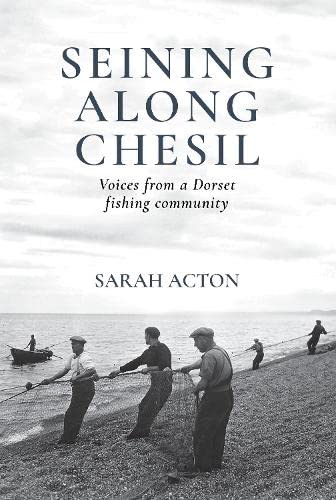
Seining Along Chesil by Sarah Acton

4 out of 5 stars

The publisher provided a copy of this free of charge in return for an honest review.

Chesil Beach is an amazing geological phenomenon. This 18-mile-long bank of shingle stretches from Portland to the golden cliffs of West Bay and is a unique part of the Dorset coastline. I have visited a couple of times and it is quite something to behold.

The way that the waves form it is quite special too, the waves effectively grade the shingle from large pebbles at Portland to pea-sized stones at West Bay. It is always said that smugglers who knew the beach very well knew exactly where they were by the size of the pebbles underfoot. Not sure if it is true or not, but I think it is a great piece of local folklore.

This special place also bred a strong community in the villages along the fleet. Many of the locals were involved in the seine-net fishing for mackerel along the shore. Spotters on the hill would see the way that the water would be changed as the fish came in and send word to the crews. They would head out into the waves in their boats called Lerrets to catch the shoals.

It was tough, cold work, but the bonds between the crews and the families that supported them were strong. This closed group of fishermen didn’t always see eye to eye, there are a number of tales about fights breaking out as they sought to get the best catches, but they all looked out for each other.

And within living memory, the fish went and this method of fishing that had thrived for hundreds of years has pretty much vanished.

I thought this was a fascinating book about how they fished off Chesil Beach. Sarah Acton has got the balance right with the interview parts of the book and the background of the families that she has researched to fill in the gaps in the story. It is such a shame that this has been lost in living memory. There are still people keeping the boats going, but these men are getting older now, which may be another thing lost too. It is a bit of a niche book, but if you are fascinated by Dorset’s rich history this is a must-read.

April 2023 Review

The month started really well. I had a week off and I read six books, and then it kind of went a bit awry, and I ended up reading 15 in the end. Less than I had hoped for, but still a reasonable number. It was a good month for books too, with four making my book of the month that we almost but not quite five-star reads. So here is what I read and the books that made it through my door.


Books Read

Hide and Seek – Sofia Borges, Sven Ehmann & Di Ozesanmuseum Bamberg – Architecture – 3.5 Stars

Seining Along Chesil – Sarah Acton – Dorset – 4 Stars

More Numbers Every Day – Micael Dahlén & Helge Thorbjørnsen – Economics – 3.5 Stars

The Angel Of Santa Sofia – Josep M. Argemí Tr. Tiago Miller – Fiction – 3.5 Stars

Longshoreman – Benjamin Pond – Memoir – 3.5 Stars

Illuminated by Water – Malachy Tallack – Natural History – 3.5 Stars

The Treeline – Ben Rawlence – Natural History – 4 Stars

The Catch – Fiona Sampson – Poetry – 3 Stars

Polling UnPacked – Mark Pack – Politics – 3.5 Stars

Far From The Light – Tade Thompson – Science Fiction – 3.5 Stars

Three Women of Herat: Afghanistan 1973-77 – Veronica Doubleday – Travel – 4 Stars


Book(s) Of The Month

Notes from the Cévennes – Adam Thorpe – Travel – 4.5 Stars

The Serpent Coiled in Naples – Marius Kociejowski – Travel – 4.5 Stars

The Lost Rainforests Of Britain – Guy Shrubsole – Natural History – 4.5 Stars

Rosewater – Tade Thompson – Science Fiction – 4.5 Stars


Top Genres

Natural History – 9

Travel – 8

Fiction – 7

Poetry – 7

Science Fiction – 5

History – 5

Memoir – 4

Fantasy – 3

Politics – 2

Economics – 2


Top Publishers

Faber & Faber – 4

William Collins – 3

Monoray – 3

Little Toller – 3

Simon & Schuster – 3

Bloomsbury – 2

Allen Lane – 2

Fum D’Estamps Press – 2

Doubleday – 2

Michael Joseph – 2


Review Copies Received

The Future Of Geography: How Power And Politics In Space Will Challenge Our World – Tim Marshall

Elowen – William Henry Searle

Taking Flight: A Celebration Of The Miraculous Phenomenon Of Flight – Lev Parikian

The Granite Kingdom: A Cornish Journey – Tim Hannigan


Library Books Checked Out

The Passengers – Will Ashon

Glowing Still: A Woman’S Life On The Road – Sara Wheeler

Cucina Di Amalfi : Sun-Drenched Recipes From Southern Italy’s Most Magical Coastline – Ursula Ferrigno

Coffee First, Then The World: One Woman’s Record-Breaking Pedal Around The Planet – Jenny Graham

Singing Like Larks – Andrew Millham

Wild Isles – Patrick Barkham

Soundings: Journeys In The Company Of Whales – Doreen Cunningham


Books Bought

A Beer In The Loire: One Family’s Quest To Brew British Beer In French Wine Country – Tommy Barnes

The Golden Valley: A Visual Biography of the Garw – Phil Cope

Sheds On The Seashore: A Tour Through Beach Hut History – Kathryn Ferry

Elegy For A River: Whiskers, Claws And Conservation’s Last, Wild Hope – Tom Moorhouse

Bald Coot and Screaming Loon: A Handbook for the Curious Bird Lover – Niall Edworthy

Four Seasons in Rome: On Twins, Insomnia and the Biggest Funeral in the History of the World – Anthony Doerr

Vision of England: Dorset – Aubrey de Selincourt & Barabra Jones

Atlas of Magical Britain – Janet & Colin Bord

The Meaning of Geese: A Thousand Miles in Search of Home – Nick Acheson

Edge of Blue Heaven: A Journey Through Mongolia – Benedict Allen

Threads: The Delicate Life of John Craske – Julia Blackburn

Seriously Funny: The Endlessly Quotable Terry Pratchett – Terry Pratchett

The Weather In Africa – Martha Gellhorn

The Ruin of All Witches: Life and Death in the New World – Malcolm Gaskill

Life of a Chalkstream – Simon Cooper

Po: Beyond Yes And No – Edward de Bono

The 5-Day Course in Thinking – Edward de Bono

Mumbai to Mecca – Ilija Trojanow Tr. Rebecca Morrison

Pacific Passages – Travelling the South Seas – Hans-Christof Wächter

Seeking Provence: Old Myths, New Paths – Nicholas Woodsworth

Pacific Passages – Travelling the South Seas – Hans-Christof Wächter

Along the River that Flows Uphill: From the Orinoco to the Amazon – Richard Starks


Any from that vast list that takes your fancy? Or that you have but haven’t got around to reading yet? Le me know in the comments below.


Notes from the Cévennes by Adam Thorpe

4 out of 5 stars

The publisher provided a copy of this free of charge in return for an honest review.

For the past quarter of a century, Adam Thorpe has lived in an old house in the Cévennes, a range of mountains just north of Montpellier in southern France. He moved to France in 1990 and it was there he wrote Ulverton, a book about 300 years of history of a village in England.

Even though he is English, he was born in Paris and lived all over the place before settling in this region of France and his writing is a more thoughtful and considered approach to life abroad. He takes a long-term view of the place he has chosen to live. He celebrates the good parts of life there, and being a full resident feels that he has earned the right to critique it too.

I haven’t read Ulverton yet, but have read On Silbury Hill a few years ago. Like that book, it is a careful blend of memoir, history, and observation of the people that he has chosen to live with. He chose to move to France knowing that on an author’s salary, he would never be able to afford anywhere in the UK. The plan of buying a plot of land and a rambling farmhouse was scaled back to a house in a village.

The village they chose is very old, most of the buildings still there were erected in the medieval period and the landscape around still has the terraces visible that were used for growing crops in times past. It is a place that comes alive in the spring as orchids, wild garlic and numerous other wildflowers turn the grey slopes a psychedelic riot of colour.

The house they live in has layers of history that are visible in the architecture and tiny details that he learns about from his neighbours about how it was used. The region suffered a lot from poverty people went barefoot to save wearing out their shoes and stripped the hillsides of all timber for fuel.

The house they have bought reveals many things as they change and adapt it to their modern needs, they find long shallow grooves in the back stonework and a neighbour shows him demonstrate how knives were sharpened as they headed out for a day’s work. In a more sinister note, they find a witchcraft poppet. This is for the owner to cast spells over someone else. He returns it to where it was found and covers it again.

The families that live in the village have been there for millennia too. Thorpe learns much about the complexity of relationships even in this tiny village. There is a chapter on the rivalries between the two families and the long-running dispute they have had. He learns to tread carefully when asking about the history of the place.

I really liked this. It is not the story of someone fortunate enough to be able to afford a second home in a nice part of France, rather it is the observations of someone who is completely committed to the place they have chosen to live. His gentle and sensitive prose is a gentle meander around this village and like his other non-fiction book, is a blend of memories, history and current events, jostling for your attention. If there was one flaw, and this is only a minor one, it felt a little disjointed at times. It was reading the acknowledgements though that I found that this is a collection of articles that he wrote for the TLS, re-edited and bought together for this book. I personally would have preferred to have known that as I read each chapter.

May 2023 TBR

April whizzed by! We celebrated our 28th wedding anniversary and I had a week off work, pottering around at home and seeing some of the beautiful Dorset countryside. Read a few books, but more about that in another post soon. Here is my TBR from May. Three bank holidays too! Though Sarah has lots of jobs around the house lined up… I have three books on Wales to read this month and quite a lot of books on walking.

Still Reading

Three Women of Herat: Afghanistan 1973-77 – Veronica Doubleday


Review Books

Isles at the Edge of the Sea – Jonny Muir

The Wonderful Mr Willughby: The First True Ornithologist – Tim Birkhead

The House of Islam – Ed Husain

On the Scent: Unlocking The Mysteries Of Smell – And How Losing It Can Change Our World – Paola Totaro and Robert Wainwright

Swan: Portrait of a Majestic Bird, from Mythical Meanings to the Modern Day – Dan Keel

Handbook of Mammals of Madagascar Hardcover – Nick Garbutt

RSPB Handbook of Garden Wildlife: 3rd edition – Peter Holden & Geoffrey Abbott

Reconnection: Fixing our Broken Relationship with Nature – Miles Richardson

One Fine Day: A Journey Through English Time – Ian Marchant

The Possibility of Life: Searching for Kinship in the Cosmos – Jaime Green

Once Upon a Raven’s Nest: A Life On Exmoor In An Epoch Of Change – Catrina Davies

Shaping the Wild: Wisdom from a Welsh Hill Farm – David Elias

The View from the Hill: Four Seasons in a Walker’s Britain – Christopher Somerville

Across A Waking Land: A 1,000-Mile Walk Through A British Spring – Roger Morgan-Grenville

Brittany – Stone Stories – Wendy Mewes

Minor Monuments – Ian Maleney

Real Dorset – Jon Woolcott

Taking Flight – Lev Parikian


Other Books

The Last Overland: Singapore to London: The Return Journey Of The Iconic Land Rover Expedition – Alex Bescoby

A Walk in the Park: The Life and Times of a People’s Institution – Travis Elborough

Wanderers: A History of Women Walking – Kerri Andrews

Wild City: Encounters With Urban Wildlife – Florence Wilkinson

Endurance: 100 Tales Of Survival, Endurance And Exploration – Ed. Levison Wood

Vuelta Skelter: Riding The Remarkable 1941 Tour Of Spain – Tim Moore

The Ten Equations That Rule The World And How You Can Use Them Too – David Sumpter

Waypoints: A Journey On Foot – Robert Martineau

Sarn Helen: A Journey Through Wales, Past, Present And Future – Tom Bullough

The Passengers – Will Ashon

Between The Chalk And The Sea: A Journey On Foot Into The Past Gail Simmons


Challenge Books

The Overstory – Richard Powers

Elegy For A River: Whiskers, Claws And Conservation’s Last, Wild Hope – Tom Moorhouse

Bloom: From Food to Fuel, the Epic Story of How Algae Can Save Our World – Ruth Kassinger


Poetry

Two Cures for Love: Selected Poems, 1979-2006 Wendy Cope


Photobooks

The Golden Valley: A Visual Biography of the Garw – Phil Cope


Fiction

The Fell – Sarah Moss


So my aim of having slightly shorter TBRs really isn’t working… Any from that list that takes your fancy? Let me know in the comments below.


Escape from Model Land by Erica Thompson

4 out of 5 stars

A copy of this was provided free of charge from the publisher in return for an honest review.

The future is not what it used to be – Laura Riding and Robert Graves

Anyone who tries and takes a guess into what is going to happen is making a guess. Some of those guesses may be educated or based on long experience of a particular thing but it is still a guess. One of the methods that we have turned to, to understand what might happen in mathematical modelling. And whilst they can be a useful tool, some of them are not much more useful than a foam screwdriver.

These models that have been created are full of hidden dangers. The people who have created them either consciously or unconsciously inflict them with their own biases. Some of them do not accurately take into account all the information and others make dangerous assumptions about the way things actually happen in the real world.

I thought this was a very interesting book. Thompson puts the case well that we need to use these mathematical models but also be very aware that they have finite limits and are not the answer to all of our problems. The maxim rubbish in = rubbish out is very true, especially in some of these models.

Even though it is a complicated subject, though some of that is smoke and mirrors by the people that want to Thompson makes it accessible and interesting and she made me very aware of the limits that models have. I thought it was a very interesting chapter on financial models that seem to increase rather than decrease the risk. The chapter on climate modelling is well worth reading. I think that the call for a CERN-type system that is run by scientists from all over the globe makes a lot of sense. I can recommend this.

Polling Unpacked by Mark Pack

4 out of 5 stars

The publisher provided a copy of this free of charge in return for an honest review.

At election time we are bombarded with polls. Who’s in the lead, what is the swing, and what do various people think about a swathe of subjects that you may or may not be interested in? They dominate the political news and journalists pour over the implications of a 0.3% difference from the last poll taken only a few days ago.

Crystal Balls – They do not work

Politicians of every hue claim not to be interested or swayed by them, but they are lying. They are equally captivated by them. Their political career can be dashed on the rocks should the polls move against them. But why are people so taken by these snapshots of opinion, how do they work and can we trust their results?

It is difficult to make predictions, especially about the future.

This is a fascinating book about everything that you could possibly want to know about polling. And quite a lot of stuff that you really didn’t think that you needed to know. Pack traces their origins right back to the 19th century and brings us through the successes and disasters of polling.

I liked this. The level is pitched about right for those (i.e. me) that know very little about how polling techniques can be both good and bad, which polls you might want to keep an eye on and which are frankly a waste of time and the most importantly how the companies that arrange them can skew the results either deliberately or accidentally.

« Older posts Newer posts »

© 2026 Halfman, Halfbook

Theme by Anders NorénUp ↑