Page 32 of 185

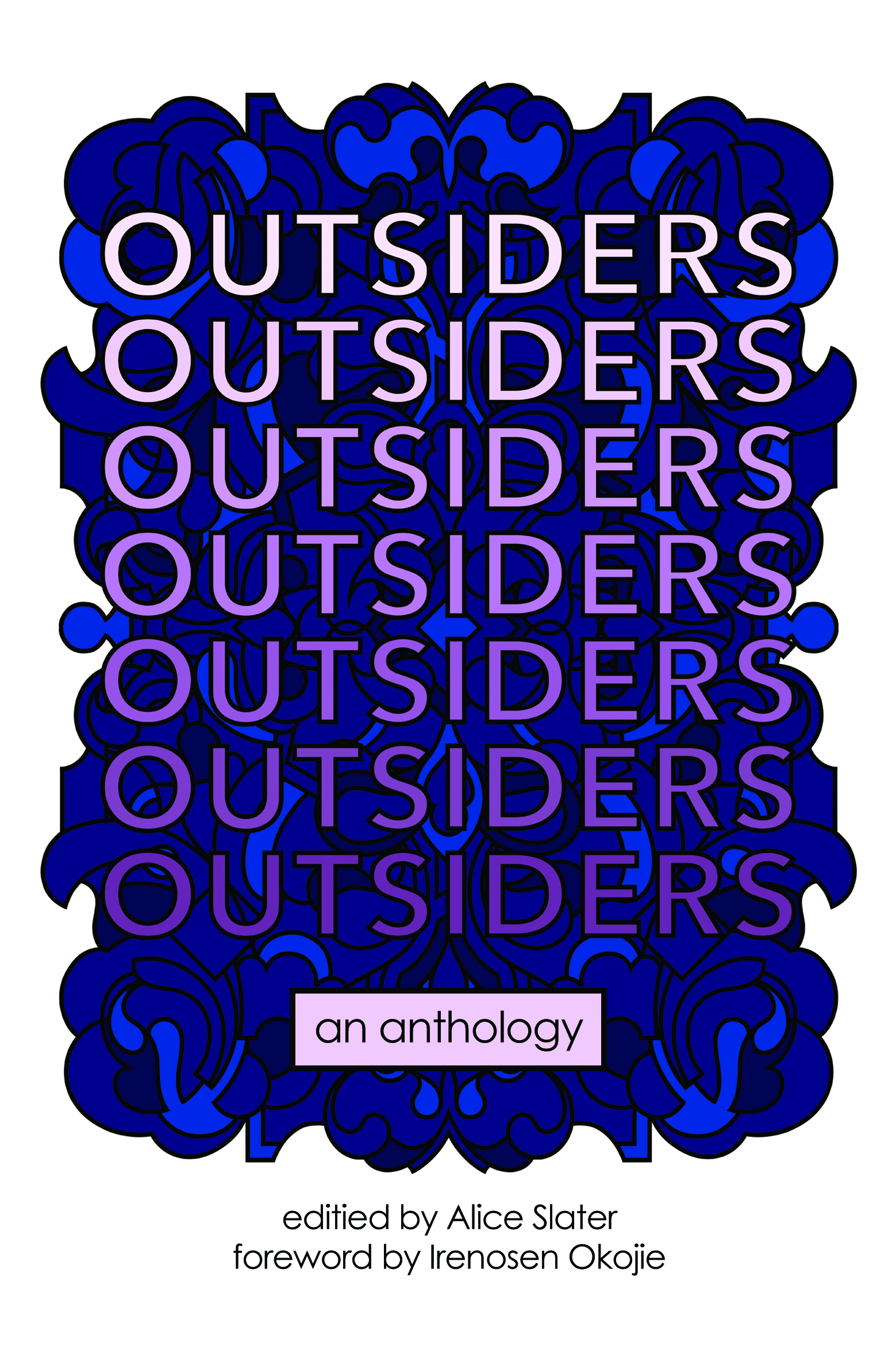
Outsiders Edited by Alice Slater

3.5 out of 5 stars

A copy of this was provided free of charge from the publisher in return for an honest review.

Almost everyone has been an outsider in their life at one point or another. Most people are then admitted into that particular inner circle, but there are some that never fit in and are always on the outside looking in. This collection of short stories from fifteen authors, both well-known and new is their take on this subject.

The theme of outsiders has been interpreted in many different ways by each of the authors. Because the authors have had free reign to write about whatever took their fancy we have stories that are fantasy, science fiction and even horror. Some of them take a gentle view of this subject and others have strong characters and storylines. Interestingly this is one of the first books that I have read that has trigger warnings for some of the subject matters covered in the stories.

I don’t think that there was a story that I didn’t like in this collection, though I did have some that I really liked, see below. Reading a story from the perspective of a group that you might not be familiar with encourages empathy and understanding. If you want a collection that seeks to redefine what it feels like to be an outsider then this is as good a place as any to start

Three Favourite Stories
To Peel An Orange
Francine
Wilgefortis

My 1001 Nights by Alice Morrison

4 out of 5 stars

I have never been a fan of running, mostly because at school I couldn’t. The thought of doing the Marathon des Sables which is six, yes six days of running makes me shudder. Yet it was this daunting (insane?) event that brought Alice Morrison to Morocco. She didn’t think she would finish it. Nor did she expect to be still living there a few years later.

Pre-covid it was a popular place for tourists to visit, but they mostly stayed in resorts and carefully curated the experience of life there. Morrison didn’t want to do that, she wanted to meet the people of this country. It is the beginning of a series of adventures that will take her from being thigh-deep in poo, across the mighty Sahara desert, to the city of Fez and walking with a family as they take their flock to the summer pastures.

Whilst this wasn’t quite was I was expecting, I ended up liking it. Morrison has a knack for integrating herself with the people that she meets in her daily life and travels around the country. And I guess because she speaks the language she is able to understand and empathise with the numerous people that she meets on each of these adventures. If you want to read an insider’s view of Morocco seen from the perspective of an outsider who has made it her home, then this is a great book to read.

The Spy Who Was Left Out In The Cold by Tim Tate

4 out of 5 stars

A copy of this was provided free of charge from the publisher in return for an honest review.

When the cold war was taking place after World War II, the Allies and the Soviet Bloc were all vying for information and intelligence. The stories of the Cambridge spy ring and others are well known, but apart from the odd one or two Soviet spies, like, Oleg Tsarev not much is known about those that chose to betray their home nations. One of those who almost nothing is known about is Michal Goleniewski.

By those in the world of smoke and mirrors, he was considered to be one of the most important spies of the Cold War. He has been written out of the official histories of this time, but Tim Tate thought that there was a story in there that still needed to be told.

In this fascinating book, he has drawn on a ream of documents that until now had not been published. These documents show how this unknown individual began passing Soviet and Polish secrets to the west in 1958. The intelligence that he provided exposed hundreds of agents working in the West. He exposed the Portland Spy ring, and numerous others, including a NATO office and agents working in the States. His information was gold dust, As their agents were blown, the KGB was starting to follow the trail of secrets. He knew that he didn’t have long and made the decision to defect.

The plan to extract him was put into place but was complicated by him wanting to bring his mistress, but it worked and he was soon to set foot in America, but wouldn’t be a free man for a while yet. He brought with him vast quantities of documents that he had snaffled just before he left, and the CIA poured over these. He was given a new identity and effectively disappeared from the clutches of the KGB and their goons. But the Americans squandered their asset and his expert knowledge was overlooked in favour of another defector whose material was mostly fiction.

Tim Tate has written a fine book about Michal Goleniewski and this is a tribute to the work he did. The writing is good, it feels like the research has been painstakingly undertaken and he tries not to sensationalise the man, but rather looks at him with a considered view. He also shows just how misguided the CIA were that they would not trust this guy who had provided vast quantities of material that could be verified and yet trusted this other defector. If you want to learn about a spy who is very little known about then this is a great book to read.

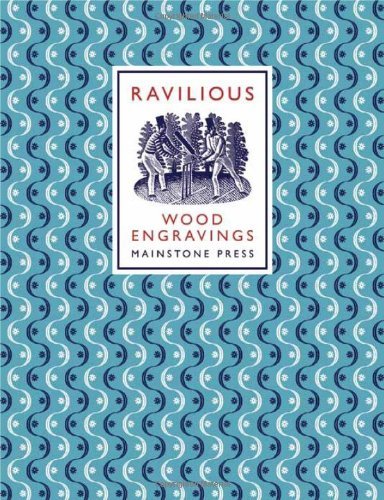
Ravilious: Wood Engravings by James Russell

4.5 out of 5 stars

I have come across Eric Ravilious in the past, but really for his beautiful artworks of the English countryside. It wasn’t until I saw this book on Twitter that I became aware that one of his many talents was woodcarvings.

And they are magnificent. I cannot believe the level of detail that he gets from the wood. All of the carvings that I have seen in the past tended to be binary in their colours, but his intricate art gives different shades to the pieces.

There is some background on how he came to create them and the other artists that influenced him. His loss in the Second World War was a tragedy, I would have loved to have seen what else he would have created from the landscapes that he saw around him Great book.

The Restless Kings by Nick Barratt

4 out of 5 stars

A copy of this was provided free of charge from the publisher in return for an honest review.

The first Plantagenet king, Henry II seemed to have everything in control, by the age of 40 he controlled England, parts of Wales, some of Ireland and the western half of France. He was married to Eleanor of Aquitaine, and he had eight children, three daughters and five sons.

It was the tension between these brothers that would ruin the legacy that Henry hoped to have as they sought to carve out their own power bases with land and income. Brother fought against brother and sometimes joined forces with each other to push back against their father. Some of the changes that he made in the way that the law and administration of his lands were run during his reign are still in use today, but the thing he could not do was temper any of his son’s desire for power.

I thought that this was a fascinating journey through our history of the early 1200s beginning with Henry II. Generally, it was quite readable, and the narrative storyline works really well. Occasionally the detail would be a little overwhelming, trying to keep up with which cousin or other relative going back on a promise and betraying the monarch at the time was. This power play took play across Europe and the UK and each of the Kings struggled to hold onto their authority across their vast lands. They were quite a greedy bunch and in certain cases fairly incompetent too and their legacy still rumbles across the political landscape of the UK Europe and even the Middle East even today.

Time On Rock by Anna Fleming

3 out of 5 stars

The last time I did any climbing was when I was in the scouts and that was a long time ago. I haven’t done anything like that for years now and whilst I am ok with heights, occasionally they get the better of me. In this memoir, Ann Fleming takes us from the first time she tried the sport to where she is now.

She has climbed all over the UK, from the slate mountains in Wales where there is almost no grip on the smooth stone, to the gritstone of the Peak District where the undulating surfaces are challenging to climb. She takes on some classic climbs in Scotland on Cullin and even ventures to Greece to climb the limestone of Kalymnos. There are brief sojourns back in history as she looks at how this once male activity is becoming far more evenly split now, but there is still some way to go with attitudes from some of the old school.

Generally, I thought that this was a reasonable book. However, there were parts of this book that I liked and other parts that really didn’t work for me. I found the technical parts of the books a touch tedious, I would have liked a little more explanation as to some of the techniques and methods that she uses when climbing as some of the jargon was mystifying. What I did like was her descriptions of the mountain landscapes across the UK the euphoria and emotions that she had on completing a particularly challenging climb

Rhythms of Nature by Ian Carter

4 out of 5 stars

A copy of this was provided free of charge from the publisher in return for an honest review.

Ian Carter has been an ornithologist for Natural England for 25 years and recently retired from The Fens to the Wilds of Dartmoor. Being retired means that he has got time to think about all manner of subjects, hence this book. The book is split into four sections, Home Turf, Venturing Out, Ways of Seeing and Connections. The number of essays varies per section, but they follow the theme.

In, Home Turf, he considers such questions as, should we feed birds at home or leave them to it. It is a subject that he is torn between as he likes seeing the variety of birds in his garden but knows that it can affect their ability to seek food from natural sources. He tells about leaving his lawn to go wild and the effect that it had on drawing in all manner of wildlife to his garden. It did make his landlord raise his eyebrows a little though.

Wild Browsing, in the second section, Venturing Out, is about the delights of finding your own food whilst walking. It is not extensive by any means, he points you in the direction of books that are specialised in this, rather it is about the simple joy of finding the first blackberry of the season and knowing where to get his favourite hazelnuts before the squirrels do.

I particularly like Ways of Seeing. In here he talks about discovering truly wild spaces and how to find them even in your mind as much as the place. Like Chris Yates, he thinks that to really see the wilderness in your local area head out in the gloaming. As the daylight fades and people head indoors you’ll be aware of much more wildlife. The final section is about ways that we can reconnect to the natural world. We are a part of it after all and the health benefits of doing this for us and our planet are profound.

This is another good book from Carter and complements his previous book, Human, Nature, really well. It is a similar format, too, so there are a series of short essays about a particular topic that has interested him. I like the way he writes, he comes across as knowledgeable and authoritative without feeling that you are being lectured too. He is not afraid to have a strong opinion on subject matters either which is good. We need people to speak out more on the things that are happening that need to stop.

Thunderstone by Nancy Campbell

4 out of 5 stars

A copy of this was provided free of charge from the publisher in return for an honest review.

Life has a way of throwing curveballs at you when you least expect it; I know I am living through one of them at the moment. For Nancy Campbell though it came in three parts. Firstly there was the pandemic, this huge disrupter to life as we had known it. On top of that, she had a phone call whilst she was in Germany. It was a call that could not be ignored and it was to tell her that her partner had had a stroke. The final curveball for her was knowing that their relationship had reached an end.

Adrift from all that she once held dear, she tries to think about what she would be best doing. There were various options but she is persuaded to spend £750 that she really doesn’t have on a caravan. It is towed to a spot between the canal and railway by a new friend called Sven. She is in good company there, others live on the canal who are on the fringes of society in Oxford and they welcome her into the community.

This is a diary of the summer months in 2021 as she adapts to her new life alone. It is full of the detail of her new life as she adapts to living in a tiny tin box. But there is much more than that in this memoir, She is very open with her thoughts and feelings, showing at times some really raw emotions and her own medical condition. She also uses her diary to reflect on the events in the wider world and the mundane moments that go to make up life.

She has a way with words that is memorising and this is a book that has life and death, love and pain in equal measure. I liked this a lot and it doesn’t feel heavily edited either, entries for some days are long and thoughtful and others are just a note of what happened that particular day. One entry was blank, quite a poignant moment in itself. This is not going to be an easy read for some people, but her calm amidst the storms that swirl around her is inspirational.

RSPB ID Spotlights – Garden Bugs & Ducks, Geese and Swans

3.5 out of 5 stars

A copy of this was provided free of charge from the publisher in return for an honest review.

This is a dual review of two new RSPB spotlight guides that are the most recent additions to the range that now has twelve in it. There are short guides on moths, butterflies, birds of prey and caterpillars. The two that I was kindly sent are Garden Bugs and Ducks, Geese and Swans.

They are a fold-out format printed on card and with a high gloss finish which I think may resist a small amount of water should it be damp when using them outside. One-half of the fold-out pages have brief information on the subject matter at hand, so for the ducks and geese, there is information on the habitat, behaviour and conservation. The other side of these pages has beautiful illustrations by Stephen Message.

I thought that these were well-produced small guide books. Strongly recommend these for the budding naturalist who may not want a detailed guidebook just yet, but still wants to know what they have seen on a lake or found in their garden.

Ring Of Stone Circles by Stan L Abbott

3.5 out of 5 stars

A copy of this was provided free of charge from the publisher in return for an honest review.

I have always found that the is something special about the ancient monuments that are still present in our modern landscape. They are, what some would call, thin places, where this world meets other realms and I find that they have a tranquillity about them that I don’t always find elsewhere.

The most famous stone circle is probably Stonehenge, but there are present in every county. Sadly Dorset has only two according to the book, A Guide to the Stone Circles of Britain, Ireland and Brittany by Aubrey Burl, a book that I was fortunate to find in a charity shop and still have to read at some point. In Cumbria though, more stone circles there than in any other county, fifty according to the research that I have done. In this book, Stan Abbott visits twenty-nine of them on his new electric bike just as the country emerged from the lockdowns in 2021.

The book is a mix of travelogue and ancient history as he travels around the region searching for these circles. I gather from the text, that he visited some before, but there are others that are new to him. There is some personal speculation in the book about why these were built by neolithic peoples and why they were aligned in a particular way, but thankfully there is no outlandish ideas. He does take the easy solution though and put it down to ritual. Though what those were is anyone’s guess.

There were parts of this book that I really liked, but I did have a couple of issues with it. I liked the way he was concentrating on one part of the country seeking out these ancient stone circles and trying to think about the context in which they were built. He does not have any agenda either, which was refreshing. Instead, he is travelling just to see them and enjoy the moments spent there. He does speculate why they may have been built as well as look at the wider context with the monuments in Wiltshire and Orkney. I had a couple of issues though, I would have really liked to have photographs in this book of some or all of the places that he visited and I would like to have had a better map as the one at the front of the book is tiny!

« Older posts Newer posts »

© 2026 Halfman, Halfbook

Theme by Anders NorénUp ↑