Page 31 of 185

The Grove by Ben Dark

Welcome to Halfman, Halfbook for my stop on the Blog Tour for The Grove by Ben Dark and published by Mitchell Beazley

About the Book

There is a renewed interest in the nature on our doorsteps, as can be seen in the work of amateur botanists identifying wildflowers and chalking the names on the pavements.

But beyond the garden wall lies a wealth of cultivated plants, each with a unique tale to tell. In The Grove, writer and head gardener Ben Dark reveals the remarkable secrets of twenty commonly found species – including the rose, wisteria, buddleja, box and the tulip – encountered in the front gardens of one London street over the course of year.

As Ben writes, in those small front gardens ‘are stories of ambition, envy, hope and failure’ and The Grove is about so much more than a single street, or indeed the plants found in its 19 ½ front gardens. It’s a beguiling blend of horticultural history and personal narrative and a lyrical exploration of why gardens and gardening matter.

About the Author

Ben Dark is a head gardener, award-winning broadcaster and landscape historian working at the top of British horticulture. He ’s been described as ‘the millennial Monty’ by Gardeners’ World Magazine and ‘the future of horticulture’ by Horticulture Week.


He graduated with a degree in History from Bristol University and went on to study Horticulture at Capel Manor College, before completing his education with a traineeship at the Garden Museum and an MA in Garden and Landscape History at the University of London’s Institute of Historical Research. As a gardener he has worked for embassies, cemeteries, heritage bodies and oligarchs. He has organized a private flower show for the Royal Family and helped to build gold-medal winning gardens on the main avenue at the Chelsea Flower Show. As the creator and host of the award-winning Garden Log Podcast he frequently speaks to gardening groups and industry events. Ben has written about plants for the Telegraph and has been featured in the Independent, Gardens

Illustrated and the Financial Times.

My Review

If you have a garden and a library you have everything you need – Marcus Tullius Cicero

If you are a regular visitor to this blog then you probably know that I like books. Whilst the house is not quite a library, it isn’t too far short, Sarah has a thing about gardens so we have a lot of plants around the place. I don’t know exactly how many plants she has in the front garden but the size of the bed is about 10m x 5m. Based on the words of Cicero, I think we’re sorted.

Even though he is a head gardener, Ben Dark does not have his own garden. He lives in a flat with his wife and son and when walking in the neighbourhood came across this street called The Grove with these rich and varied front gardens. It reminded him of the day, years ago, just after he had started horticultural college. He realised that he actually recognised a plant in someone’s garden Not only did he recognise it, but he knew its Latin name and could remember what he had recently learnt about it. From that moment on he was hooked on plants.

Each of the gardens was very different but they all had a particular thing in there that piqued his interest and for each chapter, he has chosen one plant to write about. Beginning with Wisteria, each chapter is on an utterly different plant, from Box to magnolia, Tulips to London Planes and roses to a plant that we have a lot of in our garden, Verbena. It gives him an opportunity to explore the origins of each plant and why we have them in London. It is endlessly fascinating, as we root around in the undergrowth with him, learning about each of them and what they bring to our gardens.

I had never heard of Ben Dark before coming across this book. But I can see why he is highly rated based on what I have just read. I did like the way that he uses a different plant for each chapter to explore the gardens of The Grove. The mix of culture, horticulture and history along with his own personal stories and anecdotes is just about right. He knows his green subjects too, drawing on all his experience as a gardener and he does that without me feeling that I was being lectured to as some of the gardeners can do.

Don’t forget to visit the other blogs on the blog tour

Buy this at your local independent bookshop. If you’re not sure where your nearest is then you can find one here

My thanks to Anne Cater of Random Things Tours for the copy of the book to read.

Return to My Trees by Matthew Yeomans

4 out of 5 stars

A copy of this was provided free of charge from the publisher in return for an honest review.

Back in 2020, the world reached one of its pivotal moments in history. As the novel coronavirus swept around the world from China, countries dealt with the pandemic as it breached borders. In March of that year, the UK was put into lockdown and a plethora of rules and restrictions were put into place.

People coped with it in different ways, but one of the most noticeable benefits was that people began to notice the natural world once again. Matthew Yeomans was one of those who was discovering the natural world again. It was on one of his permitted walks that he had walked from a housing estate into a woodland. The beauty of it overwhelmed him and it was at that point that he decided that he wanted to write about the trees and woodlands of Wales.

But what was he going to write about? An idea formed; he would walk through the ancient and modern forests of his home country and write about them. He began to plan a route that in the end would take him on a series of routes from the border in England in the south, along the spine of the country to the west coast before heading inland and north. The route he chooses takes him past and through the history of the country from the ancient druid that the Romans feared, to the decays remanets of the industrial past.

He is joined by friends on some of the walks, old friends who provide good company and drinking partners. On others, he undertakes them alone which gives him time to think about his and our relationship with the natural world. A relationship that is under threat more than ever before.

The only way to save the world is to fall in love with it again – Brian Eno

Yeomans has a subtle and dry humour in his prose and has written an entertaining book that I really liked. His lockdown project to walk through the ancient and modern forests of Wales was something that gave him a sense of purpose, but he is also aware of the benefits that he gets from walking through these woods. This book calls for you to do the same and wallow in the peace that comes from being in a woodland or forest.

Looking for Transwonderland by Noo Saro-Wiwa

4 out of 5 stars

This book is a good reminder that the past is a foreign country. Even though she was born and grew up there, she has Saro-Wira has lived most of her life in the UK. Whilst she returned regularly after her father was murdered, she hadn’t returned for a long time.

Returning there became safe after a change of government and this would be the opportunity to see her home country through adult eyes and see if she could find the things that her late father loved so much about the place.

It is a place that is full of life and people and noise and smells and brings the memories flooding back. Growing up there she was not allowed the freedoms that she now had to travel all over the country and find family members and speak to all manner of people. Having lived away from Nigeria for a while gave her an insight into the pulse of the country and its foibles and strengths.

She comes to realise what her father loved and hated in equal measure about the country. The corruption is rife, from the very top to the bottom and even though the politics is cleaner than it was, there is still a dark undercurrent. I really liked this book, the writing shows the passion that she has for Nigeria still and she is a great describer of the characters that she meets, both family and the people in the street. Even though this was published nearly 10 years ago, this is still worth reading for an insider’s view of Nigeria.

Bewilderment by Richard Powers

3 out of 5 stars

Following the tragic loss of his wife, Theo Byrne has to bring up their son, Robin alone. He is not a normal child by any means, he has an intensity about him that he channels into whatever project he is interested in at the time. Because he is unconventional, he doesn’t really fit in with school either and when events come to a head, they make the decision to home school.

This will be a tough call as Byre is a promising young astrobiologist who has found a way to search for life on other planets. As a way of distracting his son from the destruction that the human race is wreaking on this planet, he takes Robin to these other worlds where they try to imagine where life is so very different. He is offered treatment for Robin, which involves using psychoactive drugs and the memory patterns of his late mother. It is a risky decision, but he decides to proceed. Robin blooms under the treatment, but neither of them comprehends the implications of a decision Theo makes…

This is the first book by Richard Powers that I have read. Whilst I have heard lots of good things about him, primarily about his book, The Overstory, I had no idea what to expect. Mostly I liked it, he has a way with words that made this an easy book to read, even though you are reading about complex ideas, emotions and thoughts. I thought the plot was pretty good too, but I had a problem with a couple of elements of it that I will not elaborate on as they will involve spoilers. I am definitely going to read The Overstory based on what I have read here.

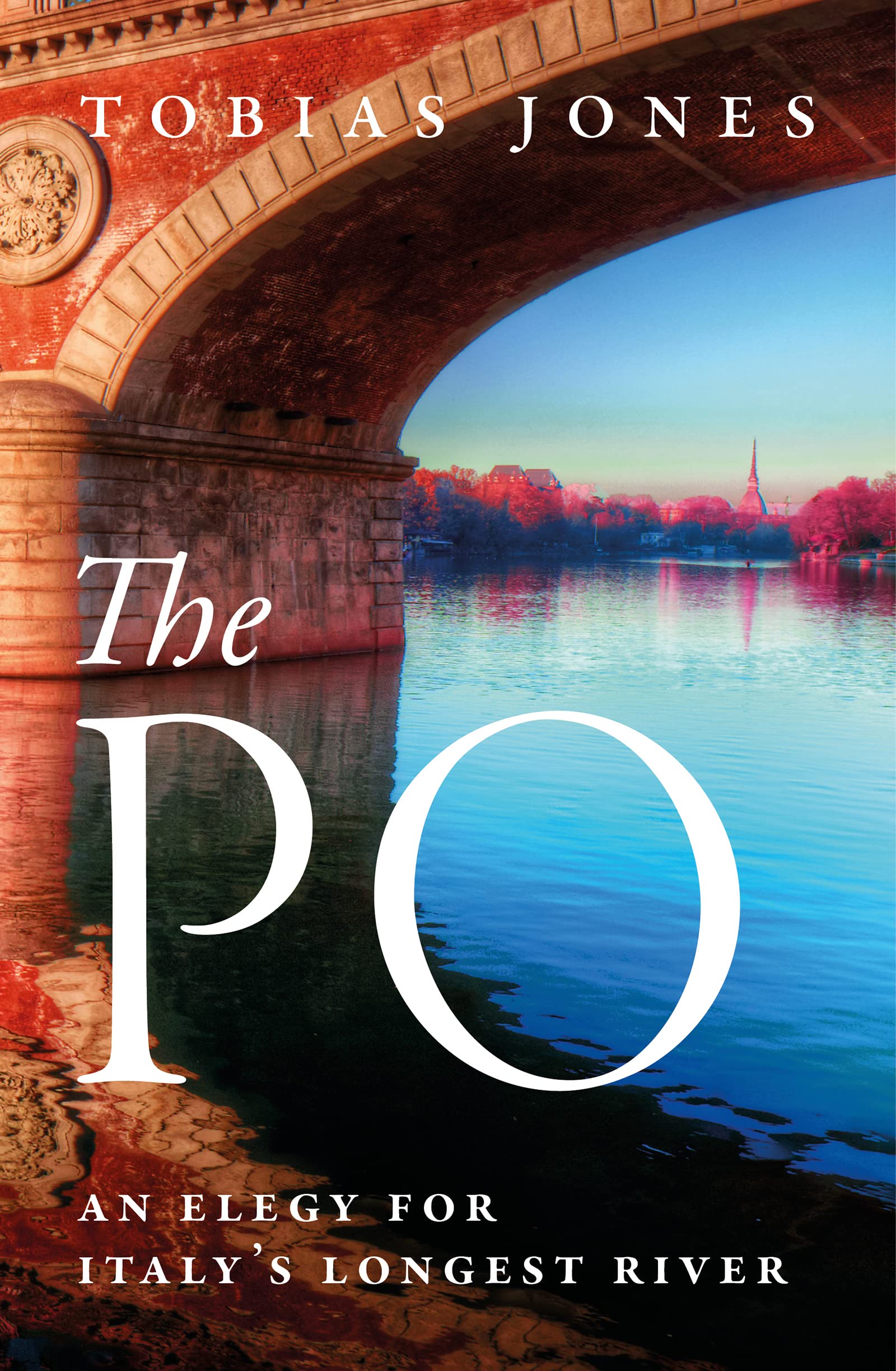
The Po by Tobias Jones

4 out of 5 stars

A copy of this was provided free of charge from the publisher in return for an honest review.

The Po is Italy’s longest river. At a smidgeon over 400 miles, it is almost twice as long as the Thames. In Italy, it is as iconic as our river too. It passes through 13 provinces as it flows from its source in the Alps to the delta in the Adriatic Sea. It has been a place that has witnessed a lot of history too, and the delta is the second largest in the Mediterranean.

It is this delta that he begins his journey from the sea to the source. He is bobbing around in a small boat trying to determine what is land and what is the sea. He passes little islands, called bonelli, that are formed and reformed by the sea and river each day. It used t be inhabited, there are buildings on the shorelines, but these are just shells now. All he can hear is the splash of fish and the calls of birds as he heads. This melding of sea and shore will set the tone of his travels upriver.

He is expecting a clearly defined river with banks that cut through the landscapes of Northern Italy. But he doesn’t find that. Instead, the same blurring of land and riverscape comes to define his journey. Finally making it out of the delta with its many tributaries he arrives in the region known as Polesine. Here the river is finally one channel, but it is still discombobulating as the banks are higher than the land around and he has to climb to see the water flow by.

He works his way upstream talking to the locals and teasing out the stories that this river has held onto and still has to tell. These stories have left traces in the culture and the people like the river itself have changed course in the landscape. We will learn about the amber that came down the river from the Baltic, to be worked on by Bronze age artisans and the puppeteers of the La Bassa Reggiana region. He is shown where to look to see the remains of old settlements and see the castle and fortresses where battles once took place.

I really liked this. Jones is a writer who is passionate and interested in the place that he has chosen to make his home. He doesn’t look at the places he travels to with rose-tinted glasses, rather he has that objective insight that you can only get from being an outsider. There are too many travel books out there that are mostly history and I think that he has got the balance of travel, anecdote and historical background about right too, he uses it to set the context of where he is. If you want a book about north Italy that is not about Venice then this is a great book to read.

brother. do. you. love. me. By Manni Coe & Reuben Coe

4 out of 5 stars

Covid disrupted life for millions of people around the world. Those that were in care homes were affected in particular, not only did they have greater restrictions, but to keep them safe family members were not permitted to visit at all. Reuben Coe was one of those in a home where they were supposedly providing specialist care for his Downs Syndrome. But they weren’t. For months he had been non-verbal and had become withdrawn from the other residents. He was at his lowest ebb when he decided to send his elder brother a text message:

brother. do. you. love. me.

As Manni read this message he knew that he had to be there for Reuben. He made the decision to leave his home and partner in Spain and travel back to the UK to withdraw his younger from the care home that he was in. It was then he realised just how much he had closed himself off from all social contact. He moved him into a cottage deep in the Dorset countryside.

The process of drawing Reuben out would be a long and painful one. But a routine of walking a short distance each day and allowing him the time that he needed to realise that he was in an environment where he was loved started to work. Every day Ruben would take his favourite felt tip pens and some paper and begin to draw pictures of things that still had meaning for him.

As the darker nights of winter ebb away, Reuben recovers in his own time. Him and Manni build their relationship as friends and brothers once again. But Manni has decisions to make that mean change once again for Reuben and he has to draw on the love and support of his partner, family and friends to help him make the right decision for Reuben.

Why are we always striving to make Reuben more normal? Shouldn’t we be encouraging him to be himself?

This is a genuinely heartwarming story of one brother doing everything in his capacity to look after another brother. He writes about how he brings his brother back from the self-consumed shell he had become and there is no tempering of his feelings or emotions. The bond that they once had takes time to rekindle, but it is there and it needs time to be strong once again. I liked this book because it shows what can be achieved should we want to build relationships and how that caring for someone is good for both. Even though this is a book that I think Manni wrote most of, he couldn’t have written it without Reuben and the inclusion of his bright and bold drawings adds to this. If you want a feel-good memoir then this is as good a place as any to start.

The This by Adam Roberts

4 out of 5 stars

For those with FOMO, the thought of not having a presence in the new social network, The This, is too much for some people. But to sign up involves more than submitting an email address and a promise to read all the targeted advertising they will through at you. For this you need a small implant injected into the roof of your mouth.

The device will then grow into your brain and allow you to connect to everyone on the network instantaneously. It is marketed as hands-free, but it seems to be consuming those that have signed up for it. Adan has heard of it, but he is quite happy with his life and the erotic female companion that comes with his Elergy phone. He is asked to write an article about The This and after that, he keeps being approached by the company to join.

He is reluctant to join, but the attention that the company are paying him has been noticed by the government. They want him to sign up and take something with him into the network…

I liked almost all of this a lot. The premise was well thought through and the plot zipped along at a fair old pace. The characters didn’t really develop that much, they were there as the pieces on the frankly terrifying social media network that is The This. The one flaw that I felt it had was that the ending was not resolved as I thought and hoped that it might be.

Where My Feet Fall Ed. Duncan Minshull

4 out of 5 stars

A copy of this was provided free of charge from the publisher in return for an honest review.

Modern transport is amazing. I can climb in my car, drive to an airport, and board a plane that can take me halfway around the world. But there is very little pleasure in travelling this way, it is clinical and impersonal, you don’t connect with the places and people that you are passing by and you barely have time to think.

Ironically the original way that we had of travelling, walking, is still the best way of forging those connections with people and the inner recesses of my mind. Others find similar comfort in taking a walk, and in this book, Duncan Minshull has collected together 20 essays from a variety of different authors who each bring a perspective on the act of placing one foot in front of the other.

In his essay, Richard Ford contemplates the decision process he goes through when choosing to go for a walk for the sake of it rather than for a specific purpose. Ingrid Persaud writes about the act of pilgrimage on a walk to Santiago when she has not undertaken any training. She suffers, but in the end knows why she did it as she places her hands on the walls of the cathedral at the end.

Walking a route that Sally Bayley used to do many years ago as a child brings back countless memories both happy and sad. Taking a dog for a walk is something that many people do each day, and for Irenosen Okojie, this is a daily ritual. In her essay, her dog, Gogo slips the lead and vanishes in the distance causing her to panic.

I liked almost every essay in this book, apart from one, which while it was well written, didn’t really fit the brief in my eyes. The variety of authors and the specific subjects they write about just goes to show that each and every walk can present a moment to discover something new about the world around us. I’d recommend this, especially if you read a little then take a walk to think about it.

Favourite Essays:
Grain … Again – Will Self
Following Others – Tim Parks
Around Deer’s Slope – Pico Iyer
A Record (Rain) – Jessica J. Lee

September 2022 Review

I ended up reading sixteen books in September, far more than I thought that I would, given everything that is going on. Here they are:

Books Read

Seven Kinds Of People You Find In Bookshops – Shaun Bythell – 4 Stars

Bewilderment – Richard Powers – 3 Stars

Beautiful Country – Qian Julie Wang – 3.5 Stars

The Accidental Detectorist – Nigel Richardson – 4 Stars

Thunderstone – Nancy Campbell – 4 Stars

Between Light and Storm – Esther Woolfson – 2.5 Stars

A River Runs Through Me – Andrew Douglas-Home – 3 Stars

Tweet Of The Day – Brett Westwood & Stephen Moss  – 3.5 Stars

Rhythms of Nature – Ian Carter – 4 Stars

Return to My Trees – Matthew Yeomans – 4 Stars

Dancing Satyr – Chris Waters – 3 Stars

The This – Adam Roberts – 3.5 Stars

My 1001 Nights – Alice Morrison – 4 Stars

The Po – Tobias Jones – 4 Stars

Looking for Transwonderland – Noo Saro-Wiwa – 4 Stars


Book Of The Month

There is not much prose in this book, but the art by Ravilious is jaw-droppingly good. This is why I didn’t hesitate to make it my book of the month.

Ravilious: Wood Engravings – James Russell – 4.5 Stars       James Russell


Top Genres

Natural History         27

Travel       20

History     13

Poetry      12

Memoir     11

Fiction      9

Science    8

Environmental          6

Science Fiction        5

Photography             4

I have 15 natural history books to read by the end of the year for a challenge, so I will have to see how many travel books I can squeeze in.


Top Publishers

Faber & Faber          8

William Collins          7

Gollancz  5

Unbound  5

Canongate                4

Picador    4

Bloomsbury               4

Eland        4

Elliott & Thompson  4

Little Toller                4


Review Copies Received

All Island No Sea – Chris Campbell

My Family and Other Enemies – Mary Novakovich

Taverna by the Sea – Jennifer Barclay

Dandelions – Thea Lenarduzzi

Seasons of Storm and Wonder – Jim Crumley

What Remains? – Rupert Callender

The Peckham Experiment – Guy Ware

Tree Thieves – Lyndsie Bourgon


Library Books Checked Out

The Art of Jeremy Gardiner – Wendy Baron

The Magic of Mushrooms – Sandra Lawrence

Rosewater – Tade Thompson

The Rosewater Insurrection – Tade Thompson

The Rosewater Redemption – Tade Thompson

One Place de l’Eglise – Trevor Dolby

A Line Above the Sky – Helen Mort

The illustrated Woman – Helen Mort

Endurance – Ed. Levison Wood

Seven Kinds Of People You Find In Bookshops – Shaun Bythell


Books Bought

A Winter in Arabia – Freya Stark

The Abduction of General Kreipe – Georgiou Efthymios Harokopos, Tr. Rosemary Tzanaki, Ed. Emmy G. Harokopu

To Oldly Go – Various

Riding Route 94 – David McKie

Havana Dreams: A Story of Cuba – Wendy Gimbel

The Liquid Continent – Nicholas Woodsworth

The Road To Nab End – William Woodruff

A Time in Arabia – Doreen Ingrams

On Persephone’s Island – Mary Taylor Simeti

The Edible Atlas – Mina Holland

The Butterfly Isles – Patrick Barkham

Frostquake – Juliet Nicolson

Landlines – Raynor Winn

River – Philipa Forrester

Fenwomen – Mary Chamberlin

Of Wolves & Men – Barry Lopez

While Wandering – Ed. Duncan Minshull

Names For The Sea – Sarah Moss

Serious Concerns – Wendy Cope


So, any there that you like the look of or have read? Let me know in the comments below

October 2022 TBR

Here is the TBR list of books for September that I will be picking my books from. I did better than I thought last month in how many I read, but we will have to see how it goes!


Reading Through The Year

A Poem for Every Night of the Year – Allie Esiri

Word Perfect – Susie Dent


Still Reading

The Travel Writing Tribe – Tim Hannigan


Blog Tour

All Island No Sea – Chris Campbell

The Grove – Ben Dark


Review Books

Isles at the Edge of the Sea – Jonny Muir

The Good Life – Dorian Amos

Asian Waters – Humphrey Hawksley

Blue Mind – Wallace J. Nichols

Britain Alone – Philip Stephens

We Own This City – Justin Fenton

Spaceworlds – Ed. Mike Ashley

The Power of Geography – Tim Marshall

The Devil You Know – Gwen Adshead, Eileen Horne

Letters from Egypt – Lucie Duff Gordon

Crawling Horror – Ed. Daisy Butcher & Janette Leaf (Probably my Halloween read)

The Valleys of the Assassins – Freya Stark

The Cruel Way – Ella Maillart

Above the Law – Adrian Bleese

Cornish Horrors – Ed. Joan Passey (Probably another Halloween read)

Somebody Else – Charles Nicholl

Scenes from Prehistoric Life – Francis Pryor

The View from the Hill – Christopher Somerville

Black Lion – Sicelo Mbatha

The Babel Message – Keith Kahn-Harris

The Heath – Hunter Davies

Three Women of Herat – Veronica Doubleday

The Sloth Lemur’s Song – Alison Richard

Polling UnPacked – Mark Pack

Illuminated by Water – Malachy Tallack

Swan – Dan Keel

be/longing – Amanda Thomson

What Remains? – Rupert Callender

brother. do. you. love. me. – Manni Coe & Reuben Coe

Nomad Century – Gaia Vince

Taverna by the Sea – Jennifer Barclay

Dandelions – Thea Lenarduzzi

My Family and Other Enemies – Mary Novakovich


Library Books

A Song for a New Day – Sarah Pinsker

This Is How They Tell Me The World Ends – Nicole Perlroth

The Travel Photographer’s Way – Nori Jemil

Bunker: Building For The End Times – Bradley L. Garrett

The Art of Jeremy Gardiner – Wendy Baron

The Magic of Mushrooms – Sandra Lawrence

Rosewater – Tade Thompson

The Illustrated Woman – Helen Mort


Poetry

The Illustrated Woman – Helen Mort

All Island No Sea – Chris Campbell


Books To Clear

Our Game – John Le Carré

The Tailor of Panama – John Le Carré

Year of the Golden Ape – Colin Forbes

Dreaming in Code – Scott Rosenberg


Challenge Books

At the Pond –  Various

The Sloth Lemur’s Song – Alison Richard

Wild Nights Out – Chris Salisbury

The Magic of Mushrooms – Sandra Lawrence

I Belong Here – Anita Sethi

« Older posts Newer posts »

© 2026 Halfman, Halfbook

Theme by Anders NorénUp ↑