Page 41 of 185

Foula by Shelia Gear

4 out of 5 stars

A copy of this was provided free of charge from the publisher in return for an honest review.

On my long list of places that I would love to visit given a small fortune and no pandemic, is Shetland. From what I have seen in photos, it is a bleak and remote part of the world that also looks utterly beautiful. It is not the only set of islands on the north coast of Scotland, to the west is the tiny isle of Foula. It is only 20 miles away and looking at the satellite images of it, it might as well be on another planet.

Watching the eternal surge and hush of the sea we were lost in its timelessness – a hundred thousand years before us, a hundred thousand years after we were gone, so it would keep rolling in.

The people that live there are tough and resourceful and used to dealing with everything that the Atlantic throughs at them every single day of the year. The weather here is relentless. Sheila Gear wanted to paint a picture of just what life was like there over the course of a year. She was an incomer and married to one of the island’s crofters. Not only did she help on the croft, but there had three young children and a myriad of other responsibilities for the land.

Not only does she write about the things that they have to do over the course of the year, but she tells how the people there used to cope in the past. But this is mostly about the croft, the hard work in the ever so brief summer as they race to get the hay in before winter returns, the struggle to make sure that the lambs are safely born and they have an income for the year. She also talks about the lack of support from the government and how they feel forgotten on their tiny patch of land.

Sit here and scan the distant horizon where sea and sky meet in a far silver line, let your mind roam free; here you will find a glimpse of understanding of life.

Unlike a lot of books about people revelling in Island life, this is a book that does not shy away from dealing with living in a place as remote as this. It is one tough life that they live on Foula. But even though it is bleak there, you can find beauty, and Gear’s prose does just that, picturing evocative moments in the breaks in the weather as well as the particular beauty of the light. It did feel like a philosophical outlook at certain points but she does not hold back on hold bloody difficult it is there. It is a wonderful read about someone who is deeply rooted and in love with the landscape of the place.

Forecast by Joe Shute

4 out of 5 stars

As I write this review the sky outside is a stunning blue and there is not a single cloud in sight. It is a spring day, but it feels a little odd for this time of the year. When I step outside though, there is still a chill in the air that reveals that it isn’t quite summer yet. Whilst it is once to have it bright, it feels a little early in the year for weather like this.

As the grip of climate change bites, what were the familiar seasons, seem to be blurring into each other much more than I remember in my short time on this earth. Gone are the stark differences of cold winters, warm springs and hot summers and autumns where the leaves turned colour ready for the first storm to blow them all off. Now we have warm wet winters and cool wet summers, and freak weather events that can strike in any month.

These themes of a world out of sorts are what Shute explores in this book. He heads to regions where flooding is becoming more prevalent and once in a century events are now happening every 15 years or so. He speaks to farmers who have been noting the day that swallows arrive for decades and now seeing how the dates they appear in the sky are a month earlier than they used to be. Spring is the time that this is most visible, it used to travel up the country at 1.2mph and now moves around 2mph and all the plants and animals are struggling to keep up.
I liked this a lot. Shute’s prose is crisp and to the point, probably his background as a journalist has helped with this and it doesn’t feel like a nostalgic book, more of a careful warning of the changes we are forcing on the world. The points that he makes and reiterates all the way through are made as bluntly as he can; i.e. that we are in the very middle of a crisis that is not going away. If there was one flaw with this, I felt that the inclusion of his own quite sad personal story didn’t really fit with the rest of the book.

Hebrides by Peter May & David Wilson

4 out of 5 stars

I have not spent that much time on the West Coast of Scotland, but I do remember it having a stunning landscape almost everywhere that went to. I never made it to the islands though, but having now spent some time looking through the magnificent pictures in this book I wish that I had done so now.

This book is a hybrid of Peter May’s recollection of and where and how he draws inspiration from the Islands to create the Lewis trilogy. I am not that much of a crime reader, so I was a bit ambivalent about this, but there are hints and the odd spoiler to the plots of each of the books, but what makes this for me is the stunning photos of the land and seascapes that David Wilson has taken. I can recommend it for those alone.

April 2022 TBR

April is already here, how did that happen? Without further ado, I am aiming to read around 18 of these over the coming month. Also will be reading some fiction as I have so far not read any this year!


Reading Through The Year

A Poem for Every Night of the Year – Allie Esiri

Word Perfect – Susie Dent


Finishing Off (Still!)

Opened Ground Poems 1966 – 1996 Seamus Heaney

The Turkish Embassy Letters – Mary Wortley Montagu

Who Are We Now? -Jason Cowley

The Year the World Went Mad – Mark Woolhouse

Hope and Fear – Ronald H. Fritze


Review Copies

Tomorrow’s People – Paul Morland

The Seven Deadly Sins – Mara Faye Lethem

One People – Guy Kennaway

The Hill of Devi – E.M. Forster

Three Women of Herat – Veronica Doubleday

The Sloth Lemur’s Song – Alison Richard

Where My Feet Fall – Duncan Minshull

Polling UnPacked – Mark Pack

Fledgling – Hannah Bourne-Taylor

Jacobé & Fineta – Joaquim Ruyra

Isles at the Edge of the Sea – Jonny Muir

The Good Life: Up the Yukon Without a Paddle – Dorian Amos

Astral Travel Elizabeth Baines

Britain Alone – Philip Stephens

We Own This City – Justin Fenton

Spaceworlds – Ed. Mike Ashley

The Power of Geography – Tim Marshall

The Four Horsemen – Emily Mayhew

The Spy Who Was Left Out In The Cold – Tim Tate

The Devil You Know – Gwen Adshead, Eileen Horne

Letters from Egypt – Lucie Duff Gordon

Crawling Horror – Ed. Daisy Butcher & Janette Leaf

The Valleys of the Assassins – Freya Stark

The Cruel Way – Ella Maillart

Above the Law – Adrian Bleese

Cornish Horrors – Ed. Joan Passey

Somebody Else – Charles Nicholl

Scenes from Prehistoric Life – Francis Pryor

Black Lion – Sicelo Mbatha

The Babel Message – Keith Kahn-Harris

The Heath – Hunter Davies


Library

The Nanny State Made Me – Stuart Maconie

12 Birds to Save Your Life – Charlie Corbett

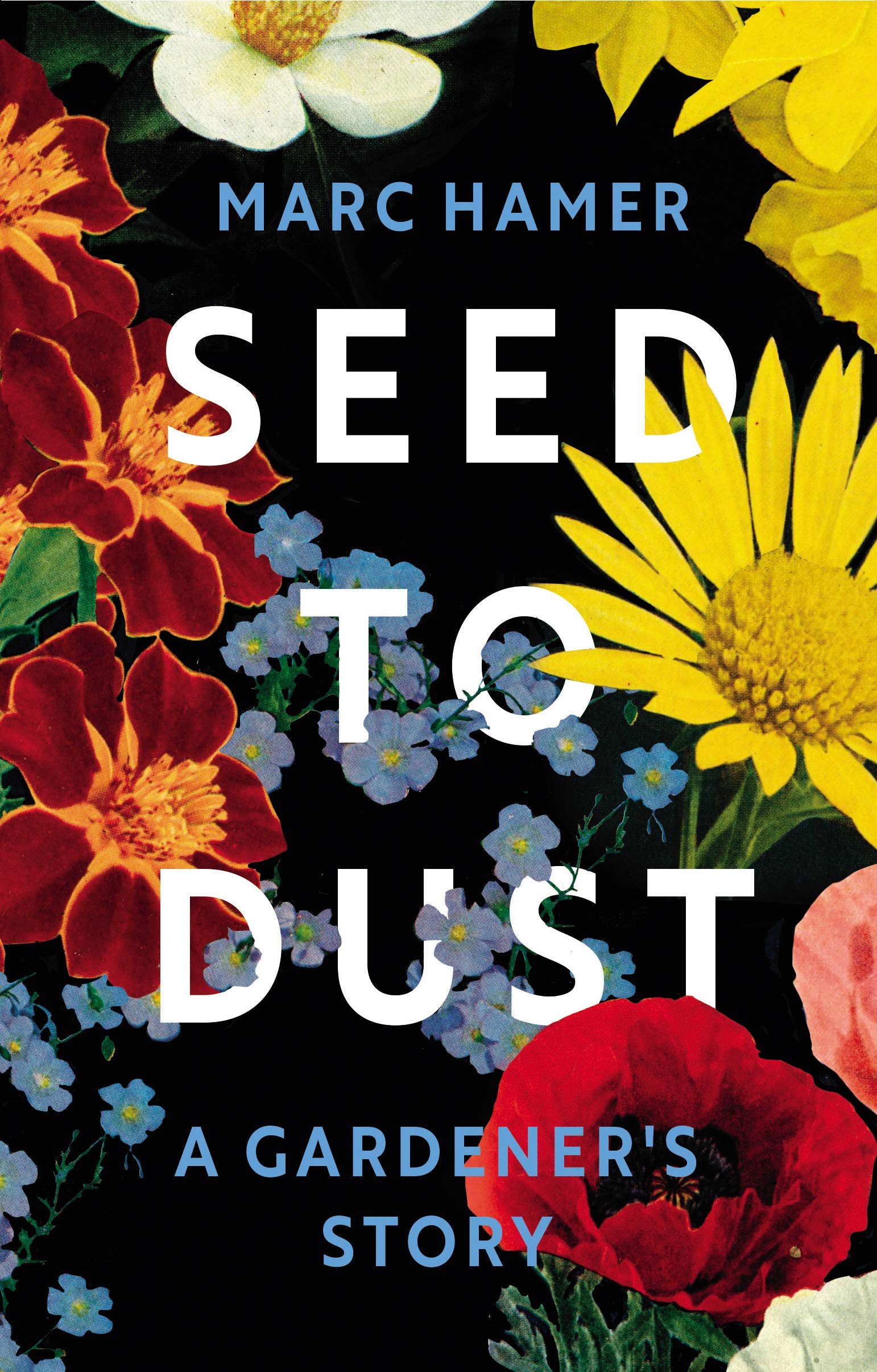
Seed To Dust – Marc Hamer

No Friend But The Mountains – Behrouz Boochani

Umbria – Patricia Clough


Poetry

Ariel – Sylvia Plath

Kid – Simon Armatage


Books to Clear

Our Game – John Le Carré

The Tailor of Panama- John Le Carré

Year of the Golden Ape – Colin Forbes

Dreaming in Code – Scott Rosenberg

Secret Bristol – James MacVeigh


Challenge Books

The Wood That Made London – C.J. Schuler

English Pastoral – James Rebanks

Wild Silence Raynor Winn


Photobook

Mysterious Britain – Homer W. Sykes

So, er, that is it. Inevitably there will be library books that have to be read as others have reserved them. Either way, I win!

Any in that list that you like the look of?

Concretopia by John Grindrod

4 out of 5 stars

One of my low key interests is architecture and the built environment seeing how places have evolved either by planning or not can tell you a lot about the place. I can tell just when someone has really thought about a place and how people are going to use it. The best designs look good and most importantly work really well, the worst just don’t…

Following World War 2 the UK needed to put a lot of effort into rebuilding towns and cities that had been bombed by the Nazis. The men and sadly it was mostly men in those days, had to move quickly to ensure that people were rehomed, slums were cleared and infrastructure was rebuilt. They embraced the wonders of concrete to solve architectural dilemmas.

To see what happened across our country, John Grindrod goes on a journey to see these architectural marvels for himself. He begins though with the prefabs, temporary builds that came in a kit form that was supposed to be an interim measure to house people. They are some still standing and there are people who are still living in them and they are 70 years old in some cases. The nearest to him was a mere three miles away and so it was he walked to Catford, to see it for himself.

His journey will take him to the new towns that were built, Harlow, Milton Keynes and Welwyn Garden City and to the tower blocks that grew in the inner cities all over the country. Some of these buildings are still with us but others have served their time and have been remodelled or flattened and rebuilt. London features quite a lot, and there is a whole chapter of the Festival of Britain and the reconstruction of the Southbank and the Brutalist buildings that are the National Theatre and the Southbank Centre. They are not to everyone’s taste, but I quite like them.

There is a lot of concrete in here, hence the title. Even though it has been around since Roman times it is only in the last century that we have used it almost everywhere and whilst it can be versatile, it is quite grey and bleak, even in the height of summer. But there is much more to this book than just concrete and buildings. He considers the way that towns and cities have changed and evolved since the second world war and the way that central and local government had to ensure that there was adequate housing for those being rehoused following the war and how some schemes were imposed onto some cities and others managed to get a much better solution

I thought that this was pretty good overall. Reading this reminded me of growing up in Woking and the shopping centre there. It was this huge paved concrete mass with all of the regular shops that you’d expect.  Grindrod is an engaging writer who is very passionate about his favourite material, concrete. The social history aspect is very interesting too and he adds a personal dimension to their stories by going and seeing them in the modern-day.

Ice Rivers by Jemma Wadham

3.5 out of 5 stars

Even though they don’t move very far or very fast, glaciers are on the move. Not just downhill, the way that the planet is warming because of climate change, they are melting at an accelerating rate. Almost every glacier around the world is smaller than it was 50 years ago and there are some that have almost vanished completely.

What this means for the planet and the people that live alongside the sea as sea levels rise is anyone’s guess. We are just on the tipping point of being able to save them, though many think it is too late. One of the experts who knows a lot about these geological marvels is Professor Jemma Wadham. She has been obsessed with them for a long time now and in this books, she hopes to teach us about them.

They are not just sterile icy lakes either, her research with a number of other scientists has proven that they are full of life and are active processors of carbon and nutrients, just like our forests and oceans, influencing crucial systems and in no surprise are a key part of the way that life functions on our planet.

Sadly though climate change is having a debilitating effect on them, Even since she has been a glaciologist she has seen a dramatic decline in their size as they slowly melt. In this book, she takes us to some of the places from Greenland to Patagonia and the Antarctic that she has been to in her research about these cold geological marvels.

I thought that this was quite a good book, and Wadham writes in a way that shows that she is a master of her subject. However, I did have a couple of reservations about it. Firstly, I felt it was like reading an academic paper at certain points in the text, the narrative would be like reading a travel book one moment and then I suddenly felt out of my depth. There are a couple of personal elements in here that she writes about, but for this book it felt out of place, this is a science book rather than a memoir. That said, if you want a snapshot of the perilous state of the planet’s glaciers this is a good place to start.

Wild Fell by Lee Schofield

4 out of 5 stars

A copy of this was provided free of charge from the publisher in return for an honest review.

It has been a while since I have been to the Lake District but I remember walking the fells and enjoying the fresh air and views. Whilst it feels wild and bleak, it is a landscape that has been managed by man for hundreds of years. I have very little recognition of seeing much in the way of wildlife, thinking about it now, it just seemed to be a partially sterile landscape, with not much opportunity for life to thrive.

One f the people trying to bring life back to these hills is Lee Schofield. He is the site manager for RSPB Haweswater and he is responsible for two hill farms coving thirty square kilometres of the uplands. They are close to the district’s largest reservoir and he along with other employees and stakeholders are slowly returning the landscape to a place that suits wildlife as well as farm animals.

Fighting the entrenched views is actually not helped by the pace being designated a UNESCO world heritage site. That seemed to focus on the cultural heritage more than the possibilities for rewilding and restoring habitats for animals such pine marten and birds like the corncrake that are just about surviving. Learning how others are tackling similar issues will take him to Norway and Italy to see how they manage and it gives him a lift as well as a raft of ideas.

But what he needs most every day is resilience. Dealing with people who don’t care a single iota about the perilous state of the wildlife in the area is wearing. Where Isabella Tree in Wilding shows what can be done when you have complete control of the lands that you own, the reality of most attempts are rewilding is going to be much closer to this; the reigning back in of ambitions because of the restrictions of various stakeholders, the resistance that people have to change and always battling the system that suits the vested interests of large landholders.

Schofield is passionate about the natural world and that comes across in every page in this his first book. It is not an easy read as he has to battle against the tide of opinion from farmers who have been there for many generations. It is not always an easy task and he does sometimes get despondent with all that he is pushing against. But over the course of the book, he demonstrates that it is possible to make progress and to find a way that suits both farming and nature. I thought that this was well worth reading for a realistic view of returning a landscape to suit the natural world. Highly recommended reading.

No One Round Here Reads Tolstoy by Mark Hodkinson

4 out of 5 stars

A copy of this was provided free of charge from the publisher in return for an honest review.

Until he moved house it hadn’t really occurred to him quite how many books that Hodkinson actually owned. Eight boxes of books with around forty per box made 3200. It was actually a little bit more than that, he now knows that he owns 3500 books. He calls it his book cave.

How did he get to that many books though? When he was growing up in Rochdale there was one book in his house, the now rare, Folklore, Myths and Legends of Britain. ( I really want to get a copy of this!!!) It was kept on top of a wardrobe with other items of great worth. He was allowed to read it, but it had to be treated with all due reverence and care.

Growing up a working-class lad during the 1970s and 1980s was for most of his peers a book free experience. e liked the same music as they did, but there was something about the magic of the worlds contained in a book that he fell for completely. He was quite unusual in trying to find books in out of way places and came across a lot of characters as he slowly began to read and acquire books.

He said at a careers interview that he wanted to be a writer, the guy asked if he meant journalist, and he said no writer. He suggested Marks & Spencer needed people and to apply there. He didn’t but did pursue a job in journalism. These were the days before the internet so the local paper was still read widely and could offer a career path, and for Hodkinson, this opened up opportunities where he finally became a writer and a publisher.

It is an interesting story of his life and there were parts of it I really liked. There are parts that made me laugh in here and it brought back memories of my time growing up in the same decades. It is not just about books though, it is about his take on life and is full of the happy and sad memories he still carries with him. All the way through the book he punctuates his life story with snapshots of his grandfather and the life that he had. It adds a sad and melancholy note to the book, but it reminds us that he has not always had the easiest path through life working as a rare northern-based publisher. I am not counting my books either…

Putin’s People by Catherine Belton

4 out of 5 stars

This is not going to be a review as such, there is far too much data and information in this book to be able to sum it up and quantify it in any meaningful way. I will say that Belton has done a fantastic job in relentlessly and tirelessly sifting through vast amounts of information to try to track what the Putin regime has been doing since he became President.

Money is the key to the way that the regime works, with the vast sums from the energy supplies fund Putin, his men and their chosen oligarchs. Money flows away from Russia into many offshore banks, through nested companies that have no apparent owners to secret accounts. Making this money legal by laundering it is key and Belton explains clearly the methods that they use to make it legitimate.

The ex KGB men also want to fund organisations and people who deliberately are seeking to undermine Western society and they use the black funds over the world to support the far left and right organisations that are responsible for the rise of populism and some terror attacks. The ex-KGB men that make up the current regime have got everything in a tight grip in Russia too. They control the courts, the banks and the security services and any criticism of Putin is treated very harshly.

The West may have thought that they won the Cold War, but reading this shows that their complacency and greed means that they have fallen for the deception that the regime has played over the long term. Belton details the methods that they have used to undermine particular political individuals and tie them into their way of thinking.

How she did this is beyond me as the entire regime is a nest of Russian dolls in a hall of mirrors and with several smoke machines running full tilt. It is not an easy read for many reasons, but if you have the slightest interest in world politics and the way that it is going, especially in the light of current events in 2022, then you should read this.

Moneyland by Oliver Bullough

5 out of 5 stars

As one of the little people, you will find that the rules are more ruthlessly applied to anything that you try and do. If you are fortunate enough to be able to pay in a large cheque to your bank then there are all sorts of hoops that you have to jump through to prove that you are not money laundering. However, if you are much richer then banks will be falling over themselves to ensure that they are going to be custodians of your money and they are discreet in their questioning as to where the money has actually come from, or if it is even yours.

When the money disappears into this global finance system, the chances of the original owner of it being able to ever get it back again is almost nil. It is laundered and then becomes available for the multibillionaire as a tax-free asset to spend on another yacht or a house on a tropical island that their newly bought private jet can whisk them to.

Whilst corruption has been a problem that we have had for millennia, we are now at a point where it is difficult to tell apart the good guys from the bad guys as the grey area is now the entire banking system.

In this book, Bullough tries to shine a light into this dark pit he is calling Moneyland. But the people that make up the global super-rich really do not want other people looking in to see what they are doing and knowing the ways that they hide their money from tax officials governments and in the case of many politicians, from the people that they are supposed to be serving.

I will not say any more than that, because, I want you to find this book and read it yourself. I am amazed that he has managed to find out as much as he has to write the stories in this book. Mostly because the people that have got the money by fair means and foul really really do not want you to know what methods they use to hide it way. He makes some tentative suggestions of how we can fix it, but those with money can often wriggle out of any imposition of rules because of their great wealth. I hope it will make you angry too, as reading this made me feel helpless that we are at a point now where we cannot do anything.

« Older posts Newer posts »

© 2026 Halfman, Halfbook

Theme by Anders NorénUp ↑