Page 54 of 185

Nature Fast and Nature Slow by Nicholas P. Money

4 out of 5 stars

A copy of this was provided free of charge from the publisher in return for an honest review.

Supposedly we have threescore and ten on this earth. Sadly that isn’t everyone as many lose their lives far too early. The longest-lived person on this planet reached 119, though there is a disputed age older than that. Some creatures are barely around long enough to register on the scale, mayflies for example who emerge from the river and have an urgent rush to find a mate before becoming food.

Do other creatures count time though? Well, they don’t generally, their lives can be short and brutal or extremely long-lived, the factors that govern these things are numerous and multifaceted. In this book, he begins with the microseconds that it takes for a jellyfish to fire a poisonous spine into an unaware swimmer. It may only reach 44mph but the g force is just staggering.

A second passes in almost no time at all. It is the speed, more or less, of our hearts that beat until we breathe out our very last breath. It is thought that every mammal has the same number of heartbeats, from the Etruscan Shrew whose heartbeats 25 times a second to the blue whale that beats 10 times a minute. Not everything huge has a long life, the tiny water bear can live for decades and survive almost everything that this planet can through at it.

For other species time can be measured in days, weeks and months, in particular, the summer flowers that appear as the equinox is reached and follow a circadian pattern. The fleeting glimpse of a flower though pales into insignificance when compared to the bristlecone pine. These trees can last a thousand years and these are by no means the oldest plants out there. Yews, giant sequoias and baobabs can reach equally vast ages that watch the humans that pass as mere flickers on their journey through time.

I thought that this was a really clever way of looking at life on this planet. Taking each chapter as a step up in time gave me a great insight into the way that the natural world works and highlights the fact that we may feel we live a long time, but we are a mere snapshot compared to other lifeforms. The writing does occasionally veer into the academic realm, however, mostly it is a very readable science book on life and its rich and varied time that it chooses to exist. Well worth reading.

Owl Unbound by Zoë Brooks

3.5 out of 5 stars

A copy of this was provided free of charge from the publisher in return for an honest review.

This collection of poetry from Zoë Brooks is as intensely personal as it is wide-ranging. She changes from poems about family members, beginning with one about her Grandfather and Uncle who were taken from this world with untimely haste, and a poem about a Lost Daughter and signing the deeds for Naunton Farm.

Mostly though, this is a collection with the sharpest of focuses on the natural world. Of being lost in the railway sidings between the fox track and the willow herb, mourning the loss of the ash trees and those moments on a muggy evening just before the storm breaks.

I have longed to leap
into the fast moving clouds
Shadowing the hills

I really liked this collection. The poems within this slime volume are as broad as they are personal, they are full of profound insight into the way that the world hurtles on in its messy way, yet Brooks still has time to pause and see the details that most people miss as they look rather than see

Three Favourite Poems
Cleeve Hill
The Apples
Too Far

Burning The Books by Richard Ovenden

3.5 out of 5 stars

A copy of this was provided free of charge from the publisher in return for an honest review.

A few months ago the author, Jeanette Winterson made quite an impact when she burned a number of copies of her books because as she said: Absolutely hated the cosy little domestic blurbs on my new covers. Turned me into wimmins fiction of the worst kind! Whether it was a genuine protest against what the publisher had done to her books or a publicity stunt it had quite an effect.

The act of burning books and destruction of libraries has always been seen as an act of violence or oppression against a particular sector of people. The act is not recent though as it has been going on over the past 3000 years. In a lot of the cases, the aim has been of the victors to eradicate the histories of the people that they have just conquered.

Sadly this is not an ancient phenomenon. And there have been many instances of this happening even in the past century. Probably the best known is the horrors that the Nazi’s inflicted on the Jewish populations. The books burnings and eradication of their common European histories began in their own country and would be similar to the places that they invaded.

In this book, Richard Ovenden takes us through several notable historical events from the war in Bosnia, the way that the Jewish communities went about saving as much of their literature as they could from those that wanted to eradicate them as well as authors such as Kafta and Byron who specifically asked for their works to be destroyed and what those responsible did to them. It is bang up to date too, considering what we have to do as a global society to keep records of the vast quantities of websites that are created all the time.

It is the duty of the present to convey the voices of the past to the ears of the future. – A Norwegian saying

I thought this was an interesting book about the way that countries and nations have sought to dominate and write history from their own perspective. Ovenden’s prose is occasionally a bit dry and academic but there are parts of this that are very readable. It is also a warning that we discard our collective histories at our peril, that these hold the key to our future.

The Electricity of Every Living Thing by Katherine May

3 out of 5 stars

Sometimes going on a walk can solve things, it gives your brain a chance to work in the background, the natural world can help calm things and it helps with fitness. Katherine May thought it would help her too, she wanted to try and understand why she couldn’t cope with the smallest of things anymore, why motherhood had been so overwhelming and why the world was pressing in on her.

The walk that she wanted to do was the South West Coast Path. This had its own set of problems though. It is quite long at 630 miles and it was the other side of the country from where they lived. But between her and her husband they came up with a plan that in theory would work; he would look after their son during the day while she is walking sections of it and pick her up at the end. She needed to keep the sea to her right and it would all work out.

Every scrap of noise – and I mean visual noise too, and the noise made by chaos and movement, drains me. Half an hour in a crowd or a noisy bar and I am hollowed out entirely. But the noise of the sea is different; it nourishes me. It allows me to reset.

It is on this walk that she has a chance encounter. While listening to the radio she hears someone talking about Asperger’s Syndrome and the answers that she hears are almost exactly the same as she would have given. This revelation is a bit of a shock, but knowing this, begins the long process of coming to terms with it and understanding just why she is different rather than simply awkward, arrogant or unfeeling.

The Maori have recently developed a new set of words to adapt their lexicon for the twenty-first century. Autism is ‘takiwatanga’ meaning ‘in your own time and space’. I find something in this definition that I’ve been craving all my life – the restless urge to live in the time and space that I was born to perceive rather than to fit badly into the one that suits everyone else.

This book is an open and honest account of her discovery of herself and a realisation of her limitations. May’s, Asperger’s diagnosis isn’t a label that will weigh her down rather it is a confirmation that she knew she was different in many ways to most other people. As her doctor tells her, there is no cure, but there are many ways that we can help you with it. There are parts of this where the writing is really beautiful and other parts where, rightly so, her emotional overload explodes on the page. I liked this overall, and if you think that you might be on the spectrum for autism then I would recommend reading this.

Lakeland Wild by Jim Crumley

4 out of 5 stars

A copy of this was provided free of charge from the publisher in return for an honest review.

Jim Crumley happened to mention that he had been on a trip to the Lakes to his publisher, Sara Hunt. Knowing that she is from that part of the world he was expecting a different conversation to the one that he actually got. Would he like to write a book about the Lakes? He was not sure, this was far south of his well known local patch and even had its own language. Lochs are now lakes, burns are known as becks and they don’t call a mountain a mountain there.

He was unsure, so decided to see what books there were on the region. He spent an hour in a book shop that had a Scotland and Cumbria section and never made it to the Scotland section. He remained unconvinced that he could have anything extra to offer to the already published books. So a little while later, he headed south on the M80, destination High Rigg, and as he arrived the landscape reached out a hand to bid him welcome.

When I embarked on this book’s journey, my only idea was to seek out those elements of what Lakeland has become where true wilderness occurs.

So begins his journey around this magnificent landscape. One of the first things that he spots is a church. Not particularly natural, and not a particularly attractive church either, but inside is a stunning altar designed by the architect George Gilbert Scott, the same man who designed the museum in his home town of Dundee. Perhaps there would be something about this place, after all, something that was confirmed not long after he watched a peregrine fly into the arc of a rainbow.

He has a whole landscape to discover and with that good omen in his mind, he sets about climbing the hills watching barn owls, discovering hidden oak copses, listening to wrens in holly bushes and most importantly spending lots of time sitting in places watching the natural world unfurl about his. This wouldn’t be the Lakes without Wordsworth being mentioned and he is mentioned in context in this book a few times. But this is about the wildlife, and as the book goes on he slowly falls in love with this new landscape and its new and yet still familiar natural world.

So often, the nature writers only task worth the effort is to become nature. Watch and be, and write down what unfolds in that particular collision of time and place.

This is another great book by Crumley. Being taken out of the comfort zone of his usual patch in Scotland has proved his mettle as a quality writer about the natural world. All the way through he tries to avoid the cliched trips in the area, instead, he tries to look for the places that not many have looked for or even seen. I liked the way that he expresses doubts over the area at the beginning explaining that it was the idea of his publisher. However, the wilderness of the national park slowly embraces him and he has a very different opinion of the place by the end of the book. Great stuff.

The cover of this book is just stunning. Really stunning. It is by the artist, Tessa Kennedy whose website is here


The Stubborn Light of Things: A Nature Diary by Melissa Harrison

4 out of 5 stars

I have never been one to keep a journal or a diary, but I can see why people do it, especially nature diaries. if you are noting the arrival of swifts and the first flush of May flowers then you will never remember the exact day unless you have it written down somewhere.

For writers like Melissa Harrison, it is essential. The seasons grind relentlessly on and if you don’t note those details that you see when out and about then they are missed. This book is a collection of her diary columns for the Nature Notebook in The Times. They go back to August 2014 and are not only a record of what she saw prior to the column being written but a glimpse into her personal life as she moved from a busy city life to the big skies of Suffolk.

One of the things that you will notice is her observation skills. This is something that her father taught her and her other five siblings as they were led on walks over Dartmoor looking for all sorts of things. Walking is her preferred method of interacting with nature. It is fast enough to take in a variety of different habitats over the course of the walk, but slow enough that you don’t miss the things than if you were cycling. Harrison also takes the time to sit, watch and absorb the things around her; the water slipping by a jetty in a river, the way that the light fades at dusk when sitting in a favourite oak tree with a glass of wine.

Each tree, then, is a record of difficulties faced and overcome: tempered as we all are, by each passing year.

I really liked this, her prose is richly detailed without feeling overwritten. . Harrison has a wide interest in all manner of things from the state of the verges to the joy of being able to see a barn owl quartering the field opposite her home in Suffolk. She often says that she is no expert, she is not interested in chasing the tick for a particular species, rather she is walking the footpaths of her village just to spend time in the natural world and to see what is there that particular day. Even though she says she is no expert, the particles of knowledge are building up every time she ventures out, she can now recognise a Cetti’s warbler from their song spotting holes in a riverbank where voles live and spotting dragonflies on a tributary of the Stour in Dorset.

What is also evident is her fury; she rightly gets angry about the sorry state of the natural world and the catastrophic collapses in invertebrates and migrant birds. She was instrumental in getting a contractor to remove the netting from a site in my hometown of Guildford that they had placed over trees just before the nesting season had started. Even though they have been published before, these are the full articles for her country column that have not had the newspaper editor

Her award-winning podcast is here:

The Lost Plot by Genevieve Cogman


3 out of 5 stars

After her previous adventures being sent into another world to just retrieve a lost book sounds perfect. But there is a catch. The world that they are going to be sent to, an alternative 1920s New York full of trigger happy cops and gangsters who are doing their best to work around the prohibition laws.

On top of that Irene is seen as an expendable and deniable resource as the other reason that she has been asked to go is to extract a young librarian who has found himself entangled in the political conflict of two dragon families. The neutrality that the entire library has always sought is under threat.

Arriving in the world she is arrested very soon after as they think that she is a notorious female gangster just in from London. She manages to extract herself from the clutches of the police, but as her photo is spread around the newspapers, she realises that this is not going to be an undercover operation. Next has to find the missing librarian and they have given her a method of determining his location.

She locates him in the next town but getting there is not going to be easy given her profile. Kai and her make their way there and are soon picked up by the local mobster who employs a Fae as one of his assassins. This job is going to be much harder than she thought and she hadn’t met the two dragon factions yet…

This was probably more intense than the previous book in the series. It was nice too, to get away from the theme of the first three, the battle with Alberich. It is a good plot concept too, with a whole different spin of her abilities as a librarian spy. One issue I had, and I have it with all of this type of book, is that however much she gets into scrapes or very deep in the dragon do-do, you know that she is going to get out ok as there is another book in the series. I still like the series though and will be carrying on with the fifth book soon.

July 2021 Review

So Johnson has waved his magic wand and Covid has magically disappeared… Not. Anyway you’re here for the books I hope and I read quite a lot of them in July, 18 in the end, but never as many as I hoped. And here they all are:

First is The Way To The Sea by Caroline Crampton. In this book, she takes us very briefly from the source of the Thames to Tower Bridge where the pace slows and she spends a lot of time taking us around the estuary and some of her upbringing in the area. Well worth reading


Those that watched in horror as the American Capitol building was overrun by the rioters who were there supposedly to stop the steal; may have wondered where these people came from. This book goes some way to explain the very worrying rise of QAnon and their particular, hateful conspiracy theories. Grim but worthwhile reading.


I was sent a review copy of Book five a long while ago and have finally got to read books three and four in the series. I like them, they are entertaining and Cogman writes a good story, but they are a touch predictable.


Girl Squads was an unsolicited review copy that I was sent a long while ago. It is quite enjoyable and Maggs has done her bit for feminism by filling in the gaps that are lacking in regular history books. It is American centric but otherwise is a good read.


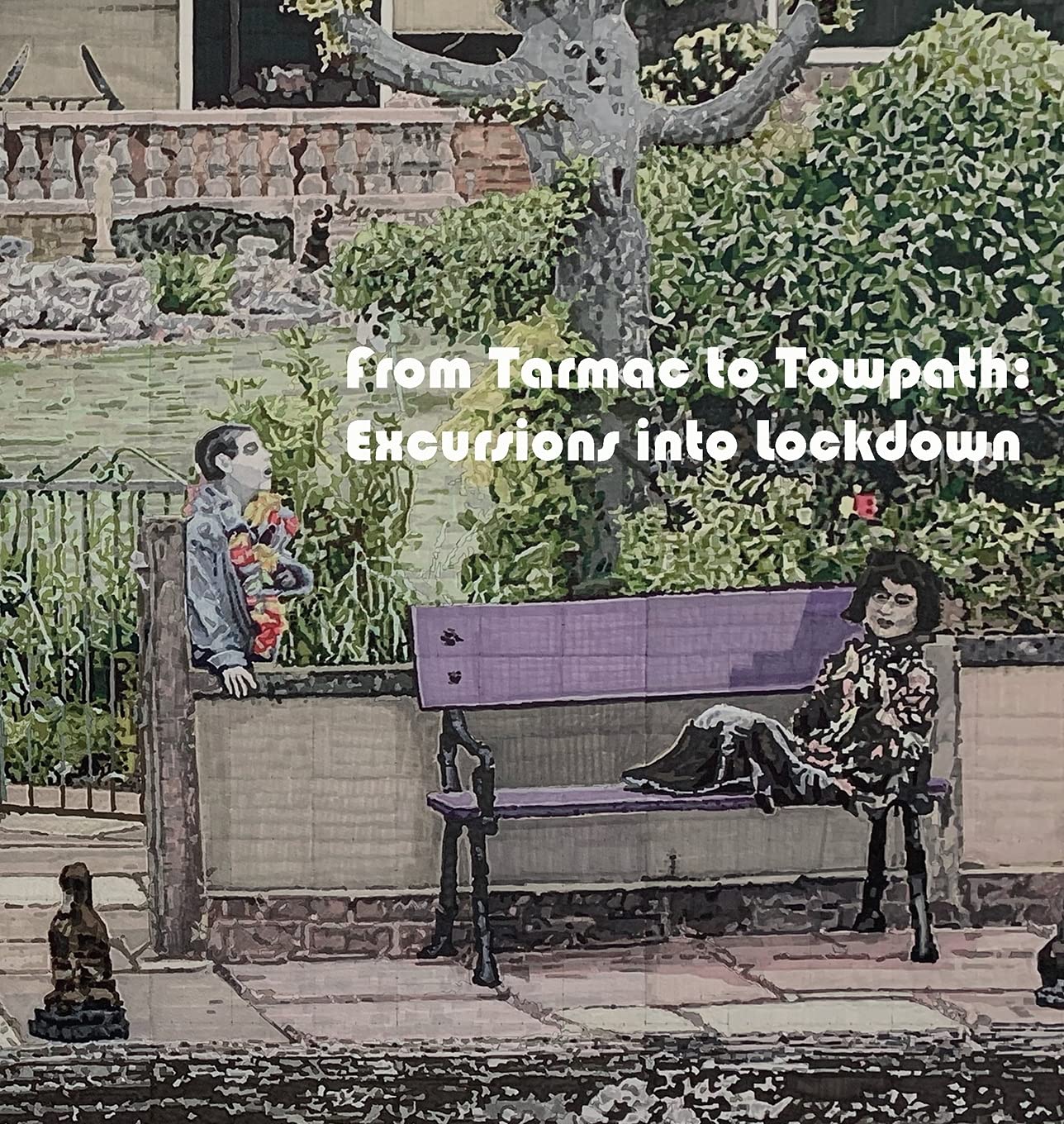
Two slightly strange books next. The first Tarmac to Towpath is a visual and artist response to the lockdowns that have been imposed because of the pandemic. I really liked it. The second is a blend of the words of Gary Budden and the amazing art of Maxim Griffin. Wonderful stuff


I am not autistic, but I can see that I have traits that move me a tiny bit up the spectrum. Katherine May is though and it wasn’t until she embarked on the South West Coast path that a chance encounter with a radio programme answered a question that she hadn’t even thought of at that point in her life. This is her story.


There is not a lot of depth to this, but it is a beautifully produced book about our little amphibious friends, frogs.


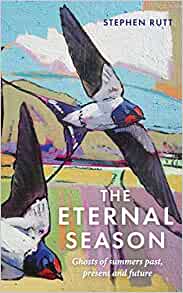
I read quite a lot of natural history books this month, meaning that I have now read more than travel so far this year. This will be resolved soon! Birdsong in a Time of Silence is another book about the discovery of the natural world during the lockdown last year. Another book that has lockdown as one of its themes is the Eternal Season, but there is more to this that that, it is also about how we are starting to have dramatic effects on the way that wildlife is being disrupted.


The Stubborn Light Of Things is Melissa Harrison’s nature diaries that have been collected together in one beautiful book. They are short pieces that can be dipped into as and when suits. How we interact with the natural world if the focus on Ian Carter’s book. Drawing on his years of experience he teases out the threads that inextricably link us to every living entity on this planet.


You can take the nature writer out of their local patch but it won’t stop them from writing about the things that they see around them. This was an idea from Jim Crumley’s publisher, Saraband and he has done an excellent job of finding a never-ending succession of interesting things to look at.


Just the one poetry book this month, which means that I am two behind on my target for the year now! Anyway, Owl Unbound is an interesting collection by Zoë Brooks about nature, life and the whole dam thing.


Sticking with life, how it evolved on this planet is still being understood. Marianne Taylor has chosen ten species to show how life has developed in its own particular way and has included a 1/2 chapter on artificial life and a bit of speculation as to where we will go from here. It might not be as in-depth as some people would like, but I did like the rich graphics and images used.


Delving into the secret life of those that spy is a combination of smoke, mirrors and deception. This claims to have an inside view of those clever bods that make and break codes but being an official history means that it does always feel like something (i.e. all the good stuff) is missing.


My book of the month is Where? This book by Simon Moreton is an artistic blend of personal memoir, family history and tribute to his late father. It is truly excellent and if you want a very different book then I can highly recommend it.

Any of these that take your fancy? Or are there some that you have read already? Let me know in the comments below

The Burning Page by Genevieve Cogman

3.5 out of 5 stars

It was supposed to be a simple fetch and retrieve routine mission, but a hasty escape through a building that is under siege on fire and where the doors back to the library suddenly are not working. No one other than the person who allocated them the task knew where there were. Leaving the alternate version of the French Revolution is only possible with the help of her assistant Kai who is partly dragon and can move between the worlds when he chooses.

Turns out it wasn’t an isolated incident, many librarians who were also trying to return with the books that had been asked to retrieve were getting stuck in the other worlds. Not everything is right in the world of the library spies and meetings are called to elicit information and to pass on orders on books that need retrieving with the hope of restoring order and balance back again. The powers that be know that a lot of this is being caused by the traitor Alberich, but fighting back against him is going to be difficult.

Irene and Kai head home after the traumatic experience where she finds her home full of deadly spiders, someone really doesn’t want her to be around anymore. Finding out who is betraying secrets of the Library to Alberich is going to take some doing and will take her to some of the darker parts of her home city and test some of her oldest friendships. The Library is trying to get a grip on the situation and she and Kai are asked to head to St Petersburg’s Winter Palace, to retrieve a book that will help restore order.

The place they are going to is a secret and the last person that expects to meet is Alberich, but he is there are waiting for them.

And I am not going to say any more than that! This is the third in the series of Cogman’s Library Spy Series. Whilst I guessed at the outcome of the book, it is a series, after all, the journey to get there is faster paced than the previous two as Irene battles the threat to the library. The characters are more developed than in the first two books too, the author has grown in confidence in her writing and the interplay between the main two characters is stronger and helps the narrative. Onto the fourth book soon.

The Story of Life in 10 1/2 Chapters by Marianne Taylor

3 out of 5 stars

A copy of this was provided free of charge from the publisher in return for an honest review.

The first life forms appeared on this small blue dot about 3.7 billion years ago. Since then it has made this place unique in all the planets in the solar system and so far the universe. The number of species has ebbed and flowed constantly, surviving meteorite strikes, mass extinctions and constantly reinventing as everything changes.

So choosing ten species to represent a key aspect of how life is formed from the millions that have gone before is not an easy task. The life forms she has chosen are the fern, a virus, a nautilus, the sponge, a stick insect, the dusky seaside sparrow, the giraffe, softshell turtle, the finches of the Galapagos Islands and of course humans.

For each choice, Taylor has written a chapter with her reasons behind it and lots of details about the lifeform, its place in our world and where it came from on the great family tree of life on this planet. It is packed full of facts and detail about each and I learnt something in every chapter, that the nautilus has been around for millions of years, that some animals are adapting really quickly to environmental change and how convergent evolution shows how vastly different species come up with broadly similar solutions.

There are lots of other books out there that go into much more detail on the origins of life and evolution. However, for some readers there can be too much detail, Taylor in this book has managed to get the balance about right for those venturing into popular science for the first time. I like the way she has picked ten different species to expand on the science of life. There are rich and informative infographics throughout the book that help make it less intimidating. It is a well put together book.

« Older posts Newer posts »

© 2026 Halfman, Halfbook

Theme by Anders NorénUp ↑