Page 72 of 185

The Way of the World by Nicolas Bouvier

5 out of 5 stars

If you were to consider a trip from Geneva to the Khyber Pass these days you would need a lot of planning, visas and even if you were trying to do it on a budget, a reasonable wad of cash. Back in 1953 Nicolas Bouvier and his friend, the artist Thierry Vernet decided to do this very journey in a convertible Fiat Topolino. They had no idea how long it would take and they only had enough money for four months travelling.

This limited budget would come to define the trip and the rich experiences that they gained from it. Rather than charge across the landscape, glimpsing sights and the people as they drove past they were forced to go slowly, stop and take time to earn more for the next stage of the journey and move slowly on again. The lack of funds meant that they have to find the cheapest possible places to stay and eat, this brings them into regular contact with people that if they had been sightseeing on a bigger budget they would have missed completely. It gives them a much better insight into the character of a city

In some of the places that they stopped they were there for a considerable length of time, arriving in Tabriz they were quizzed by a police colonel who gained permission from the local general to stay as long as they like. With their passes stamped, they could rent rooms; they were to be in Tabriz for some time. The Armenians told them many bad things about the Turkish families at the other end of the village, so they thought they would pay the head a visit just to see if any of it was true. He was an interesting character who it turns out had lived in France for a few years and he filled them in about the history of the place. They made friends with the postmaster too, collecting the letters would involve a chat and several cups of tea, but he never lost one and it was a lifeline to the outside world.

You think you are making a trip, but soon it is making you – or unmaking you.

They were to stay in the village for around six months before trying to leave. They had tried to leave earlier, but couldn’t make it through the water and were pulled behind a peasant and his horse, but they did eventually make it away and onto the next stage of their journey, through Mianeh and onto Tehran. The attempts at modernisation were a bit half-hearted and seemingly carried out without anything resembling a plan. But there were plane trees on some of the avenues that offered cool shade over cafes where you could spend the rest of your life. What really struck them was the blue that was used to colour everything. Its intensity in the sun lifted their hearts.

They left Tehran for Isfahan with heavy hearts and were driving along tarmacked roads that were pitted with potholes, making it a slightly perilous journey. They arrived at the place they were staying tired from the journey and weary from Tehran. They were their briefly and then onto the next town, Shiraz, but what they really wanted to do was leave Iran. They were asked to wait at the customs post until the superior officer arrived. The register was duly signed, and now they needed a push from the soldiers to get going again into Pakistan.

They reached Quetta and found a whitewashed hotel to stay in. They drank whisky on the roof terrace and listened to Mulberries drop onto the courtyard below. Just reaching here was enough. One rebuilt engine later and they were ready to move on to the final part of their journey.

After all, one travels in order for things to happen and change; otherwise, you might as well stay at home.

I had read Bouvier’s collection So it Goes, about his travels in the Aran Isles and Xian late last year but not read this even though I had had a copy for a while now. I now wish that I had read it earlier, as it is an absolutely superb travel book. Even though it was written a decade after they began their journey, it still feels of the moment. They take everything as it comes, rough and smooth, savouring the good experiences and taking the lessons from the failures and setbacks. The book is liberally scattered with the art and sketches from Vernet, they are full of energy and bring and extra dimension to the text. It is the sort of journey that I could imagine that Patrick Leigh Fermor would have continued with after his great trudge had he had the opportunity. Very highly recommended.

October 2020 TBR

Hi Everyone. As the nights are rapidly drawing in I am looking forward o getting stuck into these in October.


Finishing Off (Still!)

Vickery’s Folk Flora: An A-Z of the Folklore and Uses of British and Irish Plants – Roy Vickery

Lotharingia: A Personal History Of Europe’s Lost Country – Simon Winder

A Time Of Birds: Reflections on Cycling Across Europe – Helen Moat

Slow Train to Guantanamo – Peter Millar

Corvus: A Life with Birds – Esther Woolfson

Modern Nature – Derek Jarman


Blog Tours

Attack Surface – Cory Doctorow

Confess – Julia Van Der Molen

Days of Falling Flesh and Rising Moons – Steve Denehan


Review Copies

Thank you to the publishers that have sent me these review copies:

American Dirt – Jeanie Cummins

The Maths Of Life And Death – Kit Yates

Time Among the Maya: Travels in Belize, Guatemala and Mexico – Ronald Wright

A Time Of Birds: Reflections on Cycling Across Europe – Helen Moat

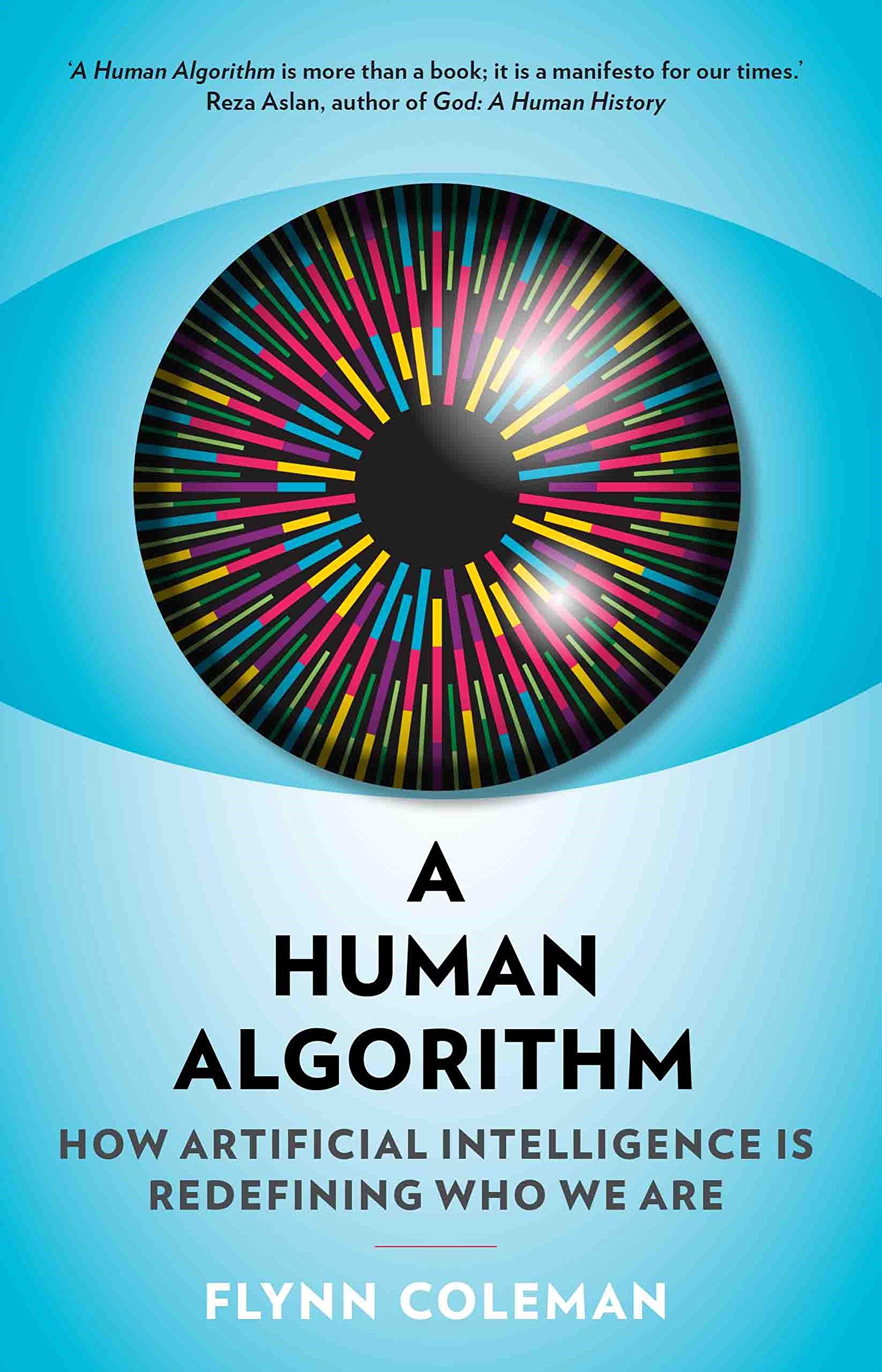
A Human Algorithm: How Artificial Intelligence Is Redefining Who We Are – Flynn Coleman

Signs of Life: To the Ends of the Earth with a Doctor – Stephen Fabes

A Bird a Day – Dominic Couzens

The Age of Static: How TV Explains Modern Britain – Phil Harrison

Material: Making and the Art of Transformation – Nick Kary

Bringing Back the Beaver: The Story of One Man’s Quest to Rewild Britain’s Waterways – Derek Gow

Rotherweird – Andrew Caldecot

Wyntertide – Andrew Caldecot

Featherhood – Charlie Gilmour

Attack Surface – Cory Doctorow


Library Books

Complete change around from last month as for the first time in a very long time I have had to renew my library books. These are the next books due back fairly soon now:

Modern Nature – Derek Jarman

Inglorious – Mark Avery

Nightingales In November – Mike Dilger

Nine Pints – Rose George

Buzz – Thor Hanson


Challenge Books

As well as a dusty shelf challenge that I am running on Good Reads, I am joining in with #20BooksOfSummer run by Cathy at 746 books.

From Rome to San Marino – Oliver Knox

Hokkaido Highway Blues – Will Ferguson

A Dragon Apparent – Norman Lewis

In Search of Conrad – Gavin Young


Own Books

See challenge books!


Poetry

Rapture – Carol Ann Duffy

Mancunian Ways – Isabelle Kenyon (Editor)


Science Fiction

Didn’t read any last month (yet again!!!) so this is still on the list:

One Way – S.J. Morden

Attack Surface – Cory Doctrow

The Perseverance by Raymond Antrobus

4 out of 5 stars

Living between two cultures is not always easy, but it is something that British-Jamaican poet Raymond Antrobus has had to live with, but it is not the only divide he has to manage, he is also deaf so he has to live in his quiet world and interact with the loud world. He has expressed these multifaceted identities in the poems in the book.

There are poems about his father, memories from his childhood and his later dementia. The collection is named after the pub that he sat outside while his father was inside drinking. Some of the poems show just how furious he can be, there is a furious rebuttal of Ted Hughes poems, Deaf School, with the original prose redacted and his response, After Reading ‘Deaf School’ by the Mississippi River and the poem that is a tribute to three women murdered in Haiti, For Jesula Gelin, Vanessa Previl and Monique Vincent.

What language
Would we speak
Without ears?

Nowadays, instead of violence,
I write until everything goes
quiet

This is quite a powerful collection, he is justifiable angry, but does not let it become a whinge, rather his energy is directed to raising awareness and making things equal. I liked the addition of sign language amongst the poems too. There are many ways of communicating what we want to say and this collection is another way of doing just that.

Three Favourite Poems
Jamaican British
My Mother Remembers
Happy Birthday Moon

Tales From The Life Of Bruce Wannell Ed. by Barnaby Rogerson & Rose Baring

5 out of 5 stars

A copy of this was provided free of charge from the publisher in return for an honest review.

Up until I picked this book up I had never heard of Bruce Wannell. He was a great traveller but has written no travel books. His knowledge of Indo-Persian and Islamic civilization was encyclopaedic and he left no written works on that either. He was an excellent musician and linguist too, he could speak fluently in French, Italian, English or German as well as conversing in Turkish and Greek. His first love though was the cultures of the middle east, speaking Iranian and Afghan Persian so he could absorb as much of their cultures as possible. He could also talk in Arabic, Pushtu, Urdu, Swahili. No wonder he was described as the greatest Orientalist of his generation.

He seems to know everyone too; he would arrive in London to visit friends and within the hour, Afghan musicians would be arriving at their door to play music for the household. Almost everywhere he went he seemed to know someone. His home in the UK was a tiny attic room in York, filled with books and the things that he treasured, but he was most at home in the mountains of Afghanistan and Iran. He had a deep understanding of their culture and he was not among them to prove a point, just to share their way of life. He could mix with the lowliest villager and the most powerful sheikhs and they all respected him

Everyone knew Bruce Wannell, but at the same time I feel as though none of us knew him at all

This book is a series of wonderful and generous tributes from his friends and people that came to know him over his life. It seems that he had the time and kind words for everyone that he met. He would occasionally get himself in trouble, every now and again he could ruffle feathers, but he was a charming man who could almost talk his way out of any situation. He had almost no money and yet still managed to eat and travel. He had an eye for things that gave him pleasure, whether they were ceramics, fine Persian clothes or the tastiest food, he always somehow acquired them. Music was something that gave him enormous pleasure, he would find a home with a piano and persuade the owner to let him play it and then invite people to come and listen. At the various concerts that he arranged there would be anonymous men from the civil service in their suits, William Dalrymple would take one look at them and could tell they were spooks. Was he a spy? Dalrymple implies that he was as he never really got to the bottom of what Wannell was doing in Peshawar or why he had to leave their in a hurry.

Reading this, I now feel that I know him so much better, but this is just the briefest of introductions. There are not many of his type left in the world now and his absence has left a huge gap in the lives of those that could call him their friend. 

Rewilding by Paul Jepson & Cain Blythe

3.5 out of 5 stars

A copy of this was provided free of charge from the publisher in return for an honest review.

The term rewilding has become the latest buzz word in conservation and environmental circles. But what does it actually mean? And does it actually work in practice? In essence, it means taking large steps back in the way we treat landscapes and the animals that inhabit them, reintroducing the apex predators and large herbivores and letting the highly interdependent ecosystems readjust accordingly. The answer to the second question is yes it does.

It is still a controversial subject though, and there is resistance to actioning these sorts of changes to the landscape from both landowners and environmentalists. The return of wolves to the highlands of Scotland would be fantastic, but for some people, this is a step too far. In this book, practising ecologists Paul Jepson and Cain Blythe explain the science behind rewilding and go into some detail on schemes that have worked around the world.

Rewilding is not about turning the clock back and restoring damaged ecosystems to an arbitrary past baseline. Rather, it is about restoring networks of interactions between communities of organisms and their physical environment, along with the ecological process that emerge from these interactions.

They go into so detail about the sorts of animals that are needed to bring about lasting and significant change to the ecosystems. It turns out that as good as apex predators are altering the dynamic, the best animals for changing ecosystems are large herbivores. In Europe we used to have large cattle breed called aurochs, these are now extinct but there is a scheme to selectively breeding older species of cattle to recreate this ancient species. The result of this is the Taurus, these have been bred with large horns, small udders and longer legs. It is intended that these will become the wild bovine to populate the rewilded areas in years to come.

One of the countries that have had a lot of success with their scheme in the Netherlands. They have decided to take an offensive approach to rewilding, they acquired large herbivores including the Konik ponies and Heck cattle and let them loose on the new nature reserve in Oostvaardersplassen. Slowly they transformed the landscape and it became more like the New Forest, a mix of open ground and trees. Another case study is on reintroducing large tortoises onto the islands of Mauritius and how they replace the damaging non-native rabbits and goats that were there. Species that were endangered have bounced back.

I think that the message this book sends is really good, the authors have selected solid case studies demonstrating that the science behind rewilding is strong. Mostly the prose is ok to read, but occasionally it read like a paper in a journal, but thankfully not too often. Worth reading if you are interested in the subject.

Tongues of Fire by Seán Hewitt

4 out of 5 stars

People have reconnected to the natural world during lockdown in many ways, some are there for the fresh air and to get out away from the limits of our walls, others are there to walk the dog and some have found what has been missing from our lives of screens and 24-hour notifications.

This first collection from Seán Hewitt views all of life’s ups and downs through the physical elements of nature. But in these poems, he goes far deeper into our psyche and our intangible response to the things that we see around us. There are poems on birds, trees and dryads, ethereal beings that are said to come from oak.

There is more to this that just poems about the natural world, they touch on the sacred and the profane, the pure time and those stolen moments among lovers. His words add an important spiritual dimension, linking himself to the natural world.

this tree seems suddenly like a stillness
a circle of quiet air, a place to stand

now that I have had to leave
and cannot think where I might go next

I really liked this and I can’t exactly say why that is. Not for any specific reason, it is just a collection that is immersive and gets under your skin in all sorts of ways. The centre part is taken from the Irish tale, Buile Suibhn which I liked, but not as much as the rest of the book. His language is simple and charged with power and draws deep from the natural world. Stunning cover too.

Three Favourite Poems
Barn Owls in Suffolk
Dormancy
Wild Garlic

DH Lawrence in Italy by Richard Owen

4 out of 5 stars

A copy of this was provided free of charge from the publisher in return for an honest review.

In November 1925, David and Frieda Lawrence arrived on the Italian Rivera. They had escaped the cold and drab English winter and were hoping for the sun. They had arrived by train in the town of Spotorno. He was leaning out the window of the carriage taking in the sight of the sparkling sea when he saw Rina Secker on the platform. She was the wife of his publisher, Martin and she was taking them to Villa Bernarda. It was located just under the castle and had views of the Mediterranean its own vines which provided red and white wine for them. It was the beginning of his love affair with the country.

Over the next six months though everything would change for them both. Lawrence was not particularly healthy and living here was to offer his some respite from the industrial place that England had become. It would also be a place where he would become fiercely productive and as Frieda put it ‘a writing machine’ . He grew to love and loathe Italy in equal measure though but liked the way that the people did things by feel and not by some mechanical coldness as in the UK.

Frieda believed in free love and David wanted stability and family life. Frieda would become attracted to their landlord, a dashing Italian army officer from the Bersaglieri Regiment and embarked on an affair with him. She was born Emma Maria Frieda Johanna von Richthofen and was a distant relation of the Red Baron. She was pretty in her youth and had a succession of lovers. She married Ernest Weekly, a Professor at Nottingham, and had three children with him. She was to meet Lawrence after her husband invited him for lunch. Before long they were having an affair and when her husband found out, he ended the marriage and forbade access to her three children. She and David were married a little while after.

The stay in Spotorno was the first of many places that they stayed in the country. They spent a little time in Florence before heading to the town of Abruzzo high above Rome in the mountains. It wasn’t ideal so they took up Compton Mackenzie’s offer of accommodation on the island of Capri. Then he spent some time in Sicily looking at some of the Greek temples. He wasn’t that impressed with the island to begin with, but it grew on him and they decided to settle there in the town on Taormina. The villa is still there and they even named the dusty road to it, after him.

All of these details of where and when they stayed, who they mixed and the various marital problems that they had, have been teased out of the unpublished letters and diaries of Rina Secker. It makes for a fascinating series of stories and Owen shows how each of the factors that were causing friction and heartache actually helped him in his novel writing. Not being in England sharpened Lawrence’s literary sense and he became a better writer because of his distance from England as well as drawing on some of the people that he knew in Italy that became characters in his books.

Lawrence reminded me a little of writers like Patrick Leigh Fermor and Laurence Durrell, in the sense that some of their English characteristics were distilled and concentrated in the Mediterranean sun and this was very visible in their works. I have known about Lady Chatterley’s Lover for decades and it is best known for the scandal that it caused at the time, I must confess I have never read any of his novels! Though having now read this fascinating book about him, I do quite fancy reading his book Sea and Sardinia to see what he thought of that beautiful island.

The Goddess of Macau by Graeme Hall

4 out of 5 stars

A copy of this was provided free of charge from the publisher in return for an honest review.

The Portuguese colony of Macau was first founded in 1557 and was the first European settlement in Asia. Over the next 450 years, it developed its own distinct and unique culture. This tiny 45 square mile island is about 37 miles of Hong Kong and it is now a Special Administrative Region of the People’s Republic of China.

Graeme Hall was living in Hong Kong when he first became fascinated by this little colony and visited many times. This short and perfectly formed short-story collection is a result of those hours spent there and studying the culture of Macau. There are stories about an arranged marriage, a fishing trip and a man looking for his family. My favourite story was An Apartment on Coloane, which is about an old man who has an unnerving sense of what is to come.

I have not been to Macau but I can imagine what it is like as I am fortunate to have been to Hong Kong a few times. That blend of Western and Chinese made it a special place, and I can only imagine that Macau is the same. I really liked this collection, but if there was one flaw with this book it is that there are only eight stories within. I reached the end and I wanted it to be at least three times as many stories of this fascinating place. A great little set of stories.

Unofficial Britain by Gareth Rees

5 out of 5 stars

A copy of this was provided free of charge from the publisher in return for an honest review.

We all have our favourite parts of this country, one of my is West Bay in Dorset, it is a beautiful place to visit on the Jurassic Coast at the end of Chesil Beach. Sitting by the sea watching the boats come in and out of the harbour is a lovely way to spend a day. But even in this beautiful spot, there are things that you probably haven’t noticed on the fringes of our society and have stories of their own to tell.

Gareth Rees has been collecting these stories for a while now and placing them on his web site, Unofficial Britain and for the first time, they have been gathered in this book. He begins with the electricity pylon, a mundane enough object that unless you look for them, they will escape your notice. Pylons were designed by the architect Sir Reginald Blomfield. He did a classical design inspired by the shape of Egyptian obelisks; they are far more ornate than they need be. Pylons divide people, a fair number consider them a blot on the landscape but there are others who see them in a very different light. These pylon poets appreciate them for what they are and their presence in the landscape. The pinnacle of this ‘Worship of the Hum’ is best expressed by the author David Southwall and his creation of Hookland, a collection of weird folklore drawn from ancient rituals.

The stone circle is a ritual space that were constructed in from the Neolithic era onwards. They still have a presence in the landscape today and many people are drawn to them. Some people see that circular features in the modern cityscape have a similar draw to those ancient ones, and Rees goes into some detail about Glasgow after seeing a map on the pillar of a flyover. It was a map of the inner ring road filled in black. Known as urban geomancy, people study maps in detail to read and interpret them, much like ley lines. Even a modern-day replica of a stone circle that he visits at the Coul Roundabout in Fife. Even though it is new, it still feels alive.

Anybody should be able to feel a connection with place, no matter where they grew up or where they live, even in the densest concrete jungles or the most monotonous suburban sprawls

If you were to imagine a haunted house, the film world has tropes that spring to mind. It would be at the bottom of a lane, the vegetation would be dark and oppressive, windows would be broken and so on. He is seeking ghosts that can be found in relatively modern homes and he heads to Grimsby to investigate the presence of a ghostly nun and other supernatural events in the town. Poverty and lack of investment have turned estates that were once full of life and people into ghost homes. We can project our fears onto any inanimate object.

Remnants of factories and industrial sites that are shadows of their former glory are other places where their presence is still felt many years after they stopped being the main employers in their towns. He talks about sirens that would sound for no apparent reason at night waking people up and old industrial sites that had sinister and secret uses, places that even now can raise hairs on the back of your neck. Edgelands have a life of their own, some of it is natural, plants that cling onto life in the most unexpected ways and some of it manmade and often slightly unnerving. Offerings that have always been left in spiritual sites can now be found in places that you wouldn’t expect like the underpasses of motorways and interchanges; he is with friends when he finds a vintage doll holding flowers. They have a raft of questions that this inert doll is never going to be able to answer for them.

We know almost nothing of ritual items left by our ancestors, so how will an archaeologist of the future interpret the things that we are leaving behind? Some features of the urban landscape have reached cult status, one of those was the Redcliffe flyover in Bristol; it has been replaced by a roundabout, but its loss was mourned by many. Near the M32 they find a shrine, though which god it is honouring is a mystery. Spaghetti Junction has 1 million vehicles pass along its twisting roads, but most are utterly unaware of the river that flows underneath it and the wildlife that it supports.

Landscapes overlay landscapes and if you know how and where to look you can see the past clearly. Rees is fascinated by the thin places of this country, places where the past and the present overlap and he see this most clearly in the industrial estates that you can find in every town and city and the desolate areas that are there if you know where to look. They walk along Bromley Hall Road, past salvage businesses and knackers yards and stop to look at the fifteenth-century hall that is remarkably still there and is the oldest brick building in London. Concrete multistorey car parks are a bit of an eyesore unless you happen to have a thing about brutalist architecture. When I drive around them, they always feel a bit too small for the cars that they are supposed to be sheltering. Rees is in Bristol to discover the stories he has heard about hauntings in a particular building.

Near where I grew up was a huge mental institution called Brookwood Hospital. Most of the residents were gone by the mid-1980s, bar a few inside a 6m high fenced-off building. Before the rest was flattened to build homes on we used to play in the partially derelict buildings on the site. I don’t remember any ghosts at the time, but it could be creepy. Rees recounts stories of those that have seen movement behind windows of hospitals in Manchester and of shrieking that disrupted filming in an establishment in Nottingham. To close he heads north on the M6, an almost ritualist journey that he remembers well from his childhood and it is fitting that he ends up in Tebay South Service station where there are standing stones that that fit in even though they shouldn’t.

Sometimes the present can haunt the living as much as the past

I thought that this was an excellent book. I like his curiosity in anything and everything that he sees, be it modern or ancient and he searches for meaning in some form in his subjects. It is a heady mix of folklore, history, landscape and cityscape writing and all built on the foundation of psychogeography. He writes well too and gets the balance just right between being fact and unease with his subject matter. If you have the slightest interest about the place that you live and want to find out what goes on in those tiny triangles of land which most people avoid, then this is a good place to start. Can also recommend these books that pick up on similar themes:

Scarp by Nick Papadimitriou

Edgelands by Paul Farley and Michael Symmons Roberts

Unofficial Countryside by Richard Mabey

Strange Labyrinth by Will Ashon

Ridge and Furrow by Neil Sentance

4 out of 5 stars

In Water and Sky, Neil Sentance told us about some of the members of his family and the Lincolnshire landscape where they lived and how it shaped his life and theirs. In Ridge and Furrow, he is back to tell us about some more characters.

The first story is about Frank, a gentleman who had been married to Lottie and since she had passed, his life had felt empty and hollow. His memories of the time spent with her lay heavy on his mind and in time they became overwhelming. There are memories of his mother, a teenager when the big freeze hit in the sixties and a big fan of the Westerns, something she passes to Neil.

He writes about Harold who had had many different jobs; bus conductor, an ambulance driver miner, working in a forge but now is a gravedigger. Trying to chip through the frozen ground to lay the winter dead to rest is hard work. Then there is the story of Fred, a giant of a man and tough farmer with a tendency to drink hard at times and his wife Florrie who worked equally hard on their farm

These stories, essays and vignettes to members of his family are full of life’s rich memories, from the happy moments and tragedies that hit every family in each generation. I liked the way that he starts with a relatively recent history and walks us back through the time in the company of his family. He is quite some writer and if there was one flaw it is quite a short book and leaves you wanting more.

« Older posts Newer posts »

© 2026 Halfman, Halfbook

Theme by Anders NorénUp ↑