Page 73 of 188

I Am An Island by Tamsin Calidas

3 out of 5 stars

After a burglary, Tamsin Calidas and her husband decided that they had had enough of London and headed north to a remote island in the Scottish Hebrides. They were turning their back on the city life and high paying careers their new home was to be a semi-derelict croft. They intended to renovate it whilst living in a small caravan.

It was idyllic at first, it is a beautiful part of the world up there. They bought some animals and made progress on the property. Their neighbours were fairly cool about them being there, implying that there had been someone else that the plot was reserved for, and rather than making friends they were having to defend their right to be there. It wasn’t the best place to be as she began to feel more and more isolated.

She longed for children and had reached to point where they needed to start the IVF treatments, quite a stressful process at the best of times, but this was enhanced given their remoteness from hospitals that could carry out those procedures. It was to be one of the things that did for her marriage too. Soon she is left alone on the island, with two broken hands after an accident and a separate incident.

All of this, as well as trying to run the croft on her own, was to push her to the very edge of the abyss.

In the current pandemic, moving to a Scottish Island well away from anyone else does have quite a lot of appeal. It is not your classic relocation book where the photogenic couple move to a beautiful part of the country, make lots of friends and reinvent their lives in a positive way and change the stresses of city life to a productive and creative life. This is very much darker, she is assaulted and subject to the overt and covert hostility of the locals to the croft that she is living in. The middle section of the book is emotionally quite raw and makes for pretty grim reading.

The final part of the book did rescue it a little, she looks to the more elemental parts of the natural world to sustain and nourish her mental health and at times her writing can be quite lyrical and poetic. However, the book has caused some controversy with the people that she shares the island with, who have a different take on the events mentioned, so I am not sure if she will be staying there much longer!

Signs of Life by Stephen Fabes

5 out of 5 stars

A copy of this was provided free of charge from the publisher in return for an honest review.

Undertaking training to become a doctor is around seven years of your life, or longer depending on your specialism. To take the decision to pause when you are a junior doctor and cycle around the world is not a light decision. He had the idea from Langer’s lines, the topological lines that are drawn on the body and show the natural orientation of the collagen fibres. He sat down with an atlas and drew lines across each of the seven continents of a possible route. His mum pointed out that Antarctica might be a bit chilly, so he decided on six continents. The travel bug was in his blood though, as a teenager he would often be found standing on a road holding a sign to ‘Anywhere’. This would be the ultimate way of getting it out of his system.

He departed from St Thomas’s Hospital where he had been working and a few of his friends there had gathered to see him off and even managed to find a piece of tape for him to cross. Being January it was a bit chilly and was soon going to get much colder. Before departing he had volunteered to be examined medically before the trip to see what the effects of cycling that far around the world would have on his body, though perhaps agreeing to be checked for anything was not the wisest decision. He hadn’t done much training for the trip, reasoning that it was going to be tough, so why add extra months of toughness. He did rue his decision a little, as he struggled to overtake a jogger on his fully loaded bike… He did 14 miles on his first day and slept in a guesthouse in Bexleyheath and woke the following morning to snow.

It was to get much colder as he cycled through France and up into the Alps and sleeping in a tent he would wake up to find everything frozen solid. Sitting hunched over a cup of coffee in a café desperately trying to get warm he makes the decision to head to Nice and the warmth of the French riviera. He was eating lots and the city boy blubber was beginning to drop away. He had filled one of his front panniers with biscuits. More worryingly was a pain in one of his knees, and being a doctor he had a mental list of what it could be, and none of the prognosis was good. Surgery was needed and it would be three months before he could resume.

But he did. He was reunited with his bike in Istanbul and the continent of Africa beckoned. His plan was to head down the eastern side and then halfway down, head across to the western side heading towards South Africa. He was joined by Nyomi, a former flatmate from London for this part of the trip. All the way through, children were fascinated by them, they would wake up, open the tent to find an audience of twenty looking at them. They found that they were pretty good shots with the slings that they used too. To understand the place though he felt that he had to see its hinterland and to do this he offered to help at the hospital in Lodwar. It makes him think about the reason that people become ill; in the UK it is a combination of factors, but in that part of Africa it is almost always down to the crushing poverty.

They reached Cape town and Nyomi returned home. He headed to the airport to get a flight to Ushuaia for the South American leg of his trip. He had set himself the target of reaching Alaska in 20 months, ensuring that when he got there he was cycling during the summer, and not freezing his arse off again… As he cycled north through Chile, the volcano Puyehue which had been dormant for 50 years had exploded leaving a six-mile by three-mile gash in the surface and covering everything in a good layer of dust for good measure. As he headed north, climbing the mountains was making him suffer from altitude sickness, he lived for each descent. But it is an encounter at gunpoint that changes him on this continent, and every time he has tomato soup, he remembers that moment.

Filling out the form for the entry into the USA brought back memories of childhood where the excitement of American culture seeped into ours and seemed shinier and better. Sitting outside a bar called Kansas City Barbeque, where a scene from Top Gun was filmed, he strikes up a conversation with the waitress and manages to get a place to sleep for free. He contemplates staying a little longer, but Highway One beckons so he heads off. It is the least eventful part of his trip and he crosses the Arctic Circle to reach his final destination in North America, Deadhorse. Next stop, Australia.

He had messaged, Claire, an on and off girlfriend, and she had agreed to cycle across Australia with him and they met up in Sydney. It was fairly uneventful, apart from Claire being bitten by a huntsman spider which thankfully wasn’t serious. They were soon across the country and on their way to Timor. Asia is another level of intensity to his ride, the traffic was much busier, Jakarta was almost permanent gridlock which made for stressful cycling. It was in Singapore that Claire decided that she wanted to go to Japan, alone. They parted company and he headed for Malaysia, where he was to acquire dengue fever…

He spent a few days off fromcycling in Bangkok, planning the next stage and took up the invitation to join a medical team in Cambodia who were visiting people who lived in floating villages on the Tonle Sap River. He had a brief excursion into Myanmar and then reached India. He heads north again, passing through one of the wettest places in the world, Cherrapunjee, which receives 12m (yes that is metres) of rain a year and was even too wet for Welsh missionaries. A visit to a clinic that is treating mental health patients is eye-opening, most of the time in India, these sort of health problems are suppressed. The visa for Pakistan was proving problematic, so he booked a flight to Hong Kong.

China was going to be an experience, the guidebook he had found only had a slim phrasebook and it didn’t have the words for rice and noodles but he could learn how to ask to buy a padlock. He hooks up with a couple of Chinese cycle tourers, which makes it a little less daunting. Mongolia and the steppe was approaching rapidly. It was bitterly cold up there, so much so that he ends up using socks in more than one place to keep appendages warm… He passes back through China and is then passing through the ‘stans, Kyrgyzstan, Tajikistan, Uzbekistan with a brief but nerve-wracking trip into Afghanistan. Next would be Georgia and then he was almost at the edge of Europe and the final leg of his epic journey.

Rather than go back the same way through Europe as he came out he headed home via Austria and Germany where he caught up with a man called Heinz Stücke. He had spent 51 years cycling around the world and had wracked up a total of 650,000 kilometres in total. It was an eye-opening evening. He then found one of the worst countries to cycle through, the Netherlands, not because of the car drivers, rather other cyclists who paid little or no attention to anyone else on the cycle path. Soon enough he was departing the ferry at Dover for the run back into London.

I have read a fair number of round the world cycling trips. There is Mark Beaumont’s book of his round the world races where he is against the clock, Sean Conway’s ride started off as a race around the world, but just became the ride of a lifetime after an accident. Alastair Humphries is another who has followed a similar journey and who wrote about it in two books. If you’re going to spend six years doing something, a trip like this seems to be the best way of seeing our planet and Stephen Fables journey around the world is a worthwhile addition to the bookshelf of these sorts of trips. He is a passionate cyclist and keen observers of human life, but what makes this a little bit different is his medical training. He thinks nothing of taking time out to visit medical centres to help others who are tending to the sick and needy. He brings his knowledge to them, they in turn teach him a little bit of humility and humanity. Occasionally, it felt a little rushed, you would pass through some countries in the blink of an eye, but to condense six years worth of memories into just four hundred pages cannot have been easy. Apart from that, this is an excellent travelogue and account of a world tour by bicycle. Very highly recommended.

Rootbound by Alice Vincent

3 out of 5 stars

Both of Alice Vincent’s grandfathers liked to garden, and she loved to spend time in their gardens, in particular, the greenhouse. Having gone through Newcastle University, she made a name for herself writing about bands, concerts and festivals. But what she really liked to do was head home to her flat in London and potter about on the tiny garden that she had on her balcony.

She had been with Josh for a number of years and was very settled, as she puts it, their lives had folded into each other and they knew precisely how each other ticked. They had been in a position to buy a small flat in London, unlike most of their generation who were reliant on rented rooms and crap landlords. The favourite part of the flat for her was the balcony.

It was here on this 4m by 1m space that she started to grow little pots of herbs that suffered somewhat at her hands. More plants were acquired from the Columbia Road Flower Market as well as bargains from supermarkets. Some of them died, others drowned in her enthusiasm for watering. But every now and again, a plant would thrive. She had begun to rediscover her gardening genes.

She volunteers at the Brockwell Park Community Greenhouses. It is hard work removing the bindweed and couch grass but by the time she left at the end of the day she was grubby and really happy. Mostly she loved working in the huge greenhouses there, they are full of huge tropical plants and row upon row of pots of seedlings.

Most of her friends weren’t interested in plants at all, they were often too busy working and playing hard, constantly attached to screens that demanded more attention every day. Life was good. Then one day her relationship with Josh came to a sudden end; as he put it, he was falling out of love with her. Later that day he packed a small suitcase and left for a friends sofa. Waking up alone in the bed was almost too much to bear.

What kept her going in the days soon after was the tiny balcony and the plants she had filled it with. Arriving home one wet day soon after she saw that two poppies have bloomed. They didn’t care how she was feeling, they just needed a little care. She wasn’t going to garden her way to happiness, but it gave her hope that there was a way through this.

They decide to share time at the flat, each spending a month there until they can decide what to do with it, so some of the time she is staying with friends and counting down the days until she can get back to her balcony. But things change and she finds someone else who she gets along with, but the rawness from her breakup holds her back from making a commitment immediately. It takes a little time apart when she visits Japan for her to know what she wants.

This is very much a memoir about the life of a millennial. Her love of gardening is there, but it feels either side of the path that she is walking rather than central to the book. A sizable chunk of the book is about her relationships and life in general. She talks about her family and memories of childhood too. Also tangled in are snippets of the botanical history of the part of London where she lives and the discovery of tiny patched of London that has been cared for by others with green fingers.

On balance, I did like this book, Vincent writes with an economical style, probably because of her background as a journalist, but intermingled with them are passages of beautiful writing, like finding an unexpected flower in a hedgerow. However, I personally would have liked to have had more about the gardening, but others may disagree.


Bringing Back the Beaver by Derek Gow

4 out of 5 stars

A copy of this was provided free of charge from the publisher in return for an honest review.

It is thought that the last beaver in the UK died in the early 1500s. These large mammals were popular for their fur and for castoreum, a secretion of its scent gland. As we do with a lot of these large creatures, we hunted them to extinction. They were even technically a fish according to catholic decree so they could be eaten on a Friday. But if you go far enough back you will find people who revered them, the beaver can be traced in all manner of place names should you know where to look.

For me, it is common sense that an animal that once used to be here and was an integral part of our ecosystems should be re-introduced, but there are others who do not want to see them on rivers and wetlands. Anglers say that they will eat the fish and their dams will stop the migration of salmon and trout. Farmers claim that they are diseased and landowners want to see a pristine landscape devoid of life. It is all nonsense, of course, the ponds they create actually help the fish, they are very rarely diseased, and while they do change the landscape, helps all sorts of other wildlife and also helps us as their dams slow floodwaters down enough to stop the build-up of larger floods further downstream. It is for the better.

In Bringing Back the Beaver (No sniggering at the back), Gow tells of his often frustrating story is, at last, starting to pay dividends. He has been an advocate for wildlife and conservation ever since a trip to the Durrell foundation in Jersey. He has been responsible for increasing numbers of water voles, storks and as well as beavers is also helping with a scheme for wildcats. It has been a long struggle at times. Yes, he is a bit of a maverick, but I would much rather have people like him deciding our wildlife policy against some anonymous civil servant who wants to delay and defy these sorts of decisions.

One thing that you can say about Derek Gow is that he is livid about the obstacles placed in the way to stop the reintroduction of beavers, one of our native animals. He has been involved in many schemes that move from the feasibility stage to local consultation and before you know it, the vested interests of landowners and others work their magic in the clubs and bars and the scheme is kicked into touch.

It did make me laugh how one civil servant came and made all the usual noises about it couldn’t possibly happen and then accidentally left his briefcase there. If seemed foolish not to have a quick shufti at the contents and then he realises that they legally had no jurisdiction, it was all bluff. Something that would prove useful when Jeremy Paxton wanted to introduce beavers on his property. When challenged by DEFRA, he said that he knew that their legal team had advised that they had no authority to do what they were doing and they didn’t have a leg to stand on. The beavers stayed.

Gow is not a natural author, his writing is crisp, almost to the point of terseness, and matter of fact. He does not suffer fools, either. Thankfully there is humour in the prose too; the stories that he tells of his escapades trying to reintroduce these aquatic creatures are hilarious. The main reason behind writing this book is to reach a wider audience and to talk about the passion he has for these large rodents. He wants to see our land and riverscapes returned to the way they used to look when the beaver was a native of this country. We need more people like Derek Gow.

Modern Nature by Derek Jarman

4 out of 5 stars

Prospect Cottage is a tiny place on the barren and windswept coastal headland of Dungeness. It is an unlikely place to want to live, mostly because of not one but two sodding great nuclear power stations. If it feels an unlikely place to live, then it is an even more unlikely place to create a garden. But that is just what Derek Jarman did.

He made that decision to create something beautiful on this headland in 1986 after he found out that he was HIV positive. At the time if you had HIV and the AIDS virus that it would almost certainly turn into there was nothing that doctors could do, apart from managing your symptoms. there was no cure and still isn’t but medicines are available to allow people to live with some dignity now.

He had bought the cottage on a whim having inherited some money from his father. This book is a diary of the time he spent working in this garden, battling against the elements to try to create something beautiful and finding the plants that could survive. He collected some of the driftwood and other objects that he found on the beaches to decorate the garden with. The gardeners’ Beth Chatto and Christopher Lloyd stumbled across it one summer and it became much better known.

His diary is also a nostalgic romp through his past life as a gay man. He was sent to public schools, places that had no humanity where older boys would torment the younger boys, mostly because they had had it happen to them and it was supposedly character building. There are details of his first experiences with other boys at school, fumbles in the grounds of the schools, that they would inevitably get caught at, and it would become another reason for the beatings. It didn’t stop him though. He remembers being presented with the bills for his education at Canford School, on the occasion of his 21st birthday; a hideously expensive school that is only a 10-minute walk from my home.

At the end of his life, he found love with HB, but his younger days had been a succession of encounters and lovers, often mentioned in detail in the diaries, as well as the trip he made to his studio flat in London and the 3 am walks out onto Hampstead Heath, and the police raids that he managed to avoid. There are lots of nostalgic entries about his life working in film and his support of the arts as well as moments spent in the garden alone and with visitors. The later part of the book is about his illness and time spent in hospital as TB in conjunction with the AIDS-ravaged his health.

He was to live another four years after the last entry in the book, before succumbing to his illness. I did like this book, the way he writes, you can sense his passion for the garden his friends and all the mini-projects that he has on the go. The later part of the book makes for fairly uncomfortable reading as he talks openly about his health and the opportunities that he may never get to take. Well worth reading for a very different view of life from my usual perspective.

Days of Falling Flesh and Rising Moons by Steve Denehan

Welcome to Halfman, Halfbook for my stop on the Blog Tour for Days of Falling Flesh and Rising Moons by Steve Denehan and published by Golden Antelope Press.

About the Book

Steve Denehan’s wholehearted response to family life is the cornerstone of this wise and canny book. Through the tiny, everyday moments, we come to know an energetic seven-year-old daughter, a wife whose presence heals, a father aging into forgetfulness, and a host of others. We see bonds between parent and child strengthen through conversations about dinosaur-shaped clouds, questions about death, quiet humming, loud car-singing, evening bike rides. We witness an adult father re-seeing his own childhood, the parental decisions which had shaped him, and the decisions which he and his spouse are making as they give their Robin her wings. As songwriter Mark Nevin says, Steve Denehan is a “beautiful soul with an all too rare lightness of touch.”

The collection was finished before a virus named Covid-19 shook the globe and sent Ireland into a complete lockdown. However, that event seemed to require poetry, so ten of this collection’s final poems are late additions, Denehan’s responses to the pandemic. Taken together, they constitute a microcosm, not just of the Covid-19 world but of this poet’s interior landscape. They range from shock to acceptance, from strict observance of painful rules to moments of deep peace and bright wings.

Such intertwining keeps readers aware that both happiness and pain can be fragile, easily cracked or crumbled. Though wholehearted devotion to a rich family life is the collection’s cornerstone, it’s the awareness of complexity that gives Denehan’s Days of Falling Flesh and Rising Moons its essential shape.

About the Author

Steve Denehan is an award-winning poet who lives in Kildare, Ireland, with his wife Eimear and daughter Robin. He is the author of Miles of Sky Above Us, Miles of Earth Below (Cajun Mutt Press), Of Thunder, Pearls and Birdsong (Fowlpox Press), Living in the Core of an Apple (Analog Submission Press) and A Chandelier of Beating Hearts (forthcoming from Salmon Poetry). His numerous publication credits include The Irish Times, Poetry Ireland Review, Acumen, Westerly and Into The Void. He has been nominated for Best of the Net, Best New Poet and has been twice nominated for The Pushcart Prize.

My Review

Family life in all of its messy forms is one of the fundamental things that tie communities together across our world, especially in times like this. Steve Denehan’s new collection is a mirror reflecting back his close family; there is his seven-year-old daughter, his wife who can calm him, and his parents who are in their twilight years.

His messy, complexity and emotional real-life are present in all of the poems in here. The subject range is vast too, so there are verses on Karaoke, floating in a pool in the dark, painting a room, the joy of holding a buttercup under his daughter’s chin, bouncy castles and most of all love in all of its different forms.

You are still my father

but sometimes, now

in these darkening dusks

I have the privilege

of being yours

There is humour in these poems, but it is often framed with a black gilt edge, just like life really, we can be laughing at something one moment and soon after we are hearing of the latest tragedy to strike someone we know. The collection feels very relevant too; there are a few poems on his take on the COVID pandemic, the one that struck home the most is when his father goes to hug his daughter and is sharply told no by his mother. Covid has driven a 2m gap between generations of the same family and love and the warmth of a hug is forbidden.

I am old

I stand

Still

At the edge of the ocean


The salt air sings to me

A lullaby

I look across the infinite expanse of green-blue

hypnotised

As his first collection, Miles of Sky Above Us, Miles of Earth Below, Denehan puts his heart and soul into this, and his emotions soar and writhe in these short bursts of prose. I liked the variation in structure and the way that the form and layouts have been changed to suit particular poems. Another highly recommended collection.

Three Favourite Poems

Your Old Datsun Cherry

Fiat Ritmo

An Eight-Minute Summer

Don’t forget to visit the other blogs on the blog tour


Buy this at your local independent bookshop. If you’re not sure where your nearest is then you can find one here

My thanks to Isabelle from Fly on the Wall Press for the copy of the book to read.

Reckless Paper Birds by John McCollough

3 out of 5 stars

One of my goals this year has been to read at least two poetry books each month and so far I have succeeded in this. I haven’t managed to get to read some of the older classic poetry books that I have been accumulating for a while now, but I have been reading some of the more contemporary offerings that have come my way.

I have read some of Penned in the Margins non-fiction book and really enjoyed them, but have not ventured into their poetry collections until now. I was fortunate to have won this collection through a Costa prize giveaway where I won all 20 books that were shortlisted for the 2019 prize.

                         The chalk path you bever longed for
zigzags through cowslips no one asked to throng.

Reckless Paper Birds is probably a collection that I wouldn’t have picked up otherwise and reading out of my comfort zone is a good thing. In this McCollough looks at all manner of things from the queer perspective. The subject that are as diverse as origami, stationary, pterodactyls stones and of course, birds.

The poems varied from short stanza to longer and more considered verses. Some of the subject matter was quite intimate and others wrote about the mundane. They all had a touch of the surreal about them too, the way he describes colour stones scattered on a road or being ina crowd falling from a tall building. I thought it was quite a good collection and challenged my outlook.

Three Favourite Poems
Nuthatch
Nervous Systems
Cartoons for Adults

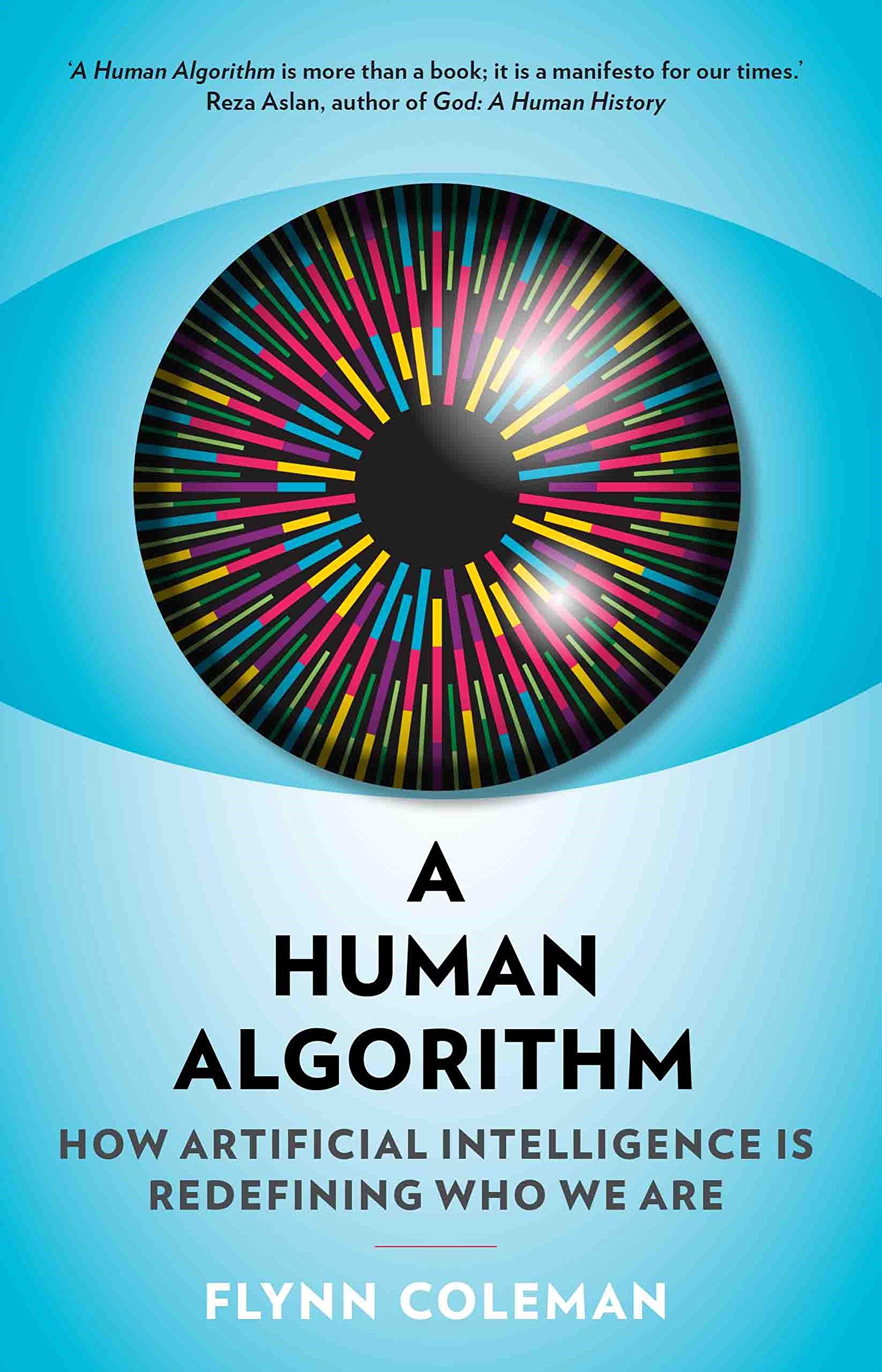
A Human Algorithm by Flynn Coleman

4 out of 5 stars

A copy of this was provided free of charge from the publisher in return for an honest review.

Artificial Intelligence is almost upon us. Lots of people are using Siri on their phones or have an Alexa or Google home device to help them organise their busy lives. But as hand as these are, the next generation of AI is going to revolutionise the world in many different ways and cause us to ask many searching and profound questions about this technology in our lives. Will it be the end of humanity? Or can these technologies be used as a power for good?

It is thought that there are around 700 people working on AI in one form or another around the world and there are about another 70,000 software engineers who understand how it functions. The problem it this tiny subset of people who have in their hands something that has the possibility to dramatically affect up to 7 billion people around the world in good and bad ways. One of the issues that are affecting the development of AI is that there is almost no diversity of voices that are contributing to this technology. Black and Latino developers are conspicuous by their absence. For example, one conference had seven black attendees, only one of which was a woman. Therefore as it is developed by a very narrow clique, the majority who are white, male and have often attended one or two of the major universities, it is inherently very sexist, racist and biased

It is said that the first trillionaire in the world will be the person who makes AI a reality. Worryingly there are no global standards on AI systems, nor are there any moral guidelines to help structure some of the internal decision making. There are significant gaps between those building the technologies, those policing it and those who will be affected by it, It does seem to be more chasms than gaps though. AI automation will also lead to mass changes in employment at the lower level. This was beginning to happen before the COVID pandemic hit, extenuating the financial gulf between rich and poor is widening day by day.

One place that you will find AI starting to proliferate, is social media. It can be great, but it can be a next of vipers too, as well as an echo chamber and brings the worst out with tribalism and confirmation bias. Always remember, if you are not paying for a product or service then you are the product.

In amongst all the bad news though there are some positive effects of AI. It is being used to work on projects that promote sustainability and humanitarian use, drones can be used to deliver food and medicine to remote areas. Another scheme is using it to make incarceration more humane and allow better rehabilitation of prisoners. Another sphere that shows great promise in is healthcare. Doctors cannot know every single disease or illness out there, the ability of Ai to crunch data showed in a clinical trial that medical assistants using the tool were accurate 91% of the time, without having to use labs, medical imaging or even having sat exams. The software developed by IBM called Watson AI read 25 million medical papers in a week or so and could recommend treatments that it had found in obscure medical trials. There are even robots that have begun to communicate with each other in a language that we cannot understand.

The fundamental question that this book asks is, do we want AI to help us or become a monster? If we do this right then we gain a brilliant new partner, if we get it wrong it could be the advent of a new dark age and we all suffer. Is it just me that is thinking of the Matrix or Skynet? How will we as a global population react to AI and robots? If the paranoia about the new 5G mobile networks is anything to go by, it might not go that well.

Fiction is empathy technology (Steven Pinker)

Colman puts both sides of the argument for and against AI really well in this book. Whilst it has the potential to be a force for good, she is careful to detail the ways in that it could be an utter disaster. She explores all manner of subjects that are connected to AI, from the history behind it, the economy and even what is consciousness and can AI become conscious? It is written with clarity about a complicated subject. There is no moral machine without a moral human and the key behind getting a useful technology that works for all and not just a techno-rich elite, is empathy, that ability that humans have to feel what other people are feeling. Sadly it is an emotion that is sadly lacking in today’s world. It is essential to our survival to include it in AI. Highly recommended.

Warriors by Gerald Hanley

5 out of 5 stars

A copy of this was provided free of charge from the publisher in return for an honest review.

In World War 2 we mostly hear about the major wars and events that took place in Europe and the Far East. There was the Campaign in North African and lots of other little theatres of war that were taking place all over the world. Gerald Hanley spent his war in the desolate sun-scorched landscape of sub-Saharan Africa.

The population was the fierce and independently minded and fierce tribesmen of Somalia. They had been ruled by the Italians but after they had been defeated, the administration had imploded and his small group of soldiers were tasked with trying to hold everything together, stop warring tribes from raiding and killing each other.

To say it was tough there was an understatement. They were the last in a long line of supply drops and the men were rarely paid, had very little in the way of rations and the detachment of native soldier that he had under his command were in a constant state of near mutiny. Some of the men found it so tough there that suicide was the only option that felt they had to leave the place.

Yet it was the isolation more than anything which was hardest to bear, at first. Eventually one grew to love it, and those who knew long isolation in those Somali wastes and survived it, will miss it forever. It was the most valuable time of one’s life.

As tough as it was there, it was a place that Hanley grew to love. He learnt so many lessons from the people that he carried forward into his later life. He is humble but firm as they were not the easiest people to deal with, the way that he deals with a guy who has just stabbed someone else is eye-opening, but he did consider them the proudest, the bravest, the vainest, the most merciless, the friendliest. I thought that this was an excellent book. He writes with a passion for the people that he is trying to help and manage there whilst trying to hold his detachment together. Whilst it was utterly different to Naples 44 by Norman Lewis it had a lot of similarities; both books were written by men who had been thrust into situations that they were never expecting. They both took everything that they came across in their stride and used the skills to strike an uneasy peace with the local populations. Very highly recommended.

Rebirding by Benedict MacDonald

4.5 out of 5 stars

A copy of this was provided free of charge from the publisher in return for an honest review.

Nature as a whole is in decline. We are part of the natural world have taken it upon ourselves to make sure that we live in the most unsustainable and destructive way possible. The collapse of invertebrates has rippled all the way up the food chain as each species reaches their specific tipping point and are suddenly gone from our landscapes. In the UK there are almost no areas of the land that haven’t been touched or manipulated in some way by mankind.

Even though the decline has been happening for a long time, it is only in the past few decades that the dramatic drop in numbers of all species has become very evident. The act of strimming, weed killing and obliterating anything that looks slightly scruffy form our urban and rural landscapes has been the final death knell. The memory of the way that the landscape and natural world used to be, has almost faded from our collective memories.

But some people have had enough, there is a growing backlash against the vested interests and status quo; Benedict MacDonald is amongst that number. In this book Rebirding, he is looking at the ways that we can bring the life back into our skies in practical and profitable ways. There are various ways of doing this and reintroduction have been successful, in particular with kites and the great bustard. But more is needed urgently.

He looks at the various national parks that we have and the current state of the SSSIs and nature reserves and how they are doing. One of the criticisms that he has about them is that they are managing their particular area in a way that is detrimental to the long term health of the site. The key to bringing back wildlife of all shapes and sizes is to bring back the large mammals and predators to our landscapes and just let them get on with it.

One place that this has been happening is the Knepp Estate, primitive species of cows and horses and pigs have been allowed to wander pretty much anywhere in the estate and the changes that they have brought about have been staggering. The habitats have returned and with them has come species that haven’t been seen in years. The flip side of this is that their neighbours are not particularly happy about the untidiness of the estate. Another key behind this is the revert to a scruffy form of land control. Leave things on the margins, don’t cut verges back until later in the summer and wildlife will find the way.

I thought that this was a well researched and more importantly a well-written book about rewilding. Coming at the subject from a desire to see a sizable increase in the number of species in and around our landscapes is laudable, birds are his passion after all. One that every conservationist should read, along with Wilding by Isabella Tree and Rewilding by Paul Jepson & Cain Blythe, all books that have drawn similar conclusions from practical experiments that are being run in various places around the world.

« Older posts Newer posts »

© 2026 Halfman, Halfbook

Theme by Anders Norén — Up ↑