Author: Paul (Page 132 of 188)

Review: Stay with Me

Stay with Me Stay with Me by Ayobami Adebayo
My rating: 3 of 5 stars

As the wife of Akin, Yejide’s primary role is to provide a child. It is what her mother in law, Moomi wants too, as well as the wider family and it is the miracle that Yejide wants too. It has driven her to seek answers from God, drag a goat to the top of Mountain of Jaw Dropping Miracles, undertake a pilgrimage and even consult the western medicine that some Nigerians are adopting. Akin’s relatives insist that he has to take a new wife to uphold the family honour, this is a step too far for Yejide and she will fight it with all her strength. She has a phantom pregnancy and sails past the usual nine months, but still no baby.

Akin’s brother, Dotun, marriage has just imploded, and he has moved in with them. He has a reputation as a womaniser and Yejide begins to consider that this may be the way that she can get the child that she and in particular her husband’s family crave.

Is a story full of love, life, death, tragedy with uplifting moments, all with the politics of the country as a turbulent backdrop. Yejide is in between cultures as the old Nigerian ways clash with the new world and Western medicine and there is plenty of deceit and lies as the plot twist and turns and the truths are laid bare for each person in the family to see. I thought it almost had too much going on with the subplots but it was neatly executed. The characters are flawed and believable and occasionally funny and shows the pressure that a can placed on one individual to perform what is expected of her. Adebayo has conveyed the way the county works through this small family is a style that is definitely her own. If you like Chimamanda Ngozi Adichie then you should give this a go.

View all my reviews

Review: Mayhem: A Memoir

Mayhem: A Memoir Mayhem: A Memoir by Sigrid Rausing
My rating: 4 of 5 stars

It read like a storyline from the latest thriller. In a £70 million pound mansion in the plushest part of London, in a drug den sealed with duct tape, human remains were found covered by a tarpaulin and a couple of flat screen TVs. The staff were told not to enter the room and with the discretion that the ultra-rich demand, none thought to question the reason why, nor disobey. This wasn’t a bestseller though; it was real life. The remains were the body of Eva Rausing, wife of Hans Kristian Rausing, heir to the multi-billion Tetra Pak fortune. The couple had long been addicted to Class A drugs and had often been in the newspapers with the journeys in and out of rehab. Her death of a heart problem had not been ignored by Hans, but his drug-addled state caused him to take actions that a person in normal circumstances would not have done.

Watching Hans and his Eva’s lives implode was Han’s sister, the editor and publisher Sigrid Rausing. She hadn’t really paid attention when he first had become addicted to drugs in his twenties but saw them both relapse after being married for seven happy years. As the drug use spiralled out of control again they drifted in and out of rehab, she took to writing persuasive letters and emails trying to help them with the predicaments. This supportive help failed, but after taking advice she became the legal custodian of their four children, something that Eva strongly objected to claiming that Sigrid wanted the extra children for herself, something that she rebuts in the book.

It is a very personal and open memoir, with stories of her childhood growing up in Sweden and the small pleasures of life that she recalls in snippets. The core theme of the book though is addiction, and how an individual can become so absorbed that the neglect friends, family and themselves. She asks the question how do you help someone with an addiction? Especially if they really don’t want to be helped at all, how the twelve step process does work, but after someone has relapsed and entered rehab again, it is easy to repeat the things that those running the centres want to hear, with no real commitment to their meaning or purpose. There are deeper questions too about where the line is where someone is knowing what they are doing and the point where that stops because of the addiction and mental capacity.

It is not an easy read subject wise, thankfully Rausing’s sparse but beautiful writing helps makes this an essential read. She is brutally honest about her own life and the failures in helping Hans and Eva, but also now understands the limits of what she could actually do at the time. She doesn’t and cannot provide the answers of where to go to get the help that people need, but does highlight how little is understood about addiction and how society can tackle the pain and anguish it causes.

View all my reviews

Review: Life 3.0: Being Human in the Age of Artificial Intelligence

Life 3.0: Being Human in the Age of Artificial Intelligence Life 3.0: Being Human in the Age of Artificial Intelligence by Max Tegmark
My rating: 2 of 5 stars

Ask people to describe what they imagine artificial intelligence and a number of their reference points would no doubt be rooted in film and literature. There is the brutal robot from the Terminator films, the benign but deadly HAL9000 from 2001 A Space Odyssey, and the contemplative Deep Thought that Douglas Adams gave us. AI has a long way to go, but it is becoming something that people are beginning to use on a daily basis when they talk to Siri or Alexa.

The potential benefits of AI for humanity could be enormous, it could be used to run all sorts of systems, search for crimes and maybe be part of the justice process, monitor our health, assist with our jobs, and have the potential to actually do some of the most menial. People are considering using them for warfare too, one step on from what the drone does under human control at the moment.

Whilst AI excites some people who can only see the positives, after all the potential of it is huge; there are others who are very concerned that about the downsides so much so that there are AI systems that are not connected to the world wide web. Using AI for war could backfire spectacularly, bye bye human race; and what happens if the AI managing your house is hacked? Or the one in your car fails at speed. Images of those pods in the matrix come to mind…

The subjects Tegmark covers In Life 3.0 goes some way to addressing these and a lot more issues that are concerning people about the implications of AI. Some of the subjects he writes about were what you’d expect in a book like this, consciousness, intelligence, life and the implications of an AI totalitarian state, would it be a utopia or worse. There were some chapters that I didn’t think were totally relevant to the subject; for example, he wanders off into the realms of space-time and goals. Was a little disappointing overall as this is a subject that needs urgent discussion right now.

View all my reviews

Monthly Muse – March

Apologies for being a bit late with this and being very quiet on the blog recently, almost immediately into April we went on holiday, so now have a pile of reviews to catch up with, but here is what I read in March. I managed 17 books in the end. Not as many as I had hoped for, other stuff kept getting in the way! 

There is a total mix of books this month, hopefully, something for everyone so here we go: 


I have been a huge fan of David Crystal for years, he has a knack of teasing out those etymology gems from our rich and varied language. What he has also done is to teach himself and other the best way of speaking to others, be it a small group in an office to a packed lecture theatre. This was one of the books and authors that was involved with Jewish Book Week and they were kind enough to send me a copy to review


Eland have been my publisher of the month in the profiles that I have been doing and you can read all about them here. Warrior Herdmen is one of the books that they have kindly sent me to review. This is the stories that Elizabeth marshall collected from her time spent with the Dodoth people who inhabited the northern fringe of Uganda. More anthropology than travel but fascinating none the less. 


Another one of the books and authors that was involved with Jewish Book Week and they were kind enough to send me a copy of this to review too. At the young age of fourteen, Laura Freeman was diagnosed with anorexia.While she let very little pass her lips in the form of nourishment, she still devoured books, and it was literature that was to hold the key to her recovery. Laura and her list of childhood favourite books has played a crucial role in her accepting that food is not something to avoid and can be enjoyed.


The final Jewish Book Week book that I was sent was The Ascent of Gravity by Marcus Chown. Gravity affects everything on this planet, but it was first understood only 400 years ago by Newton. Other have since broadened and deepened our understanding of this tiny, but significant force and Choswn takes us through the history and the most recent discoveries.


Undercover Muslim is about the troubled country of Yemen.  takes us into the coffee shops and backstreets where disillusioned young muslim men of the west seek some sort of spiritual aspiration in this society. One for my #WorldFromMyArmchair challenge too.


Surfing is a tough sport, so attempting it when you’ve had a hip replaced is beyond most people’s comprehension. Iain Gately is one surfer who has never ridden a tube, and it is one thing that he wants to do before he can’t surf any more. I really enjoyed this and it was nice to have a book written by a local Dorset author too.


Sometimes it is who you know, rather than what you know, that opens doors and opportunities and Clare had a friend had a contact in the Finnish Embassy. A message came via this link asking: We are celebrating a hundred years since independence this year: how would you like to travel on a government icebreaker? Horatio Clare jumped at the chance to spend 10 days on a modern Icebreaker in the Arctic Ocean. I love the evocative way that he writes about the sharpness of the ice, the clarity of the light and the noise as the frozen sea succumbs to the power of the ship Another good read from Clare and can highly recommend.


There are an awful lot of wild swimming books out there now, and I have read a lot of them. The classic Waterlog is still the one to beat though, but I still like to pick the others up and see where their aquatic adventures take them. It has a personal side as do a lot of natural history books these days, but then we are as much of this planet as the wildlife is. Thers is a deep melancholy and eloquence to Peter’s writing as even though he was better when he wrote the book, the spectre of depression is still a shadow in the background


In the urban sprawl, it is sometimes hard to see the natural world, but most people don’t realise that after an hour or so in the car from their front door they’d be able to see some of best examples of wildlife, woodlands and our finest natural landscapes. There is something in here for everyone, moorlands, coastal and wetlands, woodlands and even derelict industrial areas. Keep one in the glovebox of the car.


Lewis -Stempel is described as one of the best nature-writers of his generation, and he is very good, though I would argue that there are others that can carry that bough too. This is another sublime book from Lewis-Stempel to add to his raft of award-winning books. I really liked the diary format and the way that it is interspersed with folklore, poems, history, recipes and personal thoughts. Read it and you will want to own your own wood too.


Nestling in the foothills of the Himalayas in Yunnan Province lies the capital city of the almost forgotten Nakhi Kingdom, Likiang. This city was the home of the Nakhi. It was here that Peter Goullart went to live and work as a Chinese Industrial Cooperatives representative just before the beginning of World War 2. He paints a fascinating portrait of the people there uncovering the details that make the stories that he tells so compelling to read. Superb book


In Ground Work, Tim Dee has collated the thoughts and observations of thirty-one of the finest landscape and natural history writers around. This poetic and literary collection is the response to the threat that is being posed by the ‘soft-skinned, warm-blooded, short-lived, pedestrian species’ that has turned our present day into a new epoch; the Anthropocene. This new era is already causing chaotic changes to our weather systems, there is the steady creep upwards in average temperature across the globe as well as significant and it some cases catastrophic changes to our environments.


The Gathering Tide is Karen Lloyd’s journey around and across the dynamic sea and landscape of Morecombe Bay. Her evocative writing weaves together the physical journey on and around the sands, across the dunes and out to the islands and one kingdom, that poke their heads above the 10m tides. There are glimpses back into her past, fond memories of growing up in the area and meeting up with people whose livelihood depends on this coastline.


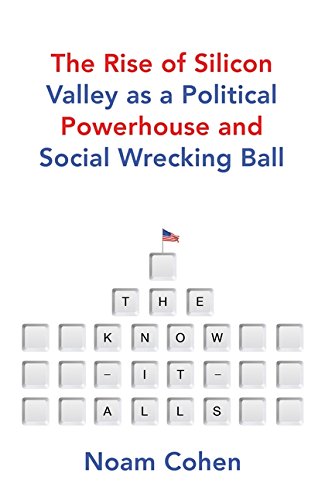
Where would you be without the internet? It is now one of life’s essentials along with power and water, and if you have teenagers then you know for them it is their lifeblood. The book covers the men who started the websites that now rule our lives and have permeated our existence in so many ways and we now rely on them. It is an interesting read, but he really doesn’t go anyway to address what needs to be done to curtail their power.


The first instance of the name Hamtunscir appeared in the 8th century, but there has been a human presence in the county of Hampshire since around 12,000 BC. People were communicating in a different way back then, but in this Langlands has scoured books and manuscripts to bring the very best of Hampshire writers and writing. There are the people that you’d expect, Jane Austen and Gilbert White as well as a raft of others including Wodehouse, Doyle and even Hardy who had ventured out of Dorset.  Nice collection of literature.


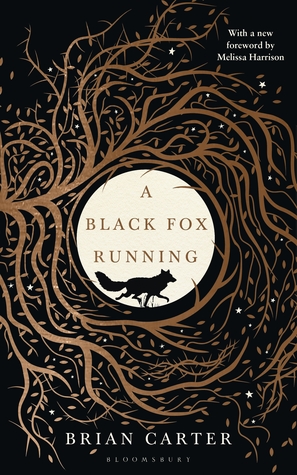
A Black Fox Running is a re-published edition with 
a stunning cover with a beautiful introduction by Melissa Harrison on how it inspired her to become a writer. It tells the story of Wulfgar, the dark-furred fox who roams far and wide over the wilds of Dartmoor and his battles with Scoble, an ex-veteran from the war with a drinking problem. It is not a children’s book, there are no compromises on death in this book, rather the writing is firmly grounded in the granite bedrock of Dartmoor bringing the natural world alive to the reader.


Jules Pretty walked along the shoreline of East Anglia in southeastern England over the course of a year, exploring four hundred miles on foot and another hundred miles by boat. It is a coast and a culture that is about to be lost not yet, perhaps, but soon to rising tides and industrial sprawl. It is a part of the world that has my roots in, as my paternal grandmother’s family come from Paglesham, though I have never visited it yet. I loved the photos in this book and the writing was considered without being too academic.

Review: Doughnut Economics: Seven Ways to Think Like a 21st-Century Economist

Doughnut Economics: Seven Ways to Think Like a 21st-Century Economist Doughnut Economics: Seven Ways to Think Like a 21st-Century Economist by Kate Raworth
My rating: 4 of 5 stars

A copy of this was provided free of charge from the publisher in return for an honest review.

The dismal science has a propensity to be tedious and uninteresting to anyone outside its narrow sphere. But its influence is wide and pervasive, the neo-liberal agenda has given us a society where there is now a vast chasm between the super-rich elite and the poor underclass and where the single-minded pursuit of profit is degrading the world that we live in and are totally dependent on. This system that favours a small political and financial elite who make decisions based on a narrow range of interests and desires and I think that you could argue that economic theory has remained just a theory. The economists at the London School of Economics were quite embarrassed when the Queen asked how they managed to totally miss the 2008 financial crash. This is a common occurrence, time and time again these events have not been predicted, let alone prevented and they have caused serious harm to economies large and small.

Is there a way of fixing it though?

Kate Raworth thinks that there is. In this radical new economic theory that she sets out in Doughnut Economics, she identifies seven elements where the present systems have failed and her proposals to overhaul the current thinking. Addressing the fundamental issues such as growth, GDP, rational economic man and distribution of wealth her new economic plan takes us away from the folly of equilibrium and the boom and bust that always follows.

description

The principle of the doughnut above is that the outer ring is the limits of our resources; we, after all, are just on one planet and haven’t got another to use when we have ruined and used this one. The inner ring is what we all need to be able to survive as human beings, from the essentials of food, water and shelter to the elements that make us civilised like energy, education and justice. The band between these two lines is the space where we all can live comfortably. It is a simple and elegant model and the places where parts of this have been implemented, the benefits are there for all to see.

When the short-term interests of a small elite diverge from the from the long-term interests of society as a whole, it is as Jared Diamond says, a blueprint for trouble. Raworth has developed an excellent and sustainable model of economics that we really need to start moving towards to, to make the economic systems work once again for the good of humanity and the planet. It is well thought through, with clear reasons as to why the current system is failing for most of the world at the moment and a soundly robust new system. For me though, the only thing it was lacking is the how we are going to change to something like this, that is urgently needed. Budging those vested and deeply ingrained interests is going to involve a lot of pain. Overall a really good book with a positive message and maybe a chance to turn a work that thrives for all.

View all my reviews

Review: A Black Fox Running

A Black Fox Running A Black Fox Running by Brian Carter
My rating: 3 of 5 stars

Wulfgar, the dark-furred fox roamed far and wide over the wilds of Dartmoor. He spoke with other foxes, conversed with otters by the rivers and exchanged greetings with the badgers at dusk. He was happy with his lot, had managed to escape the relentless pursuit of the hunt, and had now found the love of his life, Teg. But life was not going to be easy for the pair. The man trying to catch him was Scoble, an ex-veteran from the war with a drink problem. His streak of cruelness and with the assistance of his dog, Jacko, they had it in for the foxes in particular, as well as wildlife in general with their traps, gins and snares.

The talking animals makes this feel like a children’s book, but the scenes within are not. The is as much about death as it is about living life and is as full of the tangled emotions that go to make this up. Carter’s lyrical writing has an intensity to it, you feel the wind ruffle the fur, understand the smells of the night as they track their prey and share the euphoria of being alive racing across the Tors. The writing is firmly grounded in the granite bedrock of Dartmoor and he brings the natural world alive to the reader. This re-published edition has a stunning cover, with a beautiful introduction by Melissa Harrison on how it inspired her to become a writer. 3.5 stars

View all my reviews

Review: The Know-It-Alls: The Rise of Silicon Valley as a Political Powerhouse and Social Wrecking Ball

The Know-It-Alls: The Rise of Silicon Valley as a Political Powerhouse and Social Wrecking Ball The Know-It-Alls: The Rise of Silicon Valley as a Political Powerhouse and Social Wrecking Ball by Noam Cohen
My rating: 3 of 5 stars

Where would you be without the internet? You are reading this review on a device of some kind, and if you are like most people then you will have shopped recently on it, chatted with someone on a social website, done a little research, and faffed around quite a lot no doubt. It is now one of life’s essentials along with power and water, and if you have teenagers then you know for them it is their lifeblood.

There are a number of people who have been in the driving of this profound change to the way that society functions now, Berners-Lee was the man who created the world wide web that sits on the internet, but this book is concerned with some of the greatest entrepreneurs who have made their mark in cyberspace and the world.

There is a chapter with an interesting profile of eleven of the most influential individuals who have shaped the web that we use today, including Jeff Bezos of Amazon, Sergey Brin and Larry Page of Google, Reid Hoffman of LinkedIn and Mark Zuckerberg of Facebook as well as one of the first, Marc Andreessen creator of Netscape (remember that?). They have all become rich from their creations, but though the money is important to these men, and they are all men, , they are driven by the desire to be number one in their sphere and to form the world around them as they see fit, demanding that freedom of speech and individuality should have precedence over regulations and laws. As much as these men dislike and abhor oversight and control of big government, the way that they run the companies is not dissimilar to that of a dictatorship.

These websites now rule our lives, they have permeated our lives in so many ways and we now rely on them. They have countless reams data acquired from us legitimately and surreptitiously, as with a lot of these you are the product. Given the continued fallout from the Cambridge Analytical and Facebook, this is a subject that will have a keener eye turned on it in the coming months. I thought that the conclusion was very sparse as he could have been much more critical of the major players. It could have also had more to say about the future of the web, for example, what happens after Google? However, it was an interesting start to a conversation that has a long way to go.

View all my reviews

Review: Hampshire: Through Writers Eyes

Hampshire: Through Writers Eyes Hampshire: Through Writers Eyes by Alastair Langlands
My rating: 3 of 5 stars

A copy of this was provided free of charge from the publisher in return for an honest review.

The first instance of the name Hamtunscir appeared in the 8th century, but there has been a human presence in the county of Hampshire since around 12,000 BC when we were still part of the European continent until the sea level rose and we became separate. Since then traces of the people of the Mesolithic, Neolithic and Bronze age have been found. The Iron age brought hill-forts and stability to the region and then 2000 odd years ago the Romans arrived and overlaid their rule on the existing peoples. The county’s long and fascinating history is reflected in the way that writers have used it as a source of material and inspiration through the ages.

There are chapters on the three main towns of the county, the ancient capital Winchester, where the rivers meet the sea in Southampton and the naval port of Portsmouth and the authors, poetry and prose that have emanated from these places. But Hampshire is more than a coastal county, there is the 1000-year-old New Forest, seized from the locals by William the Conqueror as a personal hunting ground; it has almost all the world’s chalk streams that flow from the downs that cross the country.

Langlands has scoured books and manuscripts to bring the very best of Hampshire writers and writing. There are the people that you’d expect, Jane Austen and Gilbert White as well as a raft of others including Wodehouse, Doyle and even Hardy who had ventured out of Dorset. The subject matter is wide-ranging too, people and places feature heavily as you’d expect, but there are musings on cricket, churches, fishing, war, Basingstoke and of course natural history. My favourite chapters were titled Hinterland and The New Forest and the one on Chalk Streams and Cricketers as well as the one on Gilbert White were equally fascinating. I have lived either side of Hampshire, first in Surrey and now in Dorset, both times fairly close to the county border, travelled through it many times and know parts of it fairly well. This is an interesting collection of writings from those that have had some association or made their livelihoods from the county and is a worthy addition to the Eland Through Writers’ Eyes series.

View all my reviews

« Older posts Newer posts »

© 2026 Halfman, Halfbook

Theme by Anders Norén — Up ↑