Category: Review (Page 29 of 133)

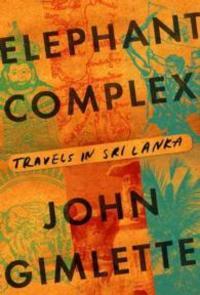
Elephant Complex by John Gimlette

4 out of 5 stars

Sri Lanka is a pearl-shaped island just off the southern Indian coast. Traces of human life have been found going back thousands of years, and it abounds with legends from its past. The island is rich in wildlife and forest too and even has its own subspecies of the Asian elephant. They were part of the commonwealth until 1948 when they declared independence and they have had a troubled history since that point with pretty much civil war between the Sinhalese and Tamil populations.

Close to where Gimlette lives in London is a community of Tamil’s. It is thought that there are around 8000 of them, but nobody knows for certain, This is a small proportion of the number in the UK and they are a people that are fairly self-contained. Their temple looks like an art deco department store, but inside it was like stepping into Sri Lankan. He knew then it was a place that he would have to see for himself.

On arrival in Columbo, he stopped to as a man the direction to go, who by chance happened to be heading in that direction. They were soon in a three-wheeler in the chaotic traffic heading towards the temple, Gangarama. It was slowly dawning on him that something was going on and he asked to go back. They took him and asked for a huge fee for his experience, which after a few minutes of sitting around was negotiated down substantially. The first few weeks in the city, he walked everywhere though navigating was challenging as their beautiful script was incomprehensible to him. After a few weeks, it was time to leave the city and head out into the countryside.

At that point, the fireflies appeared, filling the treehouse with their twinkly light. It was like being in the cockpit of a tiny thatched jet.

Being driven was an experience, they have a very different set of safety parameters and the rules of the road are more fiction than law. The road took them to the coast, where the sea glinted its amethyst colour in the sun. Inland the landscape became harsher and drier and he saw his first signs warning about elephants. They stop and climb a small hill and there in front of them were hundreds of silvery wewas. These water channels are not natural, they are a massive civil engineering feat to bring water across the island to irrigate the land.

In places, everything had been scorched away, and pools of crimson had formed in the hollows. The thorn tresses looked as if they’d been added later in ink, they were so spare and black.

His travels take him all over the island and to some of the little islands off the coast and in each place he finds out more and more about the people and the conflict that caused so much anguish. He learns how they live with some of the horrific things that the various sides inflicted on each other and sifts through their complex and long history, finding out how they have lived under various European authorities.

Gimlette has a sharp eye for detail and a way of travelling that does not presume anything. Rather he finds interesting places to go and he waits for things to happen and then tells us about them and the people that he meets there. I am a big fan of the other books that Gimlette has written, in particular, his award-winning Wild Coast and the most recently published, The Gardens Of Mars. However, I didn’t quite connect with this one as much as those other two. I think that it was because there was a lot about the civil war in the book and it felt more like a history book rather than a travel book. I thought that it was still worth reading, though as he has a wonderful way with words. There are a few pictures from his trip in the book, but there are more here.

Another Fine Mess by Tim Moore

4 out of 5 stars

Tim Moore has a knack for selecting travel adventures that don’t really fit the norm. He has followed the route of the Tour de France on his own bike, walked with a donkey across Spain, worked his way around the streets of the Monopoly board and suffered the delights of the Eurovision Song Contest. This challenge though was slightly more sensible compared to some. He wanted to take a Model T Ford from the Atlantic and drive all the way across America to reach the pacific ocean.

There was a twist though, he was doing it to see if he could get a greater understanding of why this country had voted for the orange glowing businessman. His route would take him from the gentle landscape of Virginia to the place where his car, was made, Detroit, before heading south to Texas.

After experiencing the deep south, he turns north to head up through the towns of the flyover states in the state that voted for Trump, staying in slightly seedy motels and occasionally people’s homes. The beautiful car he is driving is very different to anything he has experienced before, and he knows that he has to learn the starting ritual otherwise he isn’t going to be getting anywhere on his first sol day. Oh, and being utterly mechanically inept isn’t going to help his cause either…

But first, he has to get the 160 miles from where he bought the car, that he christens Mike, to the coast. Driving these old Models T’s is utterly unlike driving a modern car, there are no creature comforts, air-con or soundproofing. The pedal configuration is different to modern cars, there are three pedals, still, the right-hand pedal is the brake, the left hand is the clutch and gear selector with a choice of high and low gears and the centre pedal selects reverse. Somehow he makes it and collects a bottle full of Atlantic seawater with the hope of being able to tip it into the Pacific.

The other issue with these cars is they need constant tinkering and maintenance to keep going. Fine for those that have some technical competence, but for Moore, this is quite challenging. But slowly he gets used to doing the things that he needs to do each day to keep it going. It does break down. Quite a lot. And almost everywhere he stopped, there would be someone who knew someone who had one of these and was willing to help him get back running again. In fact, Mike would need an awful lot of TLC all the way up to open-heart surgery to get him to the other side of America.

I am a big fan of Tim Moore’s books and I liked this a lot. His travels are always slightly outlandish, and mostly mad and he has a knack for extracting humour from a lot of the situations he encounters. He learnt a lot about America under Trump, how it had become more polarised with people’s political opinions. However, even in the flyover states, there was still a willingness to help a mechanically inept Englishman who had a wildly different opinion to most of those helping him. It is not as funny as some of his other books though, however, there are moments of hilarity, such as when some guys had helped him put it all back together and could not get it to start at all, then Moore remembered that he hadn’t turned the fuel back on…

An English Farmhouse by Geoffrey Grigson

4 out of 5 stars

A copy of this was provided free of charge from the publisher in return for an honest review.

There have been lots of books written about the fine architecture of our towns and cities, but there are fewer books about the homes that people lived and worked in our countryside. After World War 2, Geoffrey Grigson along with the photographer Percy Hennel was invited by the artist John Piper to look at the English Farmhouse. This was to more than an architectural study, rather it would be a consideration of post-war agriculture and contemplation of the state of rural England.

Rather than select a farmhouse in a known village, Grigson has used a lot of artistic licences and imagined one called Ashton Farm in the village called Netton. Neither of these places can be found on a map, but he makes it clear that the one that was chosen does exist. Or at least it did exist as even after the book was written the buildings had reached the point where they actually collapsed. And with that destruction, the link between the buildings and the landscape was gone forever. The structures that would come to replace them were anonymous steel framed and would come to be found all over the country in the end.

First, though he has to set the context, The farm that he describes throughout the book is nestled in the chalk of Wessex. It sits on the escarpment using the land above for crops and the lands below for grazing and hay. The farm has existed in one form or other since the Saxon times and there are very few metaled roads, but lots of paths and trackways.

Each chapter looks at a particular detail of the farm, from the sarsen stones that are used in conjunction with the chalk both of which need skilled craftsmen to cut and dress the stone. Where bricks have been used in the buildings, they can be dated by looking at their size. Pictures of walls made from chalk and brick are included to show construction methods.

Roofing materials were originally thatch, but some of the buildings on the farm use slate and there are instances of corrugated iron being used under rotting thatch to prolong the life of a roof. Timber was used extensively and there are some magnificent shots of the inside of barns showing the construction methods used. There is also a chapter on how the poorly maintained buildings are slowly crumbling and collapsing.

Believe it or not, this is the first book that I have read by Geoffrey Grigson, having only read books by his wife and daughter before this. Having got an interest in architecture, I did like this, especially the forensic detail that he goes into about the buildings. I did have the odd problem with it though, for me the thing that was lacking was not having a known place that he was referring to in each of the chapters. I get why he may have done it with privacy issues in mind, as the farm buildings that he refers to did seem to be very much a real place. That said I did enjoy this a lot. He has a wonderful way with words and a deep love of the place where these villages and farms can be found on the chalk downs. I bought another of his books recently, Country Writings, that I am going to move up the TBR.

Lost Dorset: The Towns by David Burnett

5 out of 5 stars

I have lived in Dorset since 2005 and even though I am not from here I have always felt at home here. I knew that my grandfather was born in Bridport, but it was only after we dd some family history research that we realised that there was a whole Dorset side of the family that we knew nothing about. It is probably why I feel so at home here.

The postcards that are featured in the book were taken around the time that my grandfather was growing up in the county and it sent shivers down my spine seeing the places that he might have seen in his time. This volume concentrates on the towns in Dorset. These have seen massive changes of the last century, often changing from small market towns to much larger municipal centres that we find today.

The postcards are really well-curated, with images selected to show where vast changes have happened as well as some that show places and buildings that are still around today. I did like the fact that they even knew the names of some of the people that were in the photos. It is quite strange seeing a road that I drive down almost every day taken 100 years ago.

This is another excellent collection of collated postcards from the Barry Cuff Collection. Each town featured has an introduction and each of the postcards has a paragraph of details about it or the subject matter. Burnett with the assistance of others has created a fine companion volume to the villages and countryside book published a couple of years ago. If you are a fan of the country then this is a must, but if you know the county then you’ll probably like to see some of the places that you know and love from a century ago.

The White Birch by Tom Jefferys

4 out of 5 stars

Most countries seem to have a national tree; we have the oak along with a lot of other European countries, the Canadians have the Maple, the Greeks have the olive and New Zealand has the ponga! These trees supposedly have characteristics such as strength, that people have alluded to as the national character of their country. In Russia though, their unofficial national tree is the silver birch.

It seems a strange choice in some ways, it is very prevalent across the northern hemisphere and as a pioneer species, it is almost always one of the first trees to colonise areas. It can be found from the steppe, alongside rivers and railway lines and even thrives in the toxic landscape of Chernobyl. Its symbolism has nasty echoes of nationalism: white, straight, native, pure. It has permeated the consciousness of the country and revealed itself in the art.

I look out over the hills of Russia: fir trees, patches of yellow larch, and those spiny white birches, leafless in later September. Clouds leave map-like marks across the forests. The distance is a blue-grey far-away place. China lies beyond.

To discover for himself the significance that it has he explores both the country and the art that it has inspired. He begins with the images that Maria Kapajeva has collected showing various Russian women posing by birch trees as a form of collective national identity. They have been taken from a dating site where these women have uploaded their images in the hope of finding a partner. They are not always successful in this aim. To get a greater understanding though he needs to travel to Russia and his routes will take him along the Siberian railway, to the Saint Sophia Cathedral in Novgorod and to some of the countries that border this huge country. But he is there for the art, in particular the painting titled, The Rooks Have Returned by Alexei Savrasov, where he expands the significance of it for Russian culture.

The birch is nonetheless beloved – not only as a symbol, but as a living being. And that is important, maybe now more than ever.

I have read a few travel books set in Russia in my time. I think that because the place is so vast, different authors have sometimes struggled to get a grip on what exactly makes the country and the people Russian. I think though, in this book, Jeffreys has got to the very essence of what and how they define themselves and he does that through their art, their landscapes and mostly their love for this slender tree. For me, I thought that the book concentrated a little too much on art, but that is his primary career to be fair. I did really like the travel parts and the way that he interacted with the people that he encounters in Russia and outside the country on his travels. I liked the insight that he got from this perspective on the people of Russia, it is good to have a different angle on them.

Thicker than Water by Cal Flyn

3.5 out of 5 stars

It was a chance find in an exhibition in the Skye archive centre that Flyn was sheltering in from the rain. In there was an A3 map of a place called Gippsland, that was coved in fantastic place names such as Snake Island and Sealer’s Cove, but she couldn’t place it. On reading the label she found out that it was in Australia and it showed the explorations of a man called Angus McMillan.

A thought formed in her head to go there as soon as she could to get away from her current woes.
‘He’s a relative of ours’ said her mum.
‘What?’ she replied.

It turns out that Angus McMillan left the Scottish Highlands in 1837 and headed to Australia where he became an explorer and pioneer and had places and landmarks named after him along with a plethora of statues and monuments. Flyn felt a glow of pride about her great-great-great-uncle and decided that she wanted to head out there to find out more about him.

It was there that she would find out about the other side of him. McMillan and his peers were responsible for a series of assaults on the indigenous people. The places where these murders and slaughters took place had a chilling set of names; Skull Creek, Boney Point, Slaughterhouse Gully. To say she was shocked would be an understatement. She now had another raft of questions about her now dark family history that she wanted answers to…

Given the subject material, I must admit that this is not the most cheerful of reads, however, we as a society, need to face up to the past atrocities that were carried out by our relatives. I think that Flyn manages to face up to the revelations of her ancestor really well. She notes when he was an upstanding member of his community and acknowledges when the acts he carried out were utterly barbaric and unacceptable. Meeting with descendants of the survivors of these massacres is as cathartic for her as it is for them. She asks the question: can we be guilty of the actions of an ancestor several generations ago? From this book, I think that the answer is no. However, we have an individual and collective responsibility to apologise for those actions to ensure that they do not happen again.

History of Forgetfulness by Shahe Mankerian

3.5 out of 5 stars

A copy of this was provided free of charge from the publisher in return for an honest review.

War is horrific for anyone, but for civilians that are caught in the crossfire with no hope of defending themselves, it is even more intense. Mankerian is a survivor of the Lebanese Civil War that took place in the 1970s. The regular life that they had become used to was ripped from them and the horror of bombs, snipers and being on the brink of starvation became the norm.

This collection is his memories of that time.

Because of the context, this is a bleak set of poems that recall his time spent in the conflict, and yet in the horror and death and destruction, there is always a glimmer of hope. It is that glimpse of a life that could be there again, that keeps him going in amongst the crushed dolls heads, the looting, the names of the fallen in the papers and the whistle of an incoming bomb.

She can’t sleep at night
Because when she closes her eyes

She remembers everything

It is not really a collection that I liked, the content is just too grim for that. However I did admire it, the inner strength that Mankerian has to turn these horrible events into poems must be immense. The prose is as bleak as it is stark, but he manages to convey the way that they tried as best as they could to try and carry on as normal as their society and the life that they had known was blasted apart. If you want an insight into what it is like to live in the middle of a civil war and still hold that yearning for a return to normal life. A book to be read so that we don’t have to suffer like these people did.

Three Favourite Poems
The Prodigal Son On A Field Trip
The Sniper As Cupid
Homeless

Thirteen Ways To Smell A Tree by David George Haskell

4.5 out of 5 stars

A copy of this was provided free of charge from the publisher in return for an honest review.

Tree huggers have been around for a while, and as mad as it sounds, communing with nature in this way is mostly harmless, unless you have just hugged a holly… Whilst we may use some of our other senses when interacting with a tree, such as sight and touch we very rarely use some of our others. But there is something very pleasurable about walking through ancient woodland listening to the susurration of the leaves in the wind or smelling the resinous scents of a pine forest.

In this fascinating book, Haskell has taken thirteen trees that we have probably come across in some capacity or the other. Beginning with the acrid and oily horse chestnut, known to many small children for their conkers, we meander around other scents and smells such as the juniper and how it has flavoured gin, the way that the white oak is the main flavouring for whisky and how the scent of the ash tree is disappearing.

Not all the smells covered here are pleasant, the living fossil that is the ginko has a particular scent that it is thought was used to attract beasts that walked this planet a long time ago. The glossy green leaves of the bay have a scent that is one of my favourites, my parents have one in their garden and I always snap some leaves in half to smell it when I am there. Trees also give us smells after they have stopped growing, the scent of woodsmoke in the right context can be wonderful, but in a forest can be terrifying. The scent that I am most familiar with though is that of books, as I do have ‘quite a few’ around the house…

The delight I feel in the ponderosa’s aromas joins me to the communicative heart of the forest. Trees confide in one another. Insects eavesdrop and concoct. Earth and sky converse.

This is probably one of the most unusual title books that I have read recently. I really liked this and thought that Haskell has come up with a very novel way of getting us to engage more with the natural world around us. I like the way that he has selected a number of trees, and used that particular species to tell us a little about that tree and how we interact with it. He is a really good writer too, his prose is engaging and fascinating as well as being stuffed full of fascinating facts that can be dropped into conversations. If you want to read a very different slant on natural history writing then I can recommend this.

Tall Tales and Wee Stories by Billy Connolly

4 out of 5 stars

I have been a fan of Billy Connolly for as long as I can remember and sadly never took the opportunity to go and see him live before he retired in 2018. I have seen many of his recorded performances though and I think all of his travelogues as he has been around various parts of the world.

This book is a collection of some of his best-known stories that he tells as part of his sets. He is a very human comedian, he is as happy to rip the piss out of himself as he is to call out the hypocrisy of others whilst giving you a stitch laughing about it so much.

Some of the tall tales and wee stories in here I have heard before. That doesn’t make them any less funny though. One of my favourites was his description of swimming in the North Sea as a Child! Provided you don’t mind a bit (ok a lot) of profanity then there is almost certainly something in here that will make you laugh. Great stuff and thanks for all the laughs, Billy.

The Biography of a Fly by Jaap Robben

3 out of 5 stars

A copy of this was provided free of charge from the publisher in return for an honest review.

Insects generally have a short life span, often measured in hours, but sometimes they can live for days. A typical fly has their whole life compressed into the days that number less than a month and this beautifully illustrated little book is the story of one fly.

He begins his life in a small pile of dachshund poo, not the most salubrious of locations, but for the fly, this is a perfect start. He emerges from his pupa after three days and with his 4000 eyes is amazed by the world around him. He finds a buzzard on a lamp post and they begin the most strange of friendships that last him his entire life…

This is quite a lot of fun to read, it has many funny moments throughout the story as well as showing the lifecycle of a fly during their brief life. The illustrations are just blue and white with line drawings and are really nicely done.

« Older posts Newer posts »

© 2026 Halfman, Halfbook

Theme by Anders NorénUp ↑