Page 44 of 185

January 2022 Review

I am quite a bit later with this than I had intended. Ah well, this is a hobby not a job at the end of the day. So here are the books that I read in January:

I have been a big fan of Billy Connolly for as long as I can remember. He is a great human being and is always interested in those people that have made a difference in their communities. His observational humour is very rude and very funny and this book is a summation of those stories. I really liked it.

I read two history books that couldn’t have been any more different. English Farmhouse is about the rural architecture of the Wessex chalk downs and whilst it is not about a specific farm it is still a fascinating and detailed look at how these buildings were made. Across the other side of the world is the largest ocean that we have on the planet. Scattered across it are thousands of tiny islands that people have lived on for hundreds of years. Thompson takes us on a journey to these places and the people who could navigate between the islands with ease.


Bridging the gap between memoir and history is Thicker Than Water by the author of Islands of Abandonment, Cal Flynn. In this, she finds out about a relative who moved to Australia, and then when she is there find out about the atrocities that he perpetrated. This is her story about coming to terms with what he did.

Tanya Shadrick nearly died after the birth of her first child. She survived and it gave her a new lease of life to change from the person she had been into the person that she is now. Taking those risks meant stepping outside her comfort zone and change her life for the better.

I read six natural history books in January! Biography of a Fly is a graphic novel about a fly who befriends a raptor and we see this through his short life. Finding The Mother Tree is more science-based and is the story of Suzanne Simard’s discovery of how a forest actually functions and the key role that each plant plays, in particular, the mycological networks in the soil. On the Marsh is Simon Barnes year-long diary of the time spent looking at the wildlife on the small patch of march he is fortunate to own in Norfolk


The Sea Is Not Made Of Water is Nicholson applying the same rigour that he did to seabirds to the life under the ocean. Fascinating stuff. Nests is a beautiful book of all of Susan Ogilvy’s paintings of the nest that were in her garden or collected by friends. Thirteen Ways to Smell a Tree is probably the oddest titles book that I have read in a while, but it is well worth it. If you love the scent of wood in any form then I can highly recommend this.


Some people react to conflict by getting angry too. Shahe Mankerian wrote poetry instead and this collection is not really one I liked, the content is just too grim for that. However, I did admire it for its honesty.

I read five travel books too! My journeys were to take to modern and historical Greece in, A Thing Of Beauty, to the forests of Russia in The White Birch and slowly across America in Another Fine Mess.


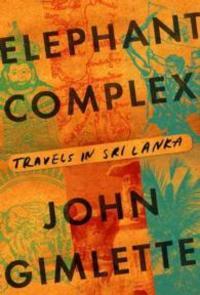
I have had Elephant Complex on my shelf for ages and I finally got to read it last month. Not as good as some of his other books, but he does get under the skin of the Sri Lankan’s Nick Jubber’s book takes us across Europe finding the original sources of the Fairy Tales that have become so well known these days.


My book of the month is a book on old postcards of the county that I live in. Lost Dorset: The Towns is the companion volume to Lost Dorset: The Villages & Countryside and feature another set of postcards from Barry Cuff’s remarkable collection of Dorset postcards. As I know some of these places I personally find it fascinating.

So 18 books in total for January means that I have made a good start to the 2022 Good Reads Challenge.

Any here that you have read? Any that now take your fancy? Let me know in the comments below.

I also have a couple of questions:

1. Do you want me to include monthly stats? I.e. what genres that I have read, and top publishers?

2. Do you want me to include a list of all the books that I have bought or beent sent too? Or would you want to see that in another monthly post

The Fairy Tellers by Nicholas Jubber

4 out of 5 stars

A copy of this was provided free of charge from the publisher in return for an honest review.

It has been a long time since I have read any fairy tales to my children, or even to myself even. I even remember reading the classic stories way way back in my childhood too. These stories are still heard and seen regularly today, they can be seen in the pantos that follow the Christmas season and the plethora of animated movies (that I must admit I haven’t seen hardly any of)

These modern retellings of the fairy tales are often a more sanitised version of these are sometimes brutal stories. Probably the most famous names associated with these tales are the Brothers Grimm and Hans Christian Andersen, But some of the other famous stories were collected by people whose names are not as well known. I didn’t know the authors of the famous tales Hansell and Gretel and all of the Arabian Nights stories. Tracing the origins of them will take Jubber across the northern climes and then heading through the Black Forest, onto Southern Europe before arriving in the Middle East.

Each of the chapters begins with the story which we are going to learn about. Most of them I knew, Aladdin, Beauty and the Beast and The Little Mermaid, but there are others in here that I had not come across before, such as The Tale of All Kinds of Fur and The Tale of the Firebird. We are taken through the known history behind them and how they came to be known to a wilder world.

I thought that Jubber has written a fascinating book, his prose is engaging and you can tell that he is obviously still captivated by the stories even today. He even manages to persuade his teenage friends to go to an animated film at the Bournemouth cinema one day rather than watch an action film. He tells captivating stories on how these came to be wider known in global culture and the little know background about the people that found these stories. If you have a thing for fairy tales and have always wondered where they came from this is a good book to start with. It has also made me want to reread the fairy tales of my childhood too.

Elephant Complex by John Gimlette

4 out of 5 stars

Sri Lanka is a pearl-shaped island just off the southern Indian coast. Traces of human life have been found going back thousands of years, and it abounds with legends from its past. The island is rich in wildlife and forest too and even has its own subspecies of the Asian elephant. They were part of the commonwealth until 1948 when they declared independence and they have had a troubled history since that point with pretty much civil war between the Sinhalese and Tamil populations.

Close to where Gimlette lives in London is a community of Tamil’s. It is thought that there are around 8000 of them, but nobody knows for certain, This is a small proportion of the number in the UK and they are a people that are fairly self-contained. Their temple looks like an art deco department store, but inside it was like stepping into Sri Lankan. He knew then it was a place that he would have to see for himself.

On arrival in Columbo, he stopped to as a man the direction to go, who by chance happened to be heading in that direction. They were soon in a three-wheeler in the chaotic traffic heading towards the temple, Gangarama. It was slowly dawning on him that something was going on and he asked to go back. They took him and asked for a huge fee for his experience, which after a few minutes of sitting around was negotiated down substantially. The first few weeks in the city, he walked everywhere though navigating was challenging as their beautiful script was incomprehensible to him. After a few weeks, it was time to leave the city and head out into the countryside.

At that point, the fireflies appeared, filling the treehouse with their twinkly light. It was like being in the cockpit of a tiny thatched jet.

Being driven was an experience, they have a very different set of safety parameters and the rules of the road are more fiction than law. The road took them to the coast, where the sea glinted its amethyst colour in the sun. Inland the landscape became harsher and drier and he saw his first signs warning about elephants. They stop and climb a small hill and there in front of them were hundreds of silvery wewas. These water channels are not natural, they are a massive civil engineering feat to bring water across the island to irrigate the land.

In places, everything had been scorched away, and pools of crimson had formed in the hollows. The thorn tresses looked as if they’d been added later in ink, they were so spare and black.

His travels take him all over the island and to some of the little islands off the coast and in each place he finds out more and more about the people and the conflict that caused so much anguish. He learns how they live with some of the horrific things that the various sides inflicted on each other and sifts through their complex and long history, finding out how they have lived under various European authorities.

Gimlette has a sharp eye for detail and a way of travelling that does not presume anything. Rather he finds interesting places to go and he waits for things to happen and then tells us about them and the people that he meets there. I am a big fan of the other books that Gimlette has written, in particular, his award-winning Wild Coast and the most recently published, The Gardens Of Mars. However, I didn’t quite connect with this one as much as those other two. I think that it was because there was a lot about the civil war in the book and it felt more like a history book rather than a travel book. I thought that it was still worth reading, though as he has a wonderful way with words. There are a few pictures from his trip in the book, but there are more here.

Another Fine Mess by Tim Moore

4 out of 5 stars

Tim Moore has a knack for selecting travel adventures that don’t really fit the norm. He has followed the route of the Tour de France on his own bike, walked with a donkey across Spain, worked his way around the streets of the Monopoly board and suffered the delights of the Eurovision Song Contest. This challenge though was slightly more sensible compared to some. He wanted to take a Model T Ford from the Atlantic and drive all the way across America to reach the pacific ocean.

There was a twist though, he was doing it to see if he could get a greater understanding of why this country had voted for the orange glowing businessman. His route would take him from the gentle landscape of Virginia to the place where his car, was made, Detroit, before heading south to Texas.

After experiencing the deep south, he turns north to head up through the towns of the flyover states in the state that voted for Trump, staying in slightly seedy motels and occasionally people’s homes. The beautiful car he is driving is very different to anything he has experienced before, and he knows that he has to learn the starting ritual otherwise he isn’t going to be getting anywhere on his first sol day. Oh, and being utterly mechanically inept isn’t going to help his cause either…

But first, he has to get the 160 miles from where he bought the car, that he christens Mike, to the coast. Driving these old Models T’s is utterly unlike driving a modern car, there are no creature comforts, air-con or soundproofing. The pedal configuration is different to modern cars, there are three pedals, still, the right-hand pedal is the brake, the left hand is the clutch and gear selector with a choice of high and low gears and the centre pedal selects reverse. Somehow he makes it and collects a bottle full of Atlantic seawater with the hope of being able to tip it into the Pacific.

The other issue with these cars is they need constant tinkering and maintenance to keep going. Fine for those that have some technical competence, but for Moore, this is quite challenging. But slowly he gets used to doing the things that he needs to do each day to keep it going. It does break down. Quite a lot. And almost everywhere he stopped, there would be someone who knew someone who had one of these and was willing to help him get back running again. In fact, Mike would need an awful lot of TLC all the way up to open-heart surgery to get him to the other side of America.

I am a big fan of Tim Moore’s books and I liked this a lot. His travels are always slightly outlandish, and mostly mad and he has a knack for extracting humour from a lot of the situations he encounters. He learnt a lot about America under Trump, how it had become more polarised with people’s political opinions. However, even in the flyover states, there was still a willingness to help a mechanically inept Englishman who had a wildly different opinion to most of those helping him. It is not as funny as some of his other books though, however, there are moments of hilarity, such as when some guys had helped him put it all back together and could not get it to start at all, then Moore remembered that he hadn’t turned the fuel back on…

The 2022 Dylan Thomas Prize Longlist

Yesterday the Swansea University Dylan Thomas Prize longlist was announced. There is an impressive and diverse list of contenders from across the globe, reflecting the diversity of the UK. 

They are choosing to celebrate voices from around the world that reflect voices from the margins and not just from the mainstream. From Sri Lanka to Trinidad, Texas, and Ireland via the Middle East, this year’s longlist features a powerful, international collection of writers who are offering platforms for under-represented voices.

Through themes of identity, conflict and love, the 2022 longlist comprises eight novels, two poetry collections and two short story collections:

·       A Passage North – Anuk Arudpragasam (Granta)

Anuk Arudpragasam was born in Colombo and currently lives between Sri Lanka and India. His debut novel, The Story of a Brief Marriage, won the DSC Prize for South Asian Literature, and was shortlisted for the Dylan Thomas Prize as well as the Internationaler Literaturpreis. His second novel, A Passage North, was shortlisted for the Booker Prize in 2021. He received a doctorate in philosophy from Columbia University in 2019. Follow him on Twitter @sirukavi

·       What Noise Against the Cane – Desiree Bailey (Yale University Press)

Desiree Bailey is the author of What Noise Against the Cane (Yale University Press, 2021), which won the 2020 Yale Series of Younger Poets Prize and was a finalist for the 2021 National Book Award for Poetry. She is also the author of the fiction chapbook In Dirt or Saltwater (O’clock Press, 2016) and has short stories and poems published in Best American Poetry, Best New Poets, American Short Fiction, Callaloo, the Academy of American Poets and elsewhere. Desiree is from Trinidad and Tobago, and Queens, New York. She currently lives in Providence, RI. Follow her on Twitter @DesireeCBailey

·       Keeping the House – Tice Cin (And Other Stories)

Tice Cin is an interdisciplinary artist from north London. A London Writers Award-winner, her work has appeared in numerous magazines, including Extra Teeth and Skin Deep, and has been commissioned by organisations such as the Battersea Arts Centre and St Paul’s Cathedral. An alumnus of the Barbican Young Poets programme, she now creates digital art as part of Design Yourself – a collective based at the Barbican Centre – exploring what it means to be human at a time of great technological change. A producer and DJ, she has released an EP, Keeping the House, to accompany her debut novel. Follow her on Twitter @ticecin

·       Auguries of a Minor God – Nidhi Zak/Aria Eipe (Faber)

Nidhi Zak/Aria Eipe is a poet, pacifist and fabulist. Born in India, she grew up across the Middle East, Europe and North America before calling Ireland home. Founder of the Play It Forward Fellowships, she serves as poetry editor at Skein Press and Fallow Media, contributing editor for the Stinging Fly and an advisory board member of Ledbury Poetry Critics Ireland. She is the recipient of a Next Generation Artist Award in Literature from the Arts Council of Ireland and the inaugural Ireland Chair of Poetry Student Award. Follow her on Twitter @AriaEipe

·       The Sweetness of Water – Nathan Harris (Tinder Press/Headline)

Nathan Harris is a Michener fellow at the University of Texas. He was awarded the Kidd prize, as judged by Anthony Doerr, and was also a finalist for the Tennessee Williams fiction prize. THE SWEETNESS OF WATER is his debut novel. He lives in Austin, Texas. Follow @TinderPress for more information.

·       No One is Talking About This – Patricia Lockwood (Bloomsbury Circus)

Patricia Lockwood is the author of four books, including the 2021 novel No One Is Talking About This, an international bestseller which was shortlisted for the Booker Prize and the Women’s Prize for Fiction, and translated into 20 languages. Her 2017 memoir Priestdaddy won the Thurber Prize for American Humor and was named one of the Guardian‘s 100 best books of the 21st century. She also has two poetry collections, Motherland Fatherland Homelandsexuals (2014) and Balloon Pop Outlaw Black (2012). Lockwood’s work has appeared in the New York Times, the New Yorker, and the London Review of Books, where she is a contributing editor. She lives in Savannah, Georgia. Follow her on Twitter @TriciaLockwood

·       Milk Blood Heat – Dantiel W. Moniz (Atlantic Books)

Dantiel W. Moniz is the recipient of the Alice Hoffman Prize for Fiction, the Cecelia Joyce Johnson Emerging Writer Award by the Key West Literary Seminars, and a Tin House Scholarship. Her fiction has appeared or is forthcoming in the Paris Review, Tin House, Ploughshares, American Short Fiction, Yale Review, One Story, McSweeney’s Quarterly Concern and elsewhere. Milk Blood Heat is her first book. She lives in Northeast Florida. Follow her on Twitter @dantielwmoniz

·       Hot Stew – Fiona Mozley (John Murray Press)

Fiona Mozley grew up in York and lives in Edinburgh. Her first novel, Elmet, won a Somerset Maugham Award and the Polari Prize. It was shortlisted for the Man Booker Prize and the Royal Society of Literature Ondaatje Prize, and longlisted for the Women’s Prize for Fiction, the Dublin Literary Award and the International Dylan Thomas Prize. In 2018 Fiona Mozley was shortlisted for the Sunday Times/PFD Young Writer of the Year Award. Follow her @fjmoz

·       Open Water – Caleb Azumah Nelson (Viking, Penguin General)

Caleb Azumah Nelson is a 27-year-old British-Ghanaian writer and photographer living in South East London. His photography has been shortlisted for the Palm Photo Prize and won the People’s Choice prize. His short story, PRAY, was shortlisted for the BBC National Short Story Award 2020. His first novel, OPEN WATER, won the Costa First Novel Award and the Bad Form Book of the Year Award, was shortlisted for Waterstones Book of the Year, and longlisted for the Dylan Thomas Prize, the Gordon Burn Prize and the Desmond Elliott Prize. He was selected as a National Book Foundation ‘5 under 35’ honoree by Brit Bennett in 2021. Follow him on Twitter @CalebANelson

·       Acts of Desperation – Megan Nolan (Jonathan Cape)

Megan Nolan lives in London and was born in 1990 in Waterford, Ireland. Her essays, fiction and reviews have been published in The New York TimesThe White ReviewThe Sunday TimesThe Village VoiceThe Guardian and in the literary anthology, Winter Papers. She writes a fortnightly column for the New Statesman. This is her first novel.

·       Peaces – Helen Oyeyemi (Faber)

Helen Oyeyemi is the author of The Icarus GirlThe Opposite HouseWhite is for Witching (which won the Somerset Maugham Award), Mr FoxBoy, Snow, BirdGingerbread and the short story collection What is Not Yours is Not Yours. In 2013, Helen was included in Granta‘s Best of Young British Novelists.

·       Filthy Animals – Brandon Taylor (Daunt Books Publishing)

Brandon Taylor is the author of the acclaimed novel Real Life, shortlisted for the Booker Prize, longlisted for the Center for Fiction First Novel Prize, and named a New York Times Book Review Editors’ Choice and the Foyles Fiction Book of the Year. He is a graduate of the Iowa Writers’ Workshop, where he was an Iowa Arts Fellow in fiction. Follow him on Twitter @blgtylr

Key Dates for the Swansea University Dylan Thomas Prize 2022

–          Longlist Announcement – 3rd February

–          Shortlist Announcement – 31st March

–          British Library Event with shortlisted authors, London – 11th May

–          Winner Announcement and award ceremony, Swansea – 12th May

Launched in 2006, the annual Swansea University Dylan Thomas Prize is one of the most prestigious awards for young writers, aimed at encouraging raw creative talent worldwide. It celebrates and nurtures international literary excellence. Worth £20,000, it is one of the UK’s most prestigious literary prizes as well as one of the world’s largest literary prizes for young writers. Awarded for the best published literary work in the English language, written by an author aged 39 or under, the Prize celebrates the international world of fiction in all its forms including poetry, novels, short stories and drama. The prize is named after the Swansea-born writer, Dylan Thomas, and celebrates his 39 years of creativity and productivity. One of the most influential, internationally-renowned writers of the mid-twentieth century, the prize invokes his memory to support the writers of today and nurture the talents of tomorrow.


ABOUT THE JUDGES

Namita Gokhale is a writer and festival director. She is the author of twenty works of fiction and non-fiction. Her acclaimed debut novel, Paro: Dreams of Passion, was published in 1984. Her latest novel The Blind Matriarch examines the Indian joint family against the backdrop of the pandemic. Jaipur Journals, published in January 2020, is set in the vibrant Jaipur Literature Festival, of which Gokhale is one of the co-founder-directors.

Her work spans various genres, including novels, short stories, Himalayan studies, mythology, several anthologies, books for young readers, and a recent play. Gokhale is the recipient of various prizes and awards, including the prestigious Sahitya Akademi (National Academy of Literature) Award 2021 for her novel Things to Leave Behind.
Follow her on Twitter @NamitaGokhale_

Rachel Trezise is a novelist and playwright from the Rhondda Valley. Her debut novel In and Out of the Goldfish Bowl won a place on the Orange Futures List in 2002. In 2006 her first short fiction collection Fresh Apples won the Dylan Thomas Prize. Her second short fiction collection Cosmic Latte won the Edge Hill Prize Readers Award in 2014. Her most recent play ‘Cotton Fingers’ toured Ireland and Wales and won the Summerhall Lustrum Award at the Edinburgh Fringe in 2019. Her most recent novel Easy Meat came out in 2021.

Alan Bilton is the author of three novels, The End of The Yellow House (Watermark 2020), The Known and Unknown Sea (Cillian, 2014), and The Sleepwalkers’ Ball (Alcemi, 2009), described by one critic as ‘Franz Kafka meets Mary Poppins’. He is also the author of a collection of surrealist short stories, Anywhere Out of the World. (Cillian, 2016) as well as books on silent film comedy, contemporary fiction, and the 1920s. He was a Hay Festival Writer at Work in 2016 and 2017 and teaches creative writing, literature and film at Swansea University.@ABiltonAuthor

Irenosen Okojie is a Nigerian British author whose bold, experimental works create vivid narratives that play with form and language. Her debut novel Butterfly Fish and short story collections Speak Gigantular and Nudibranch have won and been shortlisted for multiple awards. Her work has been optioned for the screen. A fellow and Vice Chair of the Royal Society of Literature, Irenosen is the winner of the 2020 AKO Caine Prize for her story, Grace Jones. She was awarded an MBE For Services to Literature in 2021.

Luke Kennard is a poet and novelist whose sixth collection of poetry, Notes on the Sonnets, won the Forward Prize for Best Collection 2021. His fifth, Cain, was shortlisted for the Dylan Thomas Prize in 2017. His novels, The Transition and The Answer To Everything are available from 4th Estate. He lectures at the University of Birmingham.

An English Farmhouse by Geoffrey Grigson

4 out of 5 stars

A copy of this was provided free of charge from the publisher in return for an honest review.

There have been lots of books written about the fine architecture of our towns and cities, but there are fewer books about the homes that people lived and worked in our countryside. After World War 2, Geoffrey Grigson along with the photographer Percy Hennel was invited by the artist John Piper to look at the English Farmhouse. This was to more than an architectural study, rather it would be a consideration of post-war agriculture and contemplation of the state of rural England.

Rather than select a farmhouse in a known village, Grigson has used a lot of artistic licences and imagined one called Ashton Farm in the village called Netton. Neither of these places can be found on a map, but he makes it clear that the one that was chosen does exist. Or at least it did exist as even after the book was written the buildings had reached the point where they actually collapsed. And with that destruction, the link between the buildings and the landscape was gone forever. The structures that would come to replace them were anonymous steel framed and would come to be found all over the country in the end.

First, though he has to set the context, The farm that he describes throughout the book is nestled in the chalk of Wessex. It sits on the escarpment using the land above for crops and the lands below for grazing and hay. The farm has existed in one form or other since the Saxon times and there are very few metaled roads, but lots of paths and trackways.

Each chapter looks at a particular detail of the farm, from the sarsen stones that are used in conjunction with the chalk both of which need skilled craftsmen to cut and dress the stone. Where bricks have been used in the buildings, they can be dated by looking at their size. Pictures of walls made from chalk and brick are included to show construction methods.

Roofing materials were originally thatch, but some of the buildings on the farm use slate and there are instances of corrugated iron being used under rotting thatch to prolong the life of a roof. Timber was used extensively and there are some magnificent shots of the inside of barns showing the construction methods used. There is also a chapter on how the poorly maintained buildings are slowly crumbling and collapsing.

Believe it or not, this is the first book that I have read by Geoffrey Grigson, having only read books by his wife and daughter before this. Having got an interest in architecture, I did like this, especially the forensic detail that he goes into about the buildings. I did have the odd problem with it though, for me the thing that was lacking was not having a known place that he was referring to in each of the chapters. I get why he may have done it with privacy issues in mind, as the farm buildings that he refers to did seem to be very much a real place. That said I did enjoy this a lot. He has a wonderful way with words and a deep love of the place where these villages and farms can be found on the chalk downs. I bought another of his books recently, Country Writings, that I am going to move up the TBR.

Edward Stanford Travel Writing Awards 2022

Yesterday one of my favourite books prizes announced their shortlists for their various prizes and her they all are:

Stanford Dolman Travel Book of the Year

Fifty Sounds by Polly Barton

Minarets in the Mountains by Tharik Hussain

Small Bodies of Water by Nina Mingya Powles

The Amur River by Colin Thubron

Wars of the Interior by Joseph Zarate


Food and Drink Travel Book of the Year

Eating to Extinction: The World’s Rarest Foods and Why We Need to Save Them by Dan Saladino

From Gujarat with Love: 100 Authentic Indian Vegetarian and Vegan Recipes by Vina Patel

How Wild Things Are: Cooking, Fishing and Hunting at the Bottom of the World by Analiese Gregory

Ripe Figs: Recipes and Stories from the Eastern Mediterranean by Yasmin Khan

Sumac: Recipes and Stories from Syria by Anas Atassi


Photographic Travel Book of the Year

Epic Train Journeys by Monisha Rajesh

Let’s Get Lost by Finn Beales

Only Us by Stuart Dunn

Southern Light by Dave Brosha

The Travel Photographer’s Way by Nori Jemil


Illustrated Travel Book of the Year

The Atlas of Unusual Languages by Zoran Niikolic

Antarctic Atlas by Peter Fretwell

Atlas of Imagined Places by Matt Brown

Black Girls Take World by Georgina Lawton

India: The Passenger

Wild Waters by Susanne Masters


Fiction with a Sense of Place

Barcelona Dreaming by Rupert Thomson

Elena Knows by Claudia Piñeiro

The Island of Missing Trees by Elif Shafak

The Country of Others by Leïla Slimani

The High House by Jessie Greengrass

The Paper Palace by Miranda Cowley Heller


Children’s Travel Book of the Year

Bandoola by William Grill

Journey to the Last River by Teddy Keen

Lionheart Girl by Yada Badoe

Spin to Survive Frozen Mountain by Emily Hawkins

Wild Child by Dara McAnulty

The Shark Caller by Zillah Bethell


Bradt Travel Guides New Travel Writer of the Year

“Waiting for Wilma” by Jane Adams

“Ghar Ghosts” by Ruth Cox

“The Quiet of Switzerland” by Neasa Murphy


I have some of them already, but my TBR has now got much much longer!

February 2022 TBR

January dragged as ever. It always seems to have twice as many days as other months. But it is getting lighter which is good. Everyone in my family had covid in January and I somehow avoided it. Not sure how, but I did. They are all better now. Anyway, here are the books that I will be selecting from for this months reading:

Reading Through The Year

A Poem for Every Night of the Year – Allie Esiri

Word Perfect- Susie Dent


Finishing Off

Lotharingia- Simon Winder

Opened Ground – Seamus Heaney

The Fairy Tellers – Nicholas Jubber


Review Books

A Natural History Of The Future – Rob Dunn

No One Round Here Reads Tolstoy – Mark Hodkinson

Wild Fell – Lee Schofield

Everything You Ever Wanted to Know About the Universe –  Andrew Newsam

Astral Travel – Elizabeth Baines

Britain Alone – Philip Stephens

We Own This City – Justin Fenton

Spaceworlds: Stories of Life in the Void Ed. Mike Ashley

The Power of Geography – Tim Marshall

The Four Horsemen – Emily Mayhew

Deeper Into The Wood – Ruth Pavey

The Spy Who Was Left Out In The Cold – Tim Tate

The Devil You Know – Gwen Adshead, Eileen Horne

Meet the Georgians – Robert Peal

Letters from Egypt – Lucie Duff Gordon

Crawling Horror – Ed. Daisy Butcher & Janette Leaf

The Valleys of the Assassins – Freya Stark

The Cruel Way – Ella Maillart

Above the Law – Adrian Bleese

Cornish Horrors – Ed. Joan Passey

Somebody Else – Charles Nicholl

Scenes from Prehistoric Life – Francis Pryor

The Turkish Embassy Letters – Mary Wortley Montagu

Black Lion – Sicelo Mbatha

The Babel Message – Keith Kahn-Harris

The Heath – Hunter Davies

Bengal Lancer – Francis Yeats-Brown

The Suburbanist – Geoff Nicholson


Library Books

Orchard – Benedict MacDonald & Nicholas Gates

Storyland – Amy Jeffs

The Almost Nearly Perfect People – Michael Booth

Tweet Of The Day – Brett Westwood & Stephen Moss

My 1001 Nights – Alice Morrison

Looking for Transwonderland – Noo Saro-Wiwa


Poetry

The Rose of Temperaments Various

Tell Me Who We Were Before Life Made Us Ed. Maz Hedgehog


Challenge Books

Wintering: How I Learned To Flourish When Life Became Frozen Katherine May

The Wood That Made London – C.J. Schuler

English Pastoral – James Rebanks

Wild Silence – Raynor Winn


Books To Clear

Our Game – John Le Carré

The Tailor of Panama – John Le Carré

Year of the Golden Ape – Colin Forbes

Dreaming in Code – Scott Rosenberg


Probably too ambitious as ever!

Lost Dorset: The Towns by David Burnett

5 out of 5 stars

I have lived in Dorset since 2005 and even though I am not from here I have always felt at home here. I knew that my grandfather was born in Bridport, but it was only after we dd some family history research that we realised that there was a whole Dorset side of the family that we knew nothing about. It is probably why I feel so at home here.

The postcards that are featured in the book were taken around the time that my grandfather was growing up in the county and it sent shivers down my spine seeing the places that he might have seen in his time. This volume concentrates on the towns in Dorset. These have seen massive changes of the last century, often changing from small market towns to much larger municipal centres that we find today.

The postcards are really well-curated, with images selected to show where vast changes have happened as well as some that show places and buildings that are still around today. I did like the fact that they even knew the names of some of the people that were in the photos. It is quite strange seeing a road that I drive down almost every day taken 100 years ago.

This is another excellent collection of collated postcards from the Barry Cuff Collection. Each town featured has an introduction and each of the postcards has a paragraph of details about it or the subject matter. Burnett with the assistance of others has created a fine companion volume to the villages and countryside book published a couple of years ago. If you are a fan of the country then this is a must, but if you know the county then you’ll probably like to see some of the places that you know and love from a century ago.

The White Birch by Tom Jefferys

4 out of 5 stars

Most countries seem to have a national tree; we have the oak along with a lot of other European countries, the Canadians have the Maple, the Greeks have the olive and New Zealand has the ponga! These trees supposedly have characteristics such as strength, that people have alluded to as the national character of their country. In Russia though, their unofficial national tree is the silver birch.

It seems a strange choice in some ways, it is very prevalent across the northern hemisphere and as a pioneer species, it is almost always one of the first trees to colonise areas. It can be found from the steppe, alongside rivers and railway lines and even thrives in the toxic landscape of Chernobyl. Its symbolism has nasty echoes of nationalism: white, straight, native, pure. It has permeated the consciousness of the country and revealed itself in the art.

I look out over the hills of Russia: fir trees, patches of yellow larch, and those spiny white birches, leafless in later September. Clouds leave map-like marks across the forests. The distance is a blue-grey far-away place. China lies beyond.

To discover for himself the significance that it has he explores both the country and the art that it has inspired. He begins with the images that Maria Kapajeva has collected showing various Russian women posing by birch trees as a form of collective national identity. They have been taken from a dating site where these women have uploaded their images in the hope of finding a partner. They are not always successful in this aim. To get a greater understanding though he needs to travel to Russia and his routes will take him along the Siberian railway, to the Saint Sophia Cathedral in Novgorod and to some of the countries that border this huge country. But he is there for the art, in particular the painting titled, The Rooks Have Returned by Alexei Savrasov, where he expands the significance of it for Russian culture.

The birch is nonetheless beloved – not only as a symbol, but as a living being. And that is important, maybe now more than ever.

I have read a few travel books set in Russia in my time. I think that because the place is so vast, different authors have sometimes struggled to get a grip on what exactly makes the country and the people Russian. I think though, in this book, Jeffreys has got to the very essence of what and how they define themselves and he does that through their art, their landscapes and mostly their love for this slender tree. For me, I thought that the book concentrated a little too much on art, but that is his primary career to be fair. I did really like the travel parts and the way that he interacted with the people that he encounters in Russia and outside the country on his travels. I liked the insight that he got from this perspective on the people of Russia, it is good to have a different angle on them.

« Older posts Newer posts »

© 2026 Halfman, Halfbook

Theme by Anders NorénUp ↑