Page 45 of 185

Thicker than Water by Cal Flyn

3.5 out of 5 stars

It was a chance find in an exhibition in the Skye archive centre that Flyn was sheltering in from the rain. In there was an A3 map of a place called Gippsland, that was coved in fantastic place names such as Snake Island and Sealer’s Cove, but she couldn’t place it. On reading the label she found out that it was in Australia and it showed the explorations of a man called Angus McMillan.

A thought formed in her head to go there as soon as she could to get away from her current woes.
‘He’s a relative of ours’ said her mum.
‘What?’ she replied.

It turns out that Angus McMillan left the Scottish Highlands in 1837 and headed to Australia where he became an explorer and pioneer and had places and landmarks named after him along with a plethora of statues and monuments. Flyn felt a glow of pride about her great-great-great-uncle and decided that she wanted to head out there to find out more about him.

It was there that she would find out about the other side of him. McMillan and his peers were responsible for a series of assaults on the indigenous people. The places where these murders and slaughters took place had a chilling set of names; Skull Creek, Boney Point, Slaughterhouse Gully. To say she was shocked would be an understatement. She now had another raft of questions about her now dark family history that she wanted answers to…

Given the subject material, I must admit that this is not the most cheerful of reads, however, we as a society, need to face up to the past atrocities that were carried out by our relatives. I think that Flyn manages to face up to the revelations of her ancestor really well. She notes when he was an upstanding member of his community and acknowledges when the acts he carried out were utterly barbaric and unacceptable. Meeting with descendants of the survivors of these massacres is as cathartic for her as it is for them. She asks the question: can we be guilty of the actions of an ancestor several generations ago? From this book, I think that the answer is no. However, we have an individual and collective responsibility to apologise for those actions to ensure that they do not happen again.

History of Forgetfulness by Shahe Mankerian

3.5 out of 5 stars

A copy of this was provided free of charge from the publisher in return for an honest review.

War is horrific for anyone, but for civilians that are caught in the crossfire with no hope of defending themselves, it is even more intense. Mankerian is a survivor of the Lebanese Civil War that took place in the 1970s. The regular life that they had become used to was ripped from them and the horror of bombs, snipers and being on the brink of starvation became the norm.

This collection is his memories of that time.

Because of the context, this is a bleak set of poems that recall his time spent in the conflict, and yet in the horror and death and destruction, there is always a glimmer of hope. It is that glimpse of a life that could be there again, that keeps him going in amongst the crushed dolls heads, the looting, the names of the fallen in the papers and the whistle of an incoming bomb.

She can’t sleep at night
Because when she closes her eyes

She remembers everything

It is not really a collection that I liked, the content is just too grim for that. However I did admire it, the inner strength that Mankerian has to turn these horrible events into poems must be immense. The prose is as bleak as it is stark, but he manages to convey the way that they tried as best as they could to try and carry on as normal as their society and the life that they had known was blasted apart. If you want an insight into what it is like to live in the middle of a civil war and still hold that yearning for a return to normal life. A book to be read so that we don’t have to suffer like these people did.

Three Favourite Poems
The Prodigal Son On A Field Trip
The Sniper As Cupid
Homeless

Thirteen Ways To Smell A Tree by David George Haskell

4.5 out of 5 stars

A copy of this was provided free of charge from the publisher in return for an honest review.

Tree huggers have been around for a while, and as mad as it sounds, communing with nature in this way is mostly harmless, unless you have just hugged a holly… Whilst we may use some of our other senses when interacting with a tree, such as sight and touch we very rarely use some of our others. But there is something very pleasurable about walking through ancient woodland listening to the susurration of the leaves in the wind or smelling the resinous scents of a pine forest.

In this fascinating book, Haskell has taken thirteen trees that we have probably come across in some capacity or the other. Beginning with the acrid and oily horse chestnut, known to many small children for their conkers, we meander around other scents and smells such as the juniper and how it has flavoured gin, the way that the white oak is the main flavouring for whisky and how the scent of the ash tree is disappearing.

Not all the smells covered here are pleasant, the living fossil that is the ginko has a particular scent that it is thought was used to attract beasts that walked this planet a long time ago. The glossy green leaves of the bay have a scent that is one of my favourites, my parents have one in their garden and I always snap some leaves in half to smell it when I am there. Trees also give us smells after they have stopped growing, the scent of woodsmoke in the right context can be wonderful, but in a forest can be terrifying. The scent that I am most familiar with though is that of books, as I do have ‘quite a few’ around the house…

The delight I feel in the ponderosa’s aromas joins me to the communicative heart of the forest. Trees confide in one another. Insects eavesdrop and concoct. Earth and sky converse.

This is probably one of the most unusual title books that I have read recently. I really liked this and thought that Haskell has come up with a very novel way of getting us to engage more with the natural world around us. I like the way that he has selected a number of trees, and used that particular species to tell us a little about that tree and how we interact with it. He is a really good writer too, his prose is engaging and fascinating as well as being stuffed full of fascinating facts that can be dropped into conversations. If you want to read a very different slant on natural history writing then I can recommend this.

Tall Tales and Wee Stories by Billy Connolly

4 out of 5 stars

I have been a fan of Billy Connolly for as long as I can remember and sadly never took the opportunity to go and see him live before he retired in 2018. I have seen many of his recorded performances though and I think all of his travelogues as he has been around various parts of the world.

This book is a collection of some of his best-known stories that he tells as part of his sets. He is a very human comedian, he is as happy to rip the piss out of himself as he is to call out the hypocrisy of others whilst giving you a stitch laughing about it so much.

Some of the tall tales and wee stories in here I have heard before. That doesn’t make them any less funny though. One of my favourites was his description of swimming in the North Sea as a Child! Provided you don’t mind a bit (ok a lot) of profanity then there is almost certainly something in here that will make you laugh. Great stuff and thanks for all the laughs, Billy.

The Biography of a Fly by Jaap Robben

3 out of 5 stars

A copy of this was provided free of charge from the publisher in return for an honest review.

Insects generally have a short life span, often measured in hours, but sometimes they can live for days. A typical fly has their whole life compressed into the days that number less than a month and this beautifully illustrated little book is the story of one fly.

He begins his life in a small pile of dachshund poo, not the most salubrious of locations, but for the fly, this is a perfect start. He emerges from his pupa after three days and with his 4000 eyes is amazed by the world around him. He finds a buzzard on a lamp post and they begin the most strange of friendships that last him his entire life…

This is quite a lot of fun to read, it has many funny moments throughout the story as well as showing the lifecycle of a fly during their brief life. The illustrations are just blue and white with line drawings and are really nicely done.

Treasury of Folklore – Seas and Rivers by Dee Dee Chainey & Willow Winsham

I have always thought it strange that the element that we need to live, water is also the one that can kill us really easily. We are fortunate enough to be able to get clean fresh water from the tap, but years ago finding sources of this life-sustaining liquid was a challenge. This is probably why many cultures have treated rivers and pools with reverence and awe.

This need also became had a ritual side, hence why ancient artefacts are frequently found in rivers and pools; offerings to a water deity that is almost totally forgotten. Except some of those stories can still be found in the folklore that has been passed down to us today.

In this book, Chainey and Winsham have drawn these stories from all over the world. So we can learn about the Legend of Cristalda and Pizzomunno of the coast of Puglia, Italy, fables from islands all over the world, and tales from the seven seas. There are short essays on the hidden rivers of London and the last river that some people would cross on the way to the other side, Acheron.

I was surprised how many stories had common themes, something that the authors point out in the short book. I liked this and thought that it was a good introduction to all things watery and folklore related. If you are expecting the actual stories then you might be disappointed, rather you should think of this as a springboard to use the comprehensive bibliography to read wider. It is a beautiful book too, with glorious gold detailing on the cover. I loved the artwork by Joe McLaren that is used liberally throughout the book.

A Thing of Beauty by Peter Fiennes

4 out of 5 stars

The point about classical tales is that they are a recollection of a bygone age, telling the stories of the gods and their dealings with lesser entities and their run-ins with mere mortals. These stories have entertained and informed people for over two millennia now, but do they have any relevance to the modern age and life in the fast-paced relentless world we live in.

Someone who wants to see if their messages in the myths are still relevant today is Peter Fiennes. It is a literal and a physical journey to the beautiful country of Greece travel to the locations and walk through the beautiful land and seascapes. To help him navigate these ancient paths he refers to Pausanius’ Guide to Greece, a collection of ten volumes that was written in the second century AD. He is also in search of the best Greek salad too as he travels from Athens, across the Peloponnese, tramps around the ruins of Corinth, onto Olympia and wanders around Delphi.

It is a well-trodden path and he is following the literary footsteps of Henry Miller, Patrick Leigh Fermor and of course, Byron. As well as looking back the past 2000 years and more, Fiennes is looking at the state of the country now and considering the impact that climate change will have.

I didn’t think that it was as focused as his previous two books and it felt more whimsical, but I think that this was the effect he was going for. He recounts the dreams that he has on his travels, hoping to find that the ancient landscape has given them meaning. I must admit that I am not a huge fan of classical stories and do not know all of them. Fiennes does make them relevant though. However, I did like the travel aspect of this book a lot. The descriptions of the landscapes that he passes through on foot or by bus are quite evocative and his easy-going character brings out the best in the people he meets. Good to hear that he met up with Julian Hoffman too who takes him to some of the wildlife spots in Greece and highlights some of the impending ecological issues that the country will face. Good stuff and if you like Greece then this should be on your reading list.

Nests by Susan Ogilvy

4.5 out of 5 stars

Susan Ogilvy has been a botanical illustrator for the past thirty years and has exhibited around the world. But it was only recently that she has begun painting nests. One day whilst tidying up her garden she came across a strangely shaped lump of vegetation under a tree. It was only after she had brought it inside and it had dried out that she realised that it was a chaffinch nest. And it was utterly beautiful.

This soon became an obsession, and she began to collect nests that had been abandoned or friends would find them for her, in particular, Deon who works for the British Trust for Ornithology would bring her examples that he would find on his walks observing the birds of Somerset.

The result is this book full of exquisite paintings of these nests. Ogilvy carefully measured each of the nests that she obtained and these small works of art are equal to these nests that the birds create. Each of the nests has a short essay about the bird, where the nest was found and some notes on the construction method and materials used.

Ogilvy is such a talented artist and her eye for the detail of each of the nests that she draws and paints makes this an incredibly beautiful book. I really liked it.

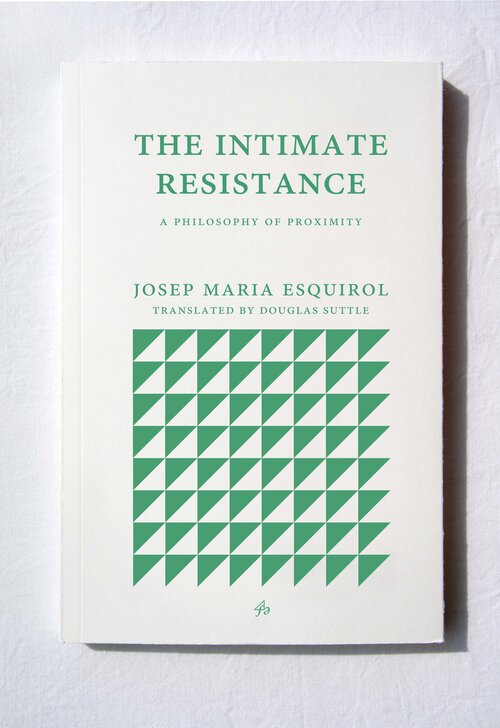
The Intimate Resistance by Josep Maria Esquirol Tr. Douglas Suttle

3 out of 5 stars

A copy of this was provided free of charge from the publisher in return for an honest review.

We have just had a family stay with us for New Year’s Eve and part of that is us cooking for them and having conversations over a laden table. We have done this for over 20 years now and we have gone from being childless to five children, three of whom are adults. The act of providing food and friendship to family and friends is almost entirely opposite to the nihilistic experience which considers that everything is meaningless.

To share a table is to share a meal, but the meal goes a lot further than the physiological dimension of eating.

Esquirol has drawn from his years of work to present a reflection on the human condition that shows how intimacy and everyday acts can warm protect and guide us. He shows how we need the tangible, things we can touch away from the screen and that simplicity does not mean banality. Not every second of life is instagramable, there are moments that are better kept in the memory.

He explores many factors in this densely packed book. There are warning of the perils of navel-gazing, where nothing is to be found other than hatred, loneliness, despair rack and ruin. He explains that how we see others gives no indication as to how they feel and how looking in detail at the definition of health, asking if this means that we are all ill? Probably not but the very act of being close to someone is as useful as treating them medically. I did learn that the alternative meaning of to guard someone is to watch attentively and care for them. Equally startling to learn was that if we are to take away memory, love vanishes.

These day muttering doesn’t come from a lack of wine; in fact rather than a scarcity of anything these days, it comes from an excess of practically everything

I will be honest I have not read much philosophy in the past. And by not much, I mean none. So for me, this book at times was a struggle to read as just some of the basic concepts were challenging to say the least. That said there were elements of the book that I did like, but in particular, the discipline of really really thinking about a problem from all angles before coming to a conclusion.

Mordew by Alex Pheby

4 out of 5 stars

Nathan is eking out an existence in the slums of a city that is battered by the sea. He lives with his parents and the meagre earnings go to helping buy medicine for his father. He has a knack for extracting the strange and unusual creatures from the Living Mud, some he does by using the Itch within him to draw them closer.

The family is desperate though and his mother reached the point where she has to sell him to the mysterious Master of Mordew. This man draws his power from the corpse of God that is hidden in his catacombs. But the inner strength that Nathan has is mightier than the Master’s and he is one of the few who could destroy him. The Master sees him as a threat and takes steps to betray Nathan and get the upper hand.

Darkness is all around Nathan as he begins to discover how to use his power.

I really liked it, even though the story takes you to places that you would never want to venture alone. The world that Pheby has created is quite something, it feels cohesive, magical and oh so dark, I am not going to say much more about the plot as if you like dark and immersive fantasy books then you need to read this. I was most impressed by the glossary at the back of the book, he has put so much into the back story of the place and the people of Mordew. There are two more books to come too!

« Older posts Newer posts »

© 2026 Halfman, Halfbook

Theme by Anders NorénUp ↑