Page 63 of 185

Spying on Wales by Nick Pyenson

3 out of 5 stars

I have been fortunate to see dolphins in the wild twice, but as yet have not seen any whales. It is one thing that I would love to do one day, assuming that we ever get back to anything resembling normal. These amazing creatures are the largest species that have ever graced our planet, the largest of which is the blue whale. Their size means that they can only live in the water, but they have adapted to this hostile environment perfectly. This is even more amazing when you think that they are not fish but mammals.

They evolved from dog-like creatures over 50 million years ago into the animals that they are now. We are still discovering new species too, the most recent of which is the Rice’s Whale found in the north-eastern Gulf of Mexico. We know so very little about them, how they got that big, how do they eat enough to survive, and will they survive the onslaught of mankind. Nick Pyenson’s research has been looking at these and many other questions and this book is part of that story.

The begins in space of all places where he mentions that the Voyager spacecraft both carry sounds from our planet and one of those sounds is whale song. Not that anyone on this planet has been able to decipher these mournful squeaks and moans. However, they have discovered lots about the sounds, how they can travel vast distances across the ocean and that humpback songs are incredibly complex. The book is split into three sections, the first part is looking at the fossil records of whales tracing back (as much as they can) to the original species that decided that going back to the oceans was in its best interest. Ironically the best places to find whale bones in nowhere near the sea, rather it is in the driest parts of our planet; former sea beds that have been thrust high because of tectonic plate movement over thousands of years.

The second part of the book is about the whales we have here and now and how a mammal can get that big, how it breathes, feeds and thrives in the ocean. It was a bit grim as part of his research takes him onto a whaling ship where these magnificent creatures are harpooned, hauled out and slaughtered for pure greed from what I can make out. In this bloody mess though he does make a discovery about a sensory organ that now one new existed. The final part of the book is about the possible futures that whales might have. We have been particularly cruel to them, slaughtering millions of them and driving a few species to the very brink of extinction, but there is a glimmer of hope, provided we understand the interconnectedness of the ocean inhabitants.

I didn’t think that this was too bad overall. It is quite readable and full of interesting and fascinating anecdotes on whales. I thought that the prose was a little dry, but he is an academic more used to writing research papers and grant applications rather than popular science books. That said, there were parts that showed wry humour and a little humanity. It is a good introduction to whales if you have never read anything about them before.

Un Lun Dun by China Miéville

4 out of 5 stars

There were supposed to be loads of foxes around, but you had to have really sharp eyes to see them. This one was standing watching the girls as they walked towards it. It didn’t seem in any hurry to move and seemed in fact it seemed to be watching them, or at least watching one of their group, in particular, Zanna. Strange things had been happening to her for a month, graffiti on walls, being handed an unmarked envelope with a travel card in the name of Zanna Moon Swazzy and there was the time that three squirrels left a nut each as an offering. It came to a head when her father was driving as was distracted by thick smoke or smog and hits someone.

One night they are disturbed by something, it is an umbrella that seems to be moving outside their window, they get dressed and follow it to a room with pipes in . Zanna turns the wheel and the sounds of the street fade away. They have left London as they know it and have entered the twin abcity of Un Lun Dun.

It is here that Zanna finds that she is Swazzy, or the chosen one, and is taken to the ‘Propheseers’ who are located on the magic bridge, the ‘Pons Absconditus’ that can move anywhere in the city and even between this city and the London we are more used to. She and Deeba learn that the city is under attack from the smog, and a man called Brokenbroll is fighting back against it by requiting umbrellas. They also meet Benjamin Unstible who has also crossed over from London. He tells them he has defeated it in London by using the ‘Klinneract’. However, there are people there who don’t want Swazzy in Un Lun Dun and attack her. She is forced to return to London to recover.

Deeba doesn’t believe that those left will be able to fight this smog and does some research while back in London. The results shock her and she knows that the city is in real trouble. She has to try and pass again between the worlds to try to save the city…

Well, that was a romp. China Miéville’s imagination knows no bounds really. I like the way that he takes the things that people are familiar with in London, Westminster Abbey, for example, and turns then round to the unexpected. A particular favourite of mine was the Binja’s, dustbins that have arm and legs and nunchucks to attack the enemy with. Some of the creatures that he has dreamt up (and that are brilliantly drawn throughout the book) are as fantastical as they are horrifying.

I didn’t think it was that strong plot-wise, I always can tell how these books are going to end, as there are very few authors who would want to eliminate their protagonists. It is just the route to that end that has the opportunity to startle and shock.

It is not dark per se, rather there are dark streaks running through the plot and the characters. It is also about nepotism and corruption that is endemic in the corridors of power regardless of the society that you are in. There is a touch of the emperor’s new clothes too, as some of the characters who should know better are taken in by the bad guys. Deeba was a great character, strong-willed and able to see through to what she knew was the right thing to do. It feels like a halfway house between the London that I know and the London below created by Gaiman in Neverwhere. That is much darker and more sinister than Un Lun Dun but has a similar vibe running through the creation of Miéville. Great stuff.

Mirrors Of The Unseen by Jason Elliot

4.5 out of 5 stars

The Iran we see portrayed on the TV is very different from the country and the people that inhabit it. They are a generous and warm people who are prepared to welcome visitors to their homeland and most importantly their homes to show generous hospitality to guests.

Elliot starts his journey in the back of a taxi leaving the airport that he had passed through with surprising efficiency. The driver asked him if he had been away long and was slightly surprised to find that this was Elliot’s first time in the country. He’d thought that he was Iranian…

As is the taxi drivers right, he is full of opinions of his city and how is was much better back in the day. A cigarette is passed forward, and he lights it while steering with his knees. Asked why he has come, he says that he is there to write a book. What is there to write about comes the question back, so he reels off a list of things that the Persian people have given humanity over time. The driver looks puzzled but shoves a tape into the slot on the dashboard. Listen he says and this wonderful, hypnotic music comes out of the speakers. He arrives at his hotel, pays the driver and tries to pass him the rest of the cigarettes, he refused to accept, until pressed a little more and then grudgingly accepts. The ritual of ta’arof has been performed once again. It is utterly different to Afghanistan, with no bullet holes in the buildings and he can just see a normal street from his modestly equipped room. It felt both surreal and yet normal.

It is a welcoming start to his travels in this most ancient of countries. He is there primarily to absorb the culture of the people and the places and has a particular fascination with the Naqsh-e Jahan Square in Isfahan and what he thinks is the glaring lack of alignment between the dome of the Sheikh Lutfullah Mosque and its entrance portal. This seeming lack of attention to detail that he had come to expect from the Persians piqued his curiosity and led him to a detailed investigation and trips back to the place to study it before it reveals its secrets to him.

The book is full of evocative scenes. When he is in the land of the Parthians and as the lamb kebabs are grilling over the open fire you can almost taste them yourself. He spends time with a young man called Zizou, who has taught himself about the history of the Iranian ancient sites, he refused to accept any money for the time spent, saying that the cost had been spent and shared with learning and knowledge. He spends time in the home of many people seeing just what they are like out of the glare of the religious police and spends many a night in some grubby hotel rooms, sharing the space with cockroaches and bathroom taps that spit like demented cobras. It didn’t matter if he was speaking to a plaster adding ornate touches to a domed ceiling or watching a tile-cutter teach his son the trade or sharing an opium pipe with an older man on a horse ranch.

The landscape pales, unfolding from the roadside in yellowing sheets which merge with the sky along a mirage-infused horizon. Moving against these desiccated expanses, one feels like a survivor, adrift without bearings.

His first book, An Unexpected Light about his travels in Afghanistan was so jaw-droppingly good that I had very high hopes for this one. And mostly this book didn’t disappoint. The way that he engages with the people that he encounters as he travels around the country is the best part of this book, he is sympathetic and tolerant of almost all, bar the one or two that see him, as a tourist and therefore a source of income. He has grown up too, there is not the wide-eyed joy that you got in the first book, rather he has taken the time and effort to find out about the places he is going to with the intention of bringing extra depth to the book. He has learnt the language so his passage through is easier he can bring those subtle nuances to life even more. It is a fascinating book about a wonderful country. The accompanying photos are excellent, in particular the one taken in Kurdestan. If you want to read more about Iran, I can also recommend Revolutionary Road by Lois Pryce for another amazing book.

February 2021 Review

Compared to January that was a much faster month. I think the extra daylight helps. The only disadvantage with February is that there are only 28 days, so I only managed to get through 16 books from the huge TBR that I had set myself. That said there were some really good books in the ones that I read. So, here they are:


I really like most of the books that China Miéville has written, with The City and The City being an outstanding favourite. Un Lun Dun is his first children book that I have had on a shelf for ages and this month I read it. Really enjoyable with the imagination that he has, but it was a touch predictable plotwise.


I read two fiction books this month, the first was a family drama set in Ireland. The Wild Laughter by Caoilinn Huges is about a family coming to term with financial losses after the crash and with the added dilemma of the request from a very ill parent. I was sent Sunny And The Wicked Lady by the lovely people at Salt. This is Alison Moore new children book. I don’t normally read these any more but it took no time at all to read this little adventure ghost story.


I really enjoyed Toast when I read it recently so thought I would read, Nigel Slater’s second foodie memoir, Eating for England. Thoroughly enjoyed it, but just felt it could have been better laid out. Also on the food theme is The Lost Orchard. THis is the story, with recipes naturally, of Raymond Blanc’s desire to create an orchard in Oxford. Not a bad book.

If you want a memoir about a life taken far too early, then I can recommend The Mahogany Pod by Jill Hopper. This is a tribute to her boyfriend of no time at all who passed far too early from cancer.


Botanical Curses and Poisons sounds like quite a morbid book, but thankfully Fez Inkwright manages to make plants that can kill an utterly fascinating subject. One of my favourite nature writers is Stephen Moss this was a book from a little while ago. It is following on from the great books, The Unofficial Countryside and Edgelands and is about the wild life that exists in the cracks. Great stuff. Nicholas Pyenson’s book is more academical and is about his passion, whales. Quite liked this, but there was the odd flaw here and there.


The two poetry books I read could not have been any more different Black Country by Liz Berry is about home life and How The Hell Are You? by Glyn Maxwell is more contemporary and political.

How Britain Ends – Gavin Esler Politics 4

I was sent this ages ago by Sandstone Press and they moved the publication date got moved back. Paul Braddon’s The Actuality is a dystopian science fiction thriller about an android who has been living in an apartment illegally. She has to flee when people realise that she is there and this is the story of her trying to escape to Europe.


I read wo travel books from the middle east that share a border Writing from Iran, Mirrors of the Unseen is Jason Elliot’s follow up to the spectacular Unexpected Light. Not quite as brilliant as that, in my opinion, this is still an excellent insight into that country. Moving over the border to Iraq, Wilfred Thesiger’s The Marsh Arabs is a travel classic and well worth reading.

My book of the month is the latest travelogue with recipes by Caroline Eden, Red Sands. She has a way of getting to the essence of the places that she is passing through, partly via the food, but mostly because she is a sensitive and receptive traveller.

Any of those take your fancy from this month?

The Marsh Arabs by Wilfred Thesiger

4 out of 5 stars

Where the Euphrates and Tigris rivers meet used to be a Marsh. Mostly these places are uninhabitable, but in the case of Iraq, there were people there who had developed a way of life that fitted and suited their environment almost perfectly. They had lived this way for around 5000 years, absorbing changes that suited them but keeping their culture and spirit very much alive. That was before Saddam Hussein drained the marshes and did all he could to wipe them out.

Thankfully before their life disappeared completely, it was documented by various people, including the author of this book, Wilfred Thesiger. The middle east was a particular passion for him and his book, The Arabian Sands is his account of crossing the Empty Quarter. He has an affinity with the people of the region and this area of Iraq fascinated him. He visited many times between the years of 1951 and 1958 staying for extended periods of time and got to know the various tribes and people of this marsh.

Memories of that first visit to the Marsh have never left me: Stars reflected in the dark water, the croaking of frogs, canoes coming home in the evening, peace and continuity, the stillness of a world that never knew an engine. Once again I experienced the longing to share this life, and to be more than a mere spectator.

He visited on the native people’s own terms, sharing their meals, staying in their reed constructed accommodation. He was a modest guest, but the people of the marshes grew to trust this man and to a certain extent rely on the medicines that he bought with him. He tried to treat as many cases as he could, from cleaning wounds and treating illnesses and he came to realise that some of what he was seeing was caused by a total lack of hygiene. At one of the villages he was asked to circumcise a lad and he took more care than was usual and he healed quickly with very little paint. It would be the first of many hundreds that he would do.

He engaged some lads to help him get around the marshes in their long slim canoes called taradas. He didn’t employ them, a sensible precaution as it could have sparked jealousy with other members, but he did ensure that they were generously supported in lots of ways. Their intimate knowledge of the waterways was such they would be heading to a wall of reeds and as the almost touched them the narrow passage through would be revealed. If he were alone, he would never have spotted it. He bought himself a boat one year to find out soon after that one on the tribal leaders had had had one made for him.

He documents all layers of the life of these people, from the intertribal rivalries and the disagreements that sometimes happened, to the crops they grew, how they sealed the Taradas and the way that they built their homes. There is a substantial section of the amazing photos that he took of the people. I did find his writing a little cold and matter of fact, probably an effect of his upbringing, but you do get an underlying sense of how fondly he saw the people. It is an important historical document of a way of life that can never exist anymore since the Marshes were drained. Well worth reading.

Use Of Weapons by Iain M. Banks

3 out of 5 stars

One of Special Circumstances’ foremost agents, sometimes known as Cheradenine Zakalwe was known for doing the overt and covert Culture’s work. He had been plucked from relative obscurity by the woman that is often known as Diziet Sma. She thought that she knew him, but she had only been looking at a shadow of his character.

The drone known as Skaffen-Amtiskaw know both of these people and he has been asked to contact Zakalwe for another job that needs his expertise. He agrees to take on the work, however, his payment for doing so is to be told the location of an individual called Livueta. Livueta is also present in the other storyline that runs in reverse throughout the book which tells of Zakalwe’s other Culture-based jobs he was involved in all the way back to his pre-Culture childhood and where we learn of a boy called Elethiomel. It is the very personal battle between Zakalwe and Elethiomel that is the lynchpin of the plot of the book.

Apart from Excession, I have loved all of the Culture series that I have read so far. Banks is a magnificent science fiction writer who could weave complex plots in amongst the universe and populace that he created all of which is underlaid by his dark humour. This though I didn’t like as much sadly. It had lots of elements that make the other books so good, the character with a back story, galaxy-wide storyline and the ever-present ships that form the backbone of his books.

Even though it had all of that, there were some things that didn’t work for me, part of it was the ending that was supposed to be a shock and yet felt more of a letdown and part was the intertwined and reversed storylines. I prefer my books to take a more logical timeline and this very much didn’t. It is such a clever plot though and I think it could have been so much better laid out.

March 2021 TBR

Blink and February has gone. I didn’t feel as long as January did. I think that the lengthening days helps. This time of year always makes me think of one of my favourite Kathleen Jamie quote:

Every year, in the third week of February, there is a day, or more usually a run of days, when one can say for sure that the light is back. Some juncture has been reached and the light spills into the world from a sun suddenly higher in the sky.

And it is true. You can sense the days getting longer, but then all of a sudden the days seem full of light and the promise of summer. If you haven’t read her books by the way, you really should do so. Anyway, you’re hopefully here about the books. Here is my totally ambitious plan for the books that I am intending on reading in March. I have split them into categories as usual, it helps me get my head around all the books that I am wanting to read.

Finishing Off (Still!)

The Marsh Arabs – Wilfred Theisger

Mrs Moreau’s Warbler How Birds Got Their Names – Stephen Moss

Lotharingia: A Personal History Of Europe’s Lost Country – Simon Winder

A Reed Shaken By The Wind: Travels Among The Marsh Arabs Of Iraq – Gavin Maxwell

Return To The Marshes – Gavin Young

BLOG TOUR

The Notebook – Tom Cox

Review Copies

Wyntertide – Andrew Caldecot

In Miniature: How Small Things Illuminate The World – Simon Garfield

Stroke: A 5% Chance of Survival – Ricky Monhan Brown

The First of Everything: A History of Human Invention, Innovation and Discovery – Stewart Ross

Behind the Enigma: The Authorized History of GCHQ, Britain’s Secret Cyber-Intelligence Agency – John Ferris

Astral Travel – Elizabeth Baines

The Germans and Europe: A Personal Frontline History -Peter Millar

Reset: Reclaiming the Internet for Civil Society – Ronald J. Deibert

Britain Alone: The Path from Suez to Brexit – Philip Stephens

Like Fado – Graham Mort

Million-Story City: The Undiscovered Writings of Marcus Preece – Marcus Preece (Malu Halasa & Aura Saxén Editors)

How to be Sad: Everything I’ve learned about getting happier, by being sad, better – Helen Russell

Touring the Land of the Dead – Maki Kashimada Tr. Haydn Trowell

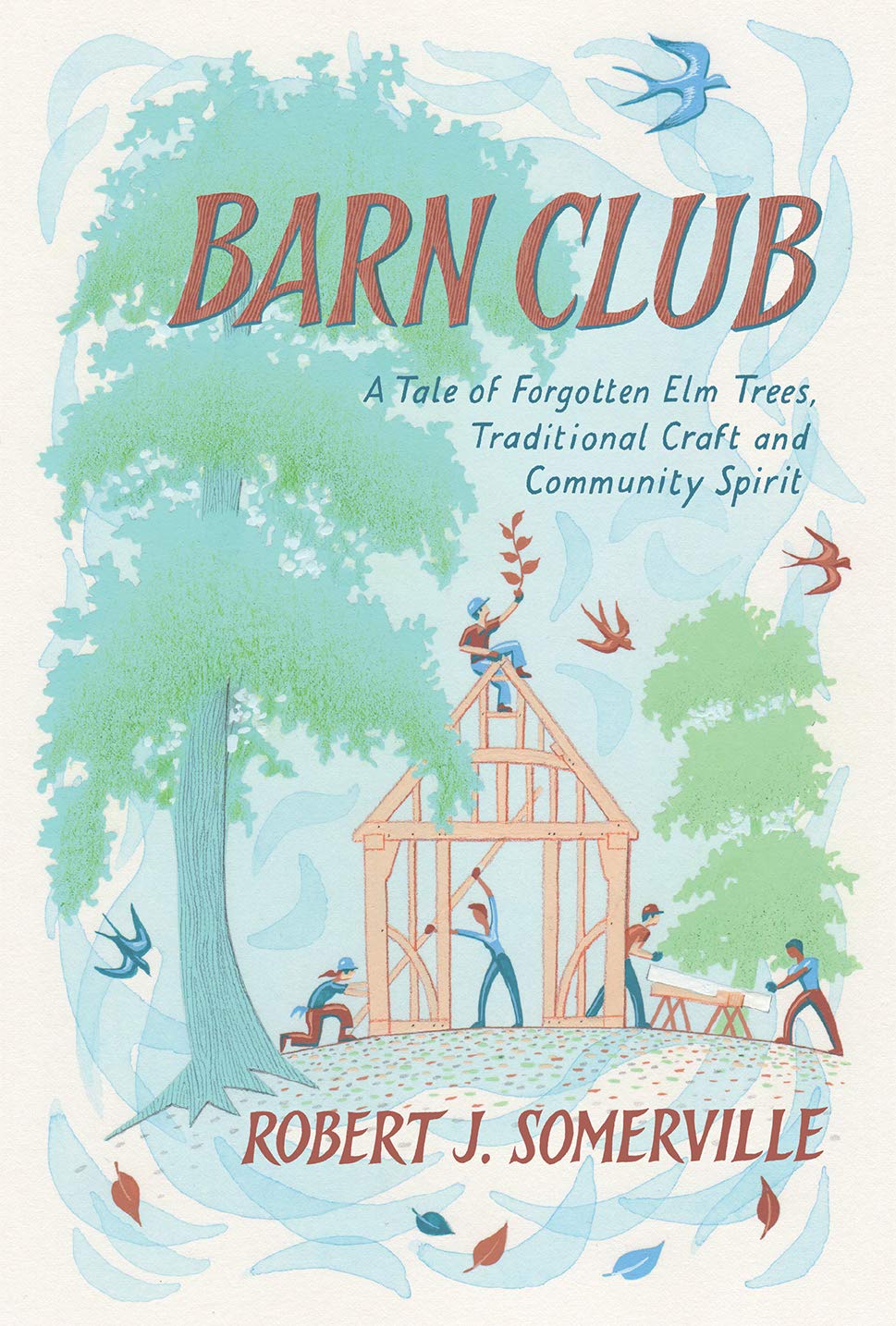
Barn Club: A Tale of Forgotten Elm Trees, Traditional Craft and Community Spirit – Robert Somerville

The Future of You: Can Your Identity Survive 21st-Century Technology? – Tracey Follows

Finding True North: The Healing Power of Place – Linda Gask

Hyphens Hashtags*: *The stories behind the symbols on our keyboard – Claire Cock-Starkey


Library

A Beginner’s Guide To Japan: Observations And Provocations – Pico Iyer

Constellations: Reflections From Life – Sinéad Gleeson

The Bells of Old Tokyo: Travels in Japanese Time – Anna Sherman

Everybody Lies: What the Internet Can Tell Us About Who We Really Are – Seth Stephens-Davidowitz

On the Plain of Snakes: A Mexican Road Trip – Paul Theroux


Books to Clear

Our Kind of Traitor- John Le Carré

Symbols: A Universal Language- Joseph Piercy

So Long, See You Tomorrow- William Maxwell


Poetry

Desert Air: Arabia, Deserts And The Orient Of The Imagination- Ed. Barnaby Rogerson

Springlines – Clare Best and Mary Anne Aytoun-Ellis


Challenge Books

From Rome to San Marino: A Walk in the Steps of Garibaldi- Oliver Knox

Hokkaido Highway Blues- Will Ferguson


Stanford Award

Without Ever Reaching the Summit- Paolo Cognetti

The Border – A Journey Around Russia: Through North Korea, China, Mongolia, Kazakhstan, Azerbaijan, Georgia, Ukraine, Belarus, Lithuania, Poland, Latvia, … Finland, Norway and the Northeast Passage- Erika Fatland Tr. Kari Dickson

Shadow City: A Woman Walks Kabul- Taran Khan

Travelling While Black- Nanjala Nyabola

Owls of the Eastern Ice: The Quest to Find and Save the World’s Largest Owl- Jonathan C. Slaght


Science Fiction

None this month; have you not seen all the books above ^^^

That is quite some list. There are a moderate number of shorter books, which will help, but still…


The Lost Orchard by Raymond Blanc

3 out of 5 stars

There is something quite magical about orchards. The most impressive that I have been to is the one at Brogdale in Kent. Not only is it vast, but the work that they do on fruit varieties benefits us all. My favourite orchard is the little community one in Bridport tucked away behind the houses and alongside the church; you’re not far from the road, but it is still a little haven of tranquillity. I would love to have enough land to have space for one, but I have to make doo with the half dozen or so trees that we have at home.

Another man who has dreamt of having his own orchard, is Raymond Blanc. He has fortunately been in a position to be able to do just that. At his award-winning hotel-restaurant in Oxfordshire, he has been able to just do that. He currently has about 2500 trees planted there, including ancient and forgotten varieties of British apples and pears, as well as 600 or so French varieties as well. On top of that, he has walnut trees, quince, medlars, apricots, nectarines, peaches, plums, damsons and cherries. It provides him with over 30 tonnes of fruit each year.

In this book, he has picked a number of his favourite varieties to write about and to cook with. There is a page on each type with a little history, some growing notes. He has also cooked each apple variety in three ways, puree, baked and in a Tarte Tatin. For the other fruits, he has chosen other cooking methods as well as tasting them raw.

It is really nicely produced book, full of black and white sketches and a smattering of colour photos. He is selecting a lot of the varieties that he is picking on the basis of their flavour, he is a cook after all. He quite often would be grading the apples and saying that he had picked them at the wrong time, and would be wondering of they would be better if picked at the correct time. Well, yes they probably would… I would have liked to have seen more photos of his orchard. Not a bad book overall. If you want to read more about orchards, I’d recommend, The Apple Orchard by Pete Brown and the Common Ground Book Of Orchards.

The Wild Laughter by Caoilinn Hughes

3.5 out of 5 stars

It is 2008 and the rise and fall of the beast that was the Celtic tiger has left devastation and recession in its wake. One family that has been affected by it are the Blacks. They live on a farm in County Roscommon and the investments that they made while the markets were on the up have gone sour, whilst the people that they have invested with seem to have survived, they are holding the losses.

The family are Manus or Chief as he is better known, his wife, Nora and their sons, Cormac and Hart. There is a tension between the brothers as they both have affections for the same girl. Cormac has managed to escape to the city and university and Hart is seen as the natural successor to take over the farm. That moment is approaching soon though as Manus falls ill. He knows he is dying and springs a request onto the brothers that will place them in an untenable position…

In amongst all the bleakness and tension of the story though there is dry humour. I think that some of the subtleties of the plot washed over me, it harks back to the time when the Irish were oppressed and had to flee from their homeland, but set in the context of a small family facing a challenging time. She has a beautiful way of writing though, and even though it covers some challenging plot tropes, it was a pleasure to read.

Eating for England by Nigel Slater

4 out of 5 stars

The British have always had a strange relationship with food, if you don’t believe me have a look here. There are smells that just the whiff of can bring the memories from childhood rushing back, whether it is nail varnish and the hint of pear drops or the sulphurous odour of cabbage from school dining rooms. Gone are the days when food is seen as fuel only and we have passed through the celebrity chef phase, the growth of farmers markets and are now at a point where we have a small, if slightly elitist, food culture.

Slater has some strong opinions on all things to do with food, from the buying, preparing, eating and observations on how others consume the things that they eat. He has selected over 200 subjects that are as wide-ranging as fudge, mustard, toast, after eight mints and spangles and written either a couple of paragraphs or a short passage on each.

These short sharp essays are all food-focused and are full of bone dry humour and razor-sharp insights. We have been getting better at foodie related things than we ever were, but there are still some habits that are utterly unique to this country such as rhubarb and custard, Fray Bentos and midget gems.

Curly, golden brown, not unlike a hobbit’s toenails yet so obviously of the pig, scratching have a following all over the Midlands that could almost be described as fanatical.

There were several times that I found myself laughing at his pithy observations. It did occasionally feel a bit repetitive, I am not sure how many musings I read about toast in one form or other, but As ever his writing is a joy. It there was one flaw, I personally would have liked them grouped into themed sections rather than scattered all over the place.

« Older posts Newer posts »

© 2026 Halfman, Halfbook

Theme by Anders NorénUp ↑