Page 27 of 188

March 2023 Review

Well, March was a good reading month. I managed to read a total of 18 books in the end, with three of them reaching 4.5 stars. Natural history has just reached the top of my genre chart too, with six, the same as fiction. Faber are top of my publishers list probably because of the poetry. I only bought 29 books too..


Books Read

Taxtopia – The Rebel Accountant – 4 Stars

Another Gulmohar Tree – Aamer Hussein – 2 Stars

Falling Away – David Banning – 3.5 Stars

The Women Who Saved the English Countryside – Matthew Kelly – 3.5 Stars

The Road: A Story of Romans and Ways to the Past – Christopher Hadley – 4 Stars

These Envoys of Beauty – Anna Vaught – 4 Stars

The Last Sunset in the West: Britain’s Vanishing West Coast Orcas – Natalie Sanders – 3.5 Stars

Nightwalking – John Lewis-Stempel – 4 Stars

Cane, Corn & Gully – Safiya Kamaria Kinshasa – 3 Stars

Manorism – Yomi Sode – 3 Stars

Quiet – Victoria Adukwei Bulley – 3.5 Stars

Afropean – Johny Pitts – 4 Stars

In the Shadow of the Mountain – Silvia Vasquez-Lavado – 3.5 Stars

The Travel Writing Tribe – Tim Hannigan – 4 Stars

Extraordinary Clouds – Richard Hamblyn – 3.5 Stars


Book(s) Of The Month

Nomad Century – Gaia Vince – 4.5 Stars

Two Lights – James Roberts – 4.5 Stars

One Place De L’Eglise – Trevor Dolby – 4.5 Stars


Top Genres

Fiction – 6

Natural History – 6

Poetry – 6

History – 5

Travel – 4

Memoir – 3

Fantasy – 3

Science Fiction – 3

Photography – 2

Environmental – 2


Top Publishers

Faber & Faber – 4

Simon & Schuster – 3

Particular Books – 2

Allen Lane – 2

Little Toller – 2

William Collins – 2

Monoray – 2

Summersdale – 1

Sandstone Press – 1

Fum D’Estamps Press – 1


Review Copies Received

The Possibility of Life: Searching for Kinship in the Cosmos – Jaime Green

Once Upon a Raven’s Nest: A Life On Exmoor In An Epoch Of Change – Catrina Davies

Shaping the Wild: Wisdom from a Welsh Hill Farm – David Elias

Cry of the Wild: Tales Of Sea, Woods and Hill – Charles Foster

In Sardinia: An Unexpected Journey in Italy – Jeff Biggers

Minor Monuments – Ian Maleney


Library Books Checked Out

The Lost Rainforests Of Britain – Guy Shrubsole

One Thousand Shades Of Green: A Year In Search Of Britain’s Wild Plants – Mike Dilger

Spring Rain – Marc Hamer

Between The Chalk And The Sea: A Journey On Foot Into The Past – Gail Simmons

Am I Normal?: The 200-year Search For Normal People (And Why They Don’t Exist) – Sarah Chaney

Ten Birds That Changed The World – Stephen Moss

Sarn Helen: A Journey Through Wales, Past, Present and Future – Tom Bullough


Books Bought

Better Than Fiction: True Travel Tales from Great Fiction Writers – Ed. Don George

Walking With Plato: A Philosophical Hike Through the British Isles – Gary Hayden

Almost French: A New Life in Paris – Sarah Turnbull

Outposts: Journeys to the Surviving Relics of the British Empire – Simon Winchester

Best of Lonely Planet Travel Writing – Ed. Tony Wheeler

The Last Overland: Singapore to London: The Return Journey Of The Iconic Land Rover Expedition – Alex Bescoby (signed)

Travels With Epicurus: Meditations from a Greek Island on the Pleasures of Old Age – Daniel Klein

A Rose for Winter – Laurie Lee

Prehistoric Britain from the Air – Janet & Colin Bord

Spain – Jan Morris

Three Rivers Of France: Dordogne, Lot, Tarn – Freda White

Italian Journeys – Jonathan Keates

From Source to Sea: Notes from Walking 215 Miles Along the River Thames – Tom Chesshyre

Unfinished Tales of Numenor and Middle-earth – J.R.R. Tolkien

Poets of the Great War: Edward Thomas – Edward Thomas

Four Thousand Weeks: Time Management for Mortals – Oliver Burkeman

Jumping Ships: The Global Misadventures of a Cargo Ship Apprentice – David Baboulene

Prehistoric Dorset – John Gale

Fresh Woods Pastures New – Ian Niall

The Cuckoo in June: Tales of a Sussex Orchard – David Atkins

Mysterious Britain: Ancient Secrets of the United Kingdom and Ireland – Janet & Colin Bord

Ley Lines: Their Nature and Properties : A Dowser’s Investigation – J. Havelock Fidler

Human kind: A Hopeful History – Rutger Bregman

Period Piece – Gwen Raverat

Upheaval: How Nations Cope with Crisis and Change – Jared Diamond

Green and Pleasant Land: Best-Loved Poems of the British Countryside – Ana Sampson

The Lost Whale – Hannah Gold (signed)

Time Junction – Helen Solomon (signed)

Wild Embers: Poems of Rebellion, Fire and Beauty – Nikita Gill


Any from that huge list that take you fancy, let me know in the comments below

April 2023 TBR

Tiny bit late posting this! Sorry. Here is the list of books for my April TBR that I hope to make serious inroads into. We’ll see…


Still Reading

Notes from the Cévennes: Half a Lifetime in Provincial France Adam Thorpe

One Place De L’Eglise: A Year Or Two In A French Village Trevor Dolby


Blog Tour

More Numbers Every Day: How Data, Stats, and Figures Control Our Lives and How to Set Ourselves Free Micael Dahlén & Helge Thorbjørnsen


Review Books

Isles at the Edge of the Sea Jonny Muir

The Wonderful Mr Willughby: The First True Ornithologist Tim Birkhead

The House of Islam Ed Husain

Three Women of Herat: Afghanistan 1973-77 Veronica Doubleday

Polling UnPacked: The History, Uses and Abuses of Political Opinion Polls Mark Pack

On the Scent: Unlocking The Mysteries Of Smell – And How Losing It Can Change Our World Paola Totaro and Robert Wainwright

The Serpent Coiled in Naples Marius Kociejowski

Swan: Portrait of a Majestic Bird, from Mythical Meanings to the Modern Day Dan Keel

Seining Along Chesil: Voices From A Dorset Fishing Community Sarah Acton

Handbook of Mammals of Madagascar Hardcover Nick Garbutt

RSPB Handbook of Garden Wildlife: 3rd edition Peter Holden & Geoffrey Abbott

Falling Away David Banning

The Angel Of Santa Sofia Josep M. Argemí Tr. Tiago Miller

Reconnection: Fixing our Broken Relationship with Nature Miles Richardson

One Fine Day: A Journey Through English Time Ian Marchant

Coast of Teeth: Travels to English Seaside Towns in an Age of Anxietyy Tom Sykes

The Possibility of Life: Searching for Kinship in the Cosmos Jaime Green

Once Upon a Raven’s Nest: A Life On Exmoor In An Epoch Of Change Catrina Davies

Shaping the Wild: Wisdom from a Welsh Hill Farm David Elias


Other Books

The Last Overland: Singapore to London: The Return Journey Of The Iconic Land Rover Expedition Alex Bescoby

A Walk in the Park: The Life and Times of a People’s Institution Travis Elborough

Wanderers: A History of Women Walking Kerri Andrews

Far From The Light Tade Thompson

The Lost Rainforests Of Britain Guy Shrubsole

The Treeline: The Last Forest And The Future Of Life On Earth Ben Rawlence

Iconicon: A Journey Around The Landmark Buildings Of Contemporary Britain John Grindrod

Rosewater Tade Thompson


Challenge Books

The Overstory Richard Powers

Bloom: From Food to Fuel, the Epic Story of How Algae Can Save Our World Ruth Kassinger


Poetry

The Catch Fiona Sampson


Photobooks

Hide and Seek: The Architecture of Cabins and Hideouts Sofia Borges, Sven Ehmann & Di Ozesanmuseum Bamberg


The intention of shorter TBRs seems to have gone! I read 18 in March so Would like to do the same again in April.

Any that you’ve read or that take your fancy let me know in the comments below.

Taxtopia by The Rebel Accountant

Welcome to Halfman, Halfbook for my stop on the Blog Tour for Taxtopia by The Rebel Accountant and published by Monoray.

About the Book

The Rebel Accountant has broken ranks to share his journey from clueless naïf to skilled tax consultant – and in doing so blows the lid on the murky world of making the tax burdens of the ultra-wealthy disappear. In the topsy-turvy world of tax avoidance, you can get richer by buying a yacht, the world’s biggest exporter of coffee is Switzerland, and billionaires like Jeff Bezos, Donald Trump and the Duke of Westminster often pay less tax than you do.
Written with sharp wit and over-brimming with inside secrets, the anonymous author shows us that not only does the global tax system encourage dubious practice which favours the rich, but that it was specifically founded with that in mind.
If you suspect that tax is a rigged game, a con, designed to fleece the little guy, you are about to find out just how shockingly true that really is.

About the Author

No one knows the true identity of THE REBEL ACCOUNTANT… But we do know he’s a chartered tax advisor who has worked widely behind the scenes in London and Australia, everywhere from major accountancy firms to tiny start-ups. He chose his career because he loves to be creative.

My Review

Tax is one of those things that I have paid since I started working many many years ago. Every month without fail the PAYE pops its head up and snaffles a chuck of the money that I have earnt that month. I am not unhappy about it, it has after all paid for my three children to be educated at minimal cost to me, pays for the roads that I drive on and paid for the ongoing treatment that Sarah has had for cancer.

It is something that I am happy to pay for as I know that it has wider benefits for society as well as myself. There are a number of people though who want to enjoy similar benefits as I do. These people are often wealthy and regardless of the way that they have accumulated their money, do not want to be encumbered with taxation. If they are in that tiny group of people who are so mind-bogglingly rich that they are often very reluctant to part with any of their money at all.

The Rebel Accountant has been one of the professionals who has helped this class of people evade and avoid anything that looks like a tax. So much so that someone with vast sums can often pay much less tax than you do in a year. They do this in several ways, firstly by employing clever people to find the loopholes that in the extremely complex tax systems, secondly but just not bothering and most infuriatingly, they gamed the systems to ensure that the people who have to pay taxes are you and me and not them.

I think that was his intention for those reading this book to be made very angry. And having read it I can confirm that it does. The entire taxation system is utterly broken and it isn’t helped by the endemic corruption of our political system that helps those with money get more and keep more. This will be at the expense of our society too if steps are not taken to address it. Even given the subject matter, it is quite an entertaining read; he is that rarest of people, an accountant with a bone-dry sense of humour. There was never a point when he ventured into the arcane depth of tax law, rather it was kept at a level that almost everyone would be able to understand. Don’t read this and weep, read this and start to put pressure on our political leaders.


Don’t forget to visit the other blogs on the blog tour

Buy this at your local independent bookshop. If you’re not sure where your nearest is then you can find one here

My thanks to Anne Cater of Random Tours for the copy of the book to read.

These Envoys of Beauty by Anna Vaught

Welcome to Halfman, Halfbook for my stop on the Blog Tour for These Envoys of Beauty by Anna Vaught and published by Reflex Press.

About the Book

These Envoys of Beauty is writing straight from the heart. Over twelve essays, Anna Vaught uses her relationship with the natural world to explore themes of loneliness, depression, and complex and sustained trauma within the family home, issues that shaped her early life and continue to have a far-reaching impact decades later.

Vaught writes about how she oriented herself to the natural world and lived within it while growing up in a rural home; about wishing trees, talking streams, and her early knowledge of plants, animals, and botanical names; about her passionate relationship, even when very young, with foraging and what was edible, how things smelled, licking the rain from leaves, drinking, growing, and cooking. She writes about how nature fed and feeds her imagination, and how it gave her hope of something different beyond the world she experienced as a child and young person.

About the Author

Anna Vaught is an English teacher, young people’s mentor, Creative Writing teacher and author of several books, including 2020’s novel Saving Lucia (Bluemoose) and short fiction collection, Famished (Influx).

Her shorter and multi-genre works are widely published in journals, magazines, anthologies and the national press. She has been a Bookseller columnist and still writes regularly for them, while she is currently a columnist for Mslexia. Her second short fiction collection, Ravished, was published by Reflex Press in 2022, and 2023 will see four books: memoir, These Envoys of Beauty (Reflex Press), new novel The Zebra and Lord Jones (Renard. UK and commonwealth; Zebra is currently on US submission), plus The Alchemy, her first book about writing.

Saving Lucia will be published in Italian by Milan’s 8tto edizioni as Bang Bang Mussolini. She is a guest university lecturer, tutor for Jericho Writers, super-nerd, volunteer with young people, mental health campaigner and has recently established the new #Curae prize for writer-carers with industry-wide support. She works alongside chronic illness and is a passionate campaigner for mental health provision, including in the publishing industry.

My Review

Slowly people are learning to reconnect with nature. Whether it is forest bathing, meditation or wild swimming, it has helped numerous people deal with the stresses and strains f modern life. For some people that connection has been a lifeline for almost all of their lives. Anna Vaught is one of those who have sought comfort in the world around her away from a horrid childhood and parents that barely loved her.

To have depression is, in my experience, to experience things through a glass darkly

In these twelve short essays, she takes us back from some of the trauma that she suffered as and child and into adulthood, and the methods and techniques and places that she used in trying to heal herself and her mind. She coped with all that that happening by examining in almost forensic detail the world around her, discovering that gorse flowers taste of coconut, smelling the spicy scent of a cowslip as she lies alongside it and burying her head in violets trying to shut away the world.

What you do not know until you grow up a bit more is that the world is full of weirdos like you: water lovers, chuggers in the mud, wailers in the field where the cows have been. That is an encouraging thought

Vaught is honest and open in her writing and this means that this is not the easiest book to read, but it is so worthwhile. There are lots of painful memories in here; it is bad enough reading about them, let alone imagining what it must be like to live through what she did. But there is also hope in here; each chapter is an exploration of her emotions and feeling as well as outlines on how she coped and got through it all. Might not be for everyone, but for those looking for a glimmer of light in a bleak place, this book may have some of the answers that you need.

I never wanted the answers: I wanted questions so big that you could not possibly find answers


Don’t forget to visit the other blogs on the blog tour

Buy this at your local independent bookshop. If you’re not sure where your nearest is then you can find one here

My thanks to Anne Cater of Random Tours for the copy of the book to read.

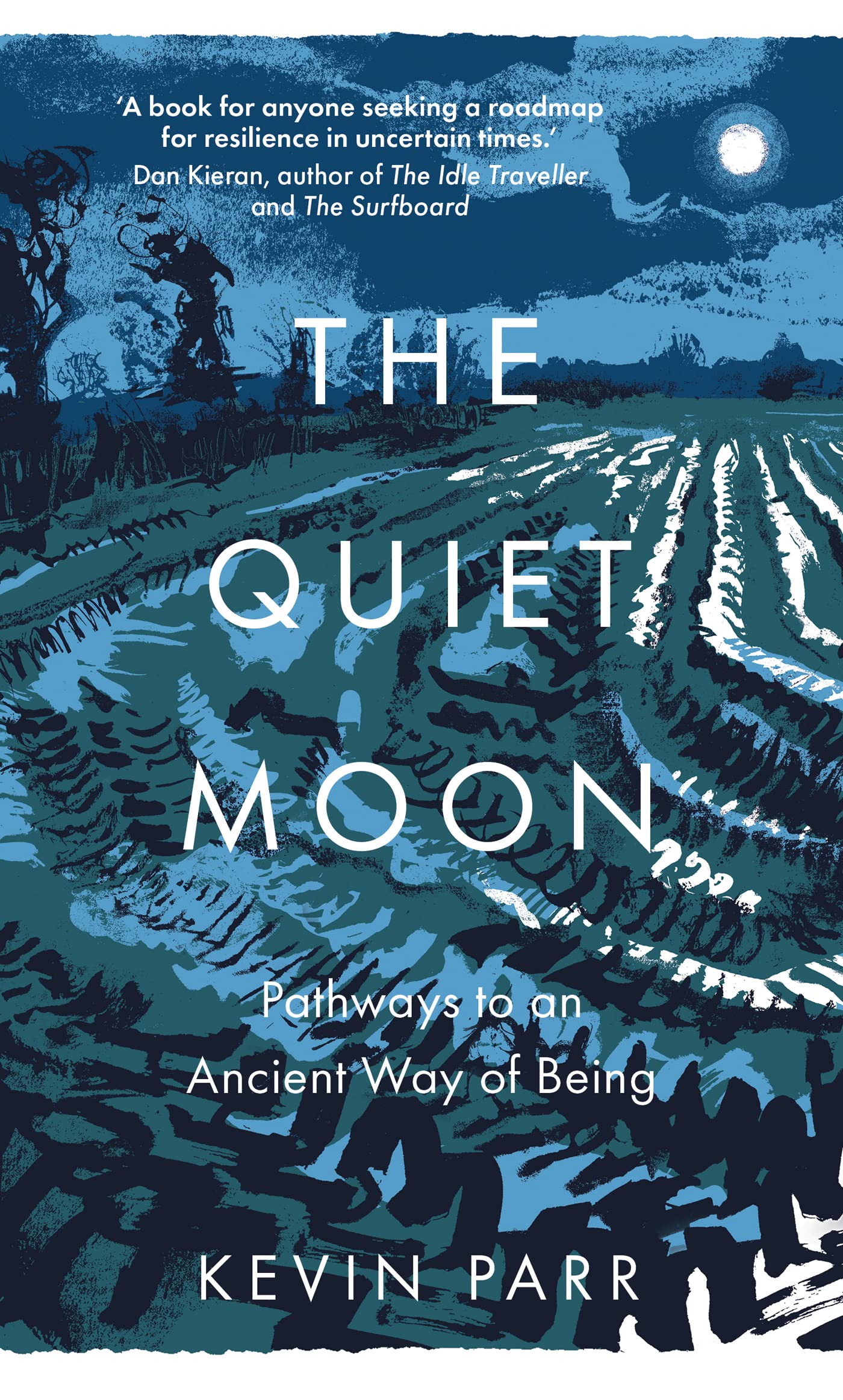
The Quiet Moon by Kevin Parr

4 out of 5 stars

A copy of this was provided free of charge from the publisher in return for an honest review.

If you go back a couple of thousand years, the people that inhabited this country are often called Celts. Very little is written about them, but what there is was written by the Romans and they took a dim view of their customs and habits. It is thought that they lived using a lunar calendar and no doubt use the four pivot points of solstice and equinox to frame their lives. But the truth is no one knows.

One man who has found that following a lunar cycle helps him deal with modern life and all the crap that it throws at him is Kevin Parr. He has slowly come to the conclusion that this less regimented way of marking time helps him become more in tune with the natural rhythms of nature and as a bonus, it has helped him no end with his mental health.

This is more than a gentle meander around the Dorset countryside though. Parr uses nature as a crutch to get him through the tough moments in his life. The book is split into twelve chapters each with a title of a moon, with wonderful names such as The Moon of Ice, The Moon of Dispute, The Bright Moon and it begins with the Quiet Moon.

In each chapter, we join Parr on his walks in his part of West Dorset. It is partly a history book and partly a natural history book and interwoven with these two main threads is a dusting of folklore, travel, memoir and musings on modern life. At times it feels like a confessional as he opens up about personal matters and other things that have been troubling his mind. As he immerses himself in research about the Celts way of life he realises that there is no clear definition of them and he fills in the gaps in a way that makes sense to him.

This in some ways is incredibly difficult to review. I can’t really put my finger on the exact reason why, but I really liked this book. But, I think it is because he is forging his own philosophy in his local landscape. There are things he writes about that I haven’t contemplated yet and need time to go away and think about them.
However, there are other subjects that he writes about that I felt like I was looking into a mirror ball, where I would sometimes glimpse my own ways of interacting with the landscapes around me. It might not be everyone’s thing, but if you want something different to read about landscapes and one man’s place in the world, then I can recommend this.

Walking With Nomads by Alice Morrison

4 out of 5 stars

I haven’t been, but when I think of Morocco, I think of the bustling souks and the colourful architecture. But this country has another side away from the main tourist attractions. The book is over three stages she walks along the Draa river, then across the Sahara and finally through the Atlas mountains. Two of these journeys happen in what we would consider normal times. Then the final walk just about manages to take place after the pandemic. But it nearly didn’t happen.

She is joined on her walk by the men who know these landscapes intimately. They know where the best places to stop are and most importantly, where the oasis and where the rare and precious resources of water can be found. Three camels carry their burden;  Morrison isn’t sure about the camels at the beginning, but she grows to admire their resilience in these harsh landscapes.

I really liked this travel book. Morrison is a genuinely enthusiastic person and that comes through on every page as she walks across Morocco. She is sensitive to those that she meets and gets on really well with her companions. It never feels that she is imposing her view or perspective on what happens on the walk.

Being a female explorer she gets to see the mostly hidden life of the women who live in these places they pass through. This is something that no male travel writer ever would get to see. She has the ability to form strong bonds with the women that she meets. Their delight in meeting her is apparent too. If you want a travel book that will help you see under the skin of a country at a gentle walking pace, then I can strongly recommend this.

RSPB How to Photograph Garden Birds by Mark Carwardine

3.5 out of 5 stars

A copy of this was provided free of charge from the publisher in return for an honest review.

Our garden bird visitors are normally sparrows starlings and pigeons. We occasionally get goldfinches and magpies, have had the odd buzzard sweep through and even once after a lot of rain (and I mean a lot) have had mallards! I had never though of taking phot of them, we just put the food out and let them get on with it.

Sadly this winter we have not has as many visitors as usual. I think that bird flu may be a factor, but who knows. IF we had had more them I would definitely be digging out my camera to try out some of the ideas in this new book. It has been a while since I used my SLR, but it did take some great photos, I normally take landscapes and not wildlife though.

Sensible advice abounds through out this book. It is an accessible and practical guide for taking the best photos in your garden. I did like the way that he showed how to set up shots and the detailed information needed to get the very best photo from your kit and the birds that you have visiting. The most useful of which is to keep taking photos. A lot will be duff, with the odd success, but the more experienced that you get, the better they will be.

The prose is conversational and aimed very much at the non expert photographer. As I know a little bit about photography, I could tell that he knew what he was talking about. It is a good all round guide for the complete beginner and someone with a little experience.

The Lost Orchards by Liz Copas & Nick Poole

5 out of 5 stars

A copy of this was provided free of charge from the publisher in return for an honest review.

We so far have six fruit trees in our garden, and according to a search on Google, it takes five trees to make an orchard. It doesn’t feel quite right though, if I ever have enough land then I am going to plant an proper orchard with rows and everything! There is a lot of folklore associated with orchards too, but Never partaken in a wasailing event, though I hear from Martin Maudsley they are well worth attending

I do love visiting the Bridport Community Orchard, located just off the town centre, it is a peaceful haven in a busy world. But they are becoming rarer than ever. Since 1960 we have lost two thirds of the small traditional orchards that could be found all over the West Country. This loss is catastrophic, not only have apple varieties that are unique to that particular local gone, but the long established ecosystems that depend on these trees have gone with it.

There are people working to find trees that have escaped the relentless grubbing up that took place a couple of decades ago. Two of them are pomologist Liz Copas and cidermaker Nick Poole who have been scouring Dorset looking for the hedgerows with apple trees as well as seeking out farms and small holdings that might have a tiny orchard still left.

This book is some of the results of their findings and their journeys back and forth across West Dorset finding the lost marvels. When they found the trees they scrumped the apples to make ciders and most importantly took samples for DNA and cutting to graft onto rootstocks. Some of the varieties they found were known by other names, and what wonderful names they have. However, some were unique and they had the opportunity to name them so we now have records for Matravers, Tom Legg, Golly Knapp and Cattistock Pink.

I thought that this was a wonderful book and if you have the faintest interest in orchards then you should read it too. I liked their theory that cider making began in Dorset too, it feels plausible given the information they have found out. It is good to see that the varieties that they have discovered are now being replanted in orchards across Dorset now. Long may it continue.

Other reading
Orchard: A Year in England’s Eden by Benedict Macdonald
Common Ground Book Of Orchards
The Apple Orchard by Pete Brown

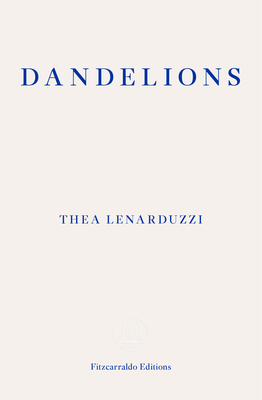
Dandelions by Thea Lenarduzzi

3.5 out of 5 stars

A copy of this was provided free of charge from the publisher in return for an honest review.

Home is as much a metaphysical thing as it is a physical building. For those that choose to make their home in different places, and in particular different countries, where they call home is very much dependent on the moment. I was born in Surrey, but I have felt more at home in Dorset since we moved here 20 years ago.

Thea Lenarduzzi has a similar dilemma. Her family are originally from Italy and the various generations have shuttled backwards and forward between the UK and Italy over the course of four generations. In this book, she blows away the dust from these family memories and tries to understand how it has shaped them as a family and her, as a person.

She sits down with her grandmother, or Nonna as she calls her and starts the process of recording the stories of family members past and just still present. This cyclic motion between the Fruili in Italy and Sheffield and Manchester happened over two generations and has defined her as a person and a full European citizen.

I cling to Nonno for support. My mind moves around his land like a ghost haunting a house that it considers its own. Or a vampire hovering on the threshold, hoping to be invited in.

I did like this intimate and intricate family memoir. Lenarduzzi meanders through her family history whilst being centred around her grandmother, Dirce. I like the way we can see a vast swathe of European history and the wars that punctuated the twentieth century through the prism of this family. Her prose is beautiful sometimes, but occasionally it felt like we had peered in a little too far into her family life. I can recommend this if you want a story of a family that has spread far and wide like the seeds from a Dandelion clock.

How I Use Spreadsheets

Why use a spreadsheet at all?

I started making a note of the books that I was reading after I got about three chapters into a book and realised that I had read it before. That was back in 2002 and I began by keeping a list in a Word document. It dawned on me a while after that that I really should be keeping that information in Excel and I transferred the data over in 2009.

I see those who use all manner of different methods to keep a track of what they are reading and a list of books on their TBR list, but for me, a spreadsheet is the best method. It works similarly to my brain, and I can compartmentalise the blocks of data in a way that suits me. It is also a great way of getting lots of pertinent facts out about my reading habits and the way that they have changed over the years.


My different spreadsheets

I have two main spreadsheets that I use. One is called New Books Read Dashboard and the other is TBR Master. (I need to sort the names out…).

New Books Read Dashboard has five tabs:

Overview which is my dashboard for this sheet

Running Sheet, so I can keep a track of everything that I have read in the current year

Main Data, which is where I have a list of every book that I can remember having read, as well as my yearly reading lists which I have kept since 2002. (There are several books from childhood reading missing, some of which I must add, but there are some that I know I will never be able to recall).

Stats where I use pivot tables to drag information out from the Main Data tab and the final one i

Lookups which is now common across all of the spreadsheets.

TBR Master has evolved from two sheets. One had a list of all the library books that I had on loan and another sheet had a list of review books that I have been sent. I had since added to it quite a lot and it now has eight tabs! These are:

TBR Dashboard which is mostly pivot tables of the information in the tabs,

TBR Plan which is where I attempt to pull together the books that I want to read for the coming month.

Library Books is the list of books that I currently am borrowing from the library.

Review books is a list of books that I have been kindly sent by publishers (And is way too long!!).

Own book is something that I have started recently, where I have been logging the many many books that I buy.

Borrowed books tab is also self-explanatory and believe it or not, only has two listed on it.

Virtual TBR is where I log books that I want to read but as yet have not got a copy. I really need to tie this in with my Good Read’s want-to-read selection.

Lookups which is the same as in New Books Read Dashboard and other sheets.


Those are the two main spreadsheets that I use day in and day out. I also have three specifically for reading challenges; a general one, a natural history one and one for my World From My Armchair challenge. I then have a further 17 spreadsheets that are for awards, such as the Wainwright, Stanford Dolman, Portico and so on. There are then numerous others that contain lists of books from authors, publishers and other random lists that I haven’t quite got around to sorting out yet.


How I Use Spreadsheets

When I first moved over from a list in a document to a spreadsheet, I only had four columns, author and title, year read and so on, but as time has gone on I have added extra columns to be able to get meaningful data out.

I now have ten columns of information that make up what I call my core set. These all appear in the same order in each (ok most as I still haven’t updated them all yet) of the spreadsheets that I use. This means that I can copy information easily between each spreadsheet without having to change anything. I know that it is always going to be the same.


Core Columns

Title: Pretty self-explanatory really, it is the title of the book.

Author: Also, self-explanatory. I use Ed. for editor and Tr. and translator where necessary

Gender: I have a dropdown that is either male or female. I haven’t included the various other genders out there at the moment.

Publisher: This is the name of the publisher. I rarely read self-published books now, but I use Self in that column when I do so.

Pages: This is how many pages the book has, including indexes etc.

ISBN: A record of the ISBN of the edition I am reading.

Publication Date: This is the date that the edition I have recorded was published

Binding: I have three choices here, Hardback, Paperback and ebook.

Price: This is the price of the book on the cover, not necessarily what I paid for it!

Genre: I have three choices on this dropdown, Non-fiction, fiction, and Poetry


Dashboards

It is all very well having the data in my spreadsheet, but it isn’t much use if I cannot extract meaningful or useful information. I have started using simple dashboards now in some of my sheets as I have found this is a good way of summarising the data. Most of this I do through pivot tables, these are a clever way of taking big dollops of data and distilling it into easy-to-read information. I also use various formulas to sum and count very specific pieces of information, normally to do with reading challenges.

In my TBR Master sheet, I use most pivots so I can see how many books are on my reading plan for the month, review copies that I have got outstanding, books on my virtual TBR and how many books I have. It kind of works at the moment, but there are gaps in what I want from this sheet at the moment.


Lookups

One of the key parts of each of the spreadsheets is the tab titled Lookups. This sheet is now being included in all new spreadsheets that I am doing and this is what it looks like:

In this tab, all the data is in specific named areas and are formatted as a table. This makes the data validation fairly easy to do and the dropdowns in each spreadsheet match each time. It might not be for everyone, but I find it helps me.


Pros & cons

When I first set about thinking about the ways that I wanted to improve my spreadsheets I set about it using good old pencil and paper. It took a lot of thinking and sketches before coming up with the current solution. I have been using these modified sheets for just over a year now and mostly this has worked really well. However, I have seen ways to make improvements and that is going to be covered in the next post on this.

« Older posts Newer posts »

© 2026 Halfman, Halfbook

Theme by Anders Norén — Up ↑