Page 59 of 188

The Others by Raül Garrigasait

3 out of 5 stars

A copy of this was provided free of charge from the publisher in return for an honest review.

It is 1837 and the Carlist Wars are at their height. A young man by the name of Rudolf von Wielemann arrives to help in the struggle. He is not there completely by choice as he has been lent on heavily by his family as his father thinks that assisting in the war with the Carlists against the liberals will be honour for the family name. He is bearing an introductory letter from his uncle. However, this young man is completely out of sorts, he has had a well to do upbringing with a passion for music and had an ordered comfortable life. But here in Spain, he is utterly out of his depth.

For a start, he barely speaks the language, Catalan and the dialect that they speak in the region that he is in is another level of difficulty. He has gone from his ordered and organised life in a civilised part of northern Europe to the chaos of war. They are not quite sure what to do with this tall Prussian but eventually find him a task but he is not really suited to it.

He makes friends with Dr Miguel Foraster and captivates him with his musical ability. But it is time to move into war and he is put in charge of a platoon of men, who are better known as the Shambolic Six, as the liberals carry out their attacks.

I liked this book overall, the prose is richly detailed and full of vivid descriptions. It is full of subtle nuanced humour, especially between von Wielemann and the men he is in charge of. But it is a layered story too, part of the book is about the discovery of the papers that von Wielemann left and how the narrator of the book, Raül, is teasing out the details and working with a publisher to write a book. I must admit that it took me a short while to work out that the story was jumping back and forwards from a historical plot to an autobiographical part as the author wonders about the man he is researching and hopes that the editor will like his writings about him.

July 2021 TBR

Halfway through another strange year, and it doesn’t seem to be getting any better at the moment. I could go on about Covid, but you’re probably as bored of it as I am.  Anyway, you are here for the books so this is the super long list that I am intending to work my way into. If I don’t emerge please send doughnuts.


Finishing Off (Still!)

Lotharingia: A Personal History Of Europe’s Lost Country – Simon Winder

Behind the Enigma: The Authorized History of GCHQ, Britain’s Secret Cyber-Intelligence Agency – John Ferris

On The Marsh: A Year Surrounded By Wildness And Wet – Simon Barnes

Pie Fidelity: In Defence Of British Food – Pete Brown

Another Fine Mess: Across Trumpland In A Ford Model T – Tim Moore


Blog Tour

The Storm is Upon Us – Mike Rothschild


New Book

These Towers Will One Day Slip Into The Sea – Gary Budden & Maxim Griffin


Review Copies

Did manage to read 7 review copies in May, but the list grows ever longer each month:

Burning The Books – Richard Ovenden

Dear Reader – Cathy Rentzenbrink

Astral Travel – Elizabeth Baines

The Germans and Europe – Peter Millar

Britain Alone – Philip Stephens

We Own This City – Justin Fenton

Elites – Douglas Board

The Fugitives – Jamal Mahjoub

Invisible Work – John Howkins

Slow Trains Around Spain – Tom Chesshyre

The Power of Geography – Tim Marshall

The Four Horsemen – Emily Mayhew

The Spy who was left out in the Cold – Tim Tate

Tarmac to Towpath – David Banning, Julian Hyde

Where – Simon Moreton

The Devil You Know- Gwen Adshead, Eileen Horne

Human, Nature- Ian Carter

Letters from Egypt – Lucie Duff Gordon

The Glitter in the Green – Jon Dunn

Lakeland Wild – Jim Crumley

Croak – Ed. Phil Bishop

Borderlines – Charles Nicholl

The Pay Off – Gottfried Leibbrandt and Natasha De Terán

The Eternal Season – Stephen Rutt

The Story of Life in 10 1/2 Chapters – Marianne Taylor

Mainstream – Ed Justin Davis & Nathan Evans

Flight of the Diamond Smugglers- Matthew Gavin Frank

White Spines – Nicholas Royle

Above the Law – Adrian Bleese


Library

There are fewer library books this month as I managed to renew some:

The Lost Plot – Genevieve Cogman

The Burning Page – Genevieve Cogman

The Way To The Sea – Caroline Crampton

Concretopia – John Grindrod

The Electricity Of Every Living Thing – Katherine May

Weathering – Lucy Wood

No Friend But The Mountains – Behrouz Boochani

Seed To Dust – Marc Hamer


Wainwright Prize

The Wainwright Prize was announced last month and I have read six so far so I am intending on working my way through the ones that I haven’t read yet.

Vesper Flights Helen Macdonald

The Stubborn Light of Things: A Nature Diary Melissa Harrison

Seed to Dust Marc Hamer

English Pastoral: An Inheritance James Rebanks

Birdsong in a Time of Silence Steven Lovatt

I Belong Here Anita Sethi

The Wild Silence Raynor Winn


Poetry

Only intending on reading one this month given the vastness of the rest of the list…

Owl Unbound – Zoë Brooks


20 Books Of Summer

Cathy at 746 books is running this again and my post about it is here. I am not going to get to all of these this month, but they are here so I can start ticking them off the list to read. Two down from last month!

An Affair Of The Heart – Dilys Powell

Wyntertide – Andrew Caldecot

The Con Artist – Fred van Lente

Girl Squads: 20 Female Friendships That Changed History – Sam Maggs

Water Ways: A Thousand Miles Along Britain’s Canals – Jasper Winn

The Night Lies Bleeding – M.D. Lachlan

Divided: Why We’re Living in an Age of Walls – Tim Marshall

The Wonderful Mr Willughby: The First True Ornithologist – Tim Birkhead

The House of Islam – Ed Husain

Asian Waters: The Struggle Over the South China Sea and the Strategy of Chinese Expansion – Humphrey Hawksley

Light of the Stars: Alien Worlds and the Fate of the Earth – Adam Frank

Blue Mind: How Water Makes You Happier, More Connected and Better at What You Do – Wallace J. Nichols

21 Lessons for the 21st Century – Yuval Noah Harari

The Restless Kings: Henry II, His Sons and the Wars for the Plantagenet Crown – Nick Barratt

The Kindness Of Strangers: Travel Stories That Make Your Heart Grow – Ed. Fearghal O’Nuallain

To Obama: With Love, Joy, Anger, and Hope – Jeanne Marie Laskas

What We Have Lost – James Hamilton-Paterson

Bloody Brilliant Women: The Pioneers, Revolutionaries and Geniuses Your History Teacher Forgot to Mention – Cathy Newman


These lists never seem to get any shorter, do they? ?

Any that you have read or are there some above that take your fancy?

Lev’s Violin by Helena Attlee

4 out of 5 stars

It was a night that she can still remember now, the full crowd, the warmth of the evening even though she was in Wales at the time. There came the moment in the concert where the violinist stepped up to play. The other instruments faded and the first notes flowed out from the strings.

When I heard the violin speak for the first time, with a voice powerful enough to open pores and unbuckle joints, and a shocking intimacy that left us all stupid with longing for emotions larger, wilder sadder and more joyful than we ever had known.

It became a memory and something precious in that very moment.

It was a bit of luck that after the concert they walked out and spotted the violinist. She went over to talk to him. He said that he had been told that the instrument had been made in Italy in the 18th century, but he had got it from a Russian and it is called Lev’s violin after the guy who had owned it before. He got it out of the case for her to see.

Expecting a pristine instrument, Attlee was surprised to see it worse for wear. Cradling it in her arms like a baby she realised that it carried the presence of everyone who had ever played it. He had been told that it was absolutely worthless when he had taken it to be valued. But surely a violin that was made in Cremona, home to the master craftsman, Stradivarius, and sounded like it did, must have a story behind it?

She thought about the concert and the sound of the violin a lot over the next few months, partly as the process of clearing her mother’s possessions meant that she wondered a lot about the stories that the things that we own have to tell us. As luck would have it she was offered work in Milan and that was really close to Cremona; she would go onto the town after to find out more about the history of the instruments made there.

It was the beginning of a journey that would take her from the workshops of that town and back into the past learning how they are made. She journeys high into the alps to see where the wood is sourced from and heads to Russia to meet Lev, the previous owner of the violin. Each of these helps her uncover a little more information about this particular instrument and the wider history of the various European diasporas that took the violins and the craft of making them all over the continent. She meets a modern-day luthier, Melvin Goldsmith who happens to make some of the best sounding violins mostly by not following conventional techniques. What would really tell her just what this violin that she had become a tiny bit obsessed with, is a dendrochronology check. Perhaps after that, it would reveal its secrets. Attlee was just about to find out.

It struck me that although people make things, things are very often the making of people

I really liked this, Attlee writes well and this has a strong coherent narrative as she follows the trail of Lev’s violin to north Italy and on into Russia gradually uncovering its history. I liked the blend of history, travel and memoir that has enough of each of them to balance it. If you have any interest in the history of music then you’d probably like this.

The violin is laying broken in it’s case and there is a crowdfunded here to raise the money to have it rebuilt and restored so it can be heard once again. You can donate money here

Anticipated Titles for Autumn 2021

I have been through all of the autumn 2021 publishers catalogues that could lay my hands on (31 so far). I have listed all the books that I really like the look of. The majority on this list are non-fiction, as you have probably come to expect by now, but there are a smattering of fiction, sci-fi and the odd poetry in there.


4th Estate

Thinking Better – Marcus De Sautoy

A Cook’s Book – Nigel Slater


Allen Lane

Index, A History Of The – Dennis Duncan


Basic Books

Rule Of The Robots – Martin Ford


Bloomsbury

Farewell Mr Puffin – Paul Heiney

Everybody Needs Beauty – Samantha Walton

A Field Guide To Larking – Lara Maiklem

Ripples On The River – Laurie Campbell & Anna Levin

Abundance – Karen Lloyd

Tales From The Tillerman – Steve Haywood

In Kiltumper – Niall Williams & Christine Breen

Truffle Hound – Rowan Jacobsen

Urban Wild – Helen Rook

Feet First – Annabel Streets

The Book Of Vanishing Species – Beatrice Forshall


Bloomsbury Sigma

Our Biggest Experiment – Alice Bell

Worlds In Shadow – Patrick Nunn

Fire And Ice – Natalie Starkey

Sticky – Laurie Winkless


Bodley Head

Four Thousand Weeks – Oliver Burkeman


British Library

Future Crimes – Mike Ashley (Editor)


Canongate

Livewired – David Eagleman

Small Bodies Of Water – Nina Mingya Powles

Explorer – Benedict Allen


Chatto & Windus

The Amur River – Colin Thubron


Ebury

Why We Swim – Bonnie Tsui

Evil Geniuses – Kurt Andersen

Surrounded By Bad Bosses And Lazy Employees Or, How To Deal With Idiots At Work – Thomas Erikson

The Man Who Mistook His Job For His Life – Naomi Shragai


Eland

The Turkish Embassy Letters – Mary Wortley Montagu

A Moroccan Trilogy – Jérôme And Jean Tharaud

Bengal Lancer – Francis Yeats-Brown


Elliott & Thompson

The Pay Off – Gottfried Leibbrandt And Natasha De Terán

The Eternal Season – Stephen Rutt

Goshawk Summer: A New Forest Season Unlike Any Other – James Aldred

The Red Planet – Simon Morden

Light Rains Sometimes Fall – Lev Parikian


Europa Editions

A Short History Of Spaghetti With Tomato Sauce – Massimo Montanari Tr. Gregory Conti


Eye Books

Above The Law – Adrian Bleese


Faber

Chewing The Fat – Jay Rayner

Allegorizings – Jan Morris


Gollancz

The Ultimate Discworld Companion – Terry Pratchett And Stephen Briggs, Illustrations By Paul Kidby


Granta

Hello, Stranger – Will Buckingham

A Trillion Trees – Fred Pearce

Slime – Susanne Wedlich


Greenfinch

A Portrait Of The Tree – Adrian Houston

This Is The Canon – Kadija Sesay, Deirdre Osborne And Joan Anim-Addo


Harvill Secker

The Dream Of Europe – Geert Mak


Haus

Walking Pepys’s London – Jacky Colliss Harvey

My Cyprus – Joachim Sartorius Tr. Stephen Brown


Head of Zeus

The Story Of Life In 10 1/2 Chapters – Marianne Taylor

Scenes From Prehistoric Life – Francis Pryor

Fire, Storm & Flood – James Dyke

The Heath – Hunter Davies


Headline

A Curious Absence Of Chickens – Sophie Grigson

Secret Nation – Sinclair Mckay


Hodder & Stoughton

Gifts Of Gravity And Light – Editors: Anita Roy & Pippa Marland

Firmament – Simon Clark

Journeys To Impossible Places – Simon Reeve

Trust No One Inside The World Of Deepfakes – Michael Grothaus

(Dis)Connected – Emma Gannon


Icon Books

Space 2069 – David Whitehouse

Flight Of The Diamond Smugglers – Matthew Gavin Frank

Once Upon A Time I Lived On Mars – Kate Greene

The Babel Message – Keith Kahn-Harris


Jonathan Cape

Learning To Sleep – John Burnside

Silent Earth – Dave Goulson

Vuelta Skelter – Tim Moore

Eating To Extinction – Dan Saladino


Little Toller

English Farmhouse – Geoffrey Grigson

No Matter How Many Skies Have Fallen – Ken Worple

Woods Of Se Wales – Oliver Rackham

The Long Field – Pamela Petro

Aurochs And Auks – John Burnside

Venetian Bestiary – Jan Morris

Millstone Grit – Glyn Hughes


Maclehose

The Dawn Of Language – Sverker Johansson Tr. Frank Perry

533 – Cees Nooteboom Tr. Laura Watkinson


Nicholas Brealey

Why Travel Matters – Craig Storti


Oneworld

The Longest Story – Richard Girling

The Gold Machine – Iain Sinclair

Animal Vegetable Criminal –  Mary Roach

A Thing of Beauty – Peter Fiennes

By Any Other Name – Simon Morley

Life as We Made it – Beth Shapiro

Infectious – John S. Tregoning

The Invisible Universe – Matthew Bothwell


Pan Macmillan

Broken Heartlands – Sebastian Payne


Penguin

Gathering Moss – Robin Wall Kimmerer

Another Bangkok Reflections On The City – Alex Kerr

This Is Your Mind On Plants – Michael Pollan


Picador

The Glass Wall – Max Egremont

The Cat Who Saved Books – Sosuke Natsukawa

New And Selected Poems – Ian Duhig

Oak – Katharine Towers


Profile Books

The Nation Of Plants – Stefano Mancuso

What’S The Use? – Ian Stewart

Being A Human – Charles Foster

A Spotter’S Guide To Countryside Mysteries – John Wright

The Library – Andrew Pettegree And Arthur Der Weduwen

Fabric – Victoria Finlay

The Wordhord – Hana Videen


Reaktion Books

Crime Dot Com – Geoff White

Blood, Sweat And Earth – Tijl Vanneste

The Sea – Richard Hamblyn

Miracles Of Our Own Making – Liz Williams

Most Unimaginably Strange – Chris Caseldine


Riverrun

Storyland – Amy Jeffs


September Publishing

The Wheel: The Witch’s Way Back to the Ancient Self – Jennifer Lane


Seven Dials

Frozen In Time – Rhys Charles


Square Peg

The Swan – Stephen Moss


Tor

Invisible Sun – Charles Stross


Transworld

Woodston – John Lewis-Stempel

London Clay – Tom Chivers

Making Numbers Count – Chip Heath And Karla Starr

Liquid History – John Warland

The Soaring Life Of The Lark – John Lewis-Stempel


Two Roads

An Atlas Of Endangered Animals – Megan Mccubbin

A Spell In The Wild – Alice Tarbuck


Unbound

Mainstream – Ed Justin Davis & Nathan Evans


W&N

The Star Builders – Arthur Turrell


William Collins

The Black Ridge – Simon Ingram

Cider Country – James Crowden

Sbs – Silent Warriors – Saul David


WW Norton

The Sound Of The Sea – Cynthia Barnett

Cryptography – Keith Martin

Super Volcanoes – Robin George Andrews

Seed Money – Bartow J. Elmore


Any that take your fancy? More importantly, are there any that I might have missed that you know about?
Superheavy by Kit Chapman

3 out of 5 stars

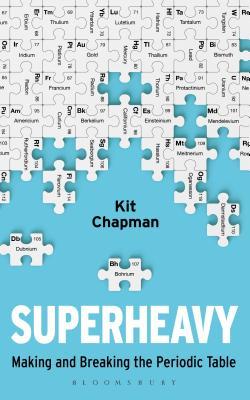
I did chemistry at school but didn’t do that well at it for a variety of reasons. However, chemistry is a big thing in our household, my other half teaches it and my youngest daughter is aiming to study it at university in the Autumn. There are copies of Chemistry World around the house and there are various chemistry conversations about all manner of things over dinner.

Even though I am not very good at it, I still find the subject fascinating, hence why I picked this book up. Kit Chapman writes about the metals that appear in the bottom rows of the periodic table and the stories behind how they were found, who discovered them and the challenges in finding these heavy metals.

The story begins with the atomic bomb and the research that led up to us discovering a foolproof way of completely eradicating the entire planet of life as we know it… This is cutting edge science and to make the metals that were needed to make these weapons. They had to develop the machines to do it including the wonderfully named cyclotron. Even though these are some of the heaviest elements, they are elusive, and often the only way of detecting that they have been made by the machine if looking at the decay trails detected by the sensors.

The guys who make these heavy metals were characters in their own right. Chapman has the opportunity to meet a number of them as he travels to all the labs in America, Russia, Germany and Japan and talks to some of the people who have that rare honour of finding an element that is new to science.

I quite liked this book overall. It does venture very close to the line that separates popular science from academic papers and occasionally ventures across it. That said, Chapman has done his research well and managed to hold together a cohesive narrative about the search for these elusive heavy metals.

The Heeding by Robbie Cowen & Nicholas Hayes

4 out of 5 stars

A copy of this was provided free of charge from the publisher in return for an honest review.

It has been a strange old world over the past five years, and then at the beginning of 2020 things took a whole different turn once again. Rising infections of disease from China crossed borders and continents and in what seemed like no time at all, we were in the midst of a global pandemic. COVID-19 was here and it wasn’t going anywhere soon.

Life as we had known it would change like nothing we had ever know before,

Different people coped in many different ways, there was generally a good spirit between communities and neighbours, but the stresses of the situation as further lockdowns that happened would begin to build. As these changes unsettled Cowen he began to pay heed to the things around him that never changed, things that anchored him to where he lived and became a metaphorical and literal support for him.

What he observed on his government approved outside excursions he began to write about what he had seen. Some of the poems were a scrawl on a page that scarcely changed from that first draft and others he would think about as sleep evaded him. Looking framed the poetry and the words demanded more observations. These are the tiny moments that he saw around him.

There it hung, in stillness, blackness,
Right there, for a moment, alone
As though arranged entirely for us;
A perfect disk of polished bone

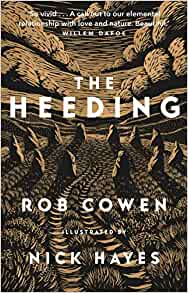
The poems in this collection feel polarised, on one hand, there are poems about starlings and hawks carrying on with their lives as though nothing had changed in the world. Moments of the natural world gave comfort to Cowen as he coped in his own way with the pandemic. There are then other poems that are raw and emotional responses to the subjects that affected him and his family. I didn’t realise that the author and artist had not met before this collaboration, as what they have compiled is a beautiful book. I particularly like the art that Hayes has created for the book. The images are strong and evocative without being bleak.

Three Favourite Poems
Last Breaths
Self Isolating
Family Trees

Reset by Ronald J. Deibert

4 out of 5 stars

A copy of this was provided free of charge from the publisher in return for an honest review.

The internet. It is either one of the best inventions that humanity has ever made or one of the worst. Sometimes it is difficult to know which is the right answer. It has put people with similar interests in contact with each other and who have benefitted greatly from that relationship. The flip side is that it is an easy and secure way for those with a more criminal perspective to exploit and steal from the innocent.

As the growing quantities of digital data swirl around the internet in what feels like an ever-increasing exponential curve, just who is looking at this data? It turns out that there is a vast unregulated industry that has a keen interest in what you are looking at and the sites that you are visiting. These consist of surveillance companies and government security agencies, dark PR agencies, hackers for hire, and others interested in manipulating things to their own agenda.

Like a couple of the other books that I have read recently, some of the things revealed in this book are quite terrifying. And I mean really terrifying. It is a problem that is not going away and coupled with the internet giants that control a lot of the data that we produce and consume, they seem unable or unwilling to do much about it. Probably as the current status quo is too profitable for them.

So where do we even start dealing with these issues?

Diebert has a whole chapter dedicated to suggestions on way to tackle these issues, called Retreat, Reform Restraint. In this, there are many different ways that he thinks might work, such as better international cooperation, a relinquishing of the grip that the global corporates elites have on us, and a suggestion that I hadn’t considered, removing anonymity from users.

He is an engaging writer, and it comes across in the text that he knows his stuff, making this an authentic read. He has got some solid ideas about the ways that we need to reclaim the internet once again for the good of humanity. Always remember, if you are not paying for something then you are the product.

Summer in the Islands by Matthew Fort

4.5 out of 5 stars

We last went to Sicily way back in 2019 and had a fantastic time. Beautiful weather, fantastic views and very wonderful Italian food. Even shopping for ingredients in the supermarket is a treat. Sadly we were only there for a week but it was wonderful. It is on the list of places to go back to one day.

That week was not really long enough; I would love to be in the position that Matthew Fort finds himself which is spending a whole six months on a Vespa called Nicoletta moving between all the islands around the coast of Italy and eating a series of memorable meals. Where do I sign up?

He starts his journey in Livorno on the Tuscan coast, a place that his grandparents called Leghorn. Its days of glory are long past, but there had been a little revival with the arrival of the huge cruise ship that disgorges their cargo of rich pensioners into the town. It is not perfect, there are some untidy bits, a bit like a well-thumbed paperback, but still has its charm though. He avoids the more pretentious restaurants with their vastly oversized plates preferring to seek out the establishments that serve simple dishes with robust flavours and top-notch ingredients.

He can’t stay there forever though, it is time to start travelling to the islands off the coast, the first of which is Gorgona. These have been prisons in the past and are still a place to keep the most dangerous of Mafia bosses. The prison on this island have a little more freedom than on others, but they are still captives. They help prepare the garden and make the bread and work with the Slow Food organisation to carry on with the old varieties and methods. He is soon back on the mainland collecting his Vespa and onto the island of Elba.

It is in this vein that we accompany Fort on his travels. There is a bit of history and culture thrown in for good measure, and in certain parts, it feels like you are sitting alongside him at the table watching the la passeggiata, the early evening stroll that Italians do still. Most evocative are the descriptions of the food he is eating, whether it is the cheese he finds that is so fresh that it squeaks, or in a tiny trattoria where everyone is local except him. There is no menu, just a steady stream of perfectly cooked and exquisite tasting dishes brought to him.

Giovani Ruffa pushes a biretta into my hand. Cold Beer. The outside of the glass is misted with condensation. The beer evaporated in my throat. Pure bliss!

As good as this book is, there are two flaws. One is that it made me very hungry reading his evocative descriptions of the meals that he eats. Secondly is that I am very envious of the fact that he had the opportunity to take a large chunk of a year out to spend a lot of time in this wonderful part of the world. It reminded me of the holidays that I have taken in Italy. I would have liked some photos in the book, but that is a minor quibble. I would love to go there now, sadly restrictions mean it isn’t happening anytime soon, but thankfully we can be taken there by this book.

The Lip by Charlie Carroll

3.5 out of 5 stars

Cornwall for the visitor is a place of sunshine and cream teas, beautiful beaches and dramatic cliffs. For those that still live there is a very different story, poverty, low paid casual work and an uncertain future.

Melody Janie is one of those locals, she is alone now after a series of family tragedies and she is living in a caravan hidden in woodland in Bones Break, near a small cliff top in north Cornwall. She trusts no one and spends her days walking her territory watching the tourists or emmets and they pass through.

She starts to see one newcomer to the area more frequently walk across what she considers her land. She hides from him initially and just observes what he is doing. But comes the time when they cross each others paths. His dog, Archie, seems to like her and they start to interact a little, but both not trusting each other. Like her, he has secrets that he is hiding from and is surprised that she doesn’t recognise him at all, but then she rarely reads the papers and has not had a phone for the past few years and is unaware of anything going on in the news.

One person from school who wants to see her again is Esther; she is at university in Bristol but is back regularly. She finds Melody Janie is remote and disturbed by all sorts of things happening around her. Esther recognises who the guy is that she has been talking to and recommends that she never sees him again…

It is difficult to reveal much more about the book without spoiling it. Safe to say that this is a fast-paced family drama centred around the character of Melody Janie. It deals with many social issues, from the influx of wealthy second homeowners to an area and how the locals resent this as the places they once could afford suddenly become out of reach. But it is also a story about mental health, how people are affected by events and how we need that one person to be there through everything. It is a little bleak, but then Carroll has managed to envelop lots of issues and social commentary in the story that rarely gets spoken about. Not one of your happy Cornish stories, but still a solid, well thought through plot.

Phosphorescence by Julie Baird

3 out of 5 stars

A copy of this was provided free of charge from the publisher in return for an honest review.

Life has been tough for lots of people over the past 18 months. The pandemic has affected people in all sorts of ways, The first lockdown was a bit of a novelty, but as the pandemic ebbed and flowed it became harder for many people. Being emotionally distraught has always been there though as we try to deal with the things that life throws at us daily or even hourly basis.

We sometimes know the things that make us happy, but those moments are often transitory, a brief internal warm feeling from having done something good before the glow fades all too quickly. But how do we sustain that feeling? In this book, Baird lays out some of her philosophies and techniques that she uses now to help her face some of the darkest periods of her life. She combats these moments she uses a combination of finding peace in the natural world and doing her best to help others who are in a much less fortunate position than she is.

Her exploration of this subject takes her from the way indigenous peoples have known the way that the world around them can act as a balm and a form of therapy for those with particular needs. She explores the use of silence especially the absence of the din that we make in the modern world. There is a chapter inspired by those who have been fortunate enough to get into space, how taking a big picture view of what we are doing and where we are intending on heading is a big help. She has been shaped by her upbringing, like all of us really, but she is trying to use that for a force for good, to call out people who are not prepared to accept anything other than a very blinkered point of view. To do this she draws deep on the things that sustain her.

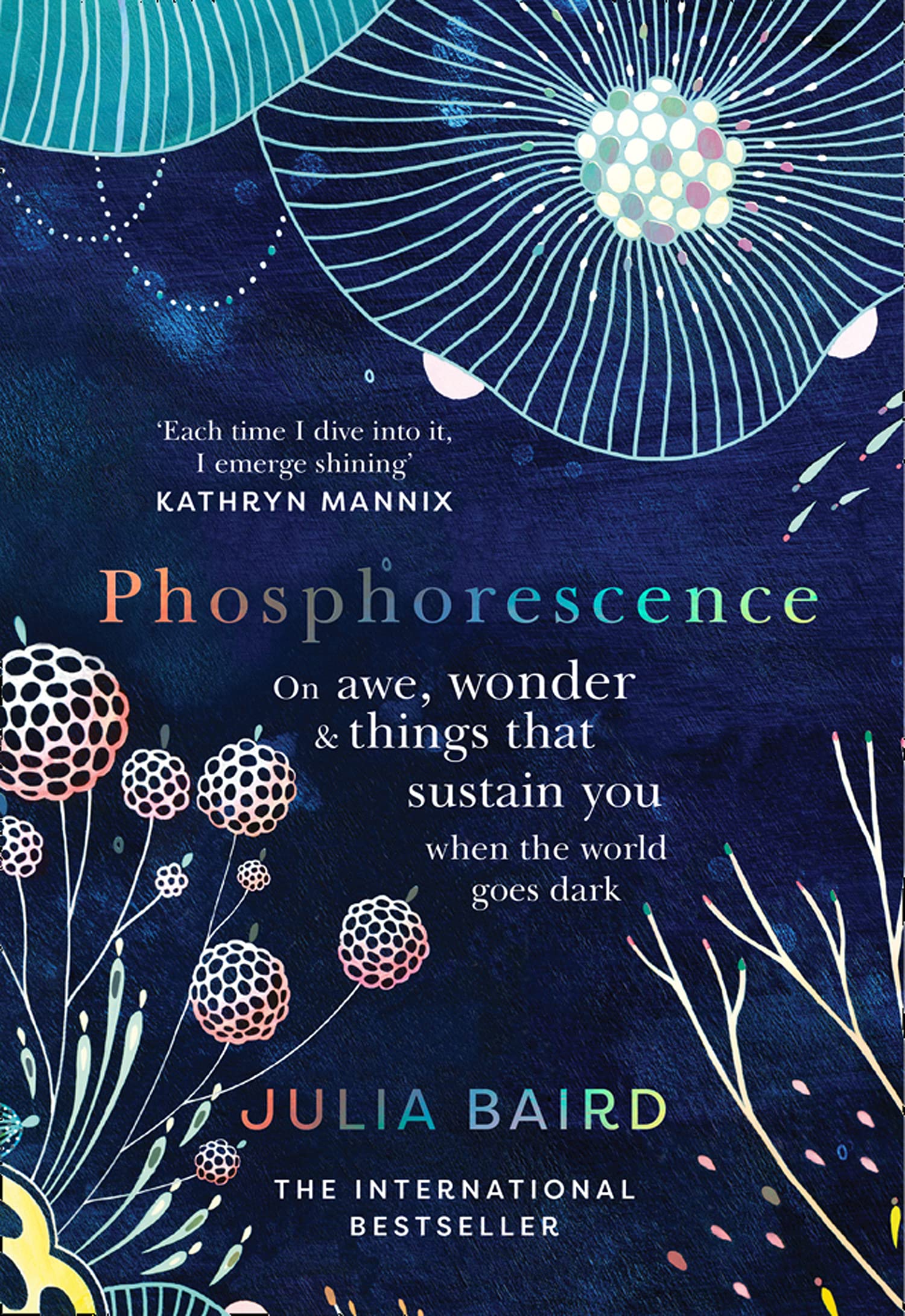
I must admit this wasn’t quite the thing that I was expecting. I had hoped for more on the natural phenomena of phosphorescence, that faint light that can be seen in a variety of different places. Even though it wasn’t fully what I hoped it would be, I still think that Baird has made a readable and relatable book. She has taken the essence of this spectacle, that inner light that we have and sees how we can apply it to our own lives. A lot of what she writes about is based on personal experience and most of it is common sense too; a power sadly lacking in a lot of people these days.

« Older posts Newer posts »

© 2026 Halfman, Halfbook

Theme by Anders Norén — Up ↑