Page 48 of 188

Nests by Susan Ogilvy

4.5 out of 5 stars

Susan Ogilvy has been a botanical illustrator for the past thirty years and has exhibited around the world. But it was only recently that she has begun painting nests. One day whilst tidying up her garden she came across a strangely shaped lump of vegetation under a tree. It was only after she had brought it inside and it had dried out that she realised that it was a chaffinch nest. And it was utterly beautiful.

This soon became an obsession, and she began to collect nests that had been abandoned or friends would find them for her, in particular, Deon who works for the British Trust for Ornithology would bring her examples that he would find on his walks observing the birds of Somerset.

The result is this book full of exquisite paintings of these nests. Ogilvy carefully measured each of the nests that she obtained and these small works of art are equal to these nests that the birds create. Each of the nests has a short essay about the bird, where the nest was found and some notes on the construction method and materials used.

Ogilvy is such a talented artist and her eye for the detail of each of the nests that she draws and paints makes this an incredibly beautiful book. I really liked it.

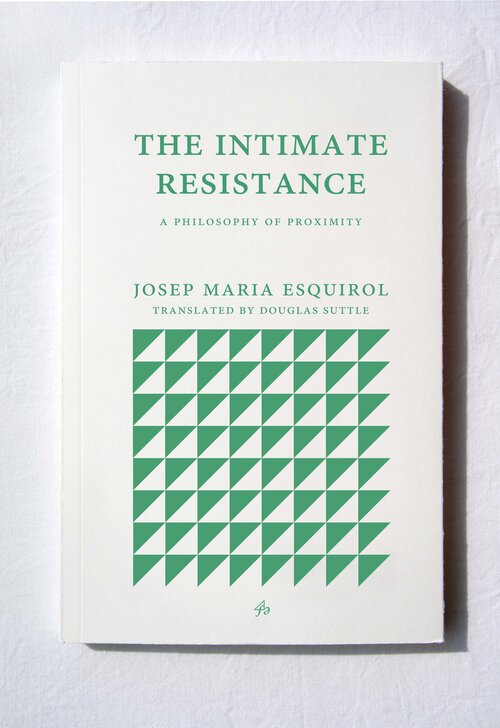
The Intimate Resistance by Josep Maria Esquirol Tr. Douglas Suttle

3 out of 5 stars

A copy of this was provided free of charge from the publisher in return for an honest review.

We have just had a family stay with us for New Year’s Eve and part of that is us cooking for them and having conversations over a laden table. We have done this for over 20 years now and we have gone from being childless to five children, three of whom are adults. The act of providing food and friendship to family and friends is almost entirely opposite to the nihilistic experience which considers that everything is meaningless.

To share a table is to share a meal, but the meal goes a lot further than the physiological dimension of eating.

Esquirol has drawn from his years of work to present a reflection on the human condition that shows how intimacy and everyday acts can warm protect and guide us. He shows how we need the tangible, things we can touch away from the screen and that simplicity does not mean banality. Not every second of life is instagramable, there are moments that are better kept in the memory.

He explores many factors in this densely packed book. There are warning of the perils of navel-gazing, where nothing is to be found other than hatred, loneliness, despair rack and ruin. He explains that how we see others gives no indication as to how they feel and how looking in detail at the definition of health, asking if this means that we are all ill? Probably not but the very act of being close to someone is as useful as treating them medically. I did learn that the alternative meaning of to guard someone is to watch attentively and care for them. Equally startling to learn was that if we are to take away memory, love vanishes.

These day muttering doesn’t come from a lack of wine; in fact rather than a scarcity of anything these days, it comes from an excess of practically everything

I will be honest I have not read much philosophy in the past. And by not much, I mean none. So for me, this book at times was a struggle to read as just some of the basic concepts were challenging to say the least. That said there were elements of the book that I did like, but in particular, the discipline of really really thinking about a problem from all angles before coming to a conclusion.

Mordew by Alex Pheby

4 out of 5 stars

Nathan is eking out an existence in the slums of a city that is battered by the sea. He lives with his parents and the meagre earnings go to helping buy medicine for his father. He has a knack for extracting the strange and unusual creatures from the Living Mud, some he does by using the Itch within him to draw them closer.

The family is desperate though and his mother reached the point where she has to sell him to the mysterious Master of Mordew. This man draws his power from the corpse of God that is hidden in his catacombs. But the inner strength that Nathan has is mightier than the Master’s and he is one of the few who could destroy him. The Master sees him as a threat and takes steps to betray Nathan and get the upper hand.

Darkness is all around Nathan as he begins to discover how to use his power.

I really liked it, even though the story takes you to places that you would never want to venture alone. The world that Pheby has created is quite something, it feels cohesive, magical and oh so dark, I am not going to say much more about the plot as if you like dark and immersive fantasy books then you need to read this. I was most impressed by the glossary at the back of the book, he has put so much into the back story of the place and the people of Mordew. There are two more books to come too!

The Art of More by Michael Brooks

4 out of 5 stars

Our brains are not wired specifically for counting. Until we are taught otherwise, the untrained maths brain will only notice up to three things, before considering any above that is just more. Instead, we have a deeply ingrained culture that tells us that maths is important and that it matters. But we all have our limits, for some, it is the GCSE, but others go on to much higher levels.

Brooks begins with arithmetic, the simplest form of maths. As a species, we have been counting for around 20,000 years and even now we can see differences in cultures in the way that people use their fingers to count. He touches on fractions and negative numbers before we arrive at geometry. For some this may bring back the horror’s of a Pi you can’t eat, but it is more straightforward than algebra where we are reminded of that moment in maths when they add the complexity of letters to maths. Who remembers the quadratic formula?
For me though, the point when my brain juddered a little was calculus. I still understand it in principle, but it has been sooooo very long since I did it and rusty is an understatement… His chapter on logarithms seems easy by comparison and for some reason, imaginary numbers for me were relatively straightforward to master. As the saying goes, there are lies, dam lies and statistics and those that have a mastery of these slippery numbers can often hold the upper edge on those that can’t.

As maths books go, this is a pretty good one. Brooks tells us about the history behind each particular subject and some of the key people who have been instrumental in making our modern world a mathematical one. It is very readable, and only occasionally veers into the realm of the formula. Should that bring back nightmares from school then that can be skipped if necessary. If the thought of maths doesn’t terrify you too much, then this is a good place to start.

Sunless Solstice Ed. By Lucy Evans and Tanya Kirk

3.5 out of 5 stars

A copy of this was provided free of charge from the publisher in return for an honest review.

As the nights draw in after the clocks go back, stories with darker moments are what some people seek out. And the editors of this book have sought out what they think that people want to read in the depths of midwinter. The twelve selected stories are drawn from some well-known authors, like Daphne du Maurier and Muriel Spark, to others that I have never heard of.

It wouldn’t be a collection of ghost stories without a moor and the first is The Ghost at the Cross Roads and a card game with a dark stranger. There is a tense story about a séance that goes wrong and another about a man who has a dread of cats. It is not just the winter that is chilling in some of these stories…

As with any collection, there were some I liked and others that I didn’t. It leans heavily on the gothic melodrama as I was kind of expecting, but there was the odd one or two in here that I did find unsettling. Not all were as scary as I thought that they’d be, but it is a nice wintery collection of stories. A ghost story told around an open fire in a pub is going to come across very differently when told walking down a misty holloway. If you like your Christmas stories less twee, then this is a good place to start.

Three Favourite Stories
On The Northern Ice
Ganthony’s Wife
A Fall of Snow

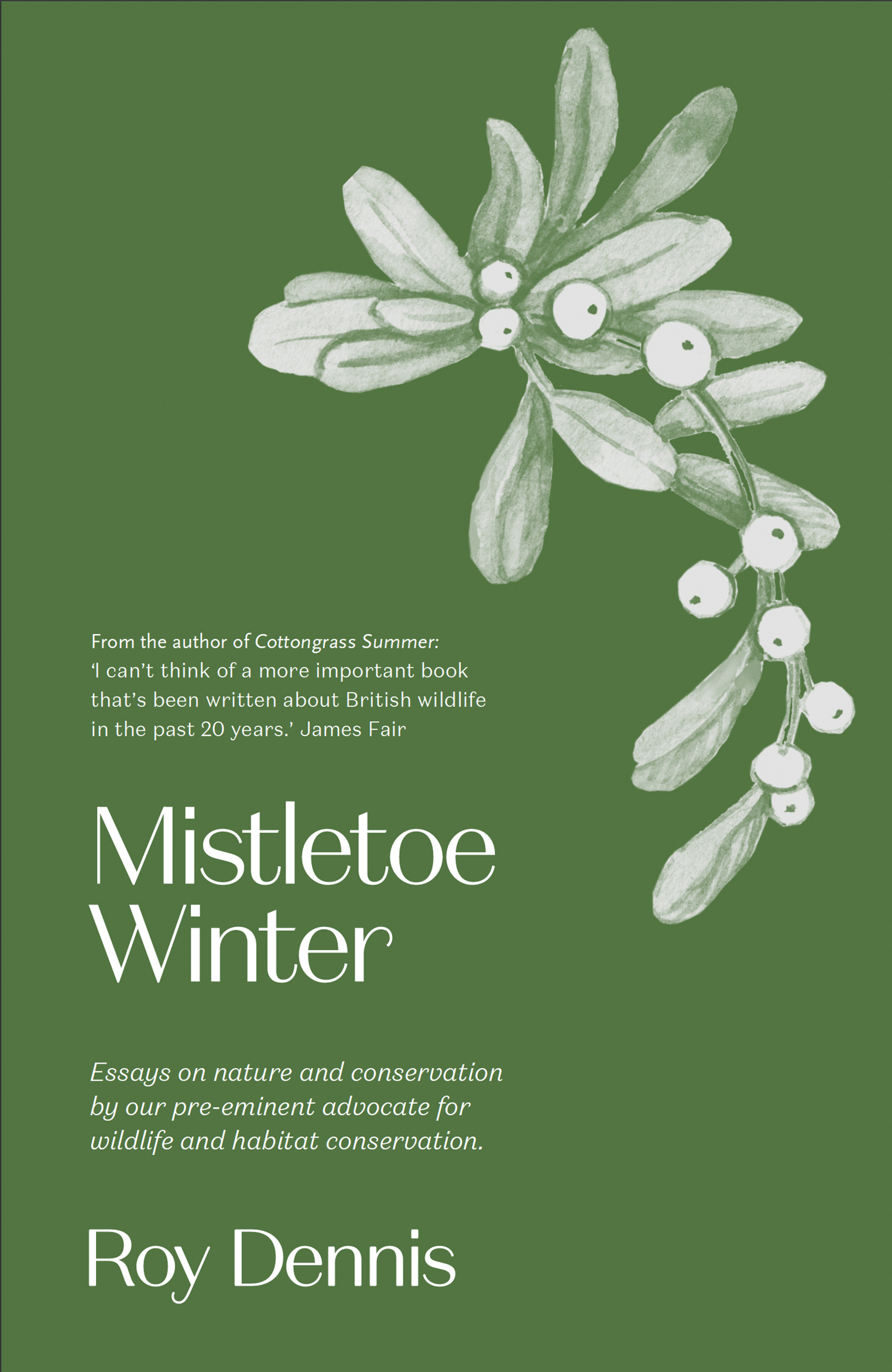
Mistletoe Winter by Roy Dennis

4 out of 5 stars

A copy of this was provided free of charge from the publisher in return for an honest review.

This is a companion volume to the earlier book, Cottongrass Summer that was published in 2020 and in this book he takes us through each of the seasons with thoughts and essays on a wide variety of subjects. He has taken

The book begins, as you’d expect with Mistletoe, a plant that Dennis doesn’t see where he lives now, but always comes across when he is in Southern England in the winter. As the leaves fall away in the autumn, the heavy globes are their most visible. They had an attraction to people who used these still green plants in ritual ways, as well as being an important food for mistle thrushes who spread the sticky seeds onto other trees. He writes about a friend who has a barn owl in her shed and the alarm call of the Ptarmigan.

This was written during the first lockdown of 2020 and that world-changing event is reflected in some of the essays in here, he sees more of the comings and goings in his garden than he would have done previously and it gives him the time to track the white-tailed eagles that were released on the Isle of Wight. One of them has even been in Poole Harbour recently. It is not just about the UK though, there is an essay on the Californian condor, Rocky Mountain goats and Pears for bears in Germany.

He is a passionate writer with a series of persuasive arguments for always seeking to improve the way that we care for the natural world. The constant theme that runs through the book, is a warning that what we have now can be so easily lost and when it is gone, it is gone forever. It is not so much a timely book more of an urgent reminder to do something to change. Great stuff.

My Books of 2021

Well, that was quite a year. Again. Kind of longing for a return to normality, but I can’t see it happening any time soon. Anyway, you’re hopefully here for the books and these are the favourites that I read during 2021. First up are some honourable mentions that I gave 4.5 stars to:

Fire, Storm & Flood – James Dyke

Fox Fires – Wyl Menmuir

Where – Simon Moreton

Thin Places – Kerri ní Dochartaigh

How To Be Sad – Helen Russell

Skylarks With Rosie – Stephen Moss

Shearwater – Roger Morgan-Grenville

Much Ado About Mothing – James Lowen

Light Rains Sometimes Fall – Lev Parikian

On Gallows Down – Nicola Chester

Springlines – Clare Best and Mary Anne Aytoun-Ellis

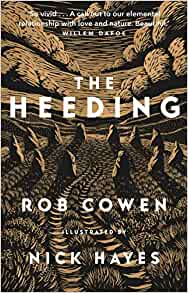
The Heeding – Rob Cowen & Nick Hayes

Red Sands – Caroline Eden

Summer In The Islands – Matthew Fort

Slow Trains Around Spain – Tom Chesshyre

Water Ways – Jasper Winn


I can now reveal my books of 2021:

First are two books on books. The Book Collectors of Daraya is about people seeking out an existence in the war-torn country of Syria and how they collected books for others to read and find a little bit of inner peace. My second is White Spines; the story of Nicholas Royle and his obsession with collecting the Picador White spined books.


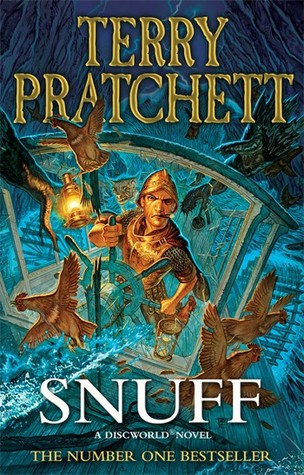
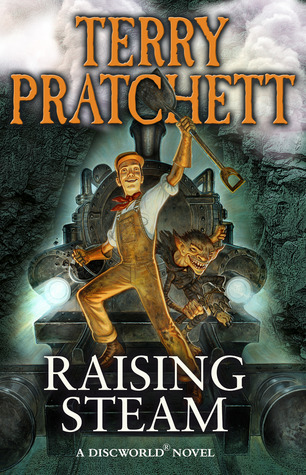
I finally finished the Discworld series this year. I had intended on doing it in 2020 but didn’t read these four. They are here because I think that he is a genius, his ability to shine a light on our world and the peculiarities of our society and make us laugh about it are unlikely to be equalled.


I read several books on London in 2021, but these two were outstanding. They are very different, but each has that special something that makes London such a different city compared to others in the UK.  Budden captures the surreal nature of the place in his book and Chivers shows how the very bedrock the city is built on can be traced if you know where to look.


Two of my favourite natural history books this year were The Screaming Sky and the Circling Sky. Charles Foster is obsessed with the swift and he has distilled that into this short volume. Neil Ansell’s book is more wide ranging, but equally well written. He takes us on many journeys into the 1000-year-old landscape that is the New Forest, recalling past trips there when younger. I was lucky enough to spend some time with him there this year too.


We live in a biased world and that bias is particularly prevalent when you look at how men and women are treated. Most things are designed for the male mind and body, which means that when women come to use them they are often put into danger. Not only could they hurt themselves, but some of these examples that Criado-Perez uses show how these poorly made product have killed. Eye-opening stuff and an essential read.

My final two books are travel. You didn’t think that I would not have any travel books on this list, did you? First is a book on the extraordinary Island of Madagasgar, written by John Gimlette. It is lavishly illustrated and his prose is top-notch as ever.


My final travel book and my book of the year for 2021 is The Bells of Old Tokyo. Anna Sherman has captured a part of Japan that I knew nothing about and her prose is sublime. Just get a copy and read it. A friend call Jeremy who runs Travel Writing World has an interview with her here.

Thank you to those that have read, commented and shared my post all this year. I know that there are not that many of you reading this, but I appreciate every one of you.


Favourite Book Covers of 2021

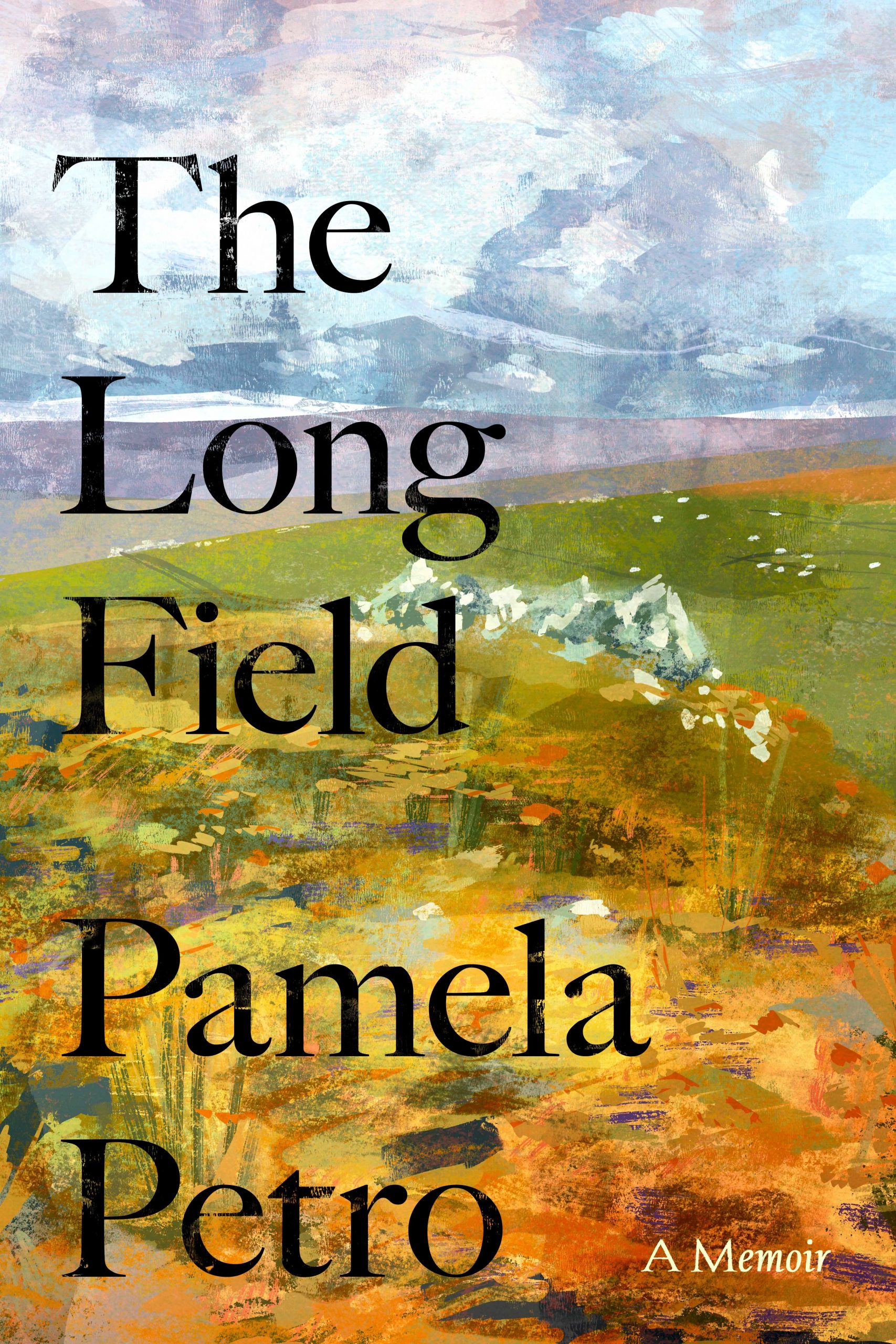
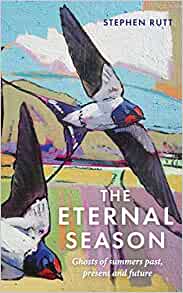
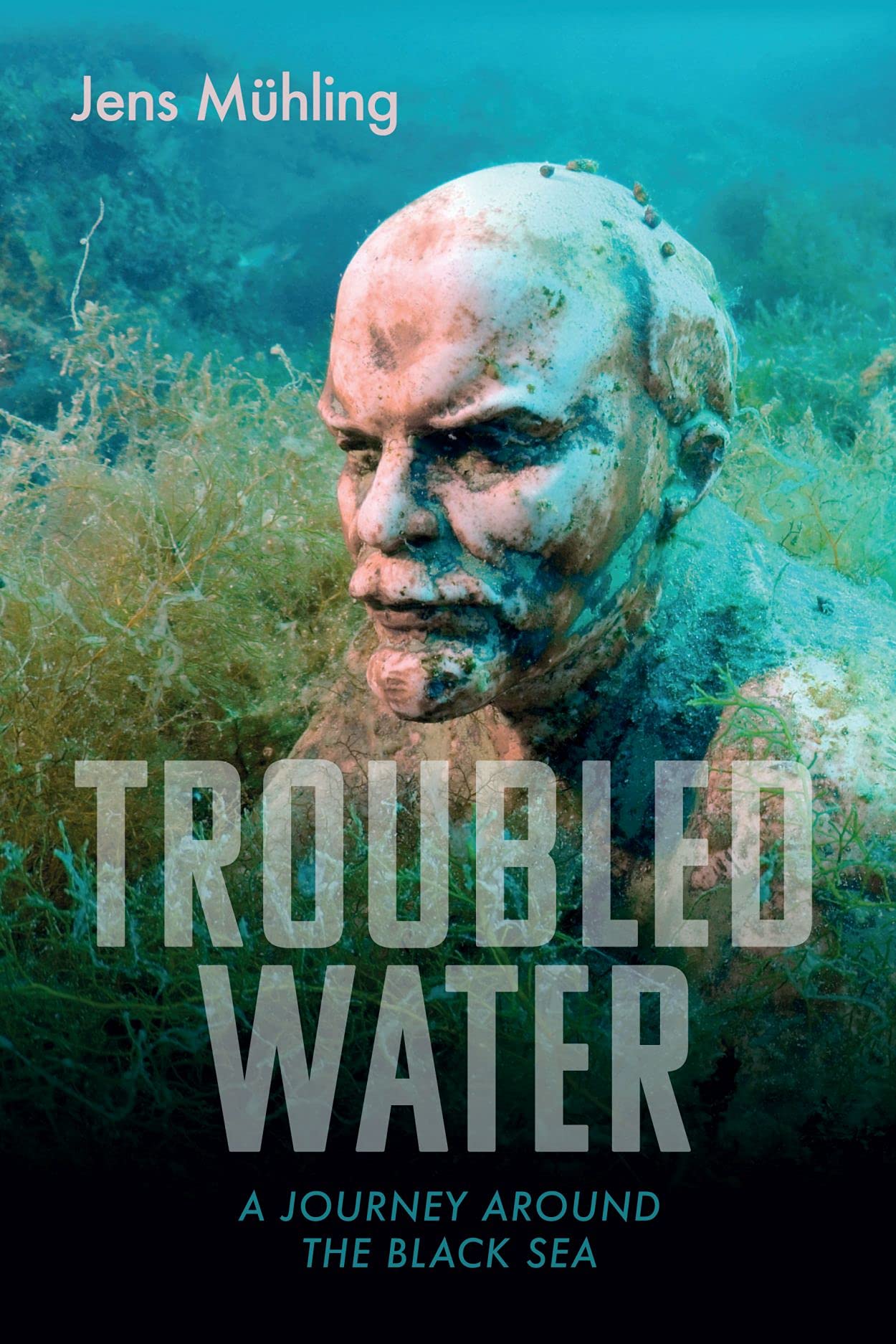
These are my favourite covers of the books that I have read over the course of 2021. They are in no particular order, but the one at the bottom is my cover of the year. The way I see it, the cover of the book has one job only and that is to be catching or attractive enough to make me want to pause, pick them up and then make me want to read it. In my opinion, all of these covers do that.


And my book cover of the year is:


December 2021 Review

The build-up to Christmas starts in August so by the time it comes around, I am a mix of bored and fed up by it. That said we had a nice quiet Christmas with a couple of family members over and met up with small numbers of other families too. Ate too much, but that kind of goes without saying really. I was only given one book for Christmas, but did get a new bookcase! Anyway this is mostly about my December reads, so here we go. I only read 12 books which I needed to get to the 190 books I needed for my Good Reads challenge, and then started pre-reading for 2022.

The books are a right of mix of types and genres and the first is David Howe’s, Extraction to Extinction which is about the way we have exploited the minerals from the surface of our planet and the impending ecological crises coming from these extractions. Bleak but worth reading.

Possibly the most surreal book that I read this year is Mordew by Alex Pheby. It is about a boy who lives in this magical world that has echoes of Victorian London about it and the story concerns his growing powers over his Lord and master. It is an immersive fantasy story.

A Christmas book, but not the sort that has any mention of tinsel within the covers. Rather these are stories that will give you goosebumps.Ii liked all the stories bar one and whilst it wasn’t scary, it was slightly unnerving!

A subject that is capturing my interest more and more is folklore. This was a library book by two of the contributors of #FolkloreThursday on Twitter and in here they look at folk stories from the rivers and seas around the world. It is not an in-depth study, but a overview.

The Vikings are portrayed as a grim, violent and brutal bunch of reprobates that raped and pillaged their way along the coastlines of Europe. They did do that, but they were also capable of fine art, cultural nuance and were in contact with peoples all over the middle east and even further. Well worth reading.

Most people don’t think about maths again after leaving school, but modern society is built on maths, equations and numbers. Brooks takes a number of concepts that you might or might not have come across and explains their significance to modern life.

I am not a big reader of philosophy but decided to give this a go after being sent it by the publisher. I struggled with some parts of it but found other parts that were absolutely spot on. May need to have another read of this at some point.

The two natural history books that I read this month could not have been any different. The first, Mistletoe Winter is another collection of essays from Roy Dennis about some of his favourite subjects and a reminded of the mess we are making of the environment. To say he is livid would be an understatement. The second is the debut by Nicola Chester. In this memoir, she takes us through her life in the natural world and the political stance that she has taken against the damage being done by various organisations. Compelling reading.


The Black Sea is surrounded by a number of countries that have been through or are still going through a significant upheaval. To find out what life was like in these places Jens Mühling circumvented the region and tried to find out what made these people tick. Really enjoyed this and it is a great companion book to Caroline Eden’s Black Sea cook book and travelogue.

I have two books of the month for December and they are the final two books in the Discworld series, Raising Steam & The Shepherds Crown. Needless to say, I loved them. R I P Terry Pratchett, thanks for everything


Has anyone read any of these? Or are there some now that you now want to? let me know in the comments below

January 2022 TBR

Can someone tell me where 2021 went? How it went so quickly and also why it took sooooo long? I thought that I would be a little more ahead, but I am not. Again…

Suddenly it is TBR time again. You know the drill, he is an unfeasibly large list that I will be picking my books from:


Finishing Off (Still!)

Lotharingia – Simon Winder

Sea People- Christina Thompson

On The Marsh – Simon Barnes

Another Fine Mess – Tim Moore

Elephant Complex – John Gimlette

Opened Ground – Seamus Heaney

Thicker Than Water – Cal Flyn

Tall Tales and Wee Stories Billy Connolly

Nests – Susan Ogilvy

A Thing Of Beauty – Peter Fiennes


Blog Tours

None this month


Review Copies

The Fairy Tellers – Tales Nicholas Jubber

The Cure For Sleep – Tanya Shadrick

Astral Travel – Elizabeth Baines

The Germans and Europe – Peter Millar

Britain Alone – Philip Stephens

We Own This City – Justin Fenton

Spaceworlds –  Ed. Mike Ashley

The Power of Geography – Tim Marshall

Finding the Mother Tree – Suzanne Simard

The Four Horsemen – Emily Mayhew

The Spy who was left out in the Cold – Tim Tate

The Devil You Know – Gwen Adshead & Eileen Horne

Letters from Egypt –  Lucie Duff Gordon

The Sea Is Not Made Of Water – Adam Nicholson

Above the Law – Adrian Bleese

Somebody Else – Charles Nicholl

Scenes from Prehistoric Life – Francis Pryor

The Turkish Embassy Letters – Mary Wortley Montagu

Survival of the City – Edward Glaeser & David Cutler

Wish You Weren’t Here – Gabby Hutchinson Crouch

Black Lion – Sicelo Mbatha

The Babel Message – Keith Kahn-Harris

Biography of a Fly – Jaap Robben

The Heath – Hunter Davies

An English Farmhouse – Geoffrey Grigson


Library Books

The White Birch – Tom Jeffreys

Planetfall – Emma Newman

After Atlas – Emma Newman


Poetry

Opened Ground – Seamus Heaney

History of Forgetfulness – Shahe Mankerian


Challenge Books

Wintering – Katherine May

An English Farmhouse – Geoffrey Grigson

Biography of a Fly – Jaap Robben

Nests – Susan Ogilvy

Thirteen Ways to Smell a Tree – David George Haskell

The Night Lies Bleeding – M.D. Lachlan

Divided – Tim Marshall

The Wonderful Mr Willughby – Tim Birkhead

The House of Islam- Ed Husain

Asian Waters – Humphrey Hawksley

Blue Mind – Wallace J. Nichols

21 Lessons for the 21st Century- Yuval Noah Harari

The Restless Kings- Nick Barratt

To Obama- Jeanne Marie Laskas

What We Have Lost – James Hamilton-Paterson


Clearance Books

Our Game –  John Le Carré

The Tailor of Panama – John Le Carré

Year of the Golden Ape – Colin Forbes

Dreaming in Code: – Scott Rosenberg


Photo Books

Lost Dorset: The Towns – David Burnett


All Year Reads

Word Perfect – Susie Dent

A Poem For Every Night Of The Year – Allie Esiri


Er. That’s it. I think…

« Older posts Newer posts »

© 2026 Halfman, Halfbook

Theme by Anders Norén — Up ↑