Page 49 of 188

My 2022 Reading Intentions

These are my reading intentions for 2022.

Blogging

I have always tended to think of myself as a reader who blogs rather than just a book blogger. This is partly why not every single book that I read gets a review written for it. And in the past year, there have been occasional moments when I have thought about stopping blogging. There have been various reasons for this, partly it sometimes feels like a job, where I think that reading should be a pleasure, secondly that I am not sure if I am having that much of an impact when I see others who have 10,000 plus followers on their various social media platforms. That said, I have been doing this for five years now (in April 2021 and I missed it) so I am going to keep going.

Review Copies

I am grateful for every single review copy that lands on my doormat. Thank you to all publishers and publicists that keep filling my bookshelves. I am sorry that I can never read them as quickly as I would like, hence why I have quite a big backlog. I am going to try not to ask for too many this year, partly because of space issues, but also because it is not fair on them to send me a book and I take waaaay too long to get around to reading it.

My Own Books

I have a lot of books at home and I mean a lot. Nine bookshelves in total as well as lots of Tsundoku around… I seriously need to make a list of the books that I want to read and pass on to family, friends and donate to the library and start reading them to relieve some of the pressure on my creaking bookshelves. I really need to stop buying books too, but can’t see that happening any time soon… This is something that a fellow blogger, Lisa of Owl Be Sat Reading, (https://owlbesatreading.wordpress.com/) is doing this year, Follow the hashtag #BeatTheBacklog on Twitter to

Library Books

I do have far too many library books out, and I am finding that having a full card means that you don’t get that chance to pick things up at random as there is no room. I would like to get from 100% to around 75% or ideally 50% full on my two library cards

Female and BAME Authors

I have been hovering around the 35% mark of female authors read each year and I am hoping to get to 40% this year. I am aiming to read more by BAME authors too. I have a number at home lined up, but I kept a list from the Observer that I will be picking others from.

Poetry

I didn’t manage to read twenty-four poetry books in 2021 so I am aiming to read eighteen poetry books in 2022. If I read more that will be great. I found a copy of A Poem For Every Night Of The Year in a charity shop and I am aiming to read a poem from that every day too.

Literary Awards

Last year I was a bit rubbish at reading some of the shortlisted books from my favourite prizes (again). I get too distracted by other books! Would like to have read all the books from the past three or four years on both the Stanford and the Wainwright prizesby the end of 2022.
Wainwright
Royal Society
Baillie Gifford
Arthur C Clarke
I would like to read some of the winners from other prizes too, including:
Republic Of Consciousness Prize
Rathbones Folio Prize
Women’s Prize for Fiction
Jhalak Prize
The Portico Prize

Challenges

I quite like book challenges. It is a way of finding new books that you might not have come across before to fit a particular brief. It kind of follows my philosophy of reading widely and reading deeply.

The World From My Armchair Challenge
My ongoing challenge is to read a travel book set in or that passes through every country, sea and ocean in the world. I and about a third of the way through and even though I thought I could complete it in four years, I didn’t. It is not a problem, I am going to keep going with it and if possible I’d like to read another 20 books towards it.

Nature Challenge
I recently joined a nature book group on Facebook and they are setting a challenge for 2022 to read 45 books that meet particular categories or themes! I have a spreadsheet. The scary thing was that I already have 37 books that meet the challenge

Read the Decades Challenge
This is for a group that I kind of still run on Good Reads. At the moment, I haven’t got the mental time and energy to keep it going and the other moderators have to a certain extent dropped by the wayside too. But I do set up a challenge each year for the few members that still participate. All this is, is to read a book from each decade from the 2020s going back as far as you like.

Science Fiction & Fantasy

Aiming again to average at least one a month for this. Science fiction is good for expanding the mind and as Terry Pratchett says: Fantasy is an exercise bicycle for the mind. It might not take you anywhere, but it tones up the muscles that can.

Photobooks

I have bought an awful lot of art & photobooks in the past year (some of which are shockingly valuable) and I want to read some of these books next year. Aiming to read at least six.

Other Bookish Stuff

As I mentioned above, I have a lot of books around the house. Even though I know a lot of what I have read in the past, when I am perusing charity shops and second-hand books shops, I have been known to buy the odd duplicate. Sometimes this is deliberate, it is in better condition or signed etc, etc. Sometimes I do not realise that I already have a copy and then find the earlier purchased copy… So, what I want to do this year is to actually catalogue my books, partly so I know what I have at home, but also, I have an idle curiosity to know just how many books are sharing the house with me. Does anyone use a book cataloguing app that they can recommend?

The main way that I manage my reading is through Good Reads, but as a backup I use spreadsheets. This is mostly for security, so I don’t lose records of all that I have read and want to read. The way I have configured them means I can extract a lot more data than I get from Good Reads. At present I must have around 30 different spreadsheets that all do different things and what I want to do is start to combine them to get down to about five or so. I have always tried to keep the layouts very similar so I can cut and paste between them easily and that is another thing that needs a little bit of tinkering…

2021 Book Stats

I finished 190 books in 2021, the same as 2020 and many other years. I did reach my Good Reads Target again.  Here are my stats for the last years reading.

My total pages read was 50665  and my monthly average of books was 15.8, the same as last year. This broke down into these monthly totals:

January – 17

February – 16

March – 17

April – 17

May – 16

June – 16

July – 18

August – 17

September – 16

October – 15

November – 13

December – 12


The split of books read

Male Authors – 124

Female Authors – 66 (35%)

BAME / BIOPC – 2% (5 authors in total)


Sources

Review Copies – 112 (last year was 94)

Library Books – 45 (last year was 42)

Own Books– 33 (last year was 54)


Split

Non-Fiction – 137 – 72.5%

Fiction – 37 – 19%

Poetry – 16 – 8.5%


Random Stats

Longest Book – Behind the Enigma – 823 pages

Shortest Book – The Less Deceived – 32 pages


Most Read Author

Dervla Murphy – 5 books


Stars Awarded:

5 Stars – 13
4.5 Stars – 16
4 Stars – 74
3.5 Stars – 45
3 Stars – 32
2.5 Stars – 8
2 Star – 2
1.5 Stars – 0
1 Star – 0


Genres

I use a spreadsheet to keep a note of the types and genres of books that I read. There are detailed below:

Natural History 32
Travel 29
Fiction 22
Poetry 16
Fantasy 11
Miscellaneous 8
Science 8
History 8
Memoir 7
Books 6
Technology 5
Food 5
Mental Health 4
Environmental 4
Landscape 3
Science Fiction 3
Social History 2
Business 2
Information Society 1
Archaeology 1
Spying 1
Britain 1
True Crime 1
Economics 1
Maps 1
Politics 1
Conspiracy Theories 1
Maths 1
Folklore 1
Language 1
Architecture 1

Publishers

These are the number of books read by each publisher. The top eight are all independent publishers. Eland were top last year.

Eland 11
Bloomsbury 10
Faber & Faber 9
Elliott & Thompson 8
William Collins 7
Little Toller 6
PIcador 6
Saraband 6
Canongate 5
Head of Zeus 4
Corgi 4
Fum D’Estampa Press 3
September Publishing 3
Pan Macmillan 3
Salt 3
Particular Books 3
Unbound 3
Headline 3
Haus Publishing 3
Sandstone Press 3
Profile Books 3
Octopus Books 2
John Murray 2
Oneworld 2
Liminal 11 2
4th Estate 2
Penguin 2
Jo Fletcher Books 2
Chelsea Green 2
Quirk Books 2
Europa Editions 2
Summersdale 2
Icon Books 2
Indigo Dreams 2
Chatto & Windus 2
Century 1
Duckworth 1
Eland 1
Michael O’Mara 1
Pelagic Publishing 1
Rodrigues Court Press 1
Quadrille 1
Gollancz 1
Wood Wide Works 1
Liliput Press 1
Scribe 1
Leaping Hare Press 1
Trapeze 1
Melville House 1
Salt Publishing 1
Penguin Classics 1
Burro Books 1
Hutchinson 1
Transworld 1
Paper + Ink 1
Virago 1
Quartet Books 1
Dead Ink 1
Hamish Hamilton 1
Bodeian Library 1
White Fox Press 1
Granta 1
Tinder Press 1
Michael O’Mara Books 1
Emma Blas Publishing 1
Orbit 1
Harvill 1
Reaktion Books 1
Two Roads 1
Penteract Press 1
Mudlark 1
Octopus Publishing 1
Jonathan Cape 1
Eye Books 1
Batsford Books 1
Mortimer Books 1
Route Publishing 1
W.W. Norton 1
Brewers 1
Allen Lane 1
Portobello Books 1
Bradt 1
Bodley Head 1
Yale University Press 1
Monoray 1
Galley Beggar Press 1
Exisle Publishing 1
Chroma Editions 1
Sagging Meniscus Press 1

The Shepherd’s Crown by Terry Patchett

5 out of 5 stars

Something is stirring deep in the chalk. The animals can sense it and Tiffany Aching can feel it through her boots too. A once vanquished enemy is gaining strength once again. Tiffany has enough to do in her steading as her reputation had grown on the Ramtops but her life is about to change in ways that she could not imagine.

There has been a death and this death has sent ripples all around Discworld.

The elves realise that this is their chance as the force that held them in place is now weaker. It may be time to make their move on the world above. To push them back again, Tiffany is going to need all the help that she can get from all the witches that she knows and of course the Nac Mac Feegles.

To protect the land; her land; there will be a reckoning…

So that is it. There are no more Discworld books after this.

Ever.

And it makes me really sad.

It is a finely plotted end to the forty-one novels of the wonderful mad world that he created. There were flaws though, elements of the plot were a thin veneer in comparison to his earlier books that were rich and deep with subtle nods to other great works of art and literature. It saddens me that even though there were plans for ten more stories and almost certainly ideas that had been squirrelled away for books not yet conceived we will never ever know what they were to be as his last request was to have the hard disc crushed under a steam roller.

But, I can forgive him all of that. He knew this was his last book, and he want one of his great characters with him on his journey across the black sands.

R I P Terry. Thanks for everything

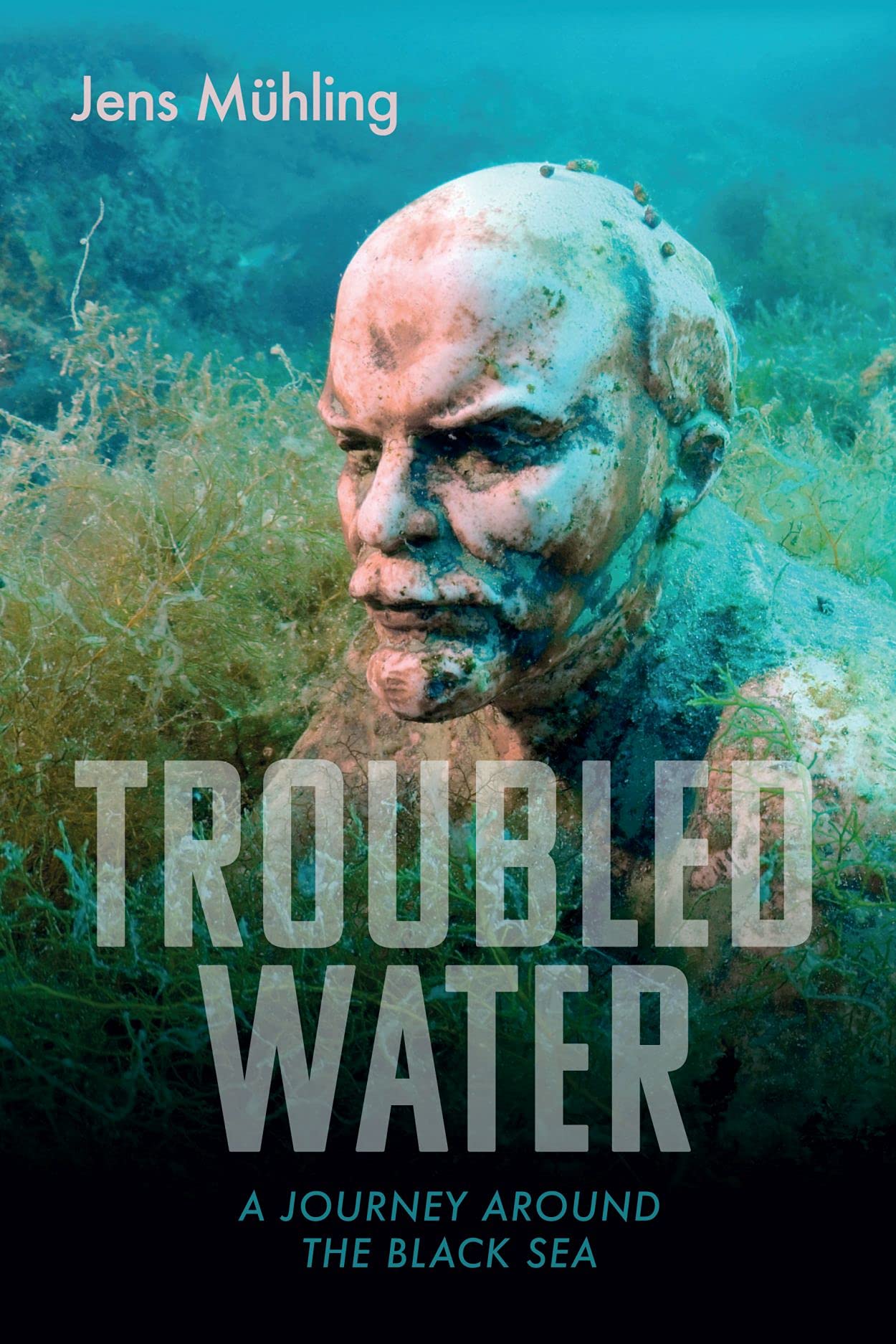
Troubled Water by Jens Mühling, Tr. Simon Pare

4 out of 5 stars

A copy of this was provided free of charge from the publisher in return for an honest review.

Whenever Mühling traces the outline of the Black Sea with a finger the shape reminds him of a horse head with the muzzle nosing Georgia. , the ear in between Ukraine and Russia and the neck is the Bosporus. It is an ancient landscape where, if you know where to look, you can still find traces of the Greeks amongst all the other shifting peoples that have populated its coasts.

He was unsure where to start the journey though and after some deliberation chose a place a little away from the coastline at the foot of Mount Ararat. It was here that the is a grain of truth in the legends that link the mountain to the sea and those are the flood stories that tell of the time before there was water and of the arrival of the floods. Before long it was time to head to Russia to see the sea for himself once again.

I have seen the Black Sea from all sides, and from none of them was it black.

At the bridge in Taman, he stood at one end, if everything went to plan, the next time he sees it would be from the other side having taken a long way round and not crossed it. After seeing a dog drink from the sea he tested the water to see how salty it was and was surprised to find it is mostly freshwater. It was a habit that he would carry on with all the way around and notice that the brackishness increases the further west he goes.

The borders in the regions have changed many times and even now are still changing and on his travels around the sea finds Turks in Russia, and Greeks who speak Turkish in Russia. As he travels around the Black Sea he finds that the cultures have their distinct differences and yet blend into each other. In Georgia, he watches as the oldest trees are collected by the oligarch for his private property and is scared to death by a driver as he is in their car heading towards the Romanian border. He finds all of the people he meets welcoming and often willing to ply him with drink of varying quality…

I thought this was a really good mix of travelogue and reportage from Mühling as he finds his way around the countries surrounding the Black Sea. He has a way of engaging with the people that he meets that brings the best out of them. His openness with them means that they respond well and he gets taken to places that he might not have had the opportunity to see as a regular tourist. As a side note, I think that the translation is really good too, Pare has picked up on the nuance that  Mühling had in his original text.

So How Did My 2021 Reading Intentions Go?

A review of my intention that I laid out last year and how I did underneath it.

My Own Books
Sarah has said again that I have too many books piled up (Tsundoko) around the house. (Note to self, try not to buy so many books). Did manage to read 25 of my own books, but that isn’t enough. That said, I am allowed to get some more bookshelves! So that is a new year project to sort that all of that out and unhaul some books. I am looking forward to having all my Little Toller and Eland books together in one place too!

Partial failure at this. I did buy and immediately fill two new bookshelves. And bought way too many books this year. Again… Ho hum…

Review Copies
According to my spreadsheet, I have 124 outstanding review copies to read. Even though there is a lot of books on the two shelves that I have for them, I’m not sure if this is right as I counted way less than that on the shelf!!! I am grateful for every book I receive through the post from publishers, so thank you to you all. I fully intend to read and review as many of those as possible as soon as I can, but also see the blogging post below.

In total, I read 110 review copies this year and I am proud of that. I still have lots and lots left to read and I am slowly working my way through the backlog and passing them onto the library or others when they have been read. Thank you once again to the publishers who are brave enough to send them on for my thoughts.

Library Books
As I said last year, these places are a precious resource. Sadly, our present government seems hell-bent on eradicating them from our cities, towns and villages. I still have too many library books out, and will still keep getting them out too. The author gets a small amount every time a book of theirs is borrowed and for the reader, most books are free or have a nominal reservation fee. I am fortunate that I have two library cards, and I am going to try not to max each one out…

Still have too many library books out, but I think I need to use them to keep them going. Support your local library

Female and BAME Authors
In 2019, 35% of my reading was by female authors. Had intended to raise that for 2020, but have dropped back to 33%. So will be aiming for 40% in 2021. I want around 5% of my reading to be BAME authors too.

In the end, 34% of the books I read were written by female authors. Less than I wanted so aiming to try and read more in 2022. This may mean that I end up reading more fiction as sadly publishers are slower moving to publish women in some of the genres that I read.
I read books by five BAME authors this past year, which equates to 3% and not the 5% I was aiming for.

Poetry
Last year I managed to read a poetry book each and every month and sometimes read more than one. I like poetry, even though I don’t always get it, so am going to try to read around two books a month in 2020.

In the end, I managed to read 16 poetry books this past year. Less than I wanted to but I am happy with that. I do find poetry difficult to review, it feels like I am back at school again with the teacher getting me to look for meaning which I can’t really see. So I think I am going to change the way that I review poetry next year

Literary Awards
I will be aiming to read all of these again (Next year I might get to the Baillie Gifford list as I didn’t this year)

Edward Stanford Travel Writing Awards (I am judging the Adventure Travel next year)
Wainwright
Royal Society
Baillie Gifford
Arthur C Clarke

Failed at this to a certain extent, but have managed to read most of the Wainwright bar five. Same with the Stanford’s prize where I have all the books from the shortlist but still not got to five of them. Have read two from the Baillie Gifford Prize and non from the Arthur C Clarke. 🙁

The World From My Armchair Challenge
Managed to read 13 more books for this long term challenge bringing my total read so far to 65. I have been acquiring books for it though, and have a further 41 books on various bookshelves scattered around the house to read for other countries. I am still looking for travel books (or non-fiction) that are set in or pass through these countries, below. So if you know any, please do let me know.

Antigua and Barbuda
Brunei Darussalam
Capo Verde
Central African Republic
Chad
Dominica
Gambia
Grenada
Kuwait
Micronesia
Persian Gulf
Saint Kitts and Nevis
Saint Vincent and the Grenadines
Sao Tome and Principe
Seychelles
Swaziland
Timor-Leste
Trinidad and Tobago
Uruguay
Balearic Sea
Ligurian Sea
Alboran Sea

I read another eight towards this challenge and this brings my total to 73 now. Still a long way to go but I have decided not to set a deadline on it at all and just keep going.

Discworld
Managed two more from the Discworld series, but these are still to go:

I have finished Discworld!!!!! And it made me sad. Really sad.

Science Fiction
Only read two (yes two) science fiction books this year which I am ashamed of really as I had high hopes of getting more than that read. Aiming to read at least one a month.

I did really poorly at this and only ended up reading three in the end. That said, I did read eleven fantasy books so I am going to take that as a win.

Blogging
I have always been a reader first and foremost and I get immense pleasure from reading and talking about books. It was reading that introduced me to NB magazine and the blog came off the back of that. After a lot of thought, I have decided that I am going to change the way that I am blogging. I am going to still be reading and reviewing on here and Good Reads and so on, but will be drastically reducing the number of review copies that I request as I can’t keep up. I am still happy to receive a book if a publisher or publicist still wishes to send them to me, but will not guarantee when I will get to read it. Instead, I have decided that I will either get the newly released books in 2020 from the library or buy them myself to read as and when I can. I will still take part in Blog Tours, but only a maximum of once a month as I don’t always like reading to a deadline.

I managed to usual 190 for my challenge this year. That seems to be my natural limit for reading, but I could get through more if I spent less time on Twitter. I requested far more books than I could get through as usual… I did buy a lot more new books than usual, partly to support my great local bookshop and partly because I can. More importantly, I am still blogging and when I get told things like this by a publicist then it makes it all worthwhile:

you’re one of the most respected bloggers around… you cover such an interesting range of books too. And your BTR pile is probably even higher than mine!

Thank you to all those that have commented and engaged. Here’s to 2022

River Kings by Cat Jarman

4 out of 5 stars

Most people who have had to do a smattering of history will have come across the Vikings and learnt about their antics. They were renowned sailors, fierce warriors and tyrants who raided and sacked many seaside towns and villages around the coast of the British Isles. The hoards that they left contained all manner of precious items that had come from all over Europe and even as far as India.

One of these precious items was a carnelian bead that came into her temporary possession just over a decade ago. Where this bead came from originally is the question that could not be answered without first asking many more questions about these people. Uncovering some of the answers to these is the subject of this book.

Dr Cat Jarman is very well placed to do this too, she works on the cutting edge of bioarchaeology, examining graves and artefacts and looking at the DNA of the men and women interred over 1000 years ago. Her story will reveal details of some of the people, where they came from, when they died and how they were related to other Vikings. I learnt how a fish-based diet can make remains seem much older than they actually are, that the chance find of runic graffiti in a church showed the presence of Vikings in the most unexpected of places.

There are stories in every place she looks, the mass graves and ship burials tell of a culture that was aggressive and highly developed. Evidence of Vikings moving through the rivers of Europe and dragging their boats overland to reach the middle east where they traded and raided in equal measure.

I really liked this, Jarman has done an excellent job of teasing out the stories from the science. The research is meticulous and she has got the mix of narrative and detail just about right. If you want a history book that makes you think again about the Vikings and the way that they changed the European continent, then this is a really good place to start.

Water Ways by Jasper Winn

4 out of 5 stars

A copy of this was provided free of charge from the publisher in return for an honest review.

Roads are now king. Almost everything is moved from port to warehouse, warehouse to store or most commonly now our home. Before the roads, rail was the most important way of moving people and goods around. You have to go back a long way to find the previous method of moving goods and raw materials around and that was water. It was loaded onto boats and moved along the coast or upstream as far as the river in question was navigable.

I thought the first canals to move bulk materials from place to place were cut in the 1700s, but it turns out that the first recognizable canal was made in the 1560s. This short stretch was to bypass a weir and was on the River Exe. It even had locks. For Winn, it seems to be the best place to start his exploration of the canal network, but he thinks getting a little experience on a boat would be useful. Thankfully being appointed writer in residence for the Canal and River Trust gives him plenty of contacts and he finds himself on the towpath on the Oxford Canal where he will be joining Kate Saffin for a short course narrow boating.

His travels will take him from coast to coast, through tunnels, and along towpaths on his foldable bike. He will speak to fishermen, discover why some people are now throwing magnets into the canals, spend time with a couple who provide fuels to narrowboat owners. He follows the people (nutters) who are tackling the Devizes to Westminster canoe race, joins in with the signing on a boat called the Village Butty and sinks quite a few pints with friends new and old. There is some history in here too, outlines of the brilliant engineers who designed and built the canals and the people in the 1950 and 1960s who couldn’t bear the thought of the network being filled in and worked tirelessly to save them.

I really liked this book, it brought back happy memories as I grew up very close to the Basingstoke Canal and loved cycling along the towpath. I have no recollection of ever falling in, but I am sure that I must have got the odd bootful of water occasionally. We are all supposed to be really close to a canal, but as far as I know there are no canals in Dorset. Winn has obviously fallen for the canal life too judging by this book. He writes with warm affection and a genuine interest for the places and people that he meets on his 1000 mile journey along the towpaths. I like the way he writes too, he has good attention to detail and shows how much these linear waterways mean to the people that use them for leisure, work and living. He has a light touch with humour and the maps on the endpapers are wonderful.

Extraction to Extinction by David Howe

3.5 out of 5 stars

A copy of this was provided free of charge from the publisher in return for an honest review.

Almost everything that we use or consume started in the crust of our planet in some way or other, even plants and trees are dependent on the soil. Unlike the other species that inhabit the Earth, we have learnt how to seek out and extract the materials that we can use in all manner of different ways. And we have been doing this for the past ten thousand years.

What we have achieved is just staggering too. We have extracted the metals from rock to make weapons, tools, buildings and vehicles. Rocks have been ground up to make a new substance that is the foundation of all our roads and construction industry. It reminded me of a quote from a Bill Bryson book that said: you could stand me on a beach till the end of time and never would it occur to me to try to make it into windows. We have gone from a species that had almost no impact on the places that we lived.

A lot of people have made a lot of money from these material extractions from our planet, but this wealth generation has come at a great cost to the planet. Vast mines have caused and continue to cause pollution and destruction to the places they are located. Processing these materials has been a contributing factor to the build-up of greenhouse gases too that will be a problem in the very near future. It begs the question, what are we going to do when we have used everything up?

I thought that this was a clear and concise explanation of how we have used ingenuity and skills to find numerous ways of extracting minerals and metals from the planet. We extract billions of tons of materials from the Earth each year, so much so that we are becoming our own geological time. He clearly explains the flip side to this is the rise in carbon dioxide that is contributing to climate change as well as the environmental catastrophe of vast commercial extractions to local areas. Howe’s prose is crisp and very much to the point making this a good introduction to the way that we extract and use minerals in modern life. But it is also a warning that what we are doing may not be repairable now. I thought it was well worth reading.

On Gallows Down by Nicola Chester

4 out of 5 stars

A copy of this was provided free of charge from the publisher in return for an honest review.

Nicola Chester was born in Petersfield but was always on the move because of her father’s job. Her earliest memories were of chalk downland, seen as they moved across Hampshire and into Berkshire before she moved to Pangbourne at the age of eight. It was here on this housing estate that she fell head over heels in love with nature> She was wild, free and happy in the fields alongside the houses, playing in the River Pang and water meadows.

But all my best memories, of love and family and living have been spent outdoors in nature. How can we stop fighting for this?

Another move to Greenham felt like a body part was being removed, but she soon felt at home in the natural world again as she discovered what was new around there. But it was also a realisation that not everywhere was accessible. This once common ground had been seized for the use of the RAF and it became the home of the American Nuclear force. It was also the home of the peace camp full of women protesting about the presence of these weapons of mass destruction. In the same way, she became aware of the natural world, Chester realised that land and who owned it and was granted access was a political issue.

It was an eye opening moment.

It is the natural world that is her bedrock and that enables her to cope with all that life throws at her and that she writes about in this book. We hear about the tragedies and the moments of joy, but not in a way that is overwhelming as a reader. She gets angry about the way that the landowners treat wildlife on their property and their disregard for life as they drench it in chemicals. But there are stories of hope and success too, Greenham Common can now be accessed by anyone again and it is buzzing with life around the brutal missile hangers. In this narrative, she weaves the history of the place as seen through other writers such as Richard Adam and John Clare.

A landscape doesn’t forget its stories. It wears them like lines on an old face, markings on an old body.

This is a searingly honest and open memoir of her and her families life set in the chalk downs of Wiltshire and I really liked it. Chester is a beautiful writer, she has a knack of describing what she sees in the most evocative way. But at its heart, this book is political; it is a critique of the still existing feudal system, tied houses and oppressive landowners that still dominate our country and ride roughshod over our rights and the natural world and a reminder that we need to stand up against these vested interests.

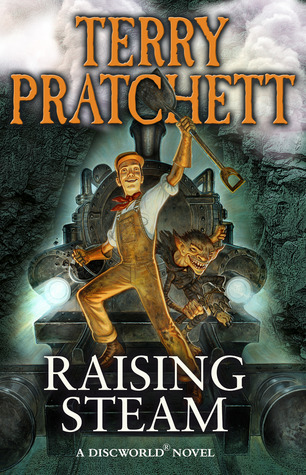
Raising Steam by Terry Pratchett

5 out of 5 stars

Dick Simnel is an engineer of some talent and with the help of his slide rule, he has developed the Discworld’s first steam locomotive, a machine that has somehow harnessed the power of all of the elements: earth, air, fire and water. It is called the Iron Girder. No one is really sure what to make of it, but when he brings it to Ankh-Morpork it piques the interest of Sir Harry King, a businessman who has made his money from the unsavoury business of waste.

Lord Vetinari, The Patrician of Ankh-Morpork, is also very interested in this device and he asks, well demands, that Moist von Lipwig, the renowned fraudster and civil servant to be his representative and the inside man inside this new industry. He is going to have his work cut out dealing with the great and the good as he persuades them to let the new railway lines over their land, but he has a deep and dodgy skill set to draw upon…

Not everyone is happy with the new railways though, some railway workers have been attacked and killed by Dwarfish fundamentalists and their terrorist attacks are getting worse. The Low King of the Dwarves is away at Quirm when there is a coup at the palace in Schmaltzberg, Überwald. Vetinari demands that the Low King is returned home to ensure political stability in the region, but even though Moist points out that the line is not complete, he is given no option to fail.

It is going to be a difficult journey, as not only are they somehow going to have to make it to Schmaltzberg, Überwald with the Low King on board, but they know they will be under attack from the rebel dwarves at some point and how they are going to get across the bridge is an audacious stunt that only Moist can pull off.

Another magnificent book from Pratchett, though you can sense cracks at the edge of the plot as the Embuggerance’s cold black fingers creep across his mind. He has purloined the plot from events in the UK when we went railway mad in the 18th century and draped it onto Discworld, where that places uneven lumps and bumps have shaped the story in his own unique way. There are lots of laugh out loud moments, as well as his own unique perspective on real-life that he sees through the prism of Discworld. Great stuff and one more to go…

« Older posts Newer posts »

© 2026 Halfman, Halfbook

Theme by Anders Norén — Up ↑